Inga in Australia.
Inga is not an easy genus to work on with many changes to its classification and most species have many very confusing synonyms and subspecies.
For example Inga edulis has 14 synonyms including Inga ynga and Inga vera.
Another is that Inga vera is a synonym of Inga edulis but its subspecies Inga vera subsp. affinis is a synonym of Inga affinis.
Other problems are that some species are variable and many species share the common names Ice Cream tree or Ice cream bean tree.
Scientific descriptions of the same species do not always agree on some details.
One comment seen is ‘If you buy “Inga edulis” seeds or plants, be advised that nurseries also are often incorrect about the identity of what they are selling’.
Searching for ‘Inga’ in S.E. Queensland on the Australian Virtual Herbarium gives Inga edulis (65), Inga (44) and Inga vera (9).
The Atlas of Living Australia for Inga species recorded in S. E. Queensland has around half as Inga and half as Inga ynga.
The vast majority of Inga plants for sale in Australia are sold as Inga edulis with a few sold under its synonyms Inga vera and Inga ynga.
Occasionally seen for sale is Inga densiflora and only seen once is Inga feuillei.
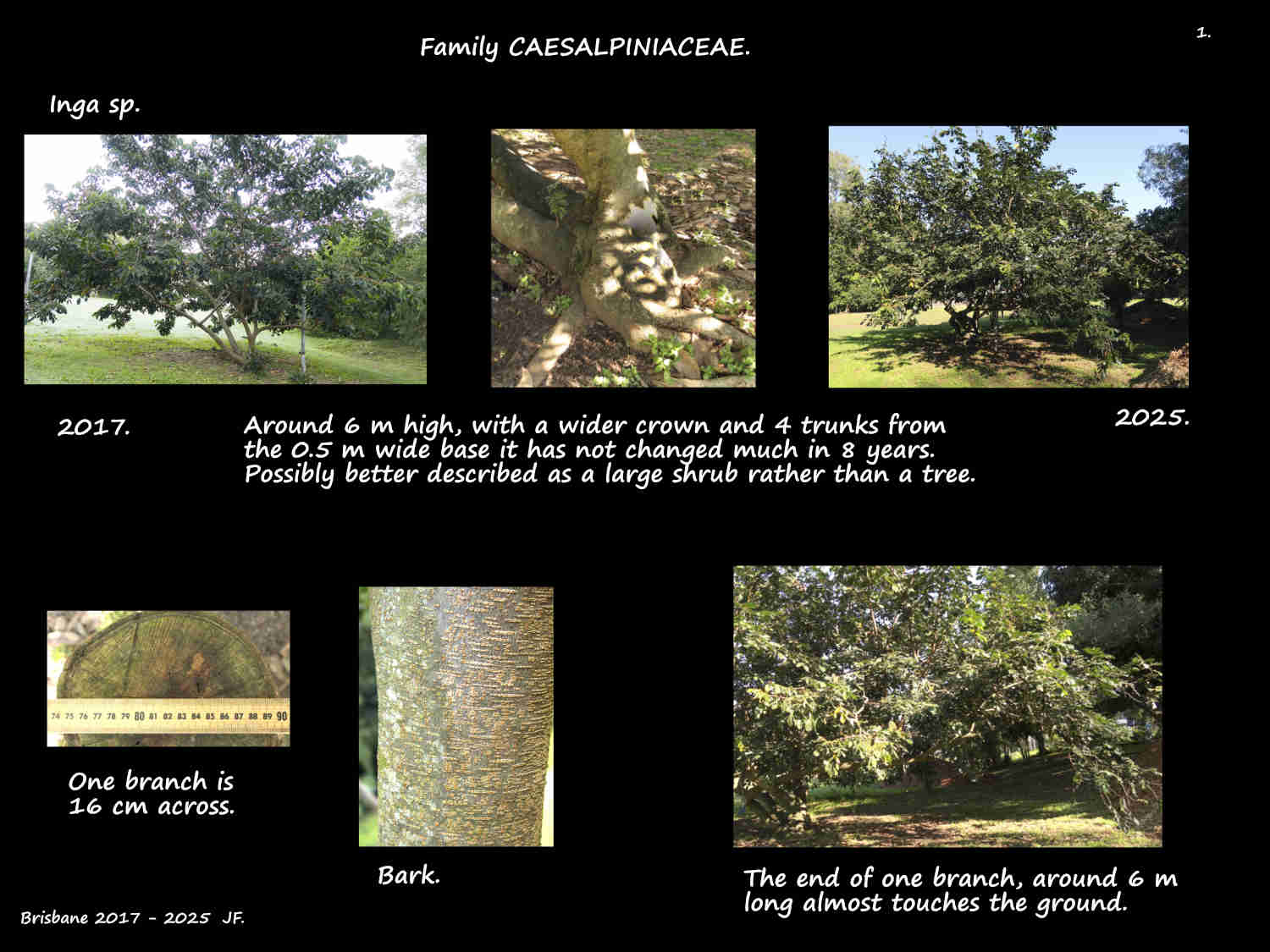
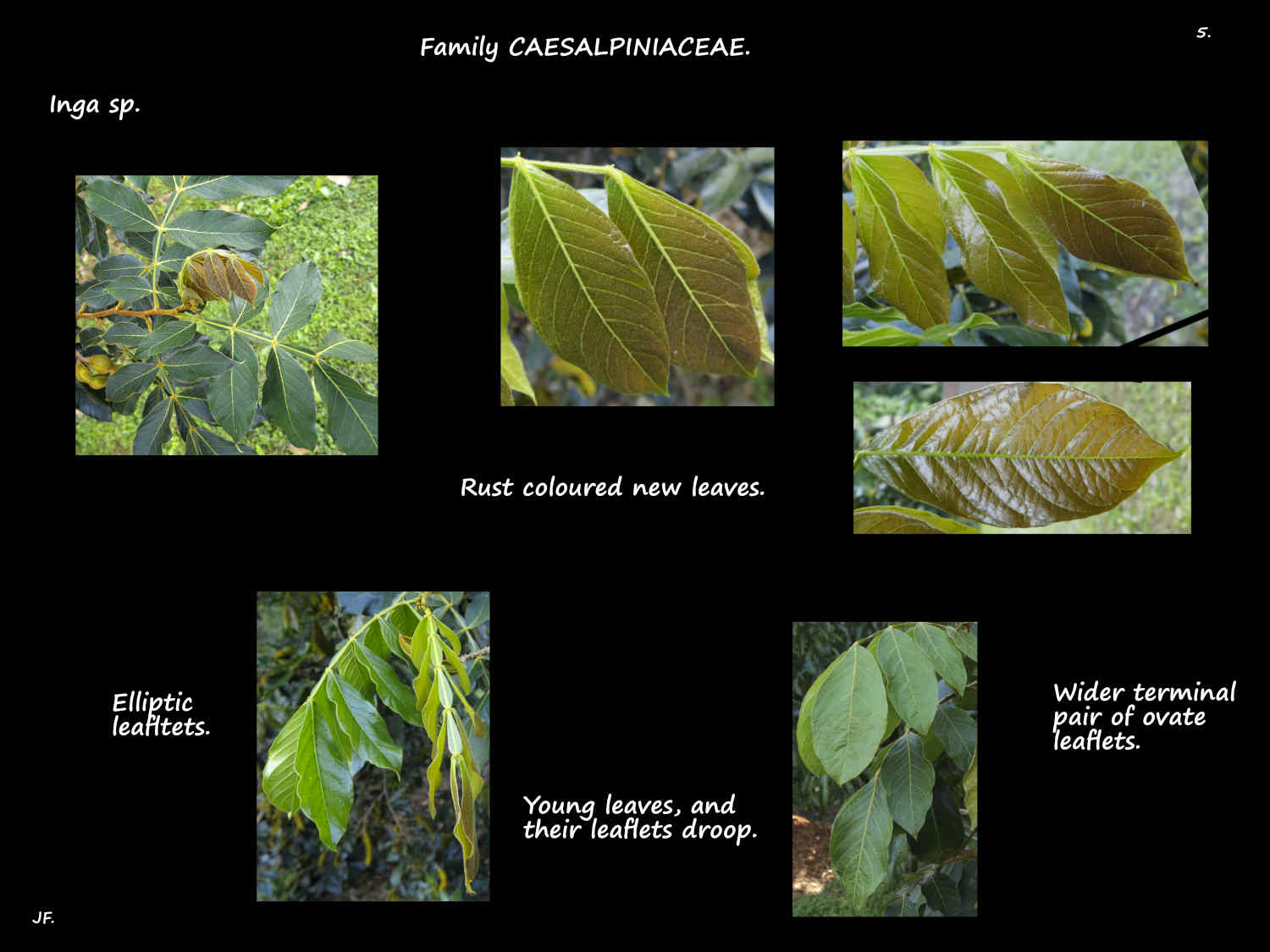
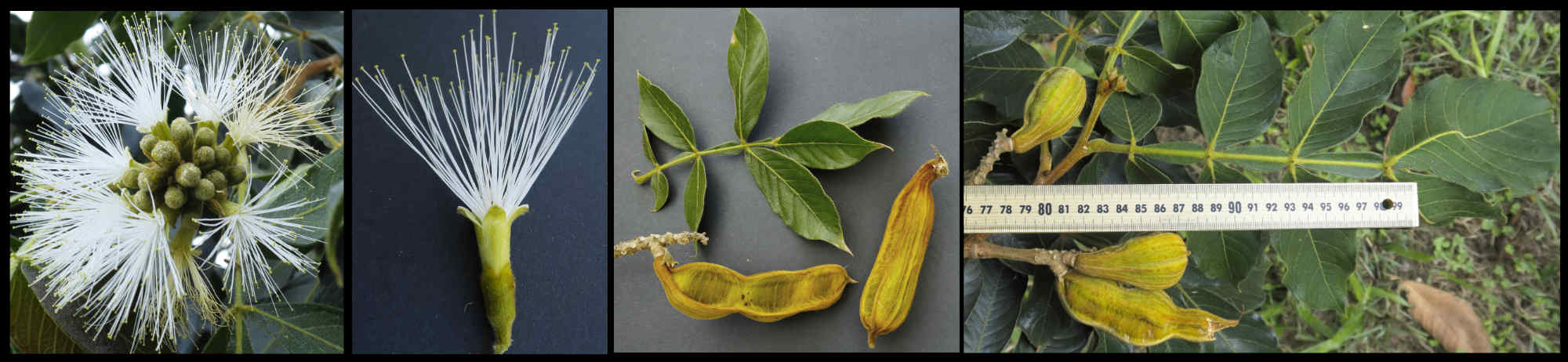
The tree ilustrated below is known locally as the Ice Cream bean tree.
Probably sold as an Inga edulis there are some features that differ from most scientific descriptions.
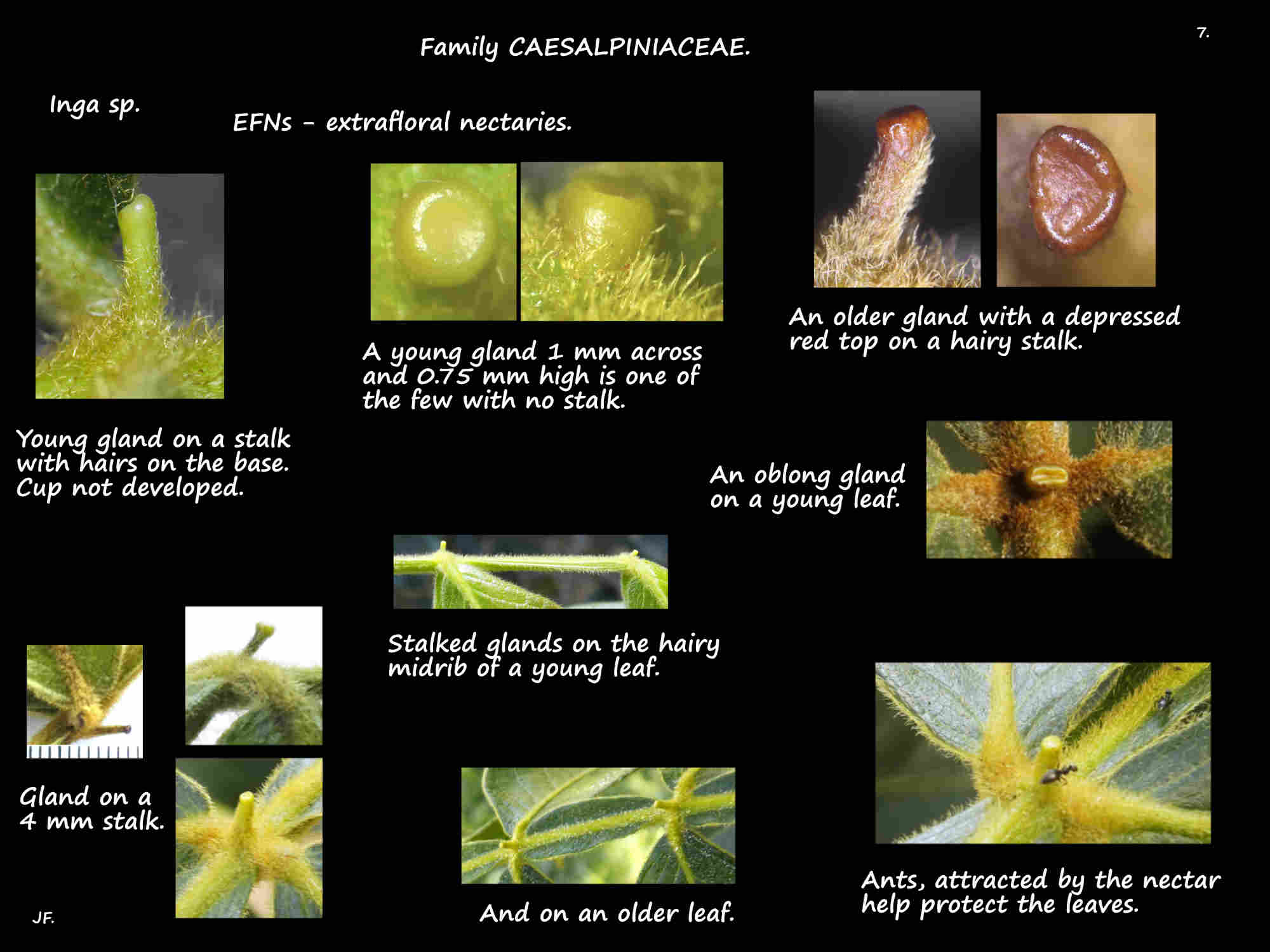
This includes the presence of stalks on the leaflets, flowers and extra-floral nectaries (EFNs).
Many Inga species have elevated EFNs including Inga allenii, Inga densiflora, Inga multijuga, Inga marginata, Inga pitmanii, Inga punctata, Inga sierrae and Inga umbellifera.
EFNs secrete nectar that attracts ants and other insects who help protect the tree from pests such as aphids and caterpillars.
Nectar glands, a small pit or cup-shaped structure between each pair of leaflets can be directly attached (sessile) or on a stalk up to 3 mm or more high.
In most species there is only one gland but there can be a few. Measurements are few and far between.
Descriptions of Inga vera/edulis say the 2 to 3 mm wide glands are sessile others have ‘elevated’ but with no height given.
Inga feuillei cup-like EFNs, on a stalk are usually said to be larger and more prominent than those of I. edulis.
Inga densiflora descriptions have sessile glands; a 0.8 to 1.5 mm wide gland on no, or a very short stalk; or a conical gland on a stalk up to 1 mm high.
It is a similar tree to Inga edulis but has smaller leaves, much smaller flowers (calyx about 4 mm and the corolla 7-8 mm long), fewer stamens and a wider pod.
Inga teresensis with nectaries on a 1.5 mm high stalk is a shrub with leaves having only 1 or 2 pairs of leaflets.
The description below is of Inga edulis as this is what almost all plants are sold as. The illustrations are under Inga sp.
*****************
Inga edulis.
This includes details from descriptions of Inga edulis under its synonyms Inga vera and Inga ynga.
Ice Cream bean trees are native to countries in tropical areas of S. America including Brazil, Bolivia, Columbia, Ecuador and Peru.
Mature trees can be 25 to 30 m high with a trunk from 30 to 100 cm across.
The often twisted trunk has pale grey-brown bark with prominent pale linear lenticels.
Starting around 2 to 3 m up the trunk the long branches form a wide flattish crown.
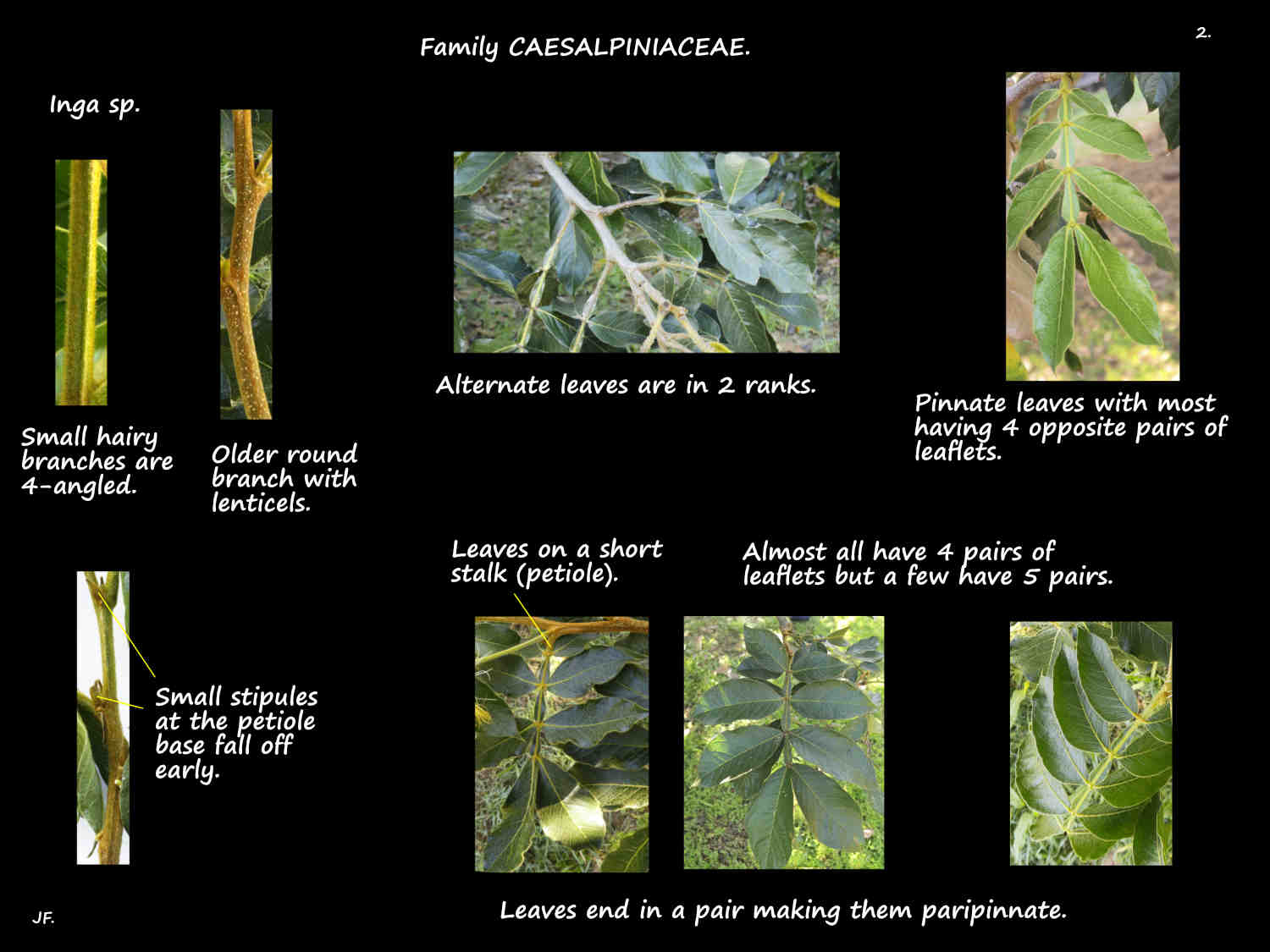
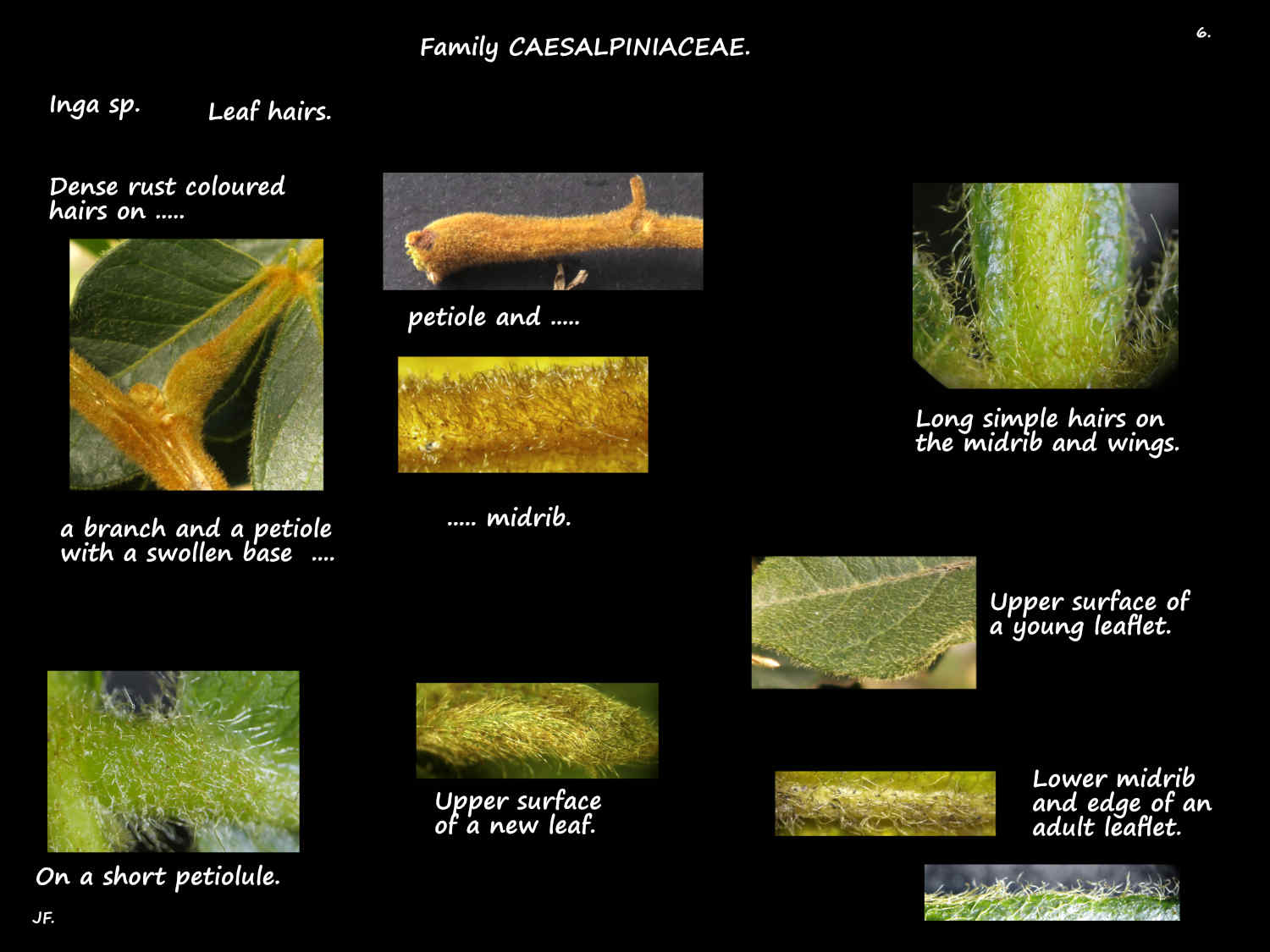
Twigs are 4-angled and densely covered in fine rust-coloured hairs.
Larger branches are round in cross section and without hairs.
Leaves, alternately arranged along the branches are in 2 ranks that face up.
Up to 25 or 30 cm long they are on a petiole up to 5 cm long.
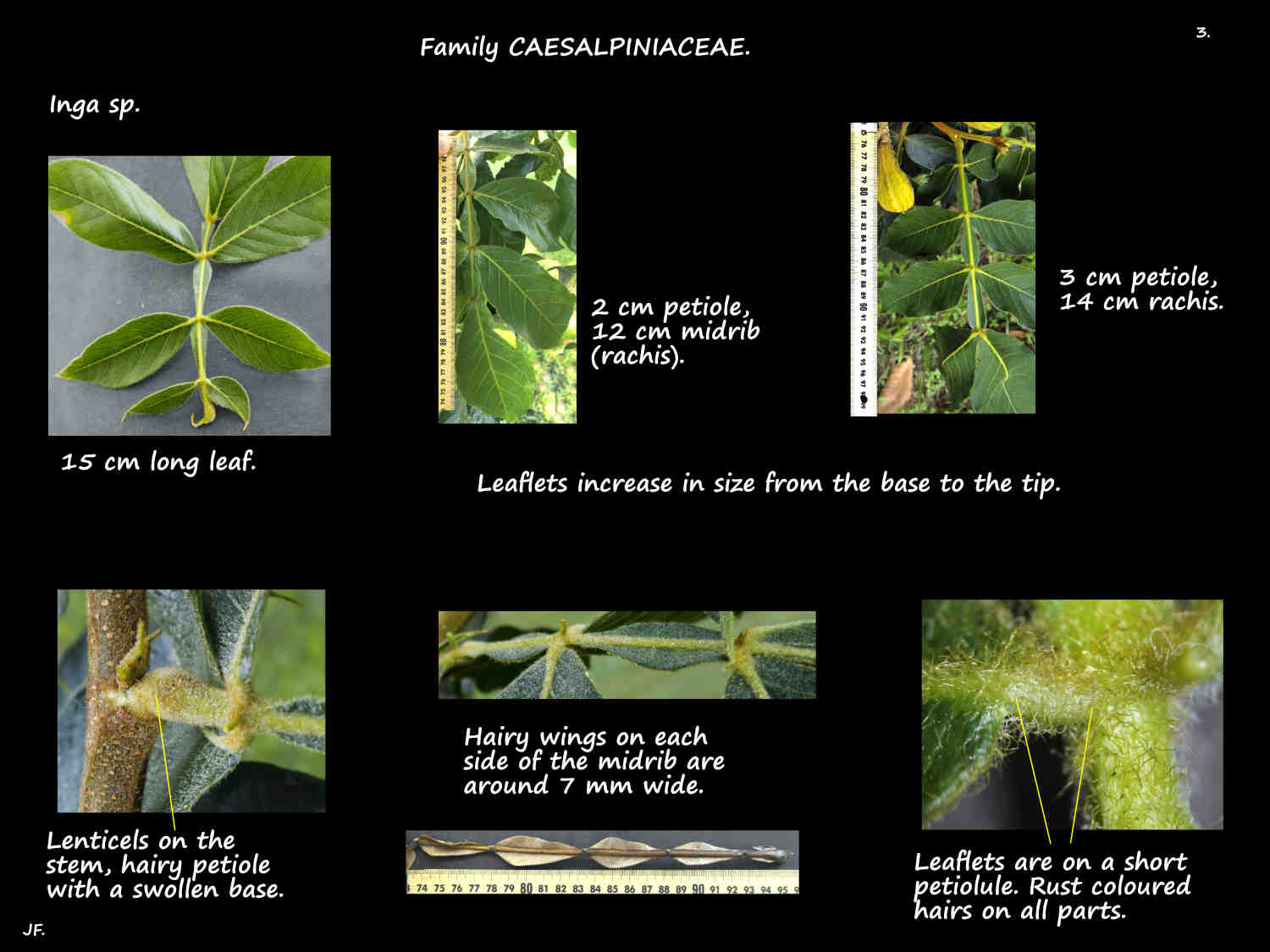
The petiole, mostly without wings is covered in rust-coloured hairs.
At the base are narrow stipules around 4 mm long that fall early.
The leaf midrib (rachis), from 6 to 25 cm long has hairs like those on the petiole.
On the midrib are 5 (3 to 7) opposite pairs of leaflets.
Between the leaflets the rachis has hairy green oblanceolate wings up to 2 cm wide.
On the upper surface of the midrib, and between each pair of leaflets is a nectary gland.
These extra-floral nectaries or EFNs are almost always described as having no stalk i.e. sessile.
The oblong cup or disc-like nectaries are said to be ‘2 to 3 mm long and 3 to 4 mm wide’ or as ‘0.7 to 1.3 mm’.
Leaflets are mostly described as being directly attached to the midrib (sessile).
(However Flora of Nicaragua has glands ‘between insertion of the petiolules’.
Genus descriptions have leaflets on ‘short petiolules’ and glands ‘between insertion of the petiolules’ all implying leaflets are stalked.)
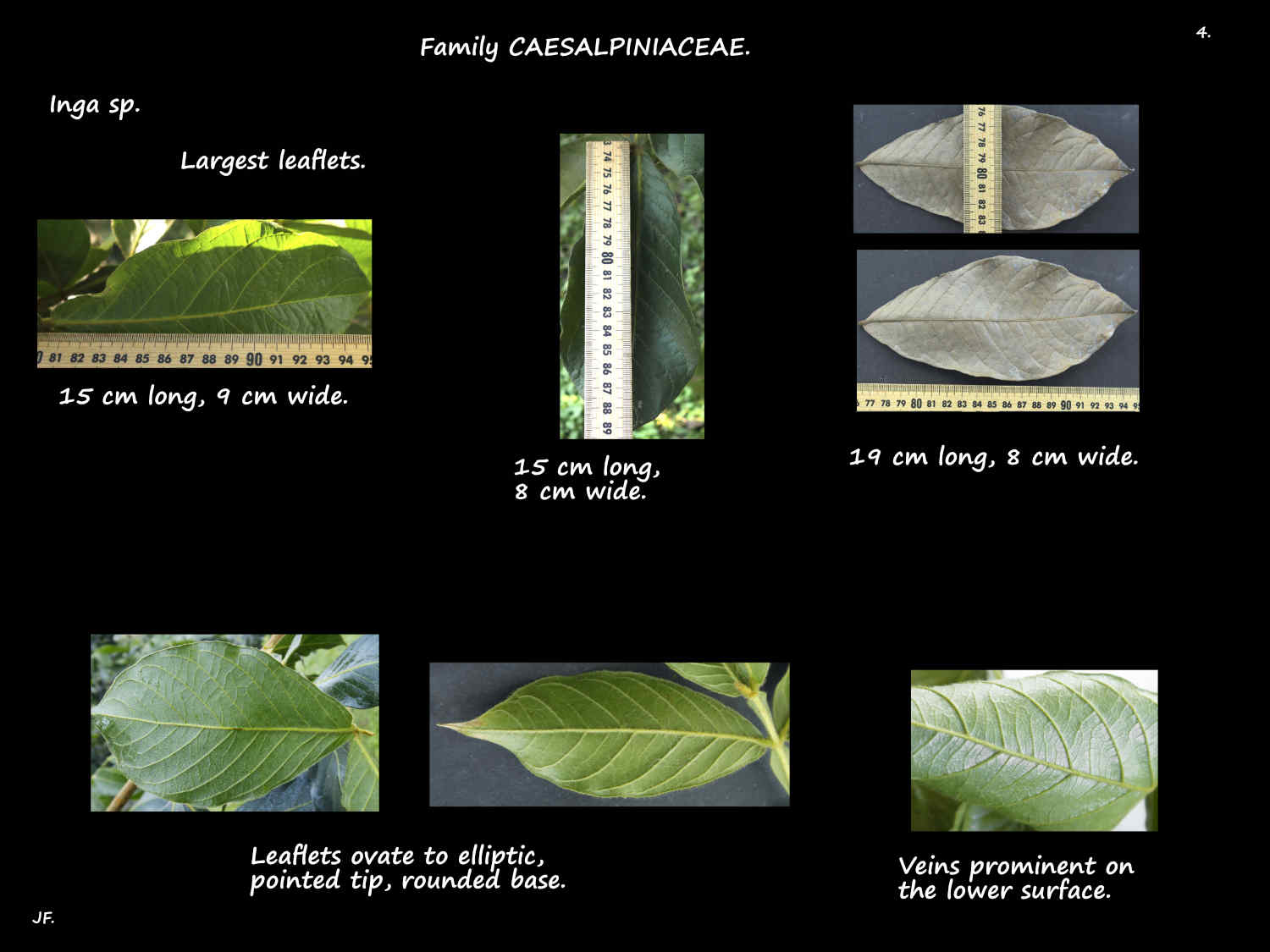
Leaflets increase in size from the base of the rachis to the tip.
At the base the ovate, elliptic or oblong leaflets are up to 7 cm long and under 4 cm wide.
The usually rounded base may be slightly asymmetric and the tip is pointed.
The terminal elliptic to lance-shaped pair of leaflets are around 16 cm long and 5 to 10 cm wide.
All have veins that are raised on the lower surface.
The lower surface has dense rust-coloured hairs on the midrib and side veins.
The upper surfaces have some short stiff hairs that lie flat along the surface.
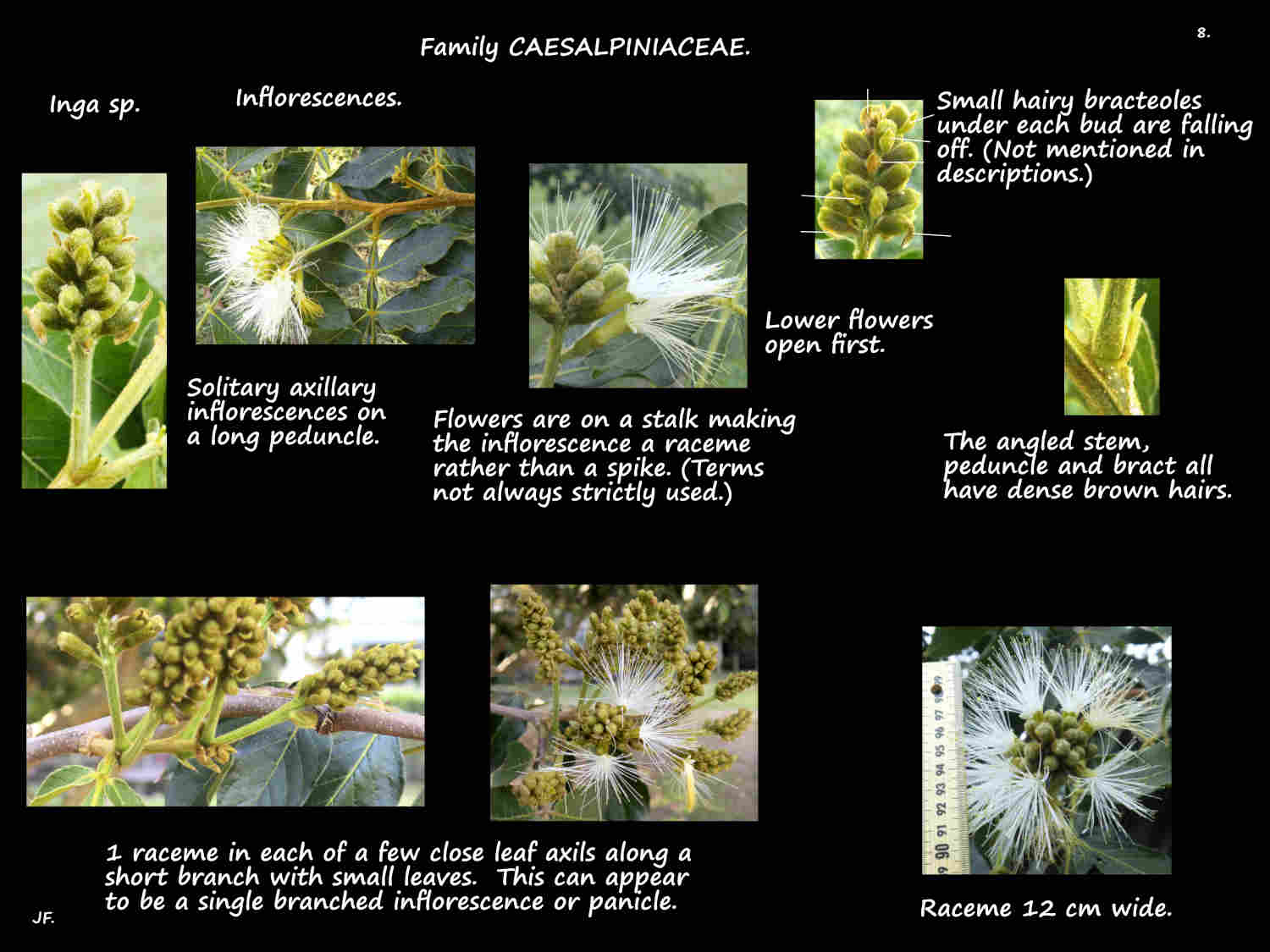
Axillary inflorescences are described as a spike.
Spikes have flowers on no (or almost no) stalk along a midrib with the lower ones opening first.
If a stem has close nodes, each with a spike, together they can appear to form a panicle or branched inflorescence.
The spikes have a stalk (peduncle) 3 to 4 (6) cm long covered in brownish hairs.
At the base of the peduncle are ovate bracts around 5 mm long.
The flower-bearing midrib is 3 to 4 cm long.
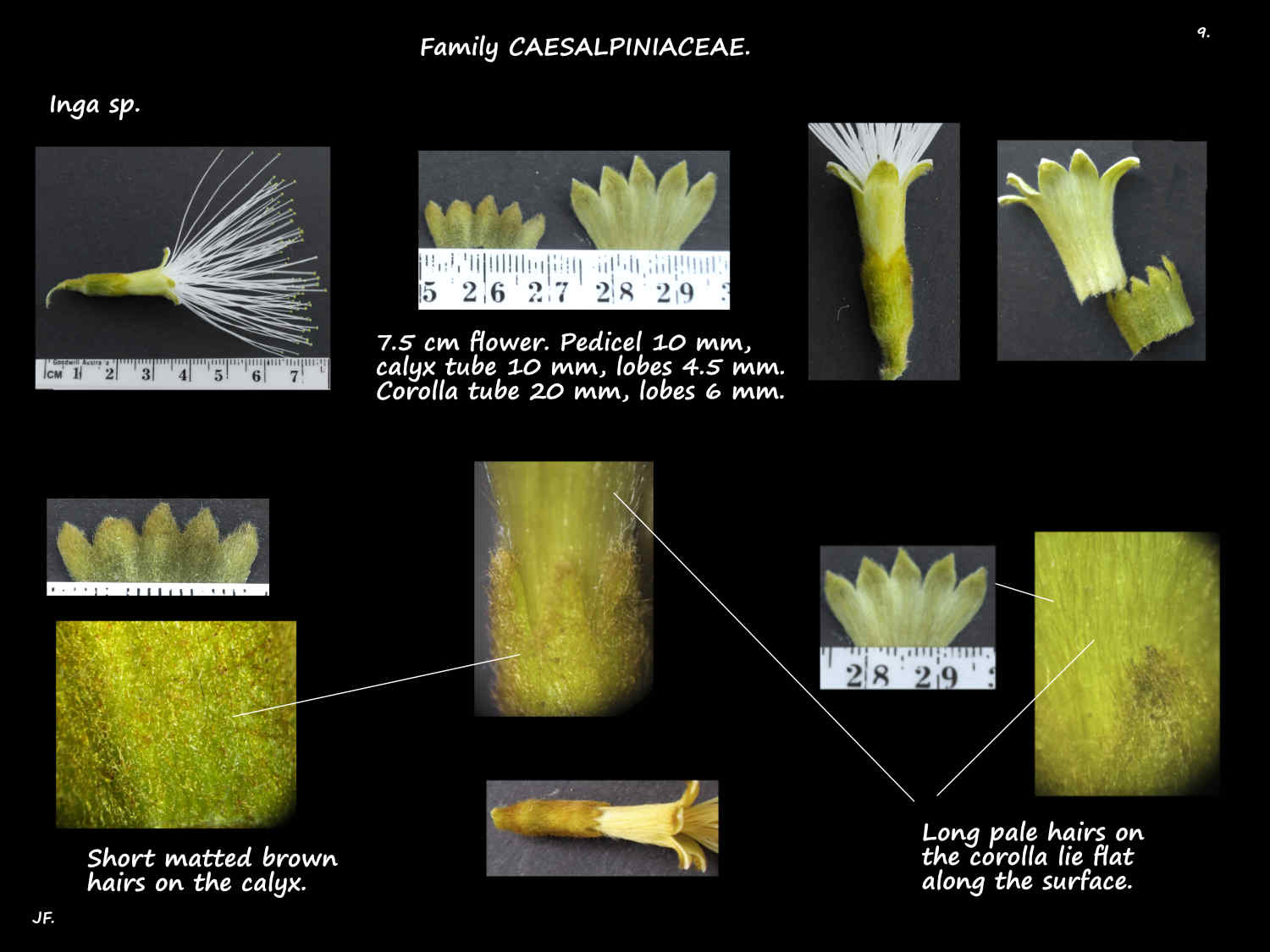
The fused sepal bases form a calyx tube around 8 mm long with 5 lobes 1 to 2 mm long.
The outer surface is covered in short brown hairs.
The 1.5 to 2 cm long white corolla has a narrow tubular base.
The 5 spreading lobes, of slightly different lengths are 2 to 4 mm long.
The outer surface has long pale silky hairs that lie flat along the surface.
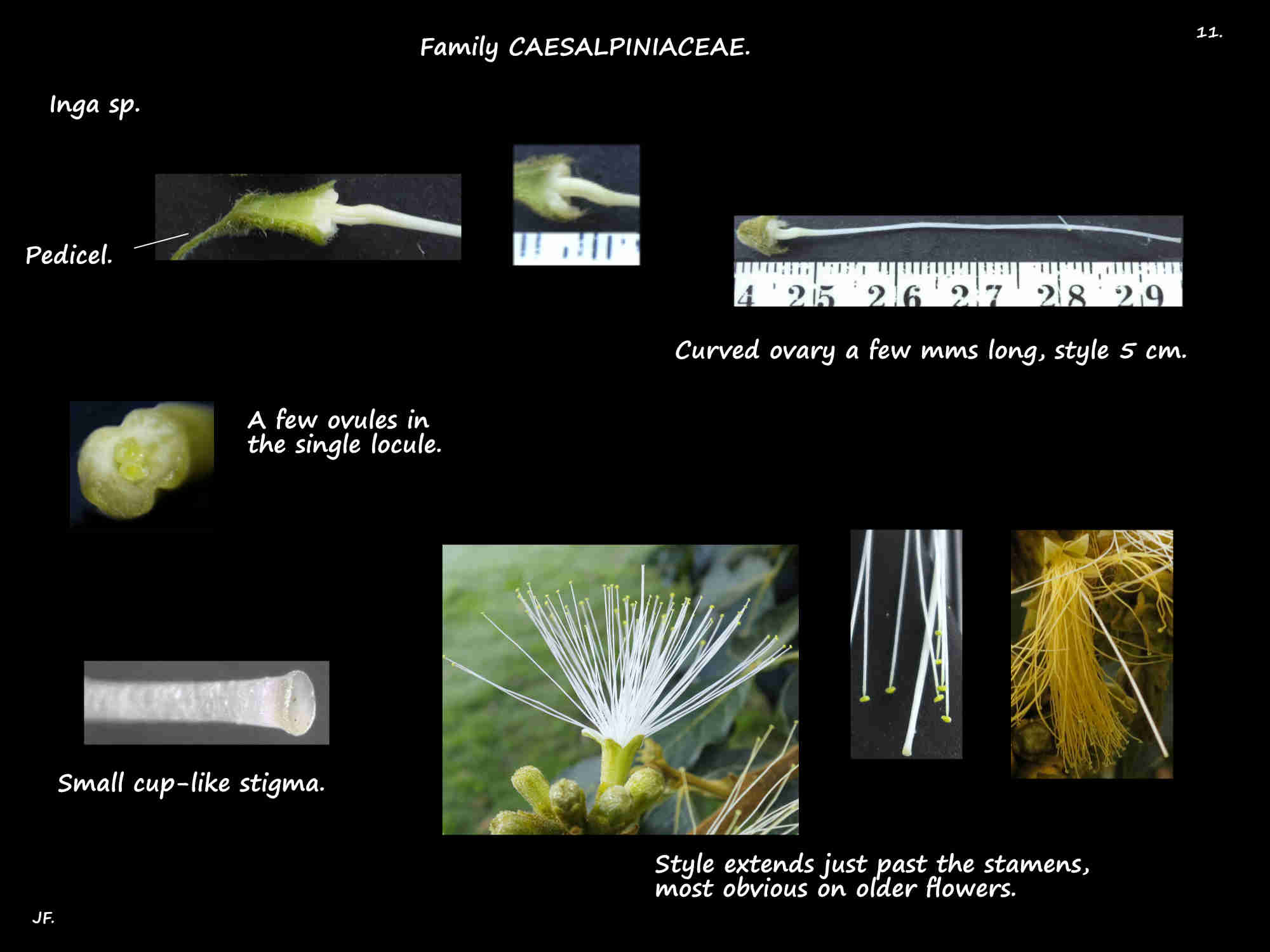
The 50 to well over 100 stamens are 4 to 5 (7) cm long.
The lower half of the white filaments are fused into a stamen tube.
The tube extends to, or just past the end of the corolla.
When the is pollen is shed the filaments become yellow and droop down.
The short curved white superior ovary has 1 locule with a few ovules.
The long white style, with a tiny stigma extends past the stamens.
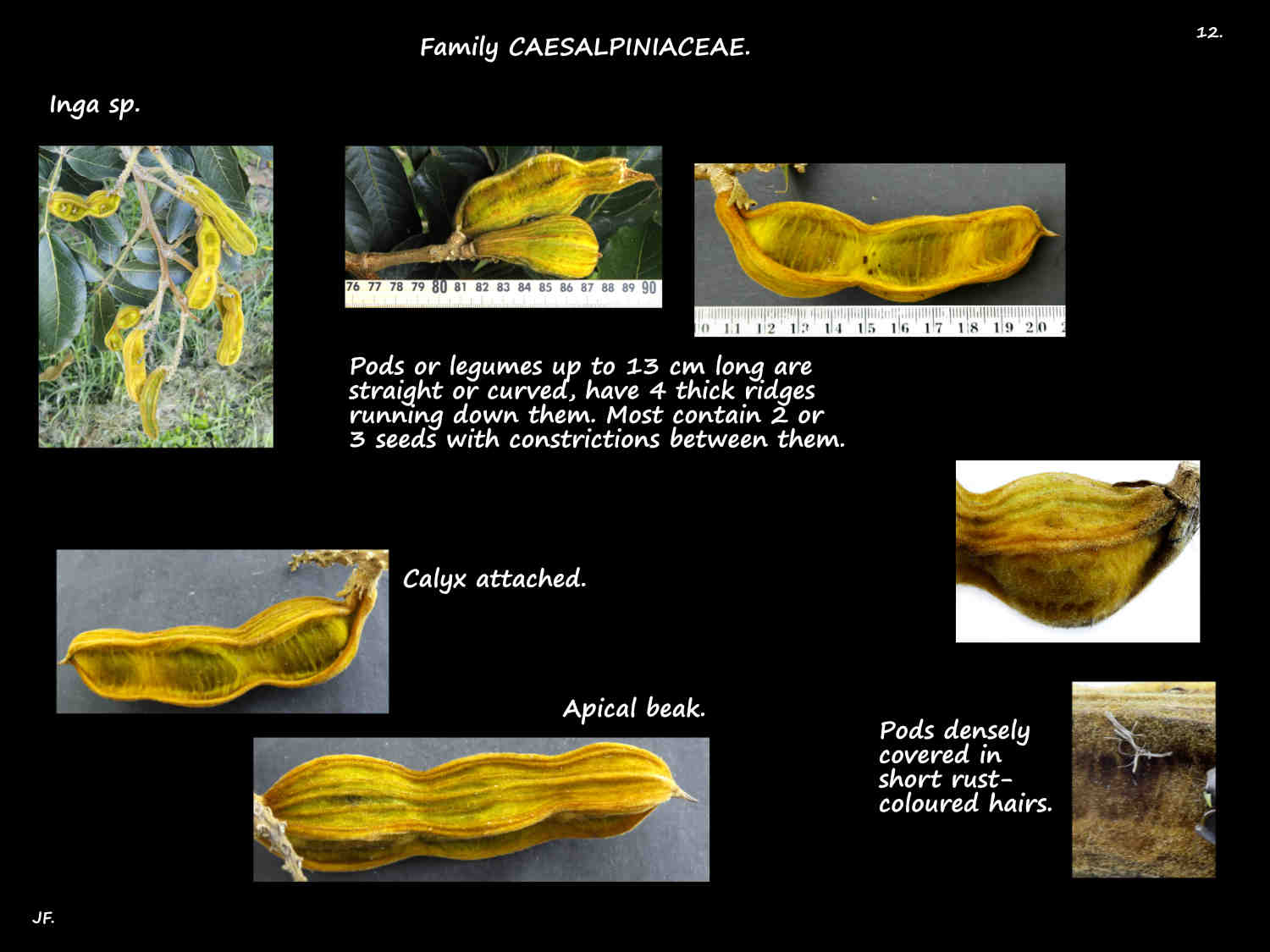
The fruit are a legume (pod) on a very short or no stalk.
Pods, 5 to 15 (20) cm long and 1 to 2 cm wide have the calyx still attached.
The straight or slightly curved pods have 4 thick raised ribs running down them.
Pods are densely covered in short brown hairs.
Most do not split open but just disintegrate on the ground.
The shiny black seeds are surrounded by a white fleshy layer.
(There are no Inga edulis hybrids.
A number of descriptions of Inga edulis or Inga vera say the pods are 1 to 2 m long. It would appear that these are other species confirming the comment above regarding the mis-naming of species.)
J.F.