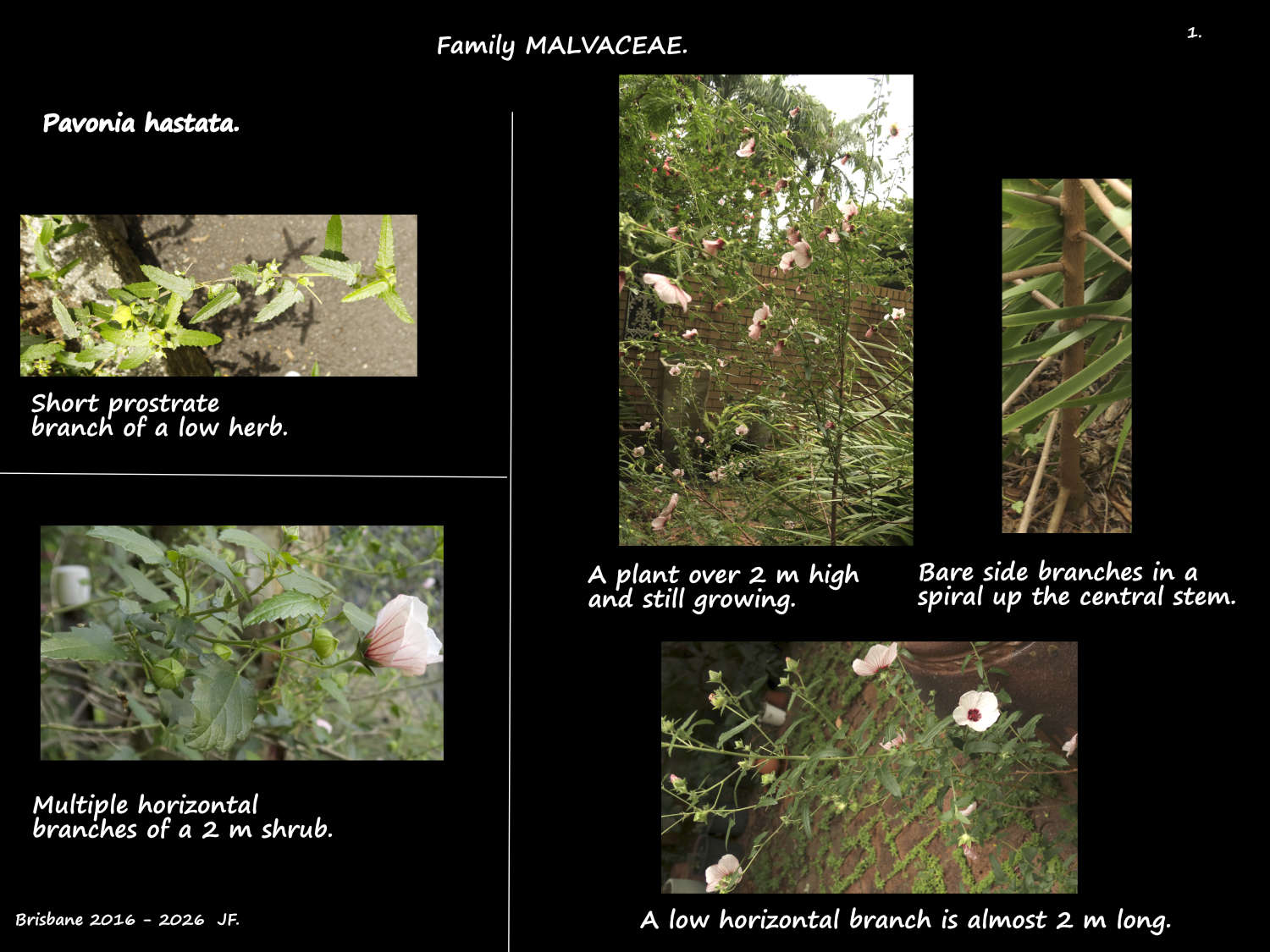
Pink Pavonia, native to South America is naturalised in S. E. Queensland.
The shrubs, from 0.5 to over 2 m high are weeds but still cultivated.
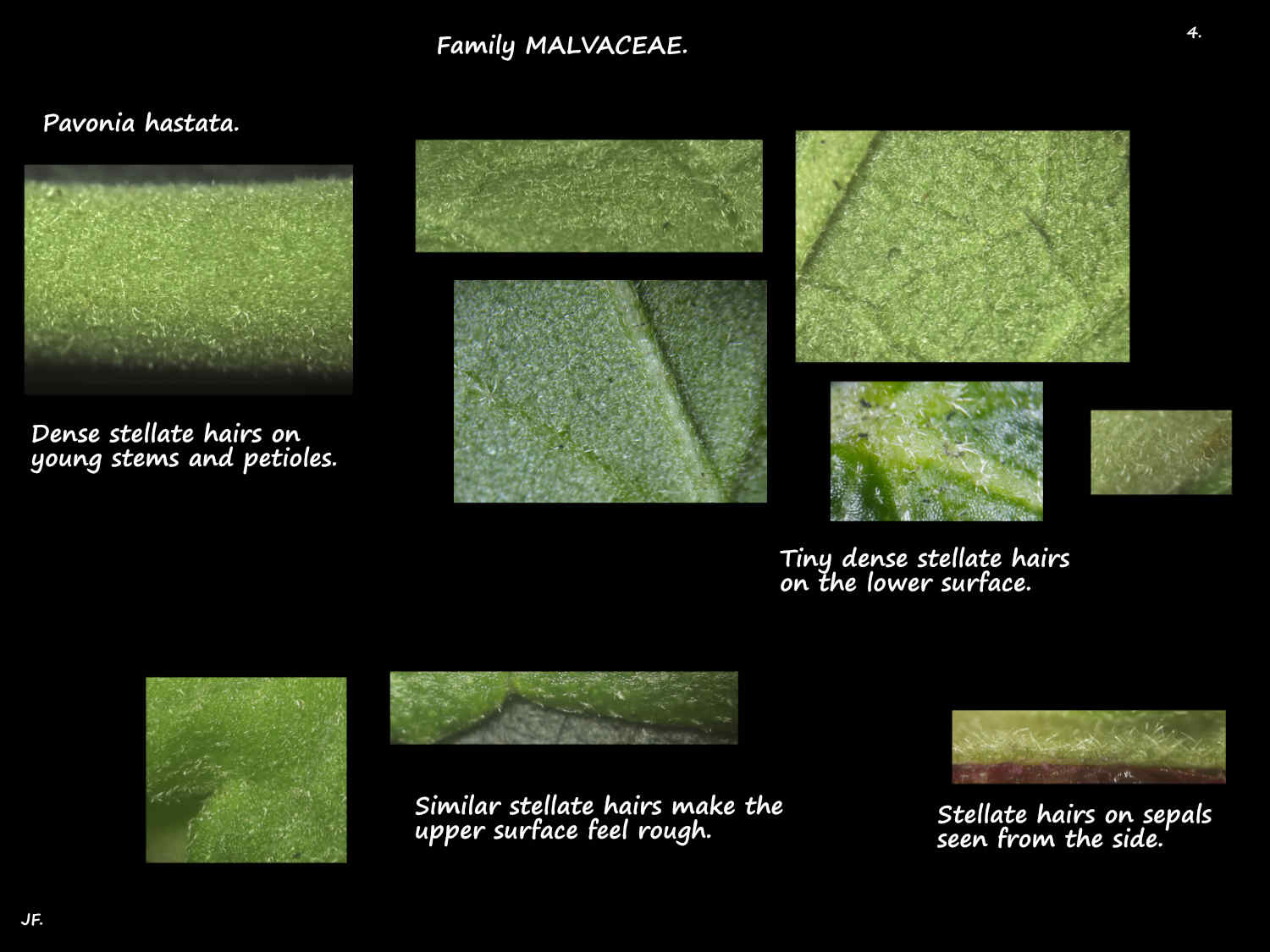
Young stems have dense stellate hairs.
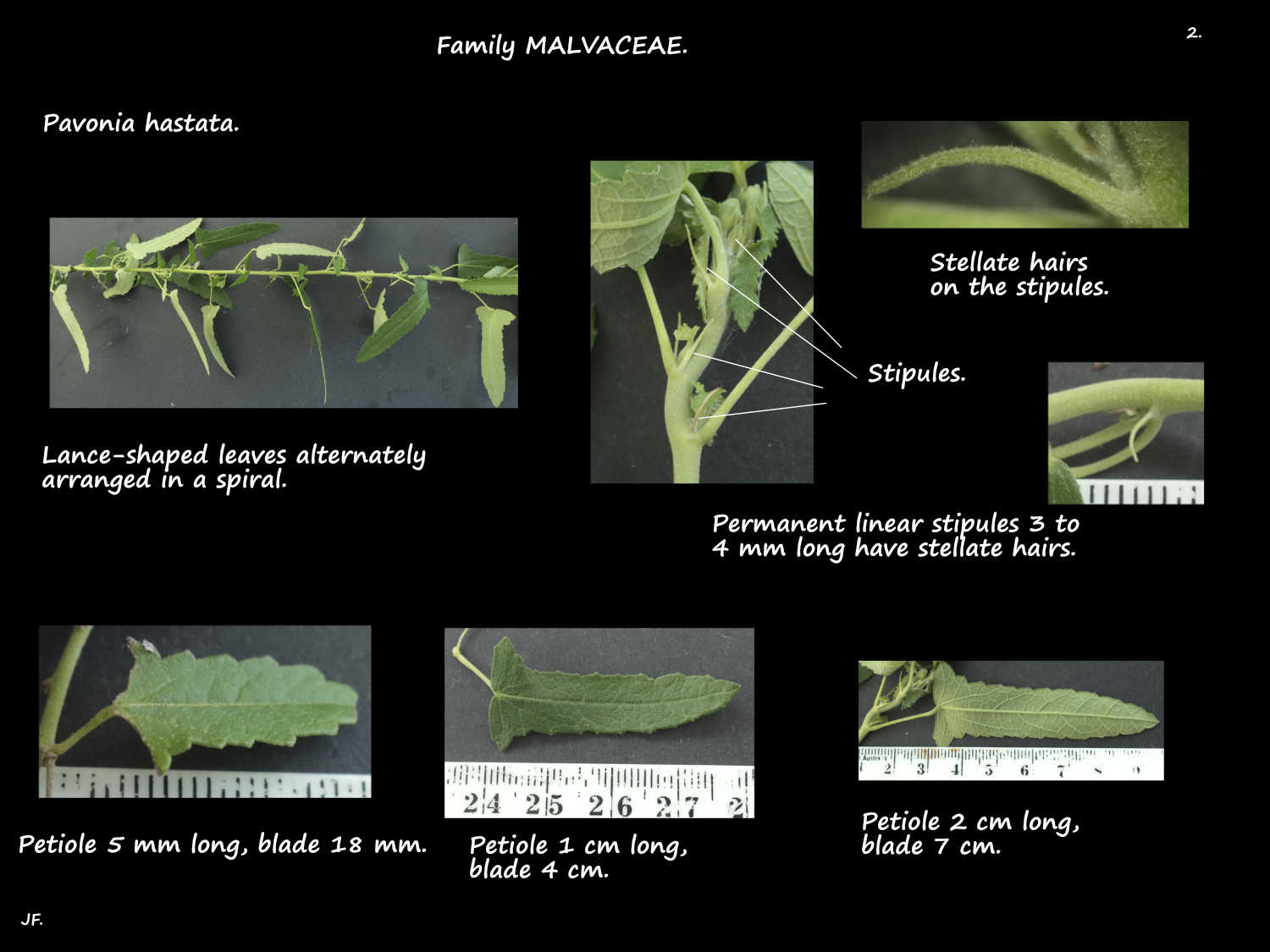
Leaves, on a petiole up to 3 cm long are alternate and in a spiral.
At the petiole base are linear green stipules covered in stellate hairs.
They tend to persist.
Blades are up to 7 cm long, 1 cm wide in the middle and 2 cm at the base.
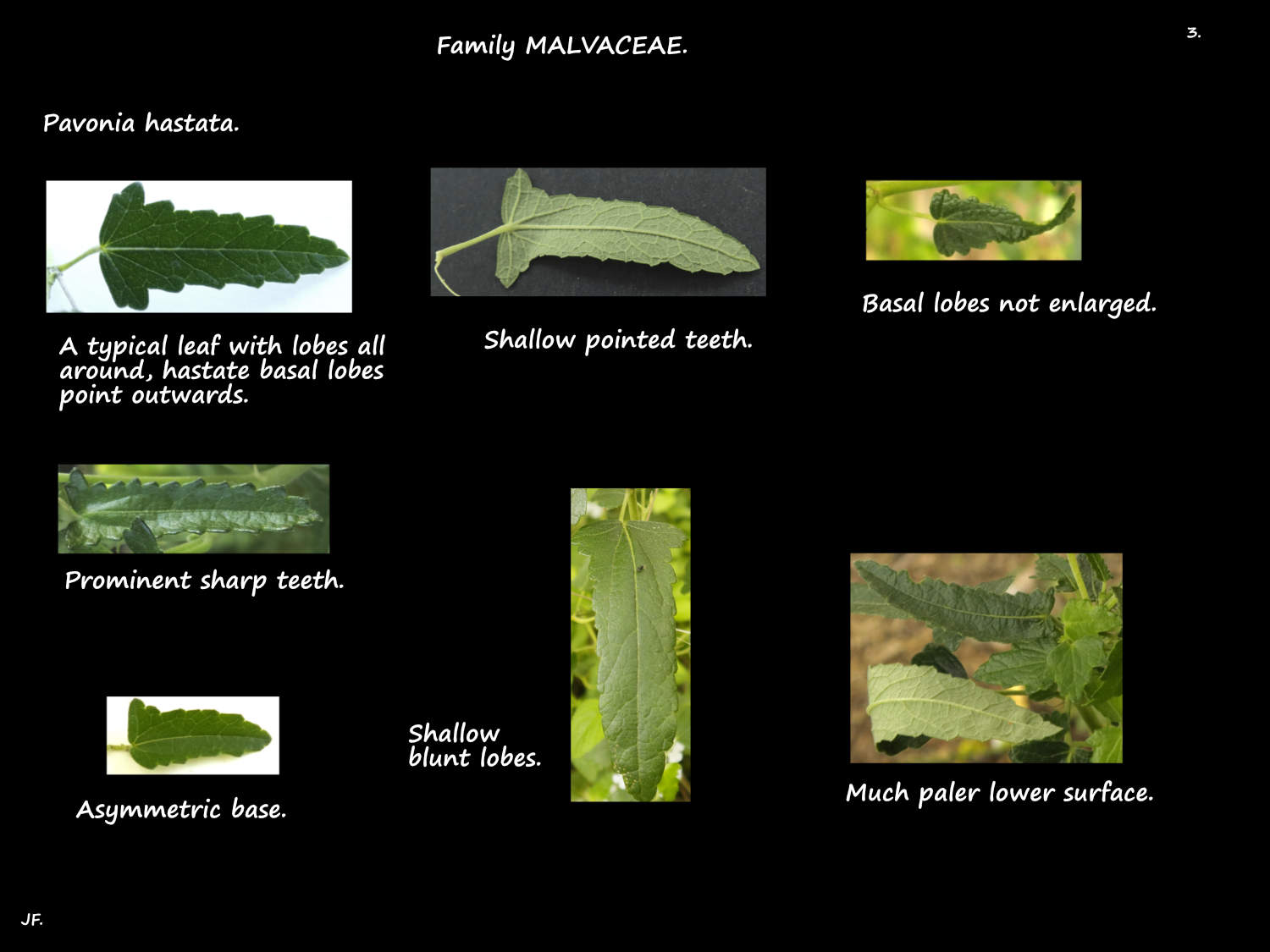
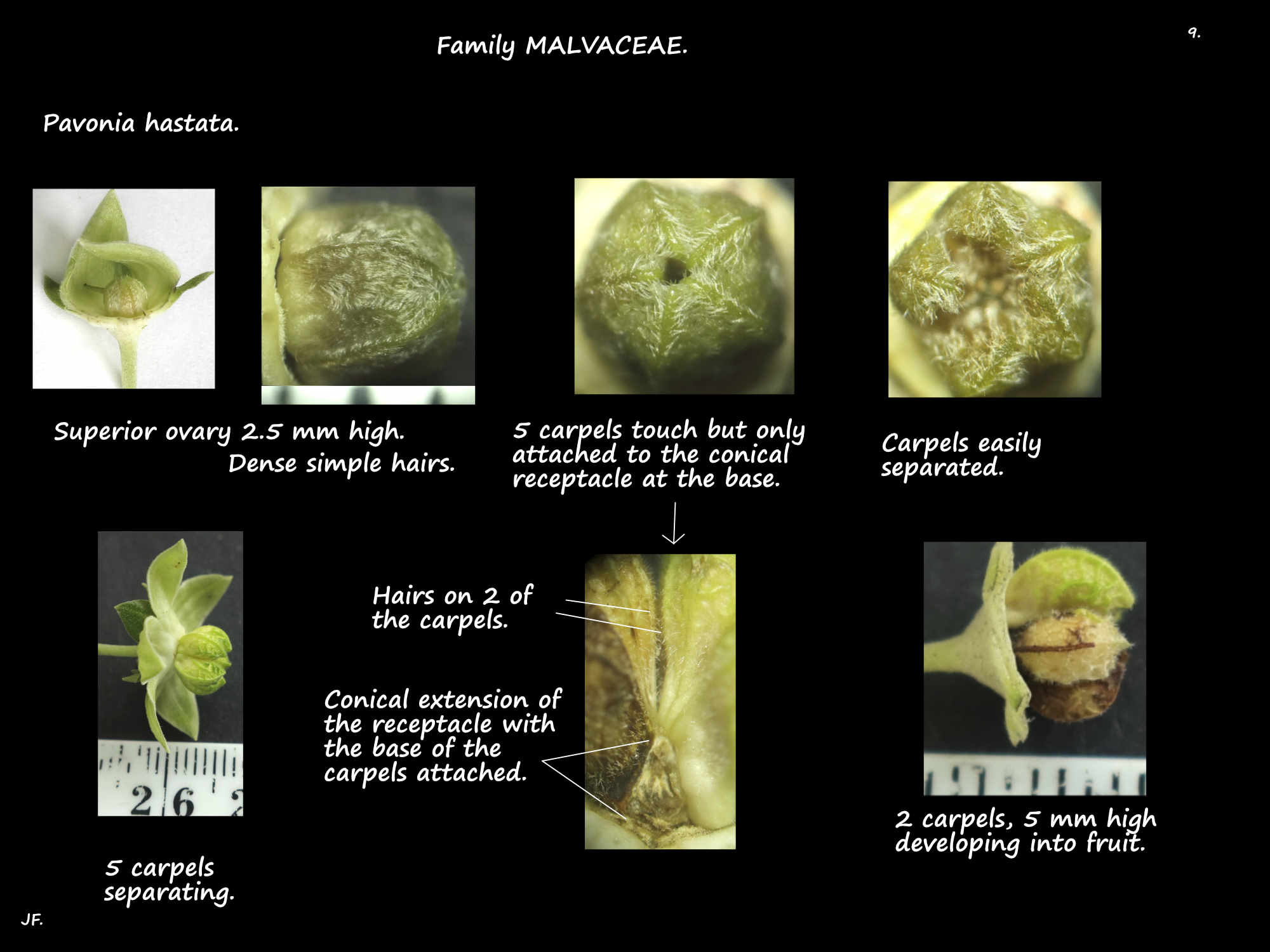
Most are lance-shaped and usually have a pair of lobes at the base.
Basal lobes commonly point sideways (hastate leaf) but can point downwards (sagittate).
The edges have small lobes that can be blunt or pointed.
There are stellate hairs on the petiole and leaves.
Hairs are dense on the pale lower surface and scattered on the mid green upper.
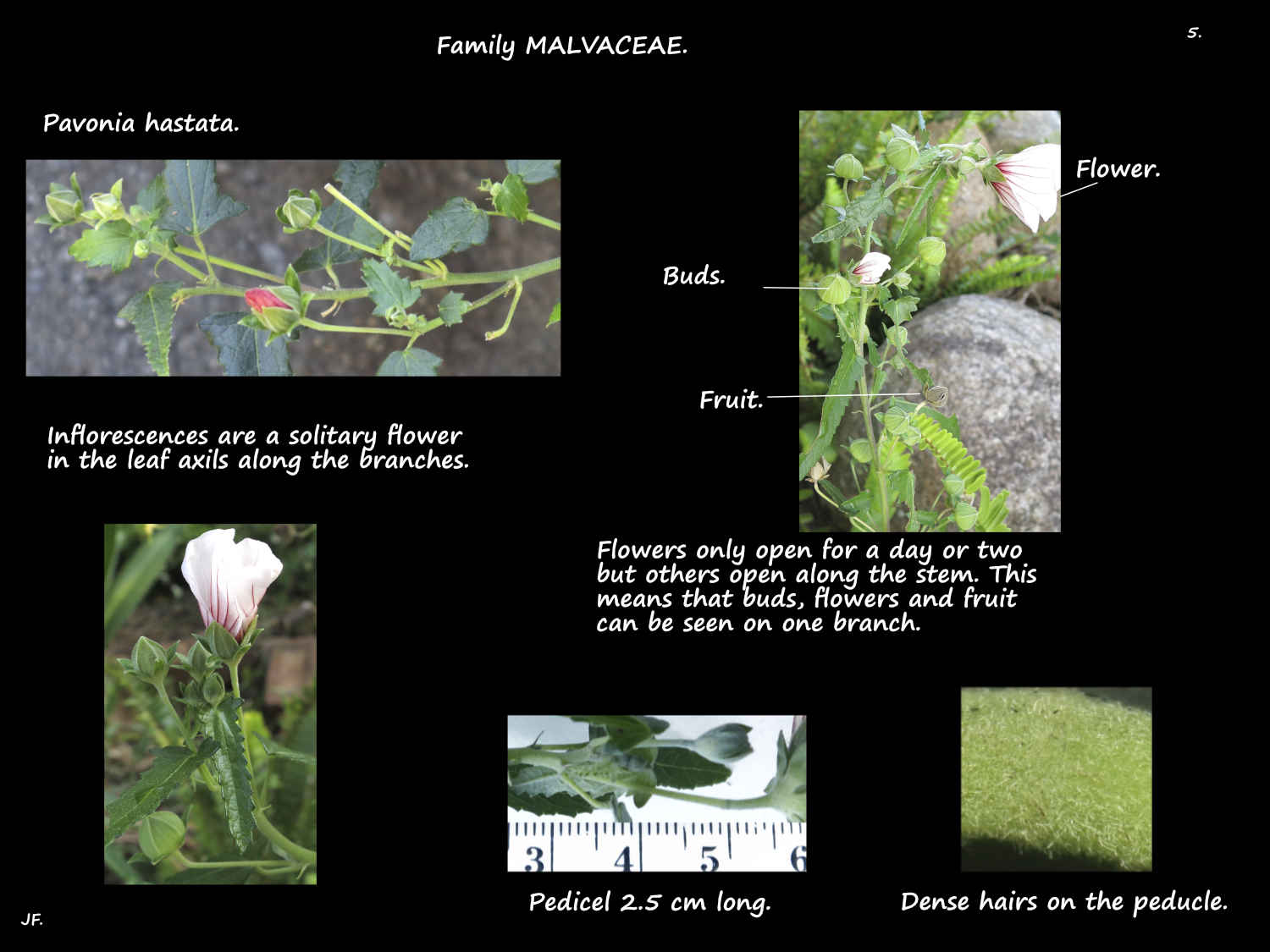
Inflorescences are solitary flowers in the leaf axils along the stems.
They are on a peduncle (pedicel) up to 3 cm long.
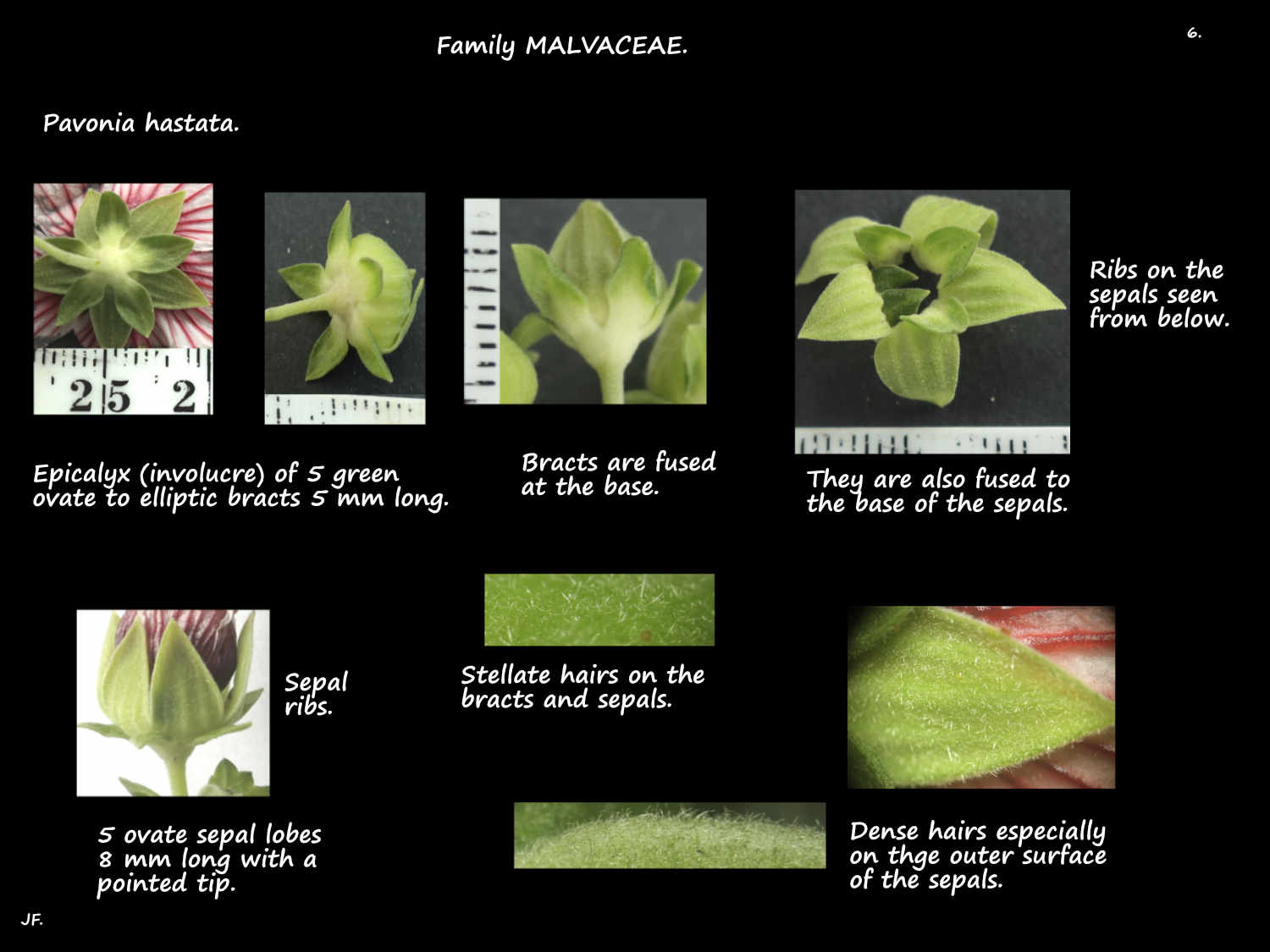
There is an epicalyx (involucre) with 5 lobes around 5 mm long with their bases fused.
The epicalyx and the 5 sepals around 7 or 8 mm long, have dense stellate hairs.
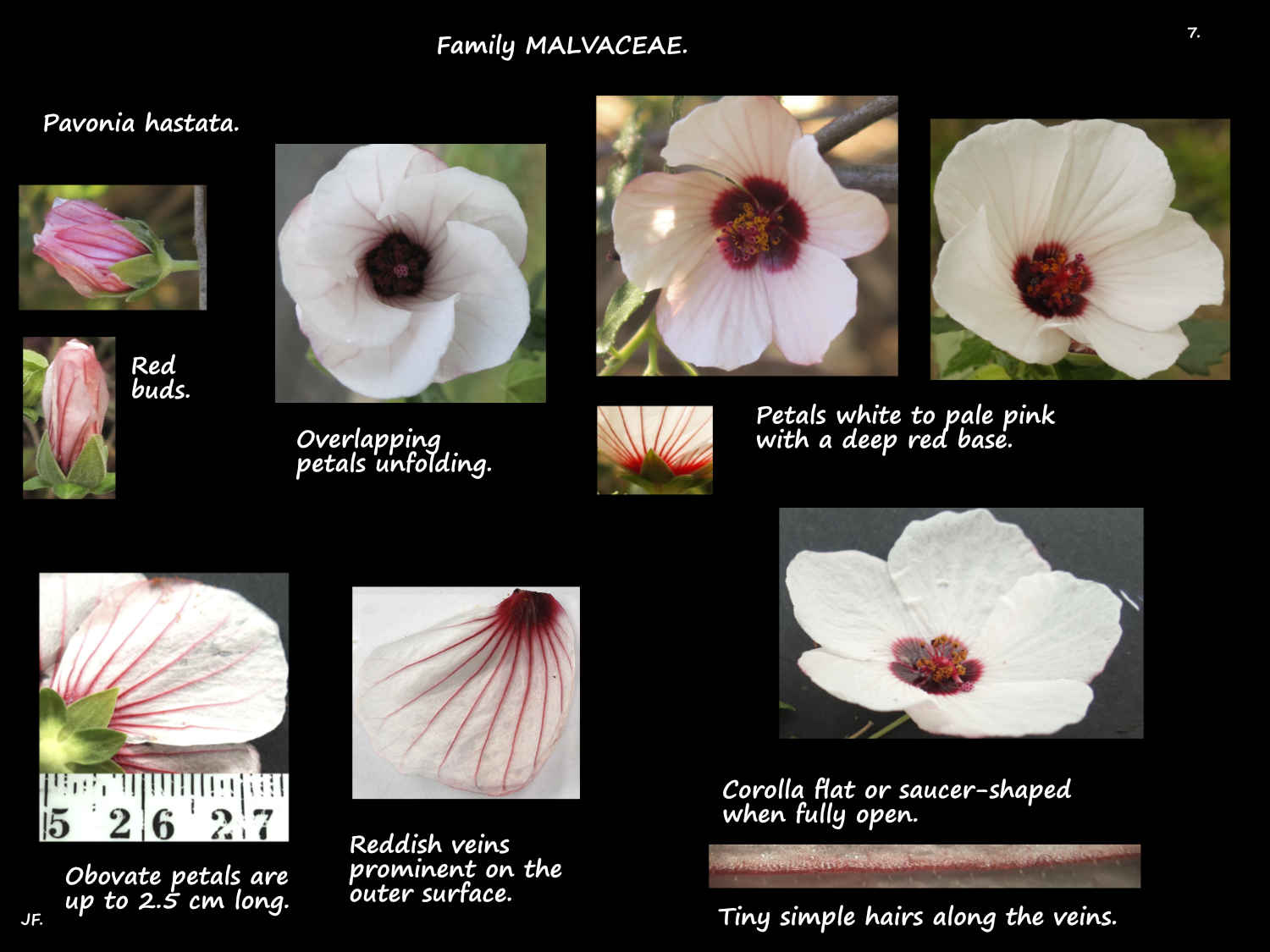
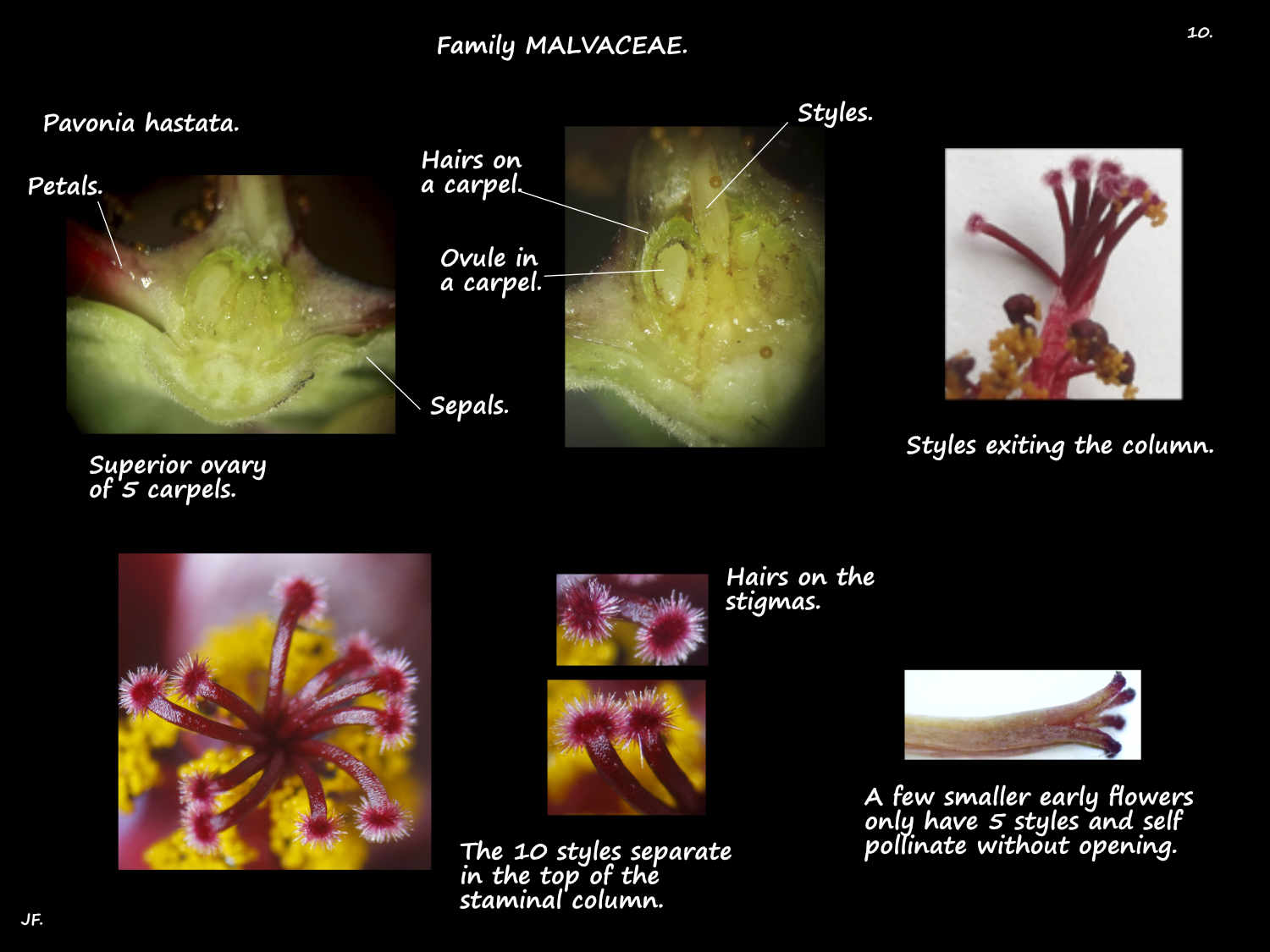
Flowers, looking like a small Hibiscus have 5 obovate petals.
The around 2.5 cm long petals have a round tip and narrow base.
They are white or pale pink with deep red at the base.
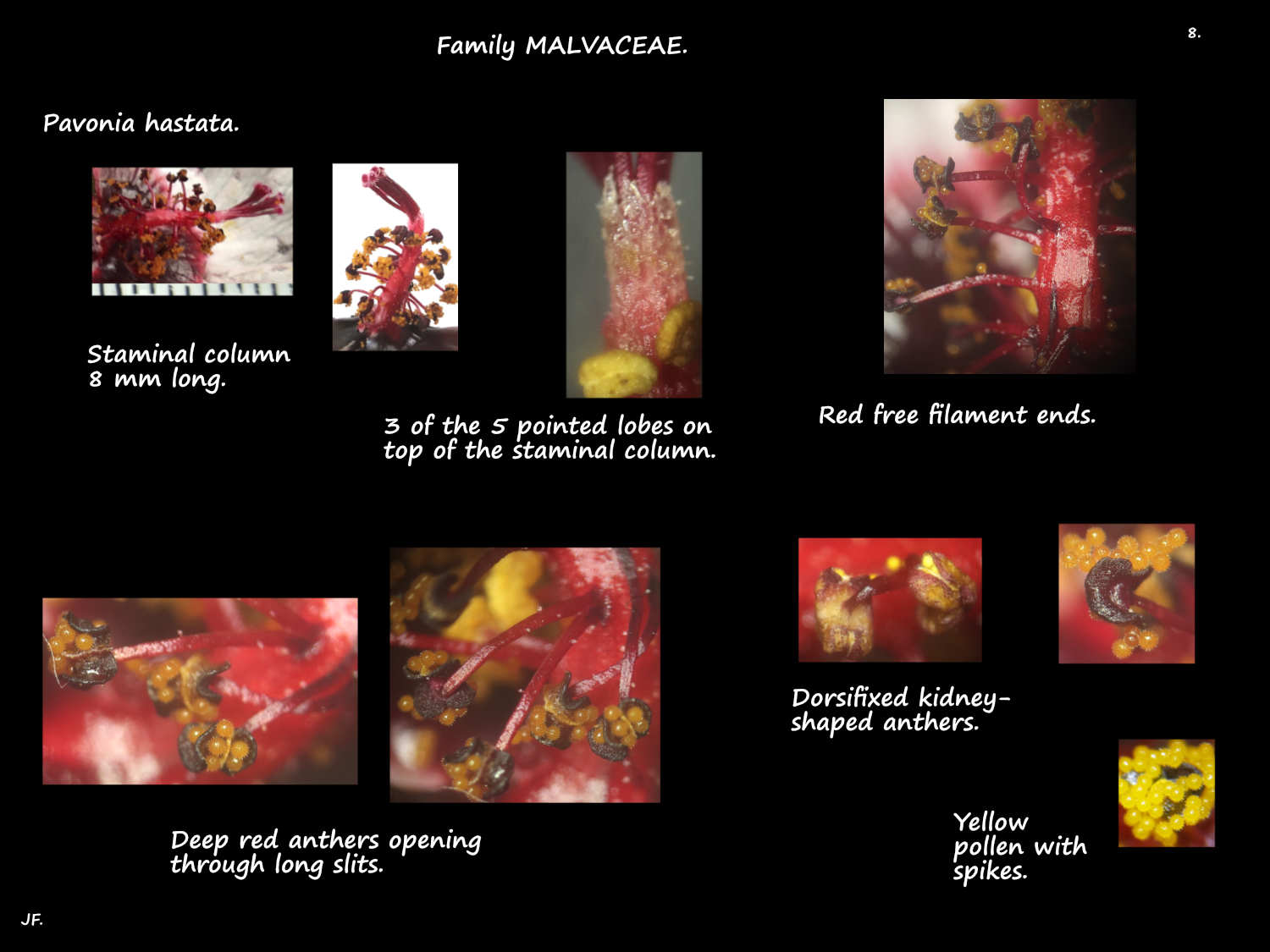
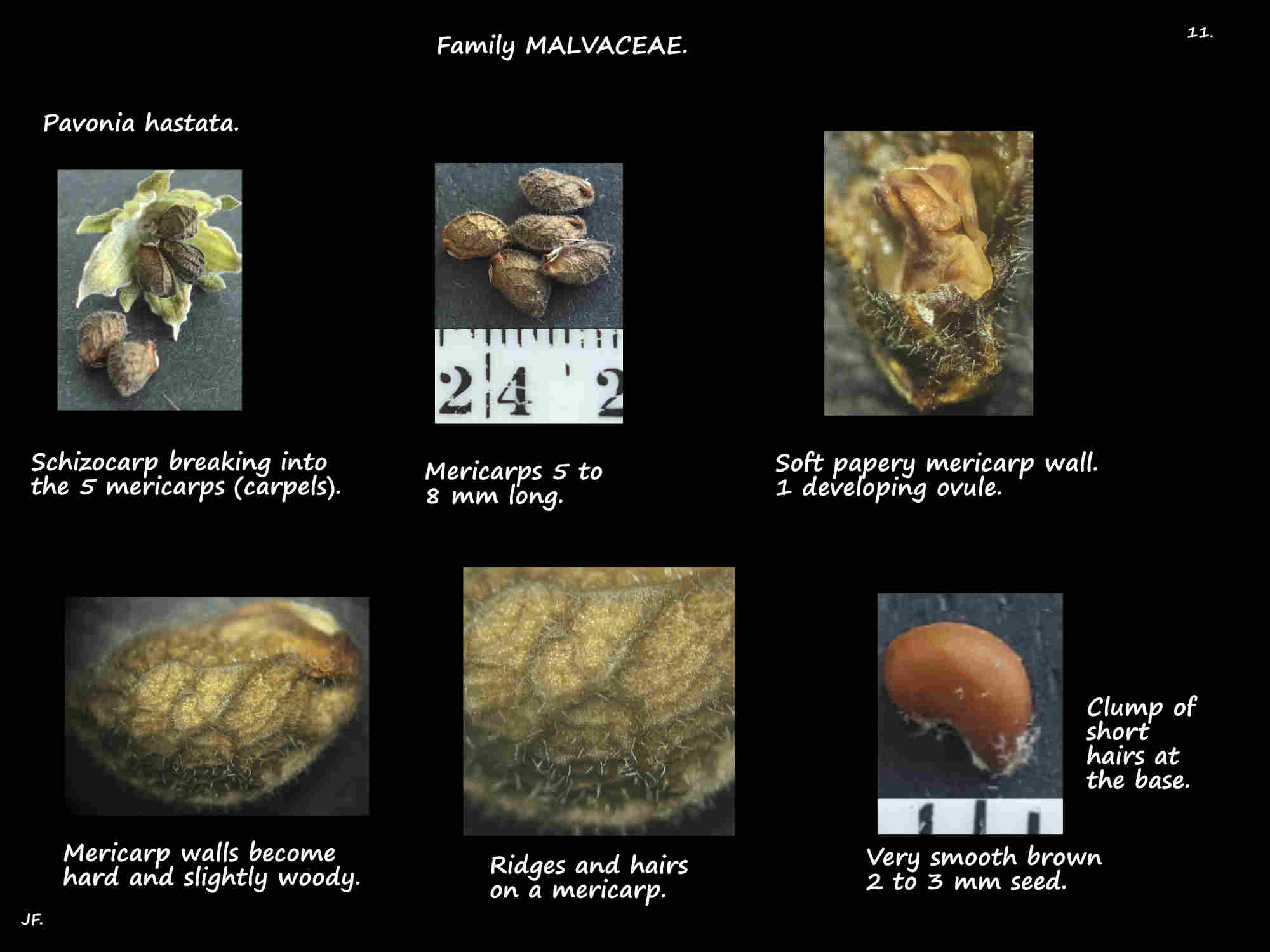
The red stamen filaments are fused into a staminal column for most of their length.
The column, shorter than the petals usually has 5 pointed lobes at the end.
The short free filament ends have red kidney-shaped anthers.
The dorsi-fixed anthers open through long slits.
The small superior ovary consists of 5 free carpels.
At the base they are attached to a small projection from the receptacle (top of the stem).
Each carpel has 1 ovule attached at the base.
There are 10 styles that are fused at the base and into the staminal column.
At the top the styles separate.
The small red stigmas have hairs that catch the pollen grains.
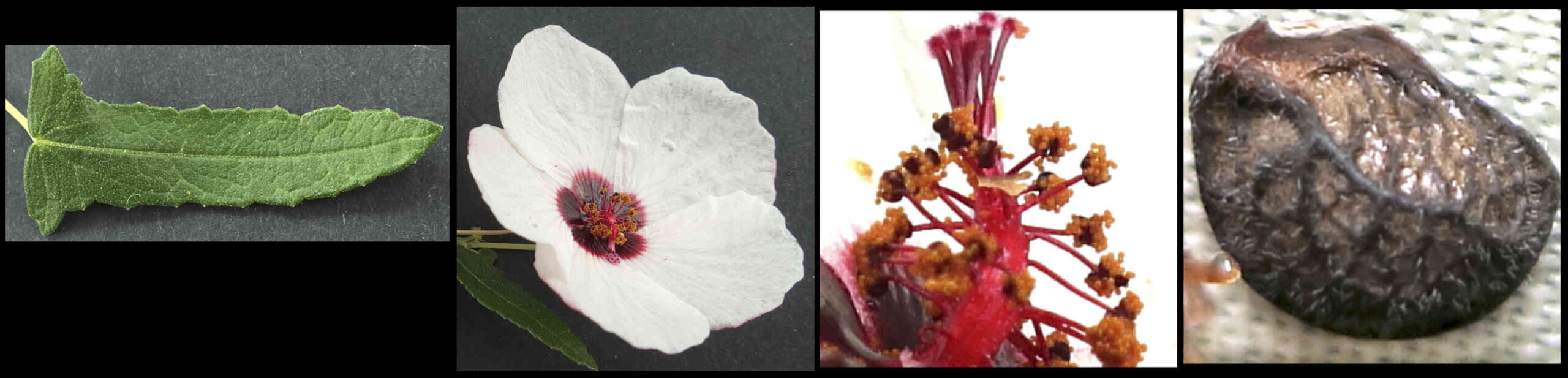
The dry fruit, under 1 cm long are schizocarps.
Each of the 5 sections (the carpels in the ovary) becomes a mericarp in the schizocarp.
Mericarps have a ridged surface, a thick suture on the inner side and usually some hairs.
Each has one kidney-shaped seed attached at the base.
Pale brown seeds, around 3 mm long have a smooth surface.
There are a few tiny white hairs at the base.
J.F.