Malvaviscus.
Family Malvaceae > Subfamily Malvoideae > Tribe Hibisceae.
Known as Turk’s cap or Wax mallow they are most common in Mexico and Central America but extend to the north and south.
It is an extremely variable genus making it difficult to work with.
Over the years authors have recognised one, a few or up to 50 species.
Currently Plants of the World Online (Kew) recognises 10 species.
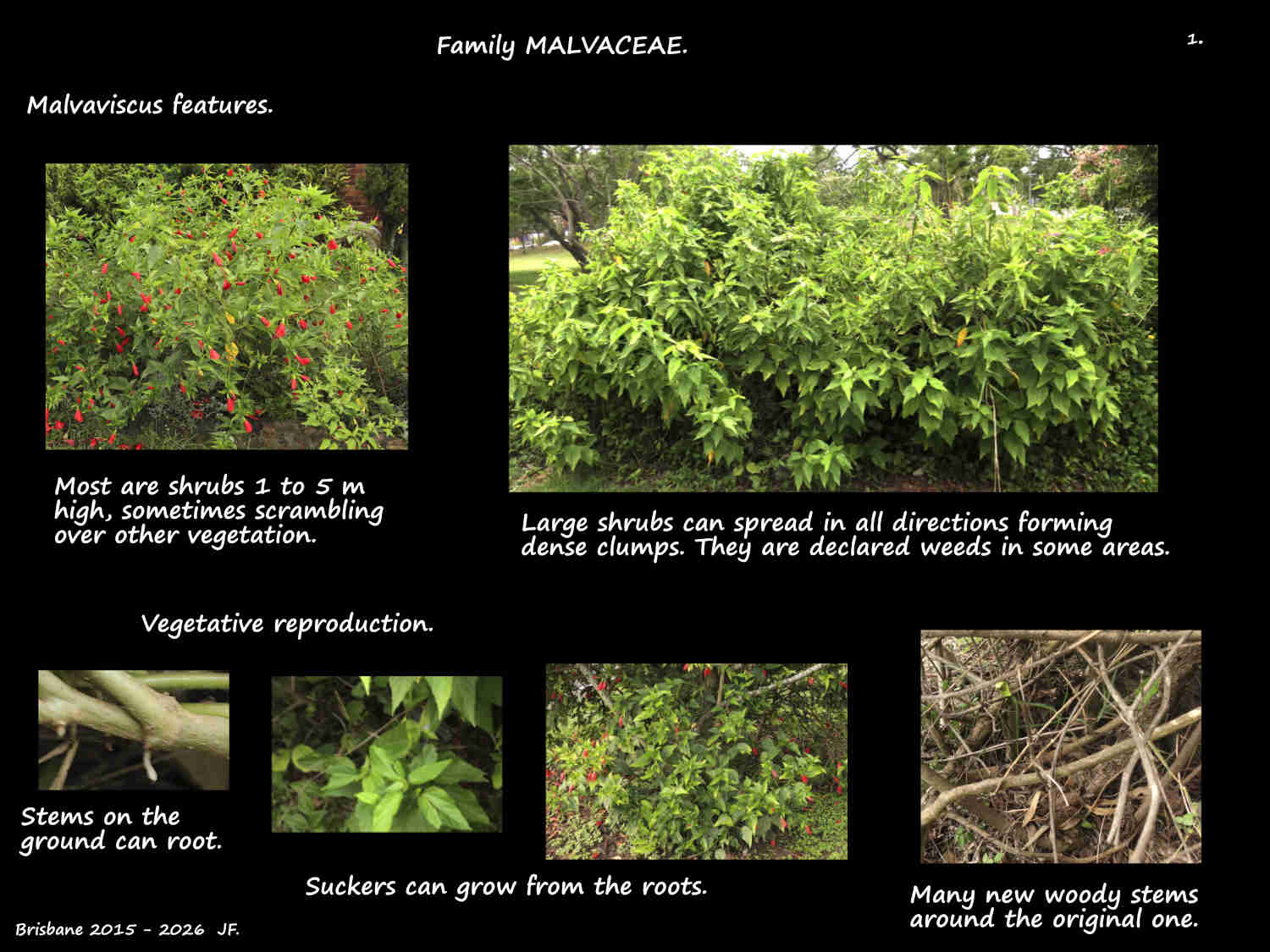
They are shrubs up to 4 or 5 m high or small trees to 10 m.
Some can be vine-like and scramble over other vegetation.
The stems may have no, a few or dense hairs.
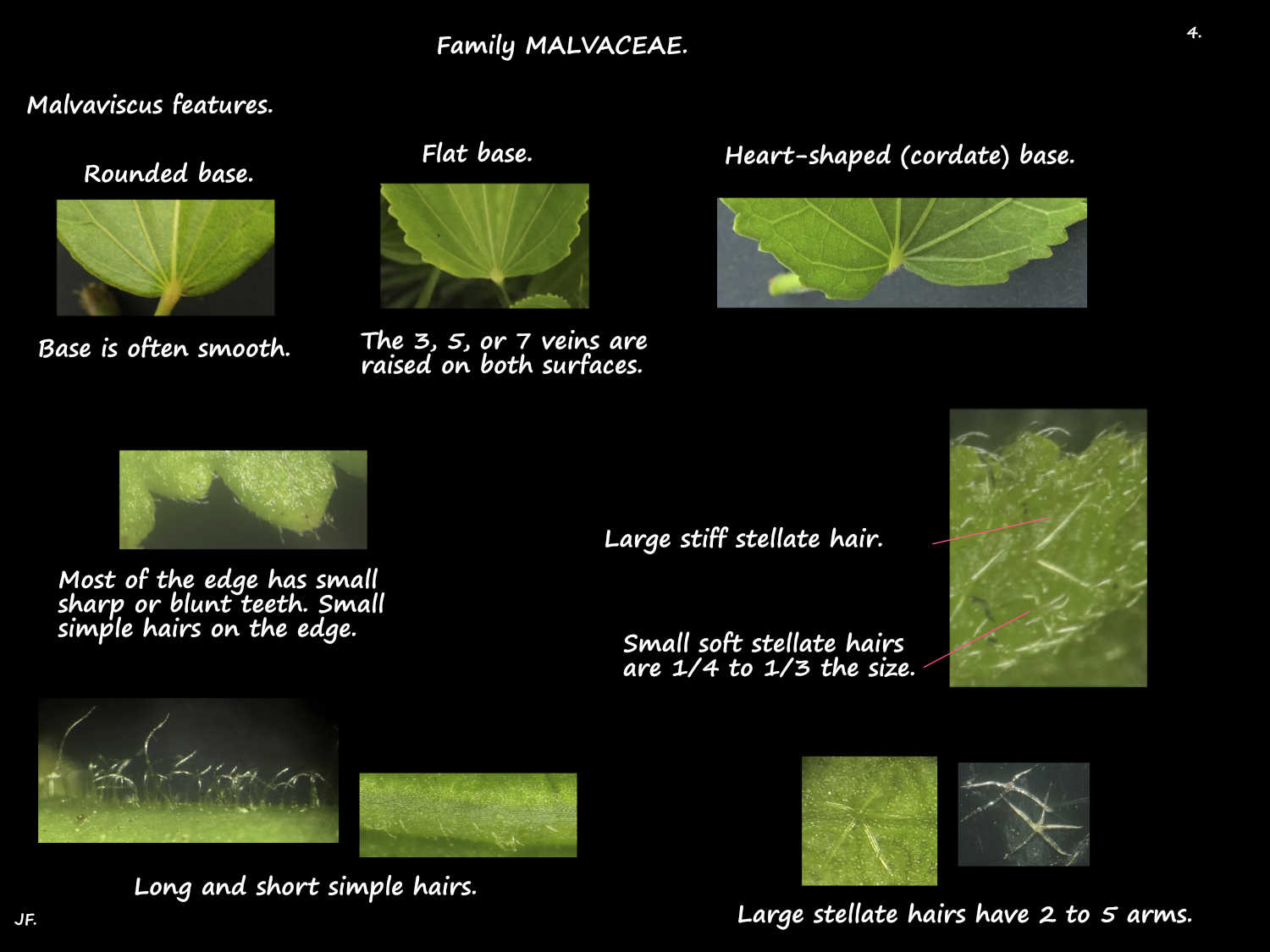
Hairs can be simple or stellate, soft or stiff, small to large and clear or coloured.
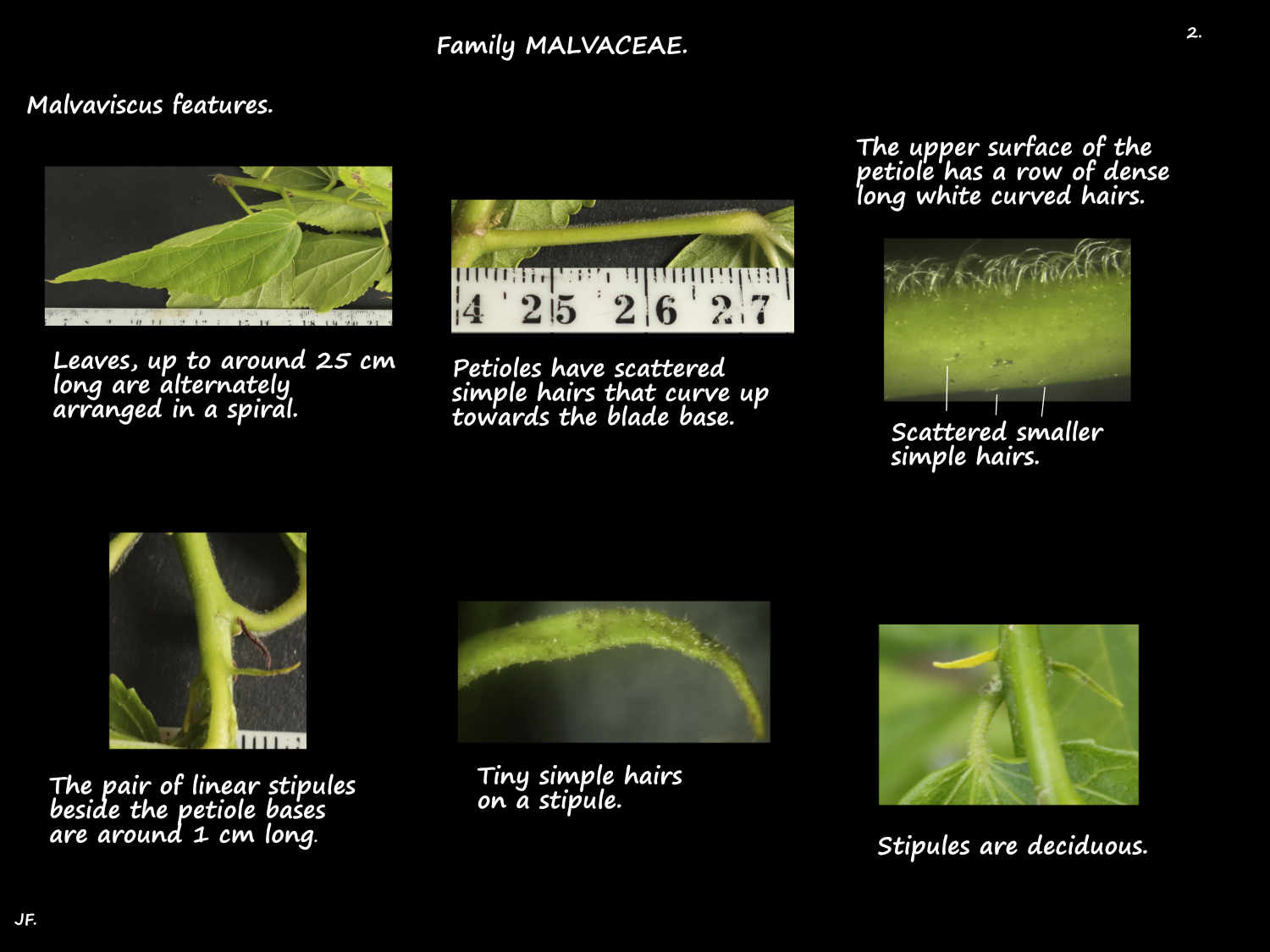
Alternately arranged leaves, in a spiral are on an often long petiole.
The pair of linear or spatula-shaped stipules at the petiole base fall early.
Petiole and stipules often have hairs.
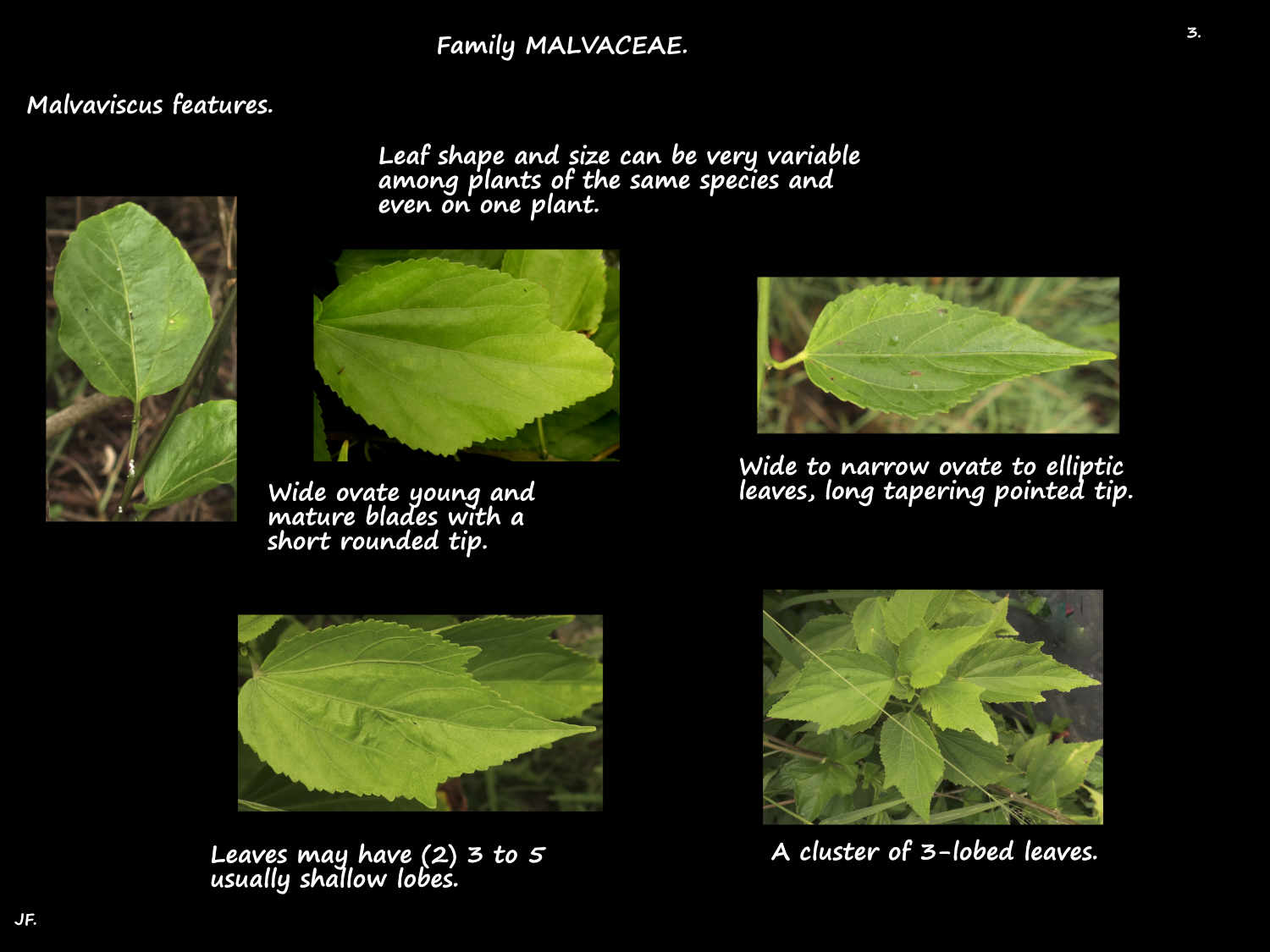
The simple leaf blades are very variable in shape, size and the type and amount of hairs.
Blades are mostly ovate to elliptic and may have 3 or 5 usually shallow lobes.
Tips are pointed or blunt and edges have small sharp or blunt teeth.
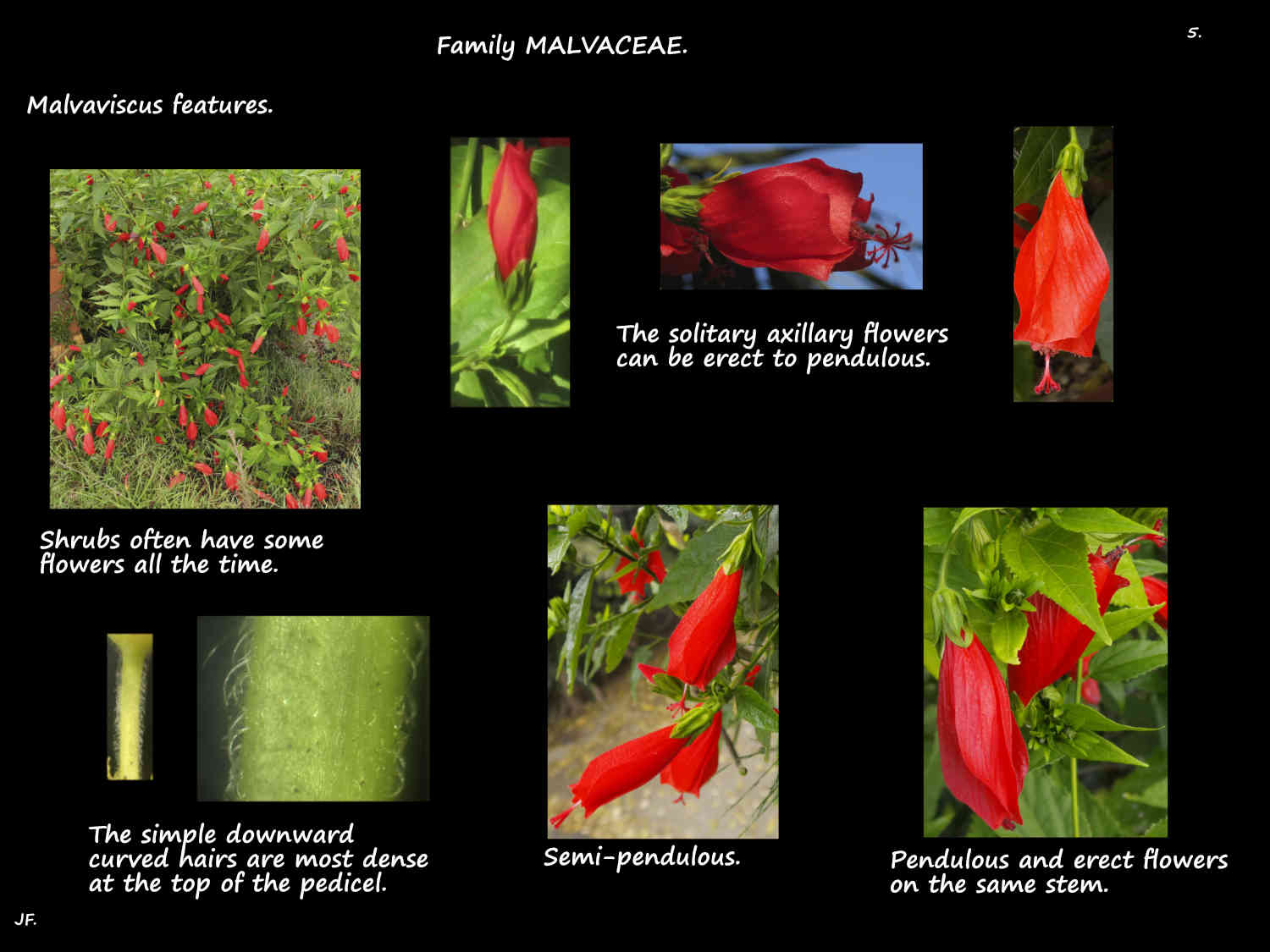
Inflorescences are most commonly single axillary flowers along the branches.
Occasionally they are a small terminal cluster.
Flowers are on a long or short peduncle/pedicel.
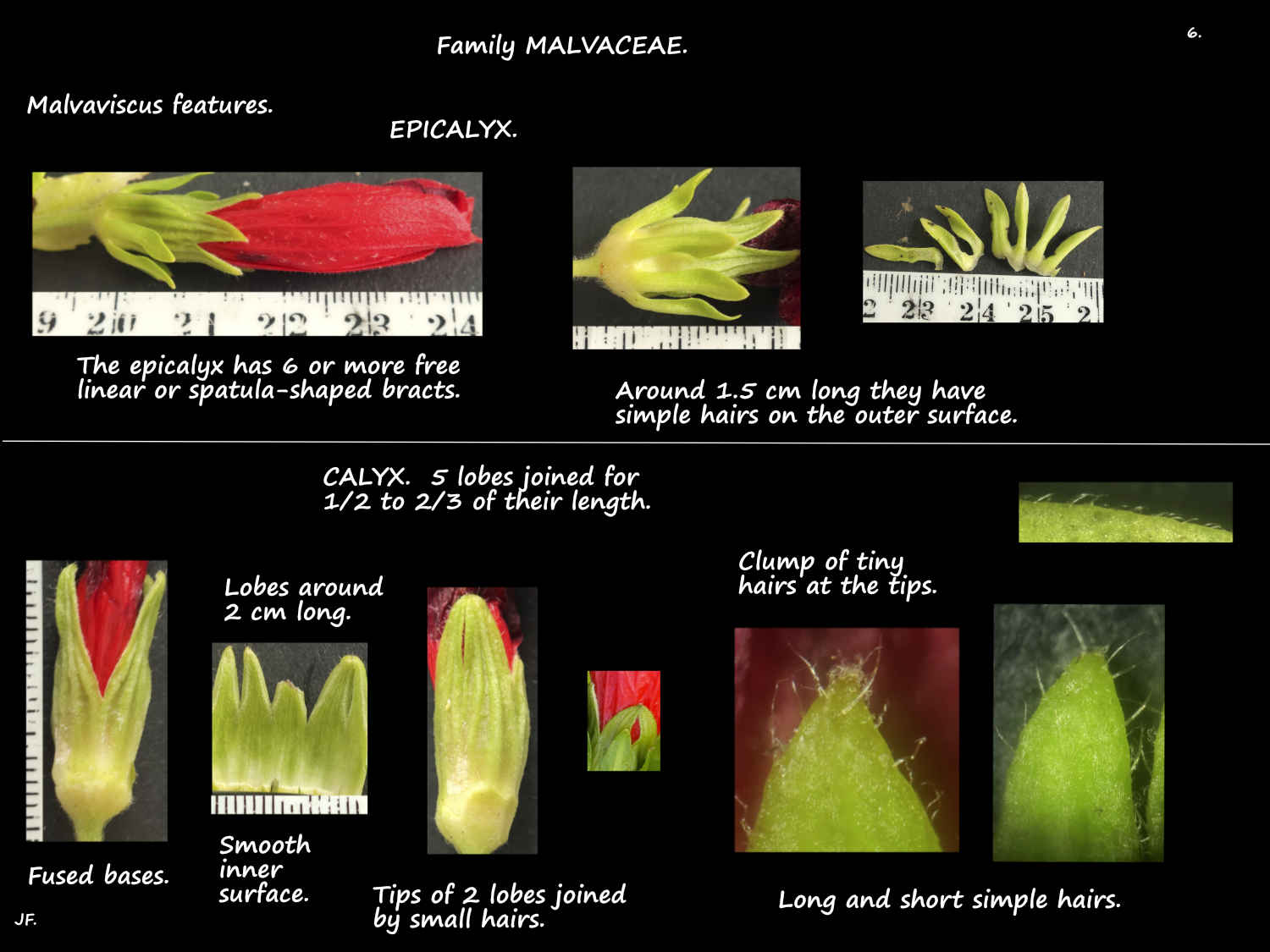
A whorl of around 8 (5 to 12) bracts forms the epicalyx or involucre.
Usually free from each other the bracts can be linear, lance or spatula shaped.
The 5 sepals in the bell-shaped or tubular calyx are joined for up to half (or more) of their length.
Lance-shaped or triangular sepal lobes can be free (5 lobes) or variously fused (2 to 4 lobes).
Pedicels, epicalyx and calyx have few to many hairs of various types.
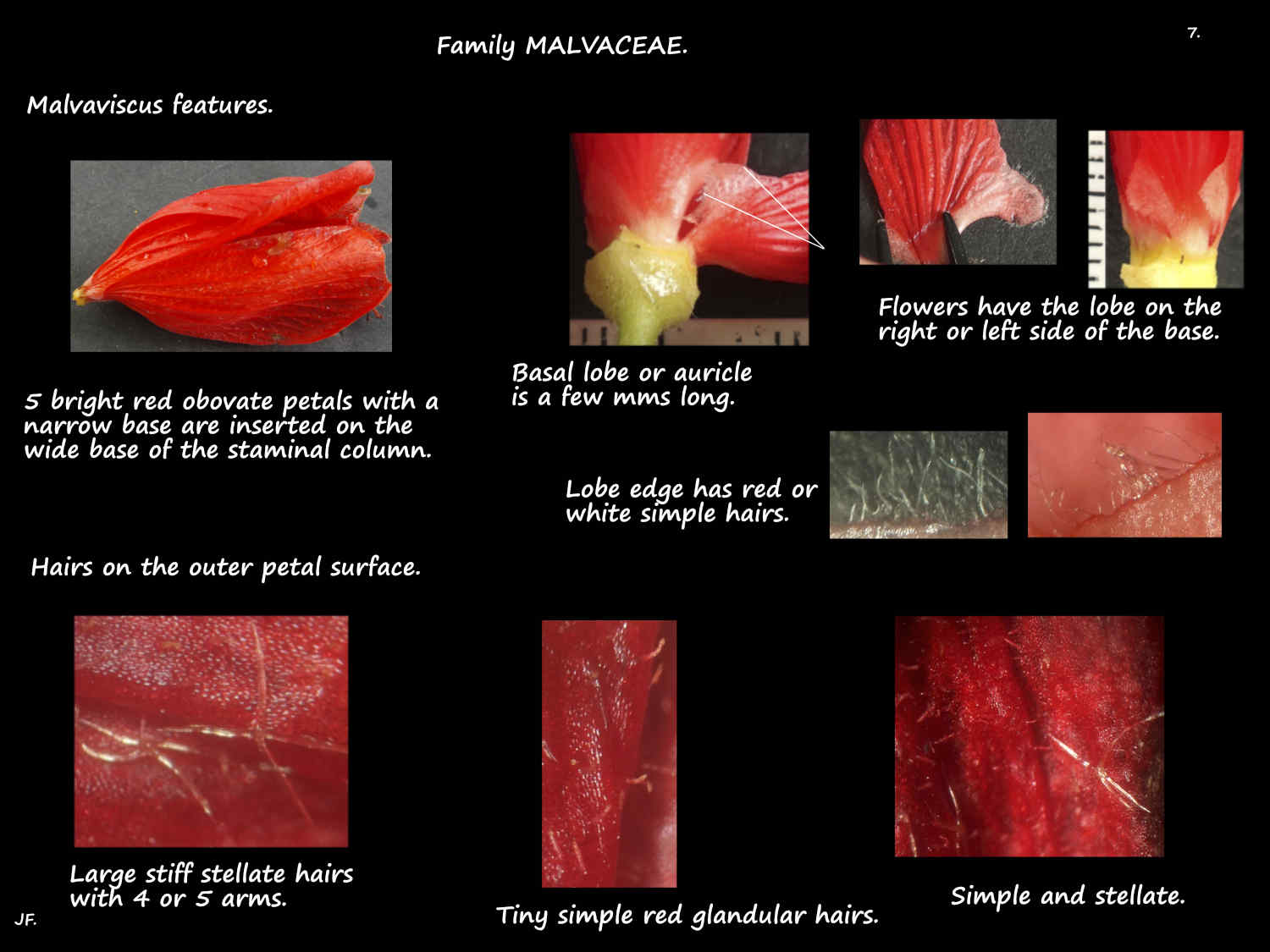
The corolla has 5 asymmetric, obovate, red, crimson or rarely white to pink petals.
The petals are folded up lengthwise like an umbrella forming a tube.
Each petal has a narrow base with a small lobe or auricle on the right or left side.
Lobes, on the same side in any one flower can be on the opposite side in others.
Lobe edges have simple hairs.
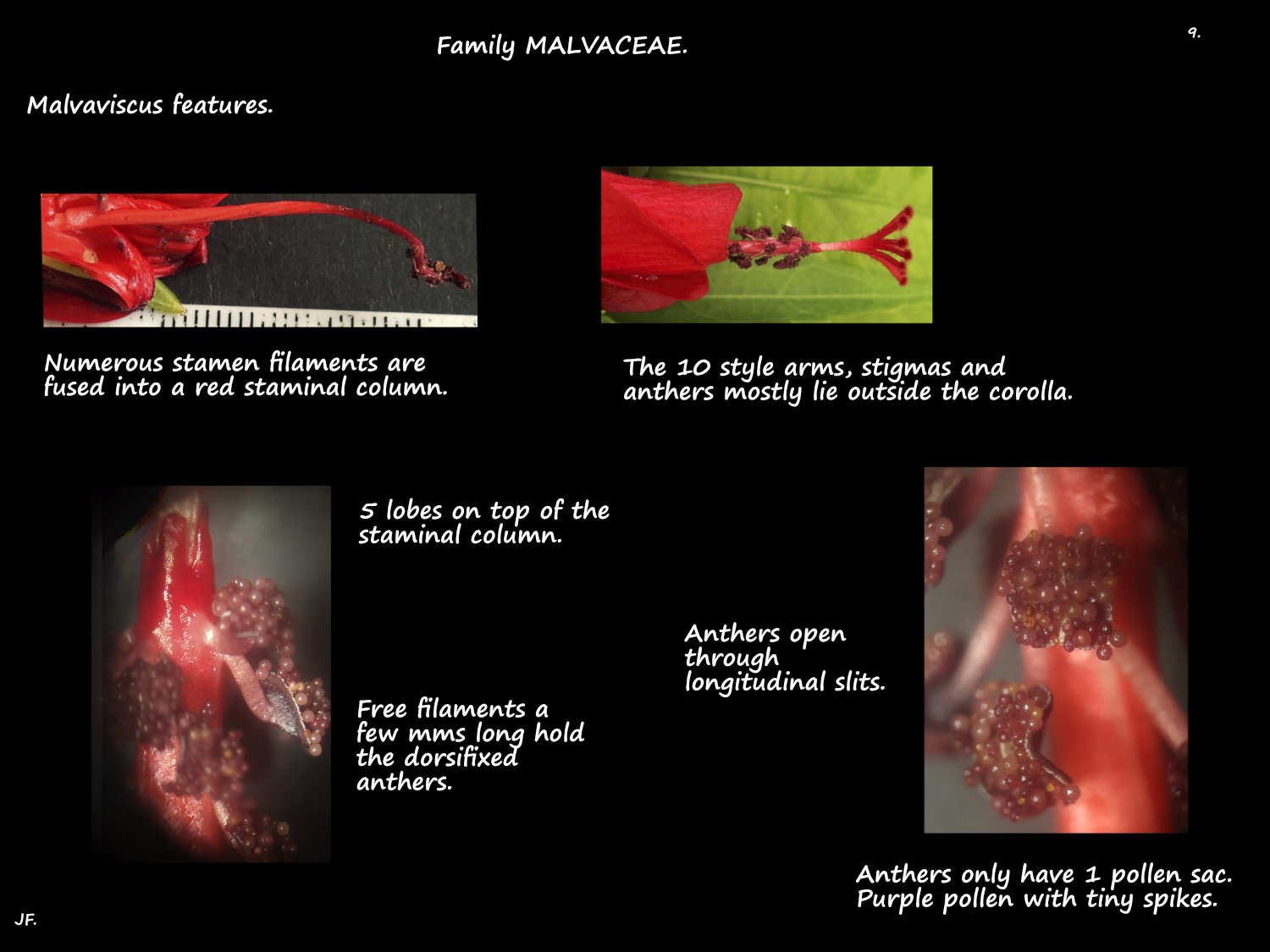
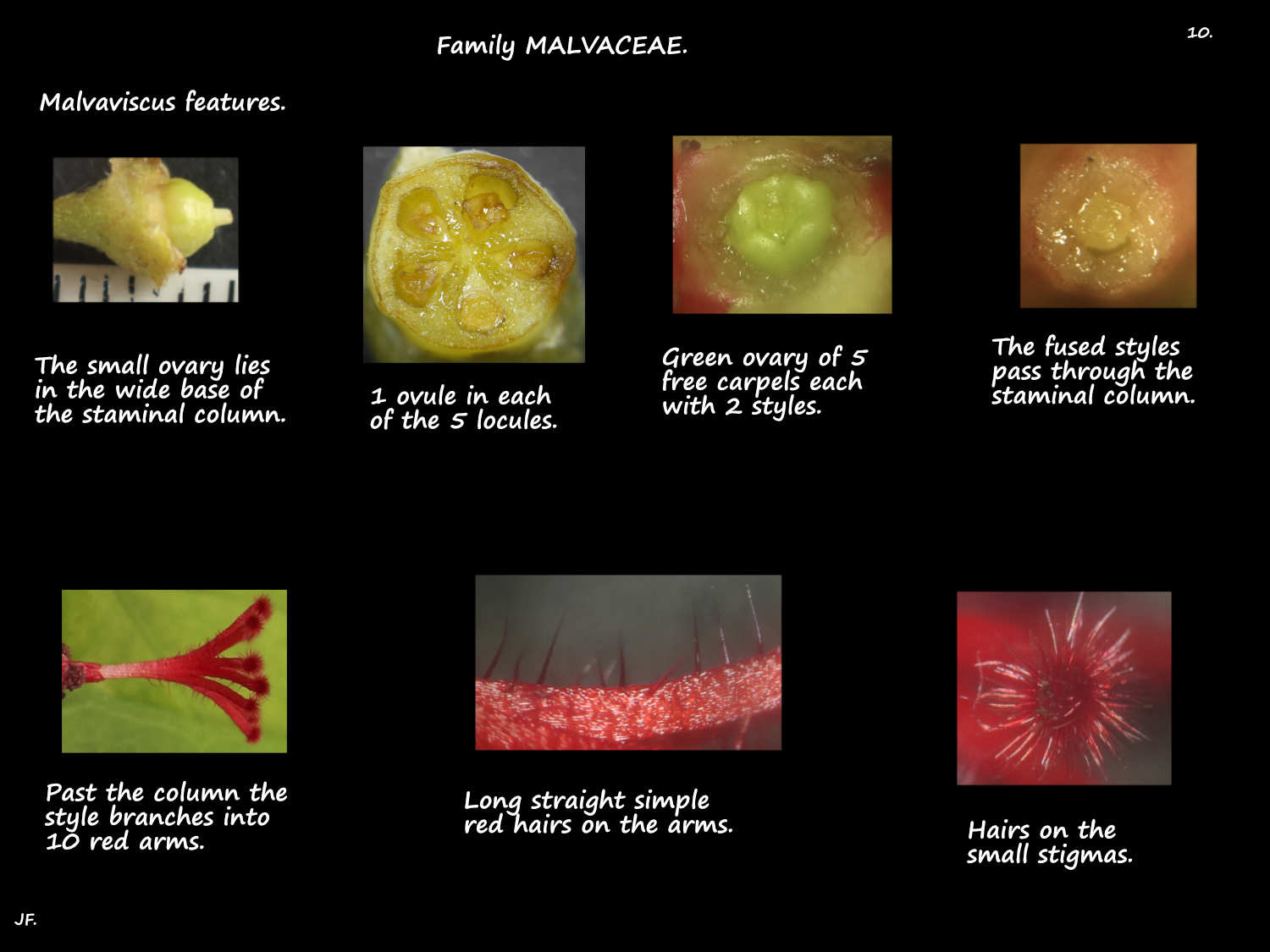
Filaments of the numerous stamens fuse into a staminal column with a slightly wider base around the ovary.
The tube has 5 small lobes at the top and the petals and nectaries alternate on the base.
Anthers, on very short free filament ends are in a cluster near the top.
Dorsifixed anthers open through a long slit releasing pollen with tiny spikes.
The superior ovary, of 5 free carpels has 5 locules each with 1 ovule.
The 2 styles from each carpel all quickly fuse and the single style enters the staminal column.
At the top of the column the style branches into the original 10 each with a small hairy stigma.
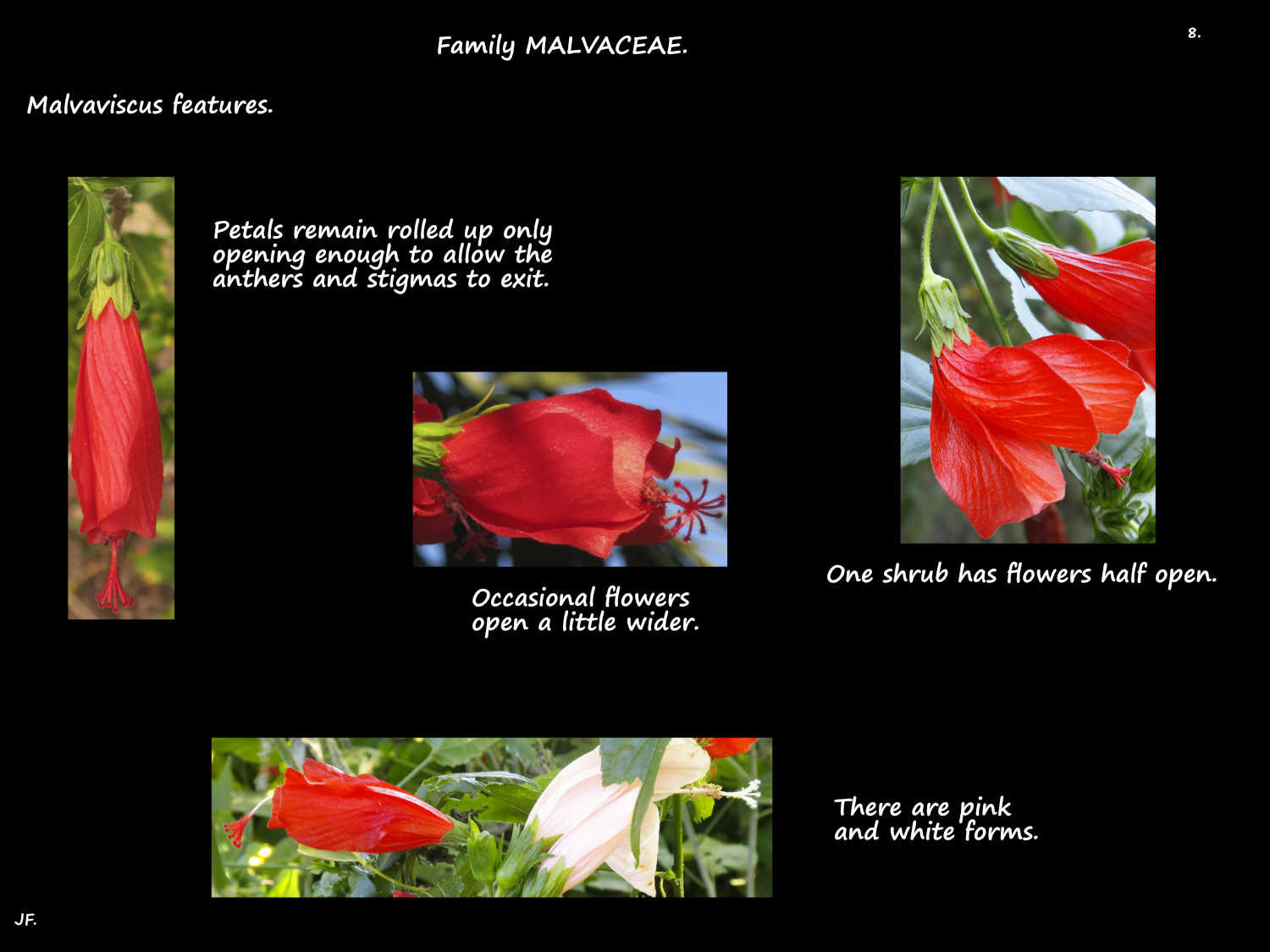
Anthers and the styles and stigmas usually extend past the petals.
Typically the flowers only open enough to let them exit.
Fruit are a fleshy berry-like, then dry schizocarp.
The usually erect fruit mature from green to orange then red or rarely white.
When dried out the 5 sections (mericarps) open to release their single seed.
J.F.