Originally Croton variegatus it is still commonly known as just ‘Croton’.#
Codiaeums are native to tropical areas including Australia, S. E. Asia and some Pacific Islands.
They are widely cultivated as outdoor or indoor plants.
There are over 200 synonyms for C. variegatum and over 300 named cultivars.
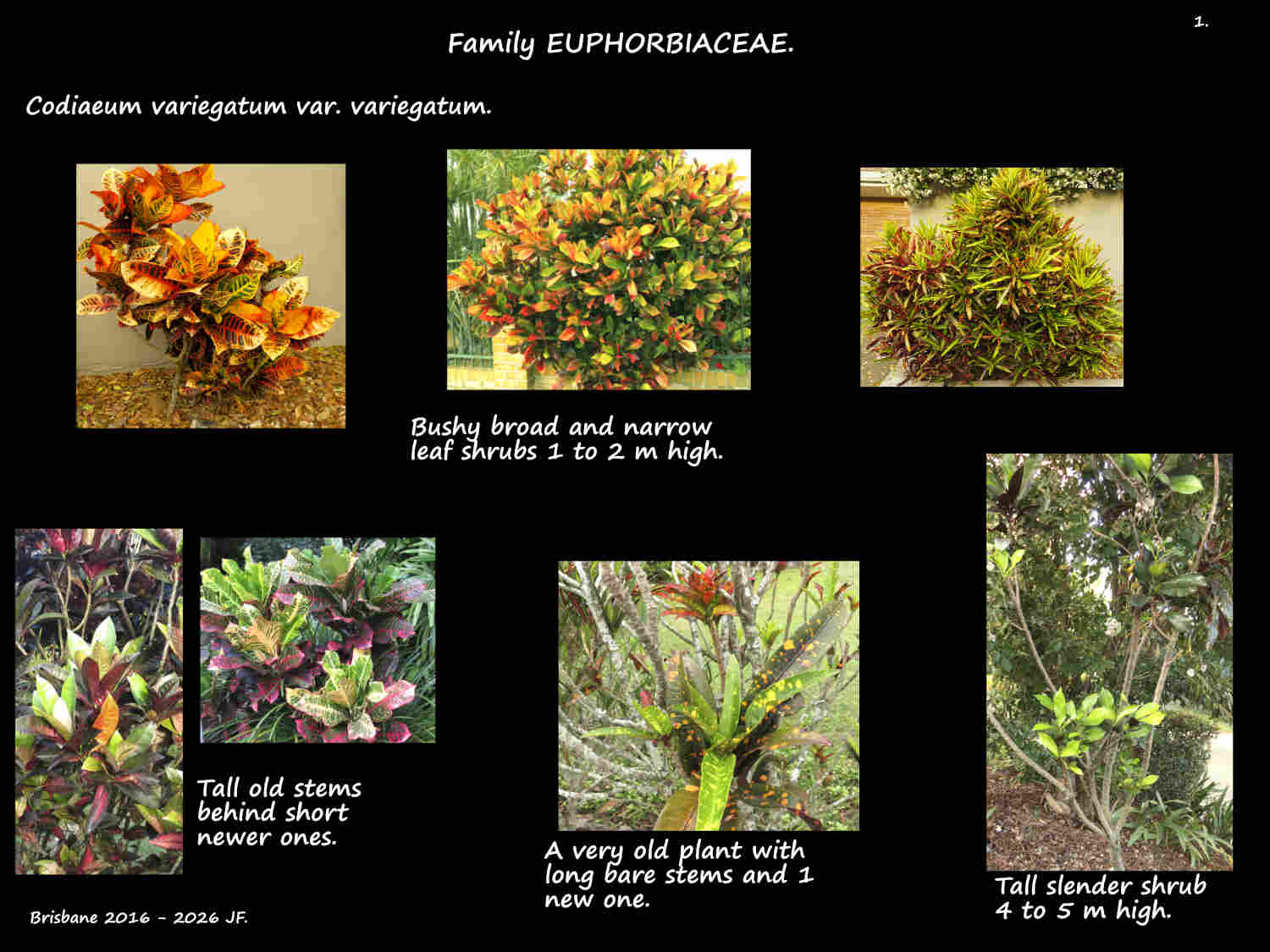
Plants seen in gardens are C. variegatum var. variegatum.
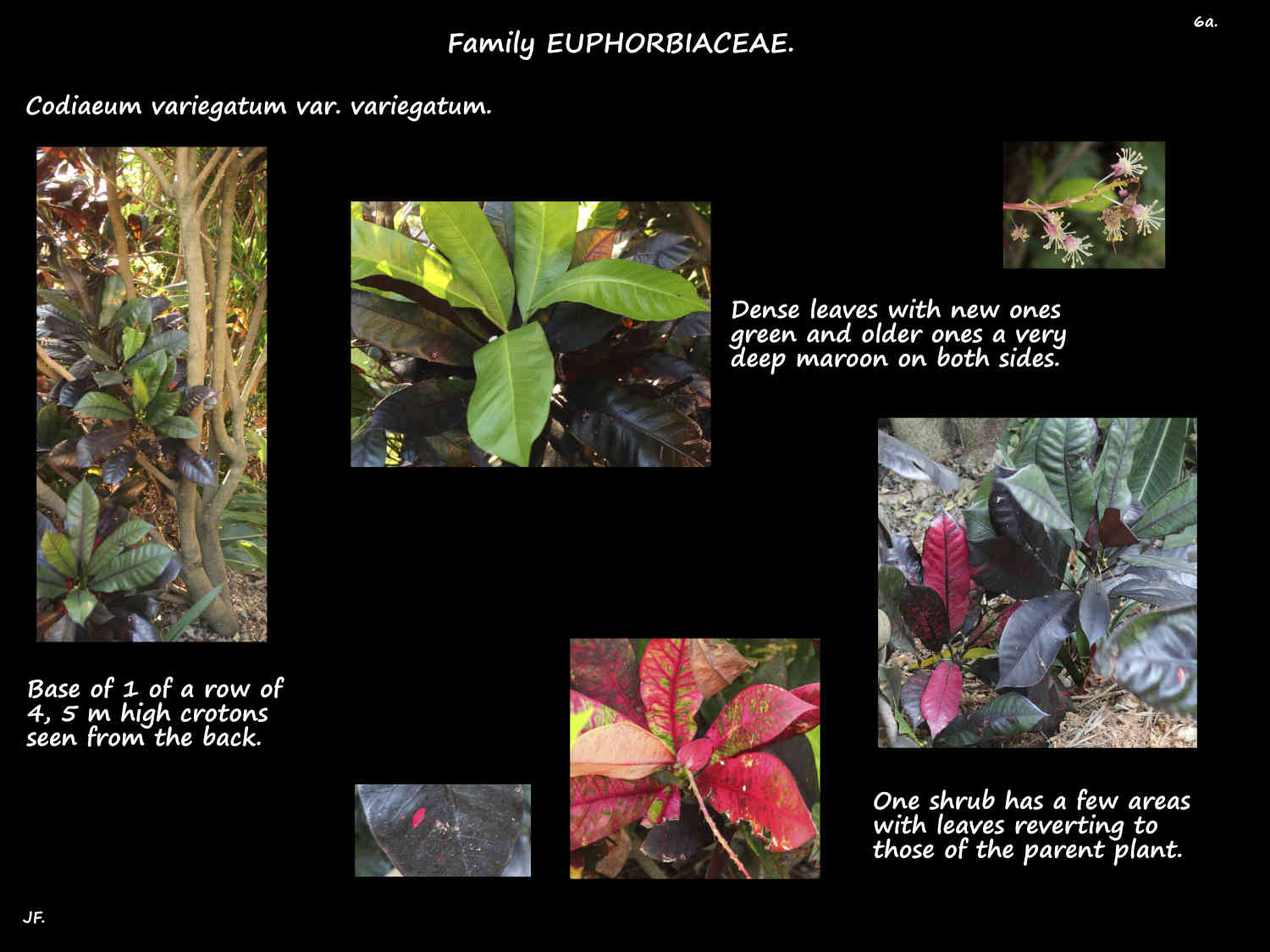
Up to around 5 m high they are usually an evergreen shrub but can be a small tree.
They have a few woody trunks or one that branches very low down.
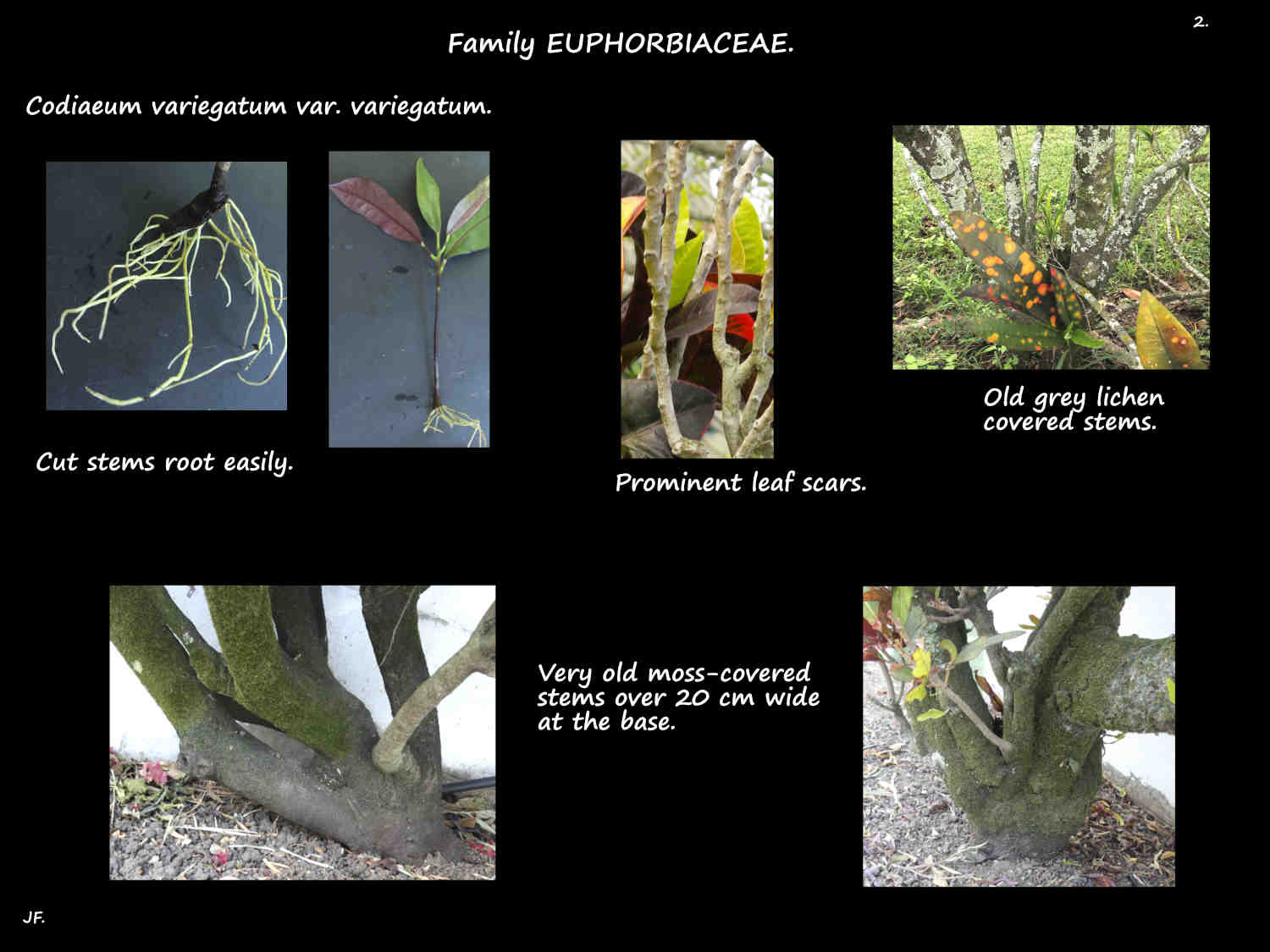
They are much branched making them bushy but older palnts may have bare stems.
Stems have marked leaf scars, no hairs and exude a white latex when cut.
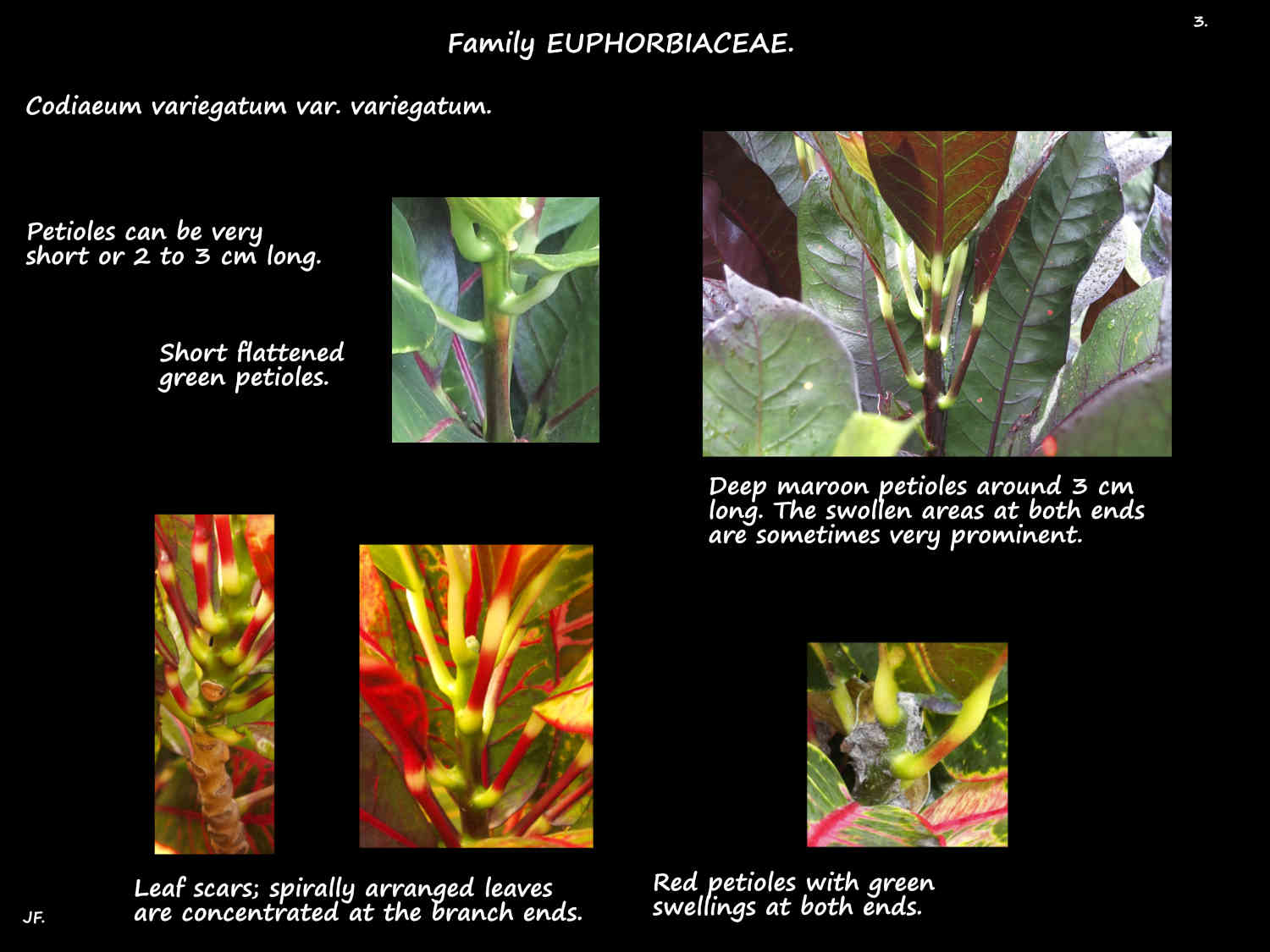
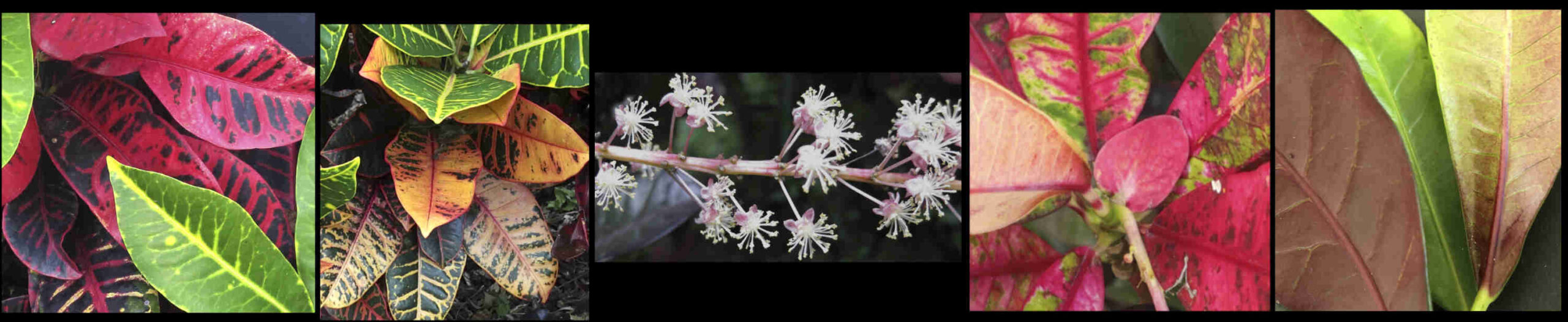
The tough, shiny simple leaves are alternately arranged.
They are from a few cms up to 25 or 30 cm long and 8 cm wide.
Petioles are a few mms up to 4 or 5 cm long.
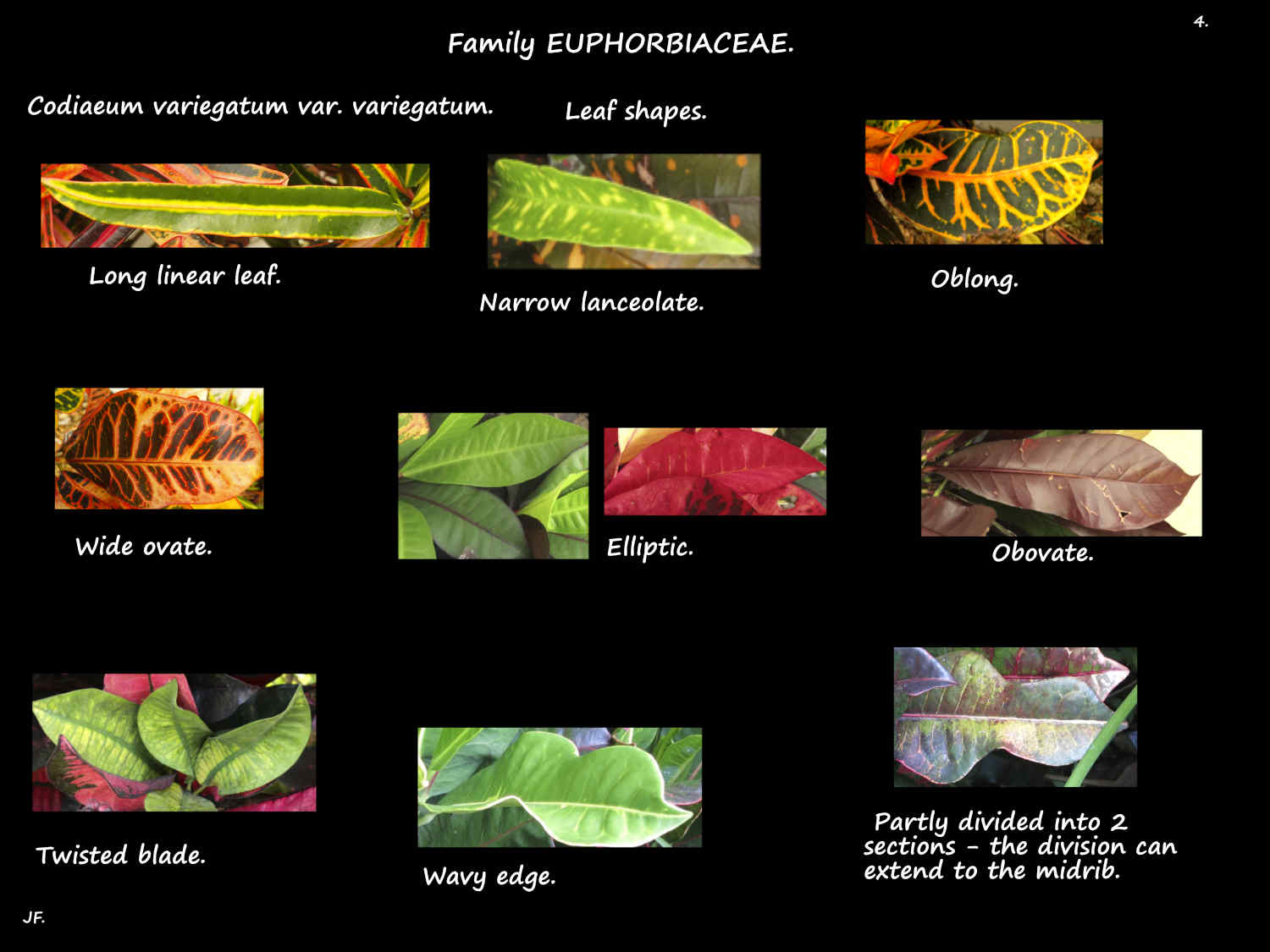
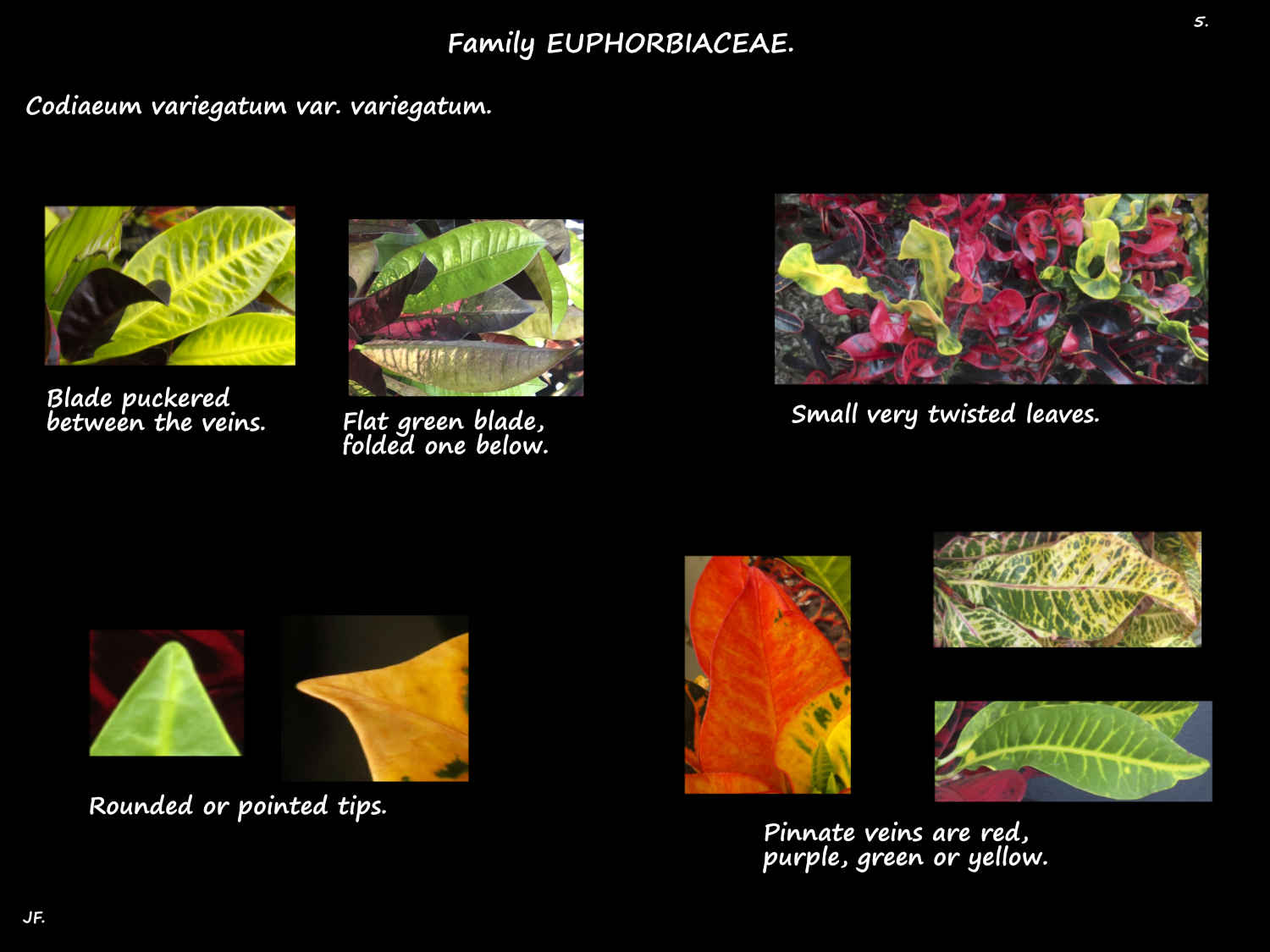
Blades can be almost any shape from linear to ovate, elliptic or oblong.
Others are obovate, lance or wedge-shaped, lobed, twisted or with a wavy edge.
Tips can be blunt or pointed and there are up to 14 pairs of pinnate veins.
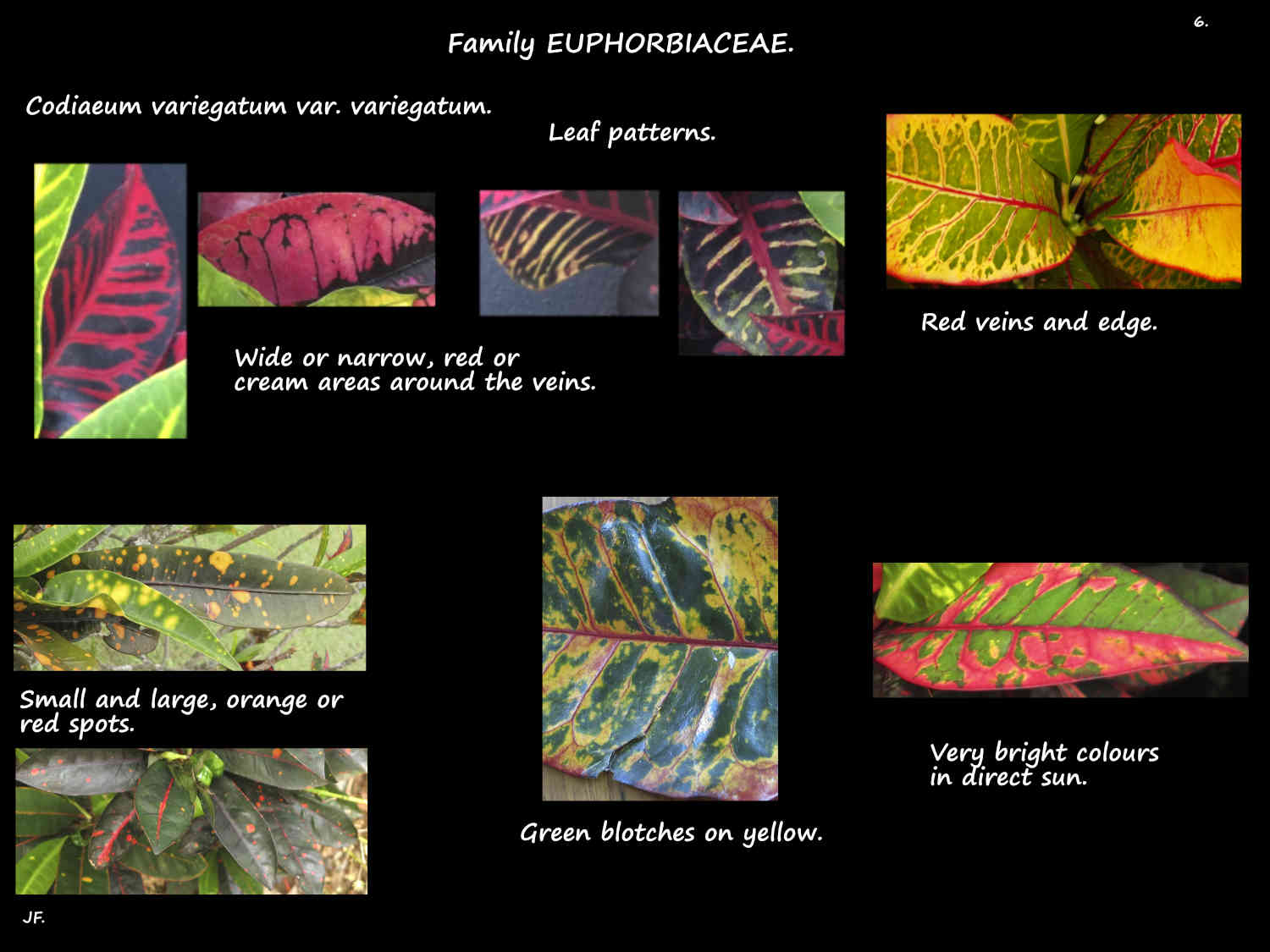
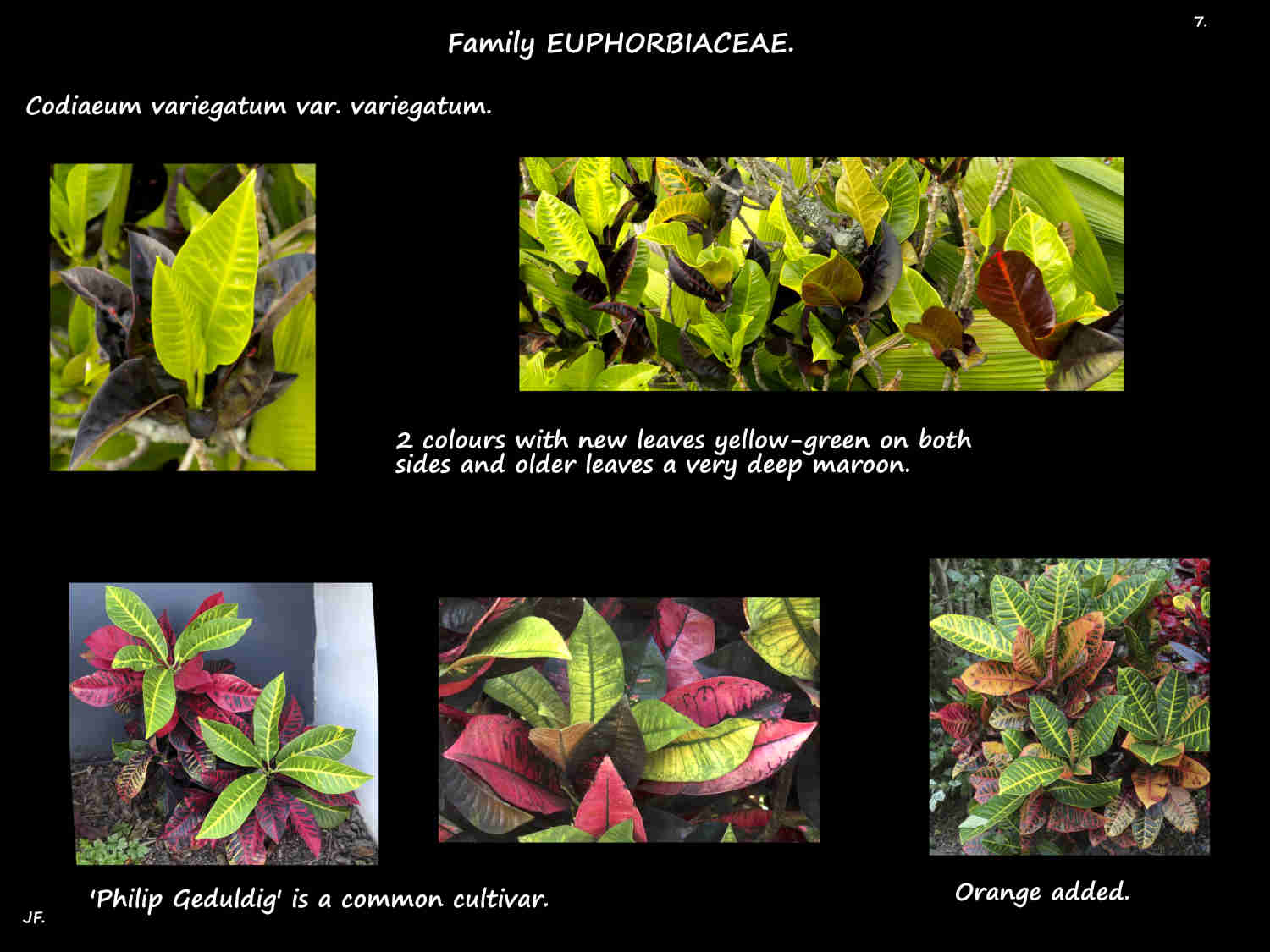
Some leaves are a single colour such as green or deep purple on one or both surfaces.
Most are variously patterned with dots, spots, lines, blotches or stripes.
The veins are often yellow or red.
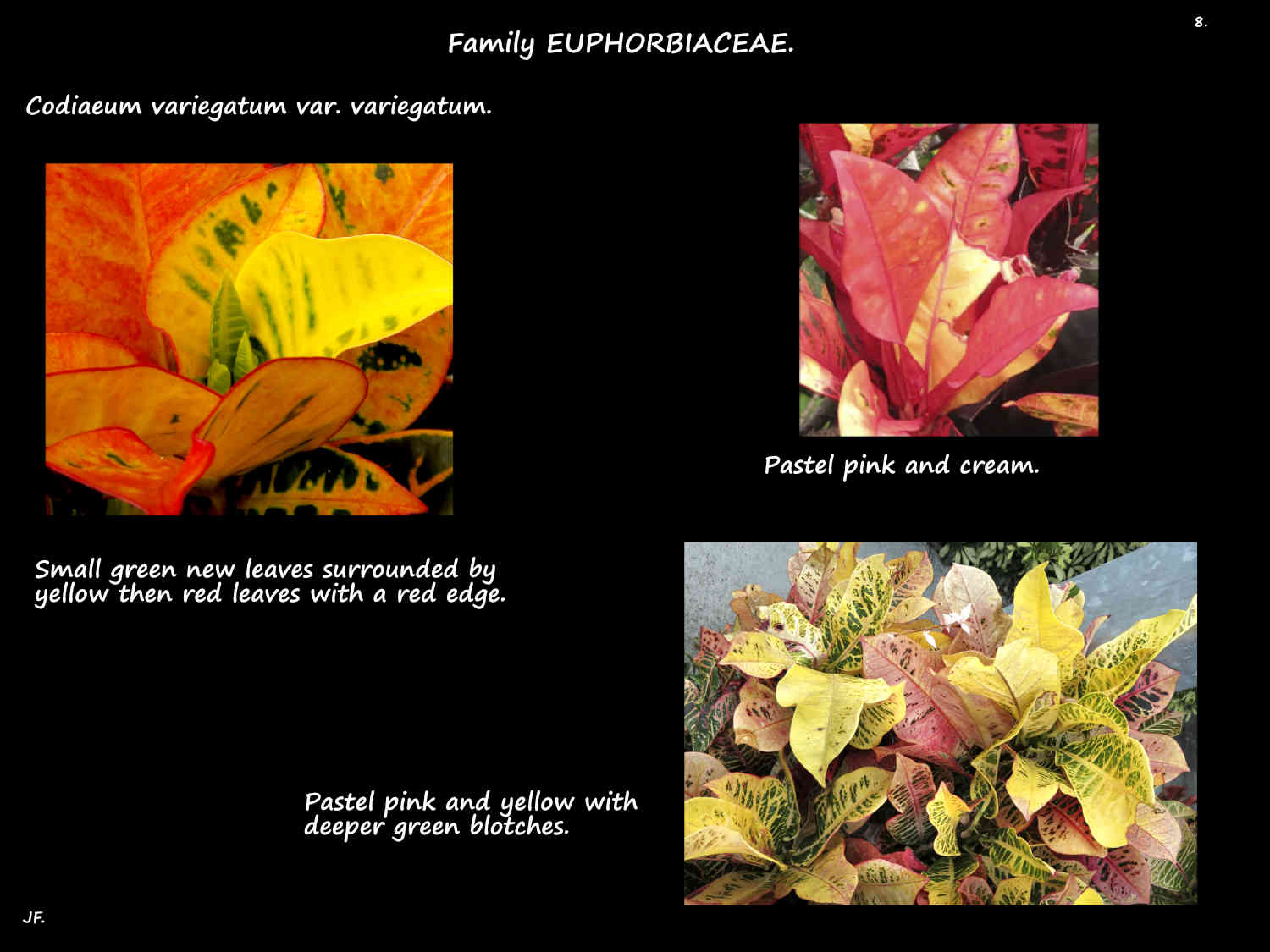
Colours include red, yellow, green, orange, pink, purple or burgundy.
The bright colours are heightened in sunlight and deepen with age.
Patterns and colours vary even on the same plant.
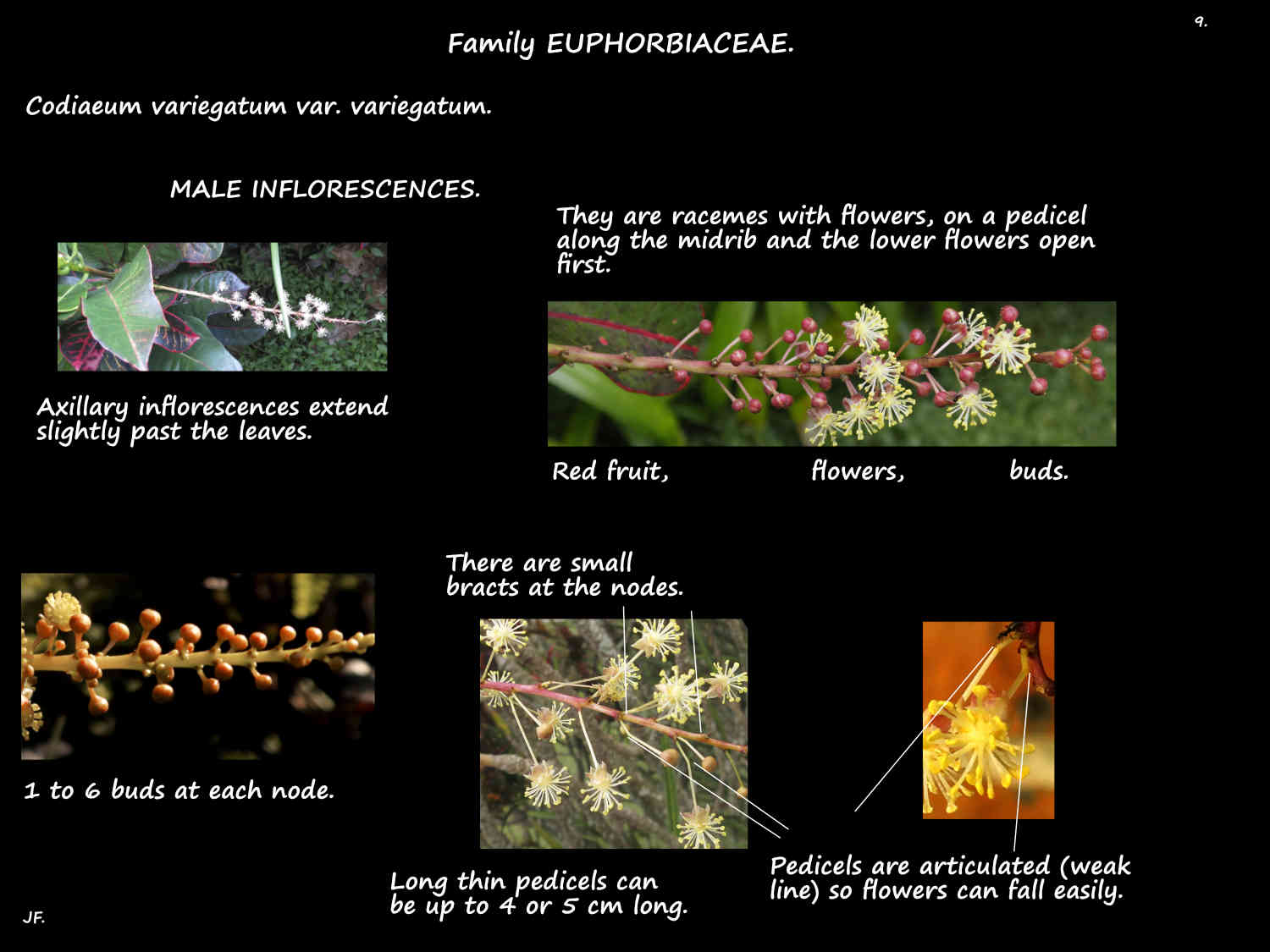
Axillary inflorescences, near the branch ends arch out between the leaves.
They are racemes up to 30 cm long with flowers opening from the base first.
Racemes have either male or female flowers (monoecious).
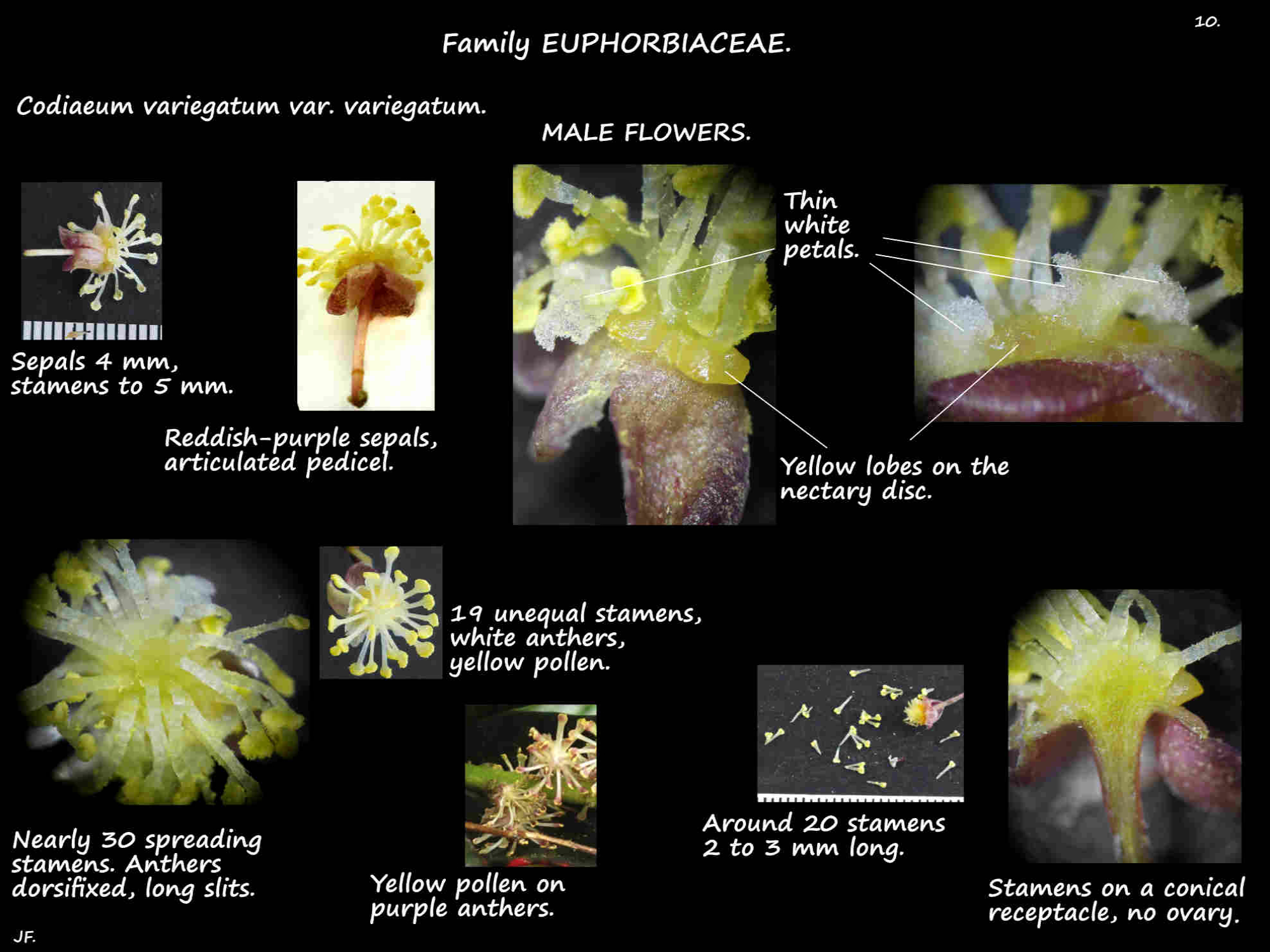
Male or staminate flowers.
The up to 60 flowers in each inflorescence are on a pedicel up to 4 or 5 cm long.
The 5 ovate to lance-shaped sepals are around 2 mm long.
The 5 white petals are around 1 mm long.
There are15 to 30 free stamens, a nectary disc with 5 lobes and no ovary.
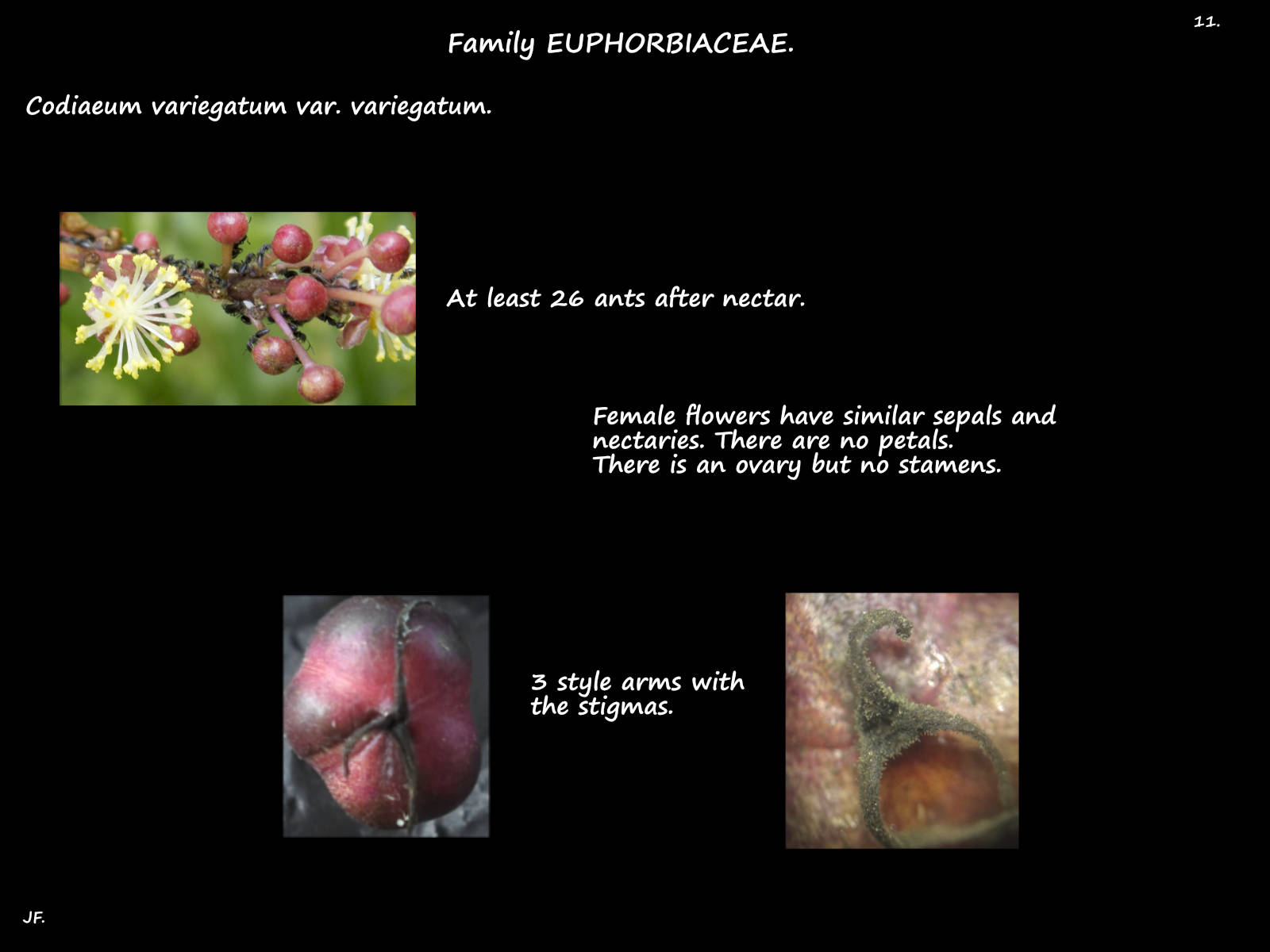
Female or pistillate flowers.
These flowers are on a thicker pedicel only a few mms long.
The 5 ovate sepals are around 1 mm long and there are no petals.
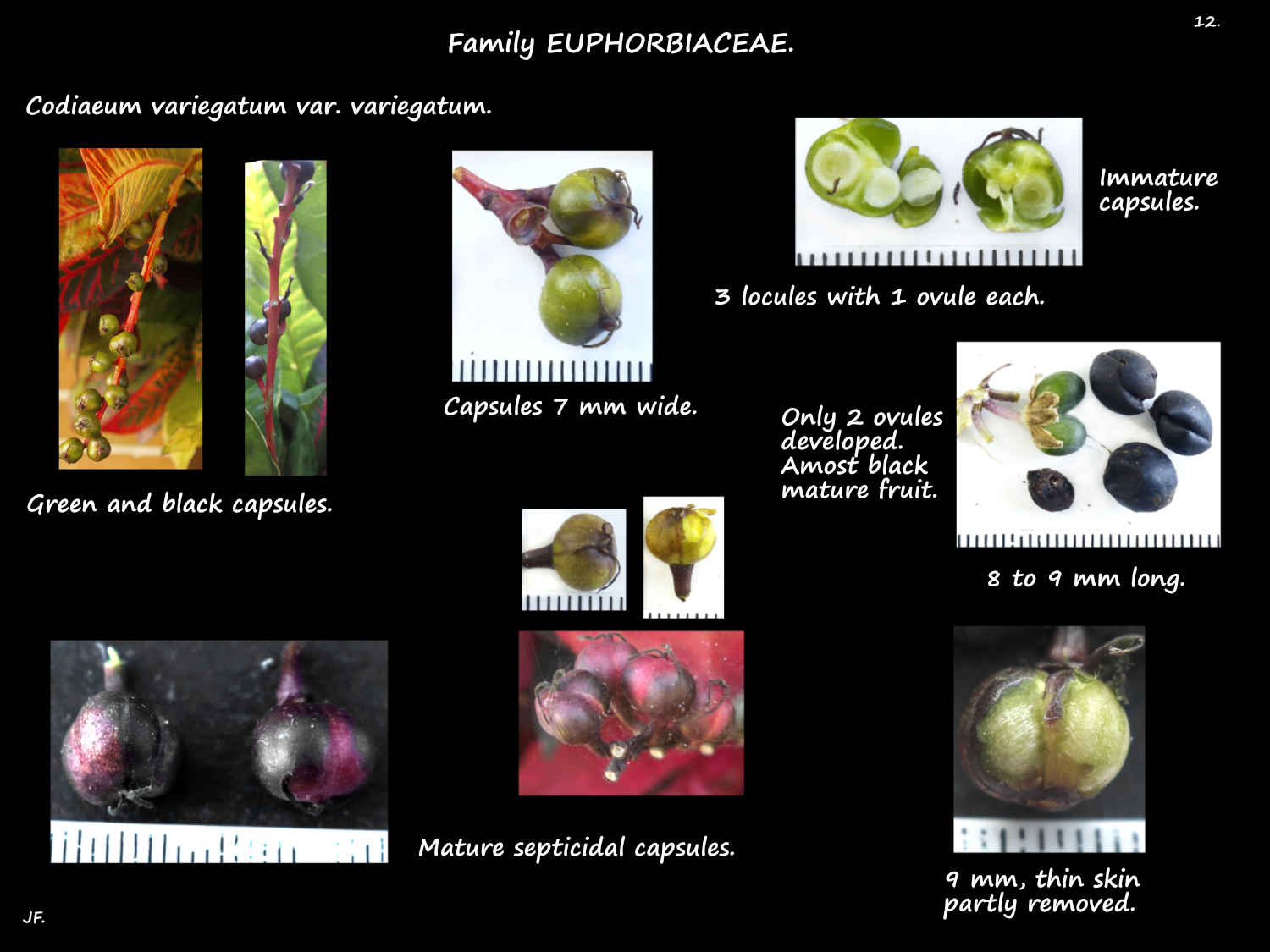
There is a yellow nectiferous disc and an ovary with 3 locules each with 1 ovule.
The shortly fused styles have spherical or occasionally lobed stigmas.
The septicidal capsules open explosively throwing the 3 seeds out.
The around 5 mm seeds are smooth.
# The Croton genus is in Family Euphorbiaceae > Subfamily Crotonoideae > Tribe Crotoneae.
The genus has over 1,100 species divided into 40 sections including Croton and Crotonopsis.
They are widespread in the tropics including Madagascar with 150 species.
J.F.