This is the type species of the genus so descriptions of them are very similar.
Only occasionally seen here, plants are probably all cultivars that vary in size and features.
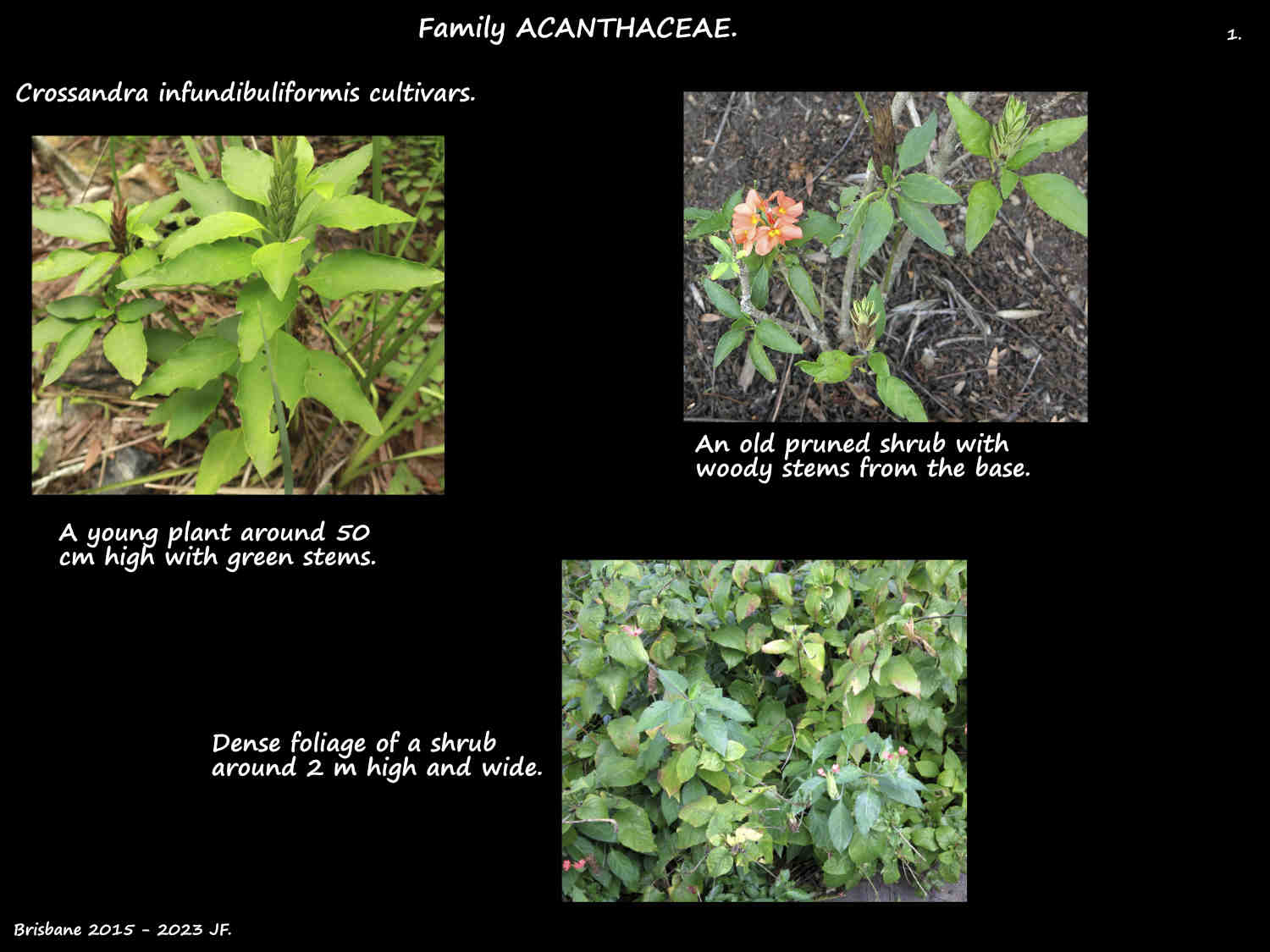
They are shrubs from 0.5 m up to 1 or 2 m high and wide.
Young stems have fine soft hairs.
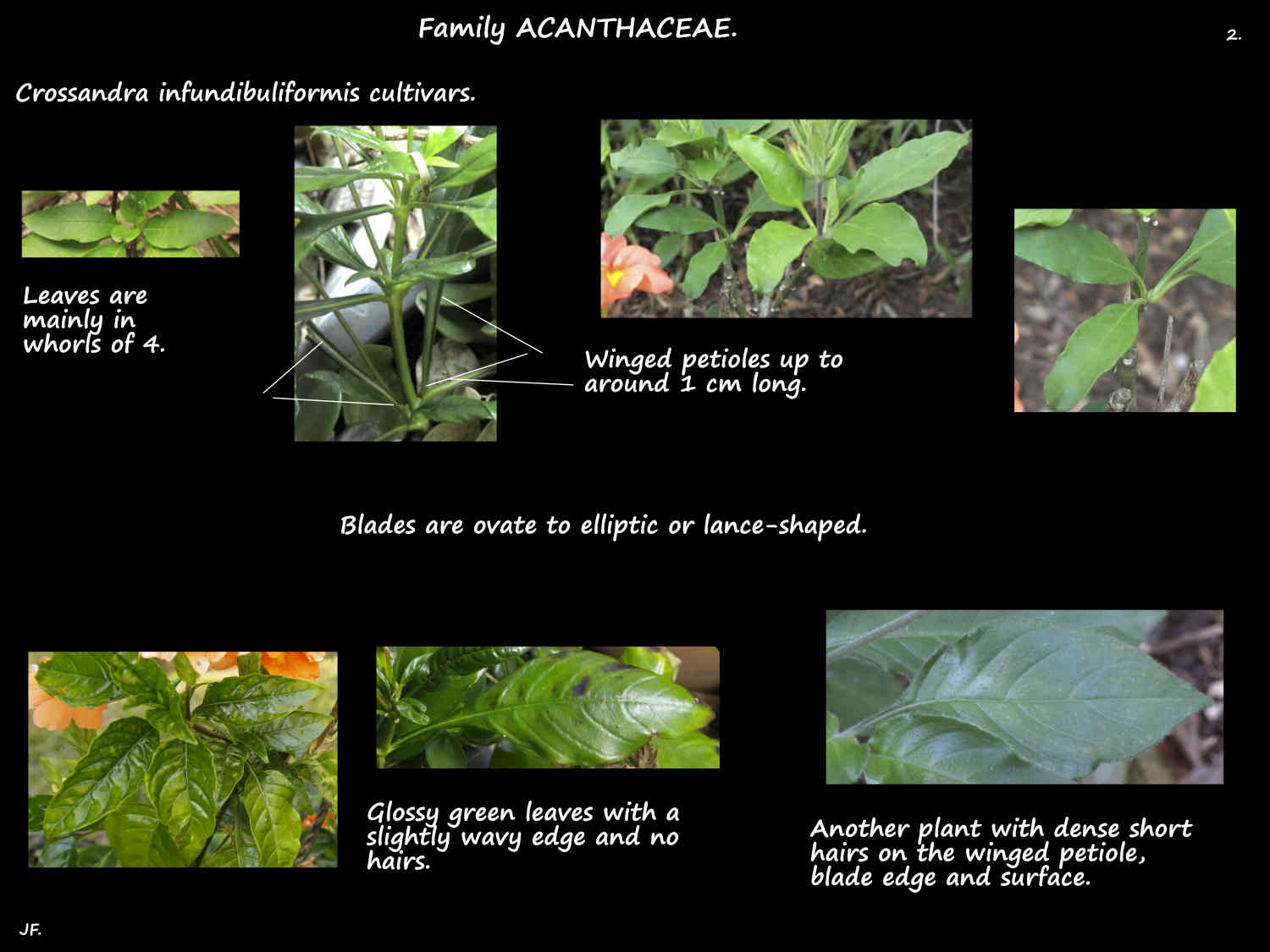
The leaves, in whorls of 4 have no petiole or a very short one.
Ovate to elliptic blades are up to around 10 cm long and 3 or 4 cm wide.
The tip tapers to a blunt point and the base runs onto any petiole.
The dark green and often glossy blades usually have a wavy edge.
Cystoliths are not seen and there are no hairs or very short fine ones.
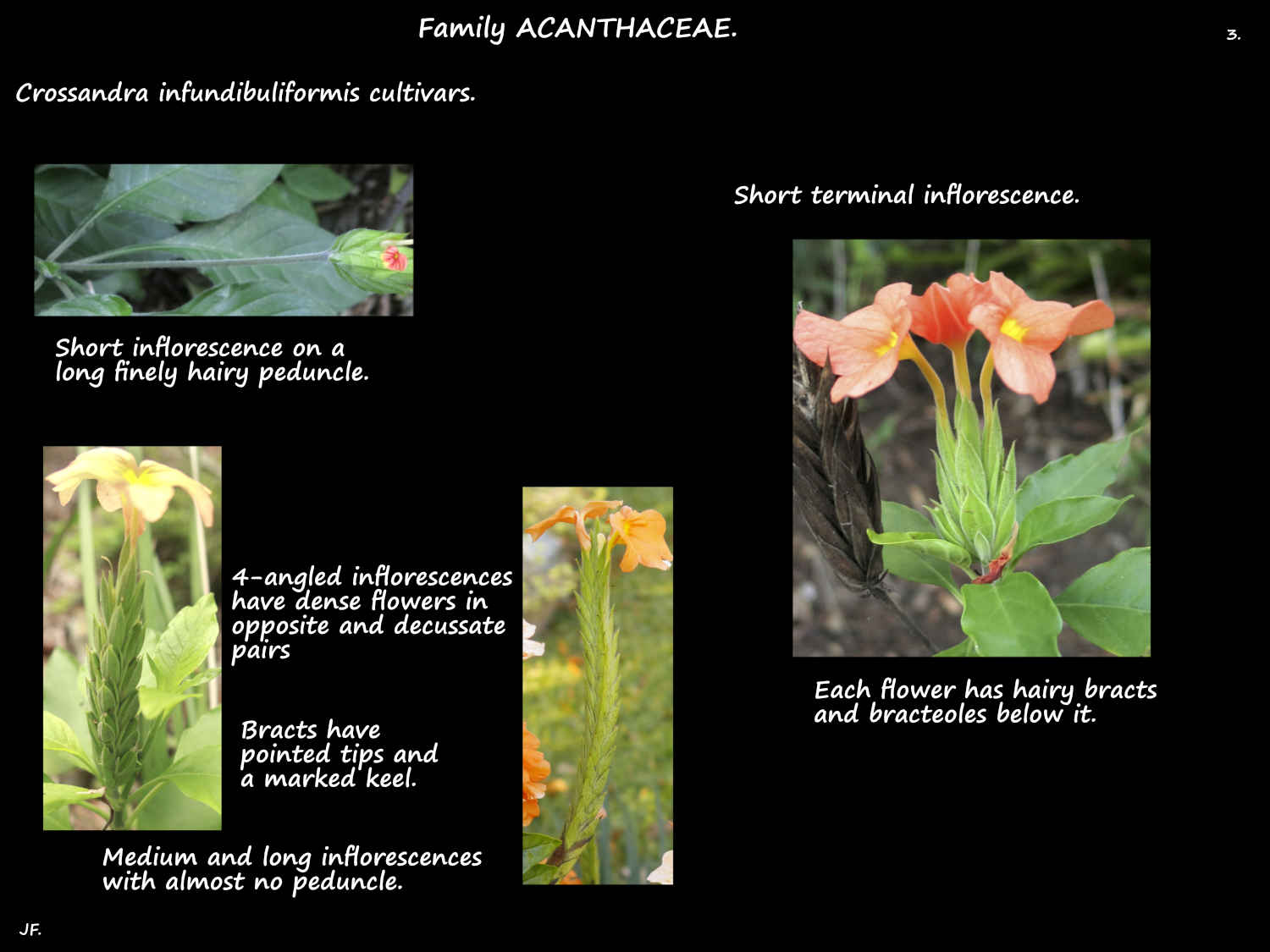
Terminal inflorescences are dense 4-angled spikes up to around 10 cm long.
The up to 10 to 15 cm long peduncle has soft hairs.
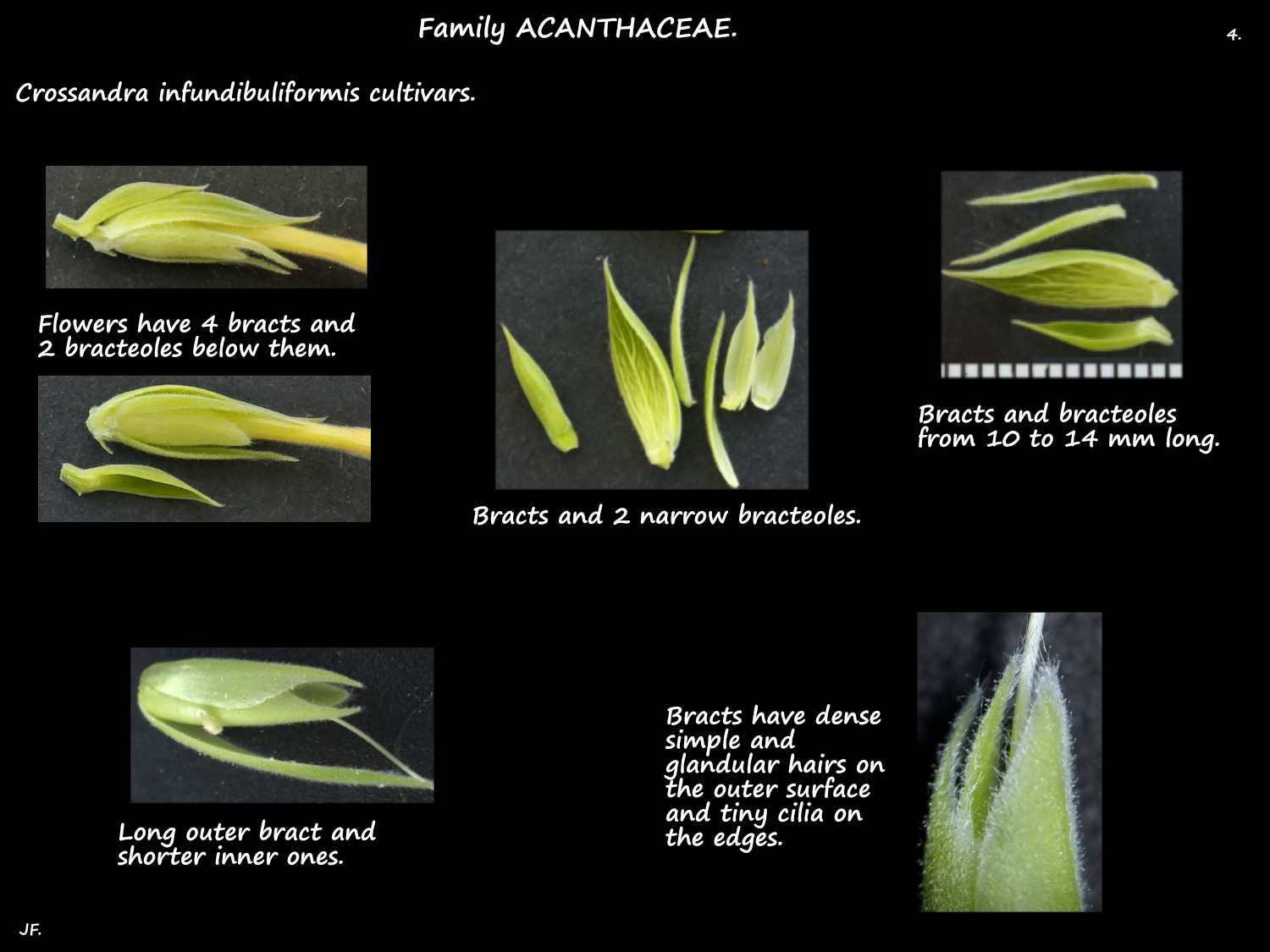
Bracts under each flower are up to 2 cm long and 5 mm wide.
The tips have a small sharp point (mucro).
The outer surfaces have glandular hairs and there are cilia (short hairs) on the edges.
There are 3 to 5 prominent veins.
The narrow bracteoles, around 10 mms long have similar hairs to the bracts.
The 5 slightly unequal sepals are around 8 to 12 mms long.
They have cilia on the edge and glandular hairs on the outer surface.
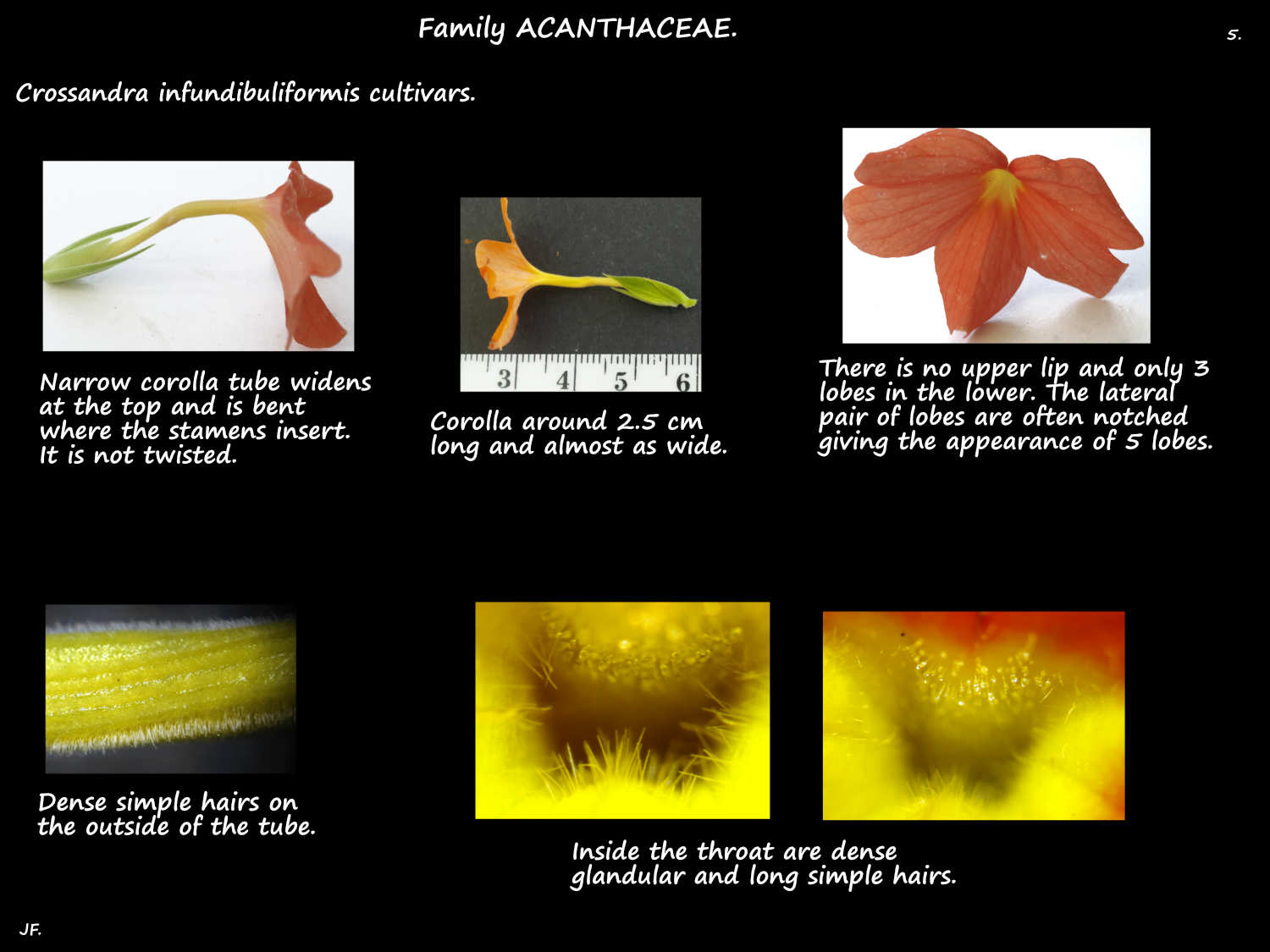
The narrow corolla tube, 2 to 2.5 cm long is bent near the middle and widens into a short throat.
There is no upper lip and the lower has 3 lobes 1.5 to 2 cm long.
The lateral pair of lobes are often notched making flowers look 5-lobed.
The corolla has simple and glandular hairs as described in the genus notes.
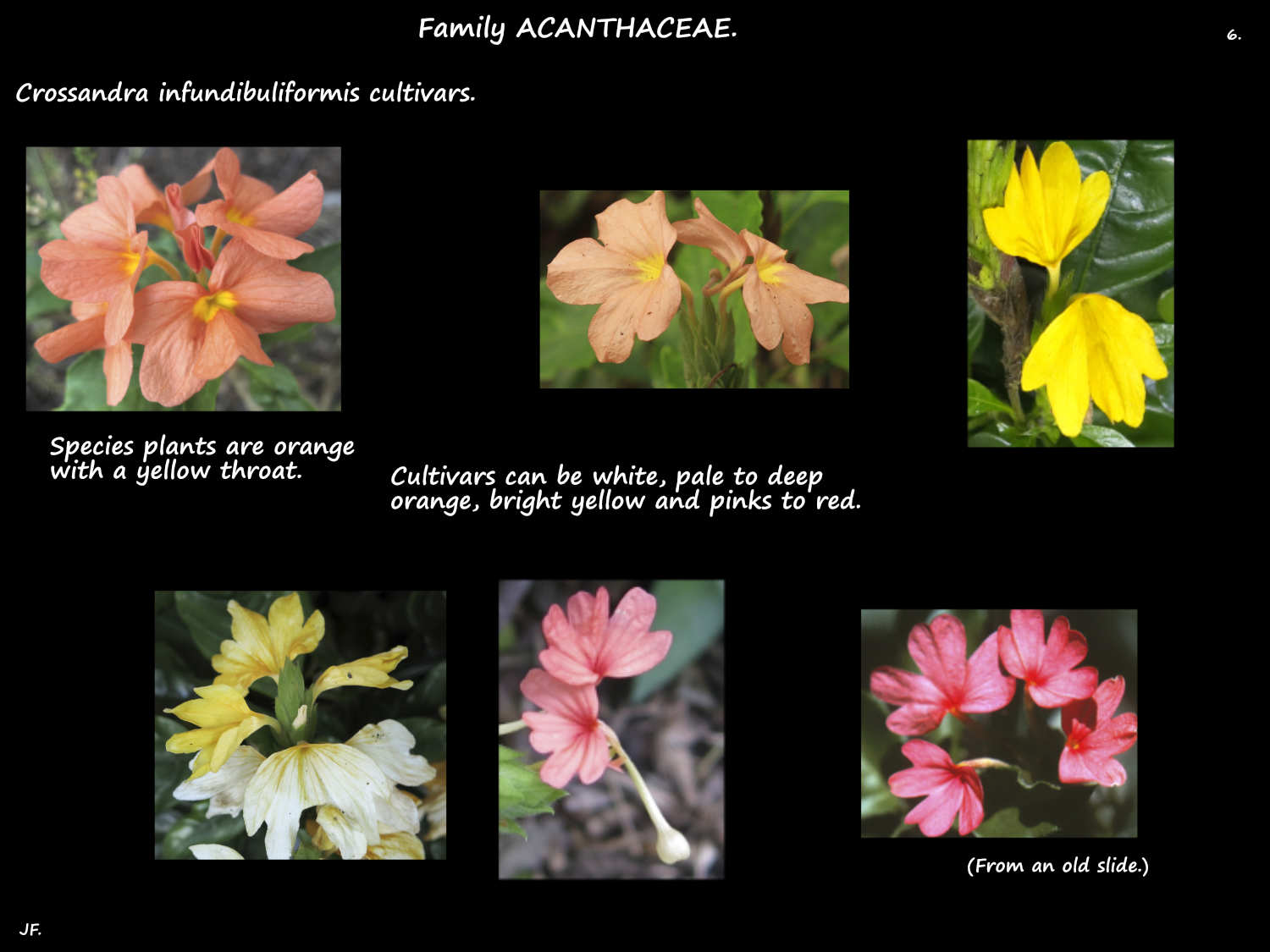
Flowers have a yellow tube and throat and often pale or dark orange lobes.
Cultivars can also have lobes that are white, bright yellow, red, pink, salmon or apricot and even turquoise.
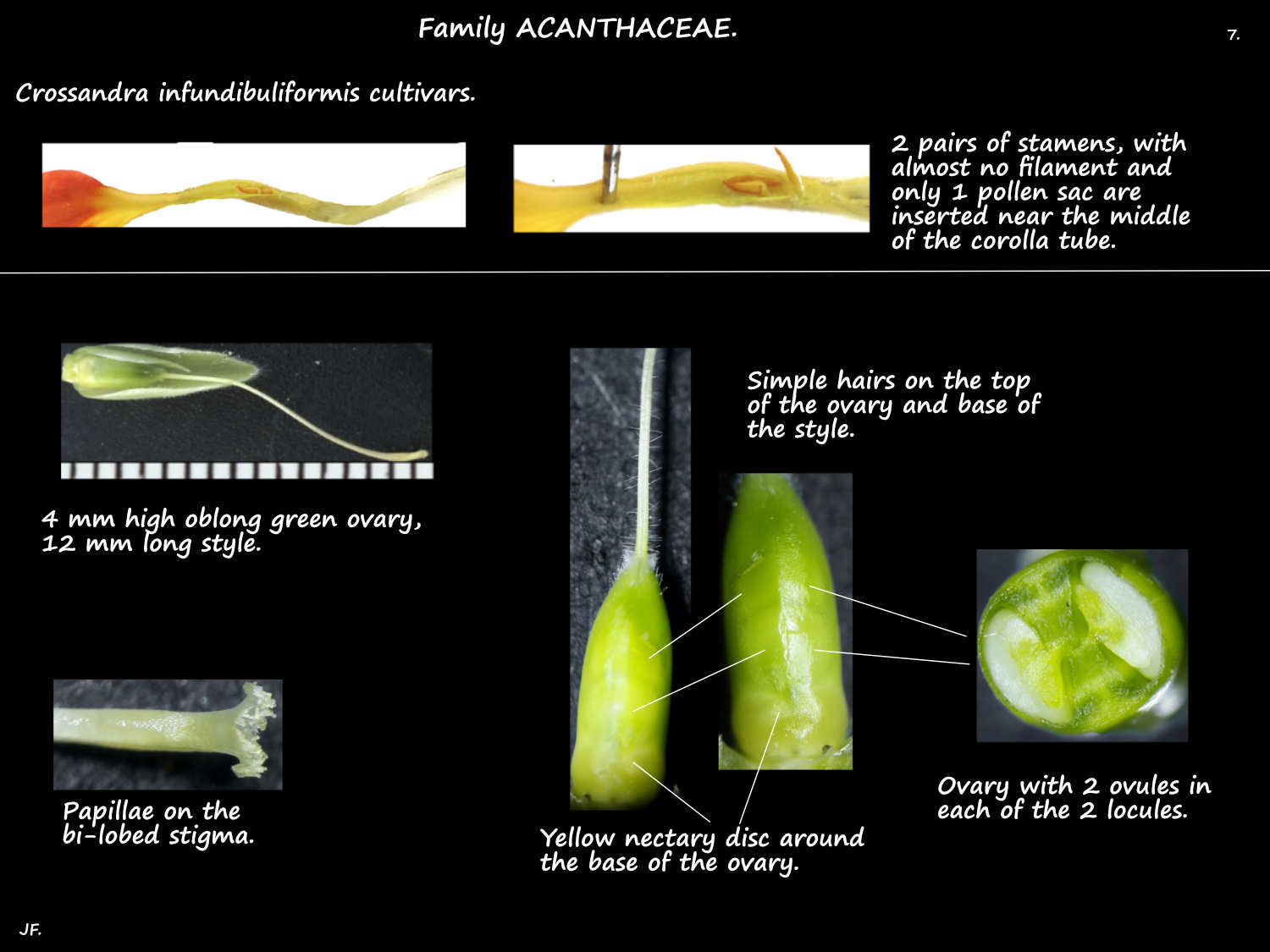
The 2 unequal pairs of stamens, in the middle of the tube have almost no filaments and anthers with 1 pollen sac.
The ovary, a few mms high has 2 locules with 2 ovules in each and a long style.
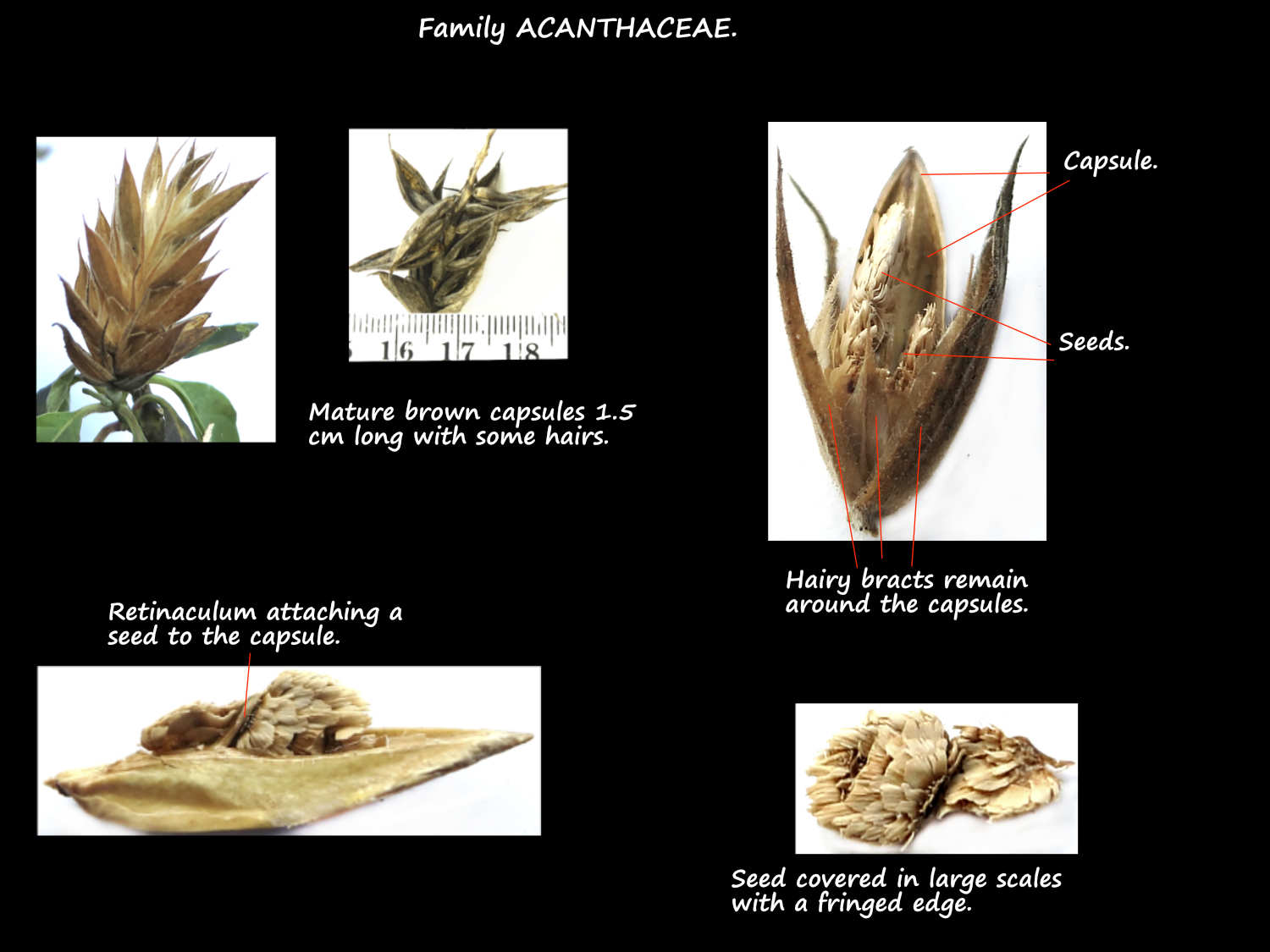
Oblong capsules, around 1 cm long have a few hairs at the top.
The 4 flat seeds are densely covered with large scales with a notched top.
The seeds are attached to the capsule by an arm or retinaculum that can throw them a long way from the plant.
J.F.