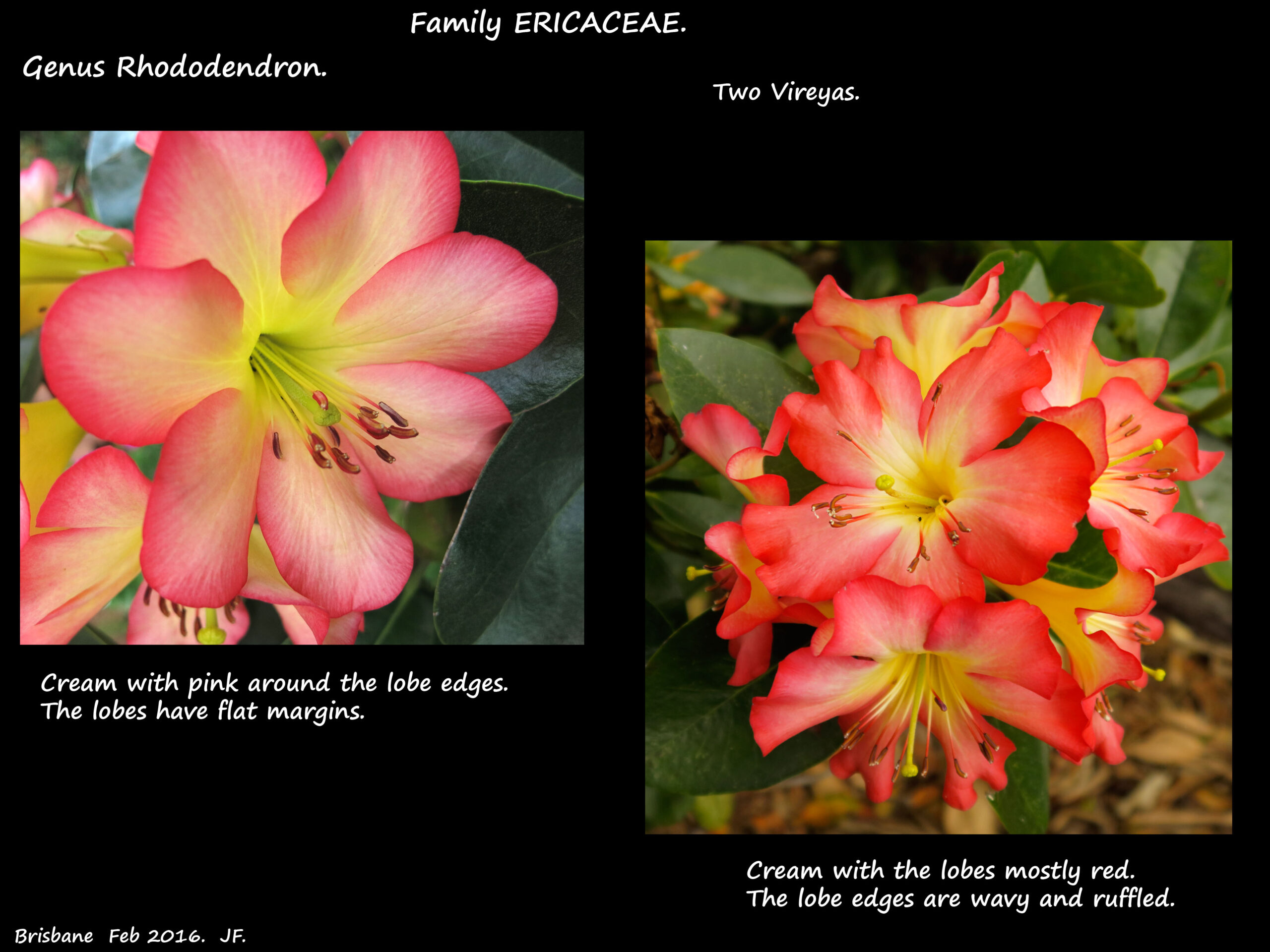
Family Ericaceae > Genus Rhododendron > Subgenus Rhododendron > Section Vireya.
They are also seen in a Vireya subgenus divided into seven Sections, one with five Subsections.
The around 320 species are found in S.E. Asia and there are 2 in Queensland.
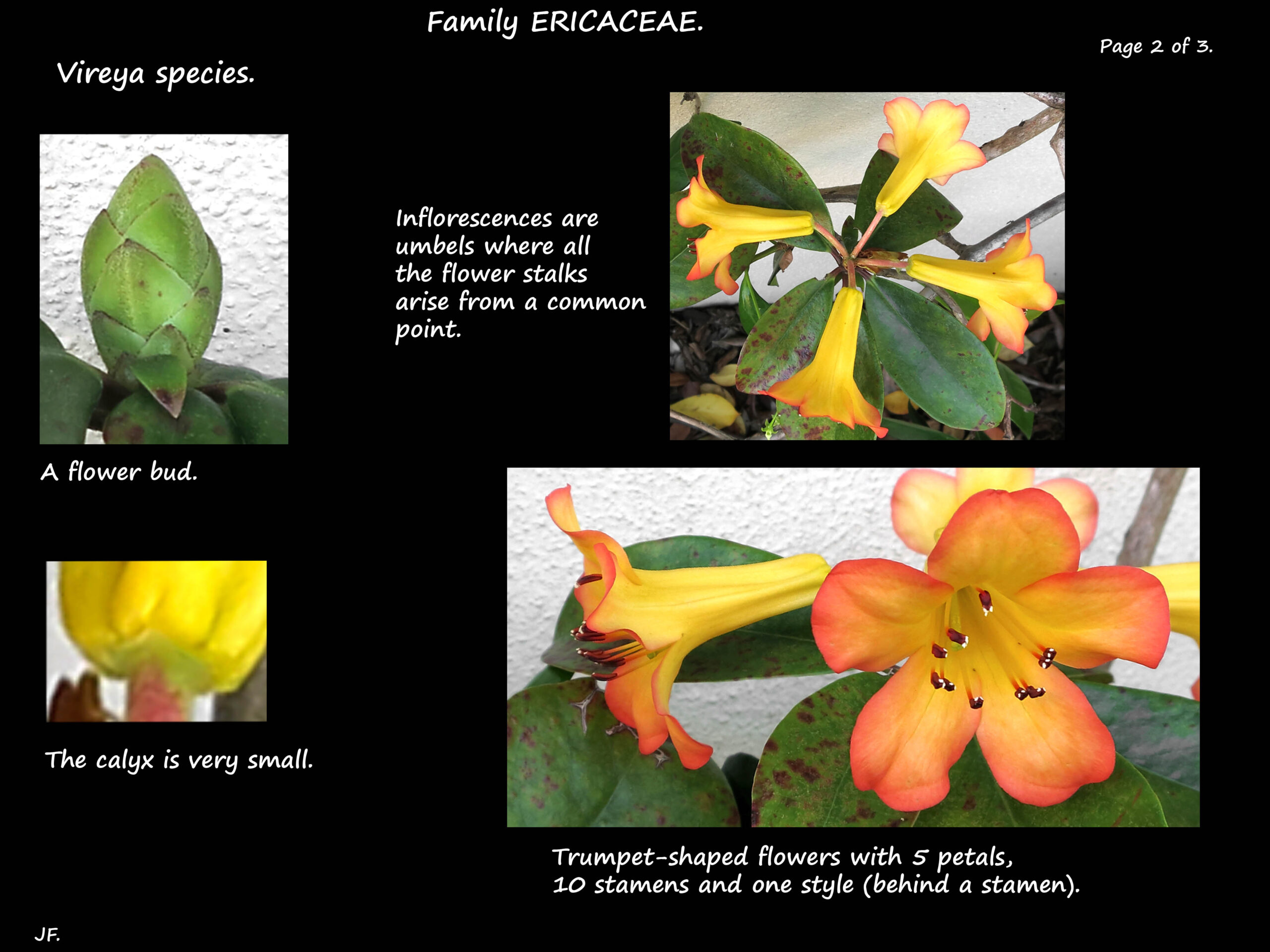
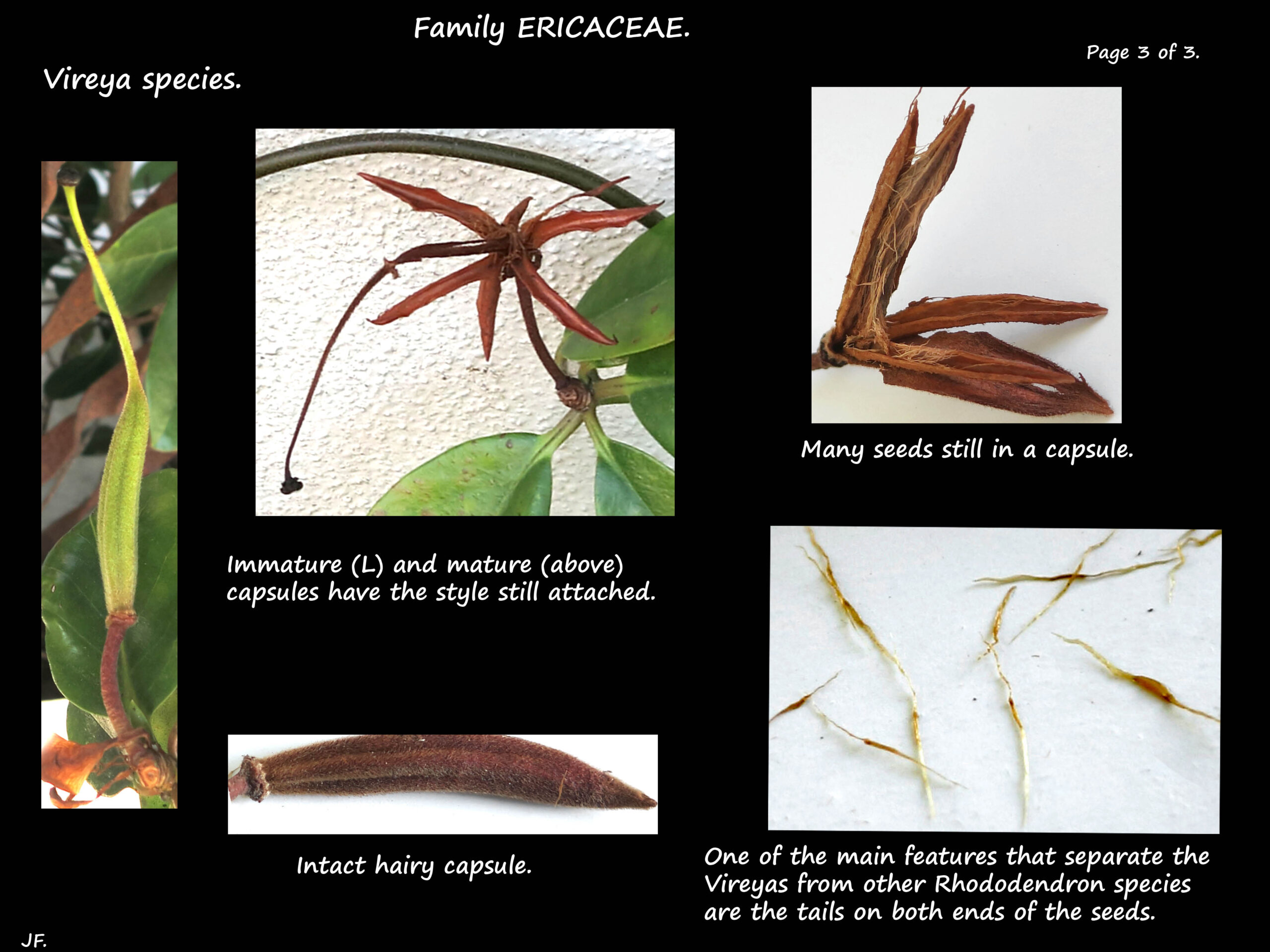
They look different from other Rhododendron species and are distinguished by having seeds with tails at both ends, flowers in umbels (flower stalks are all attached to the same spot), flowers without blue pigments and petals that are never spotted.
There are also histological differences in the leaves, ovaries and ovules.
Most are epiphytes but can also be terrestrial and some grow on rocks.
Their form varies from prostrate, to shrubs or small trees.
Terrestrial species grow from around 0.6 to 8 m high and the epiphytes 0.6 to 3m.
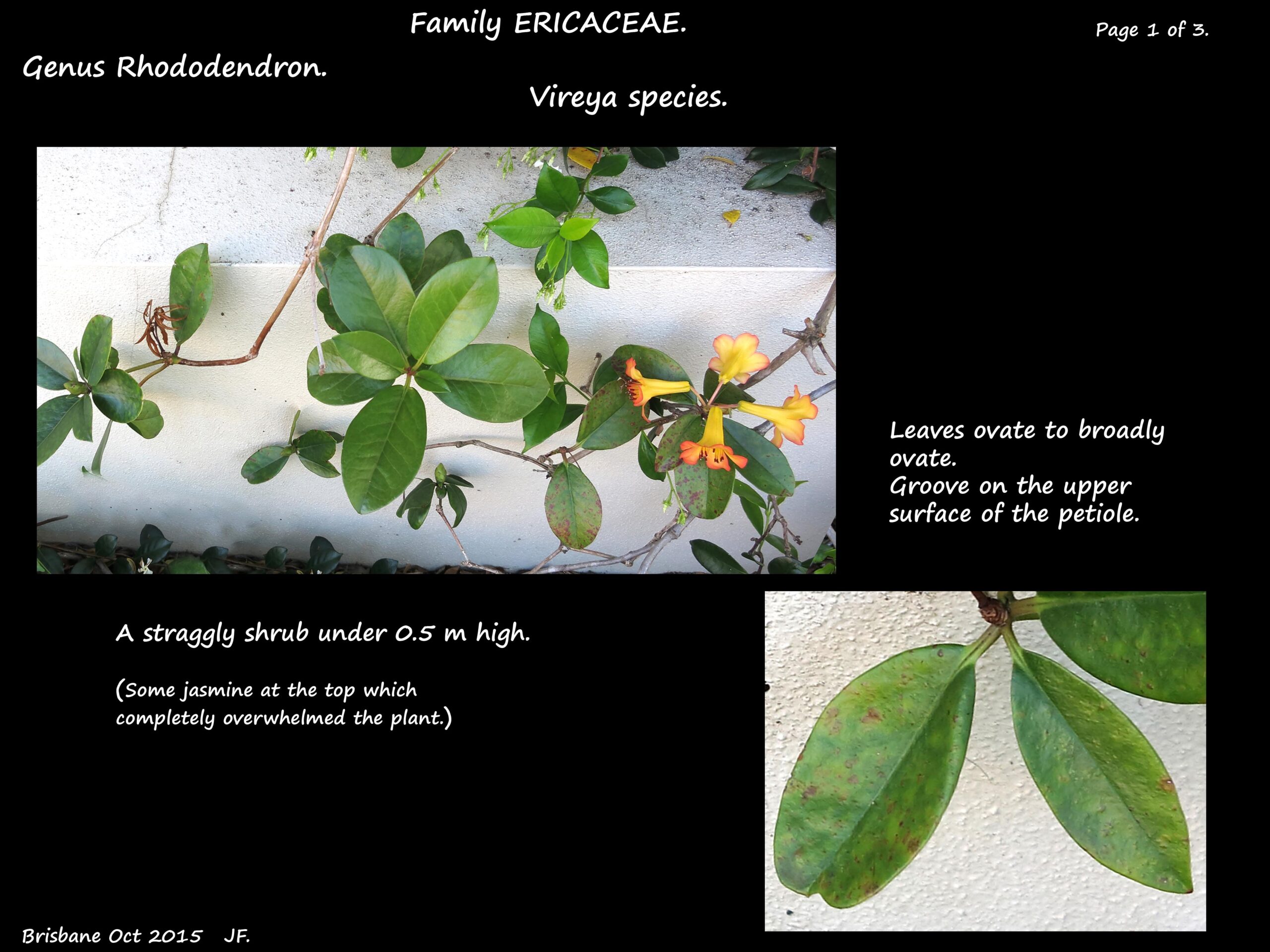
The shiny deep green leaves are evergreen.
They can be elliptic, broadly elliptic, ovate, narrowly ovate or obovate.
The length varies from around 1 to 17 cm and the width from 0.5 to 9 cm.
Leaves have scales (lepidote) which are multicellular hairs on the undersurface.
Scales may or may not have a stalk and can be entire, lobed, incised or star-shaped.
They are best seen on young leaves as a brown coating.
There may also be simple hairs.
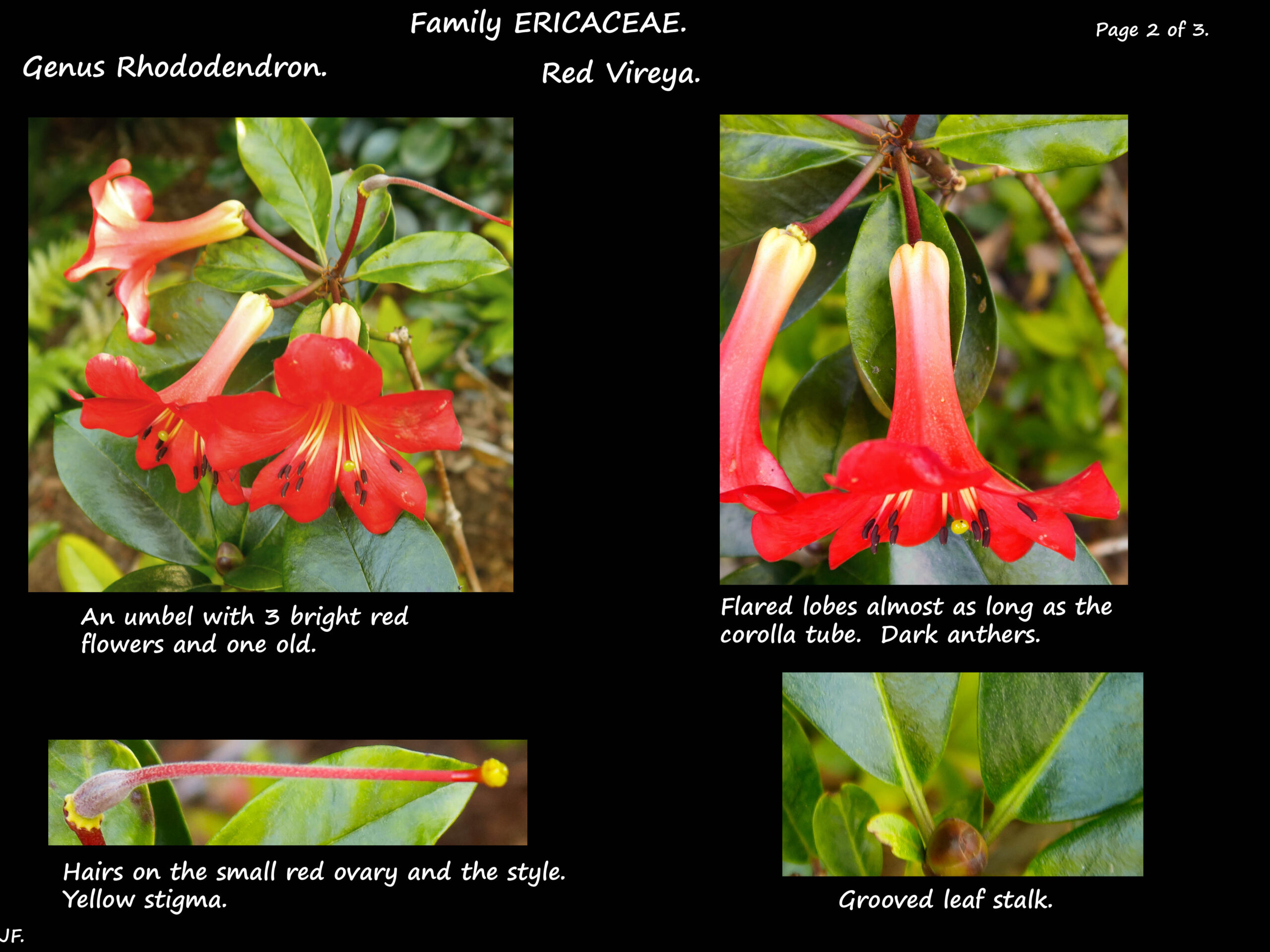
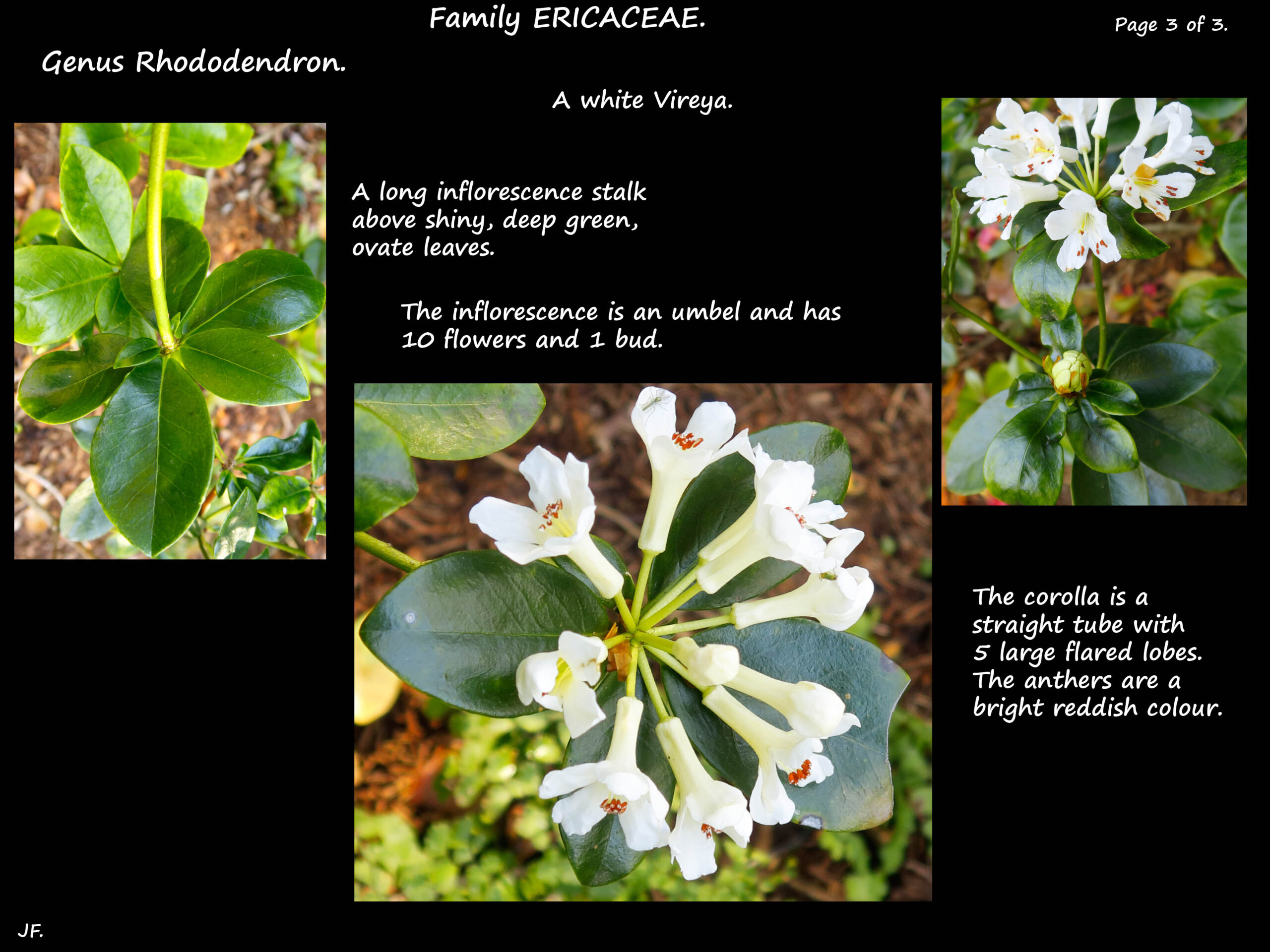
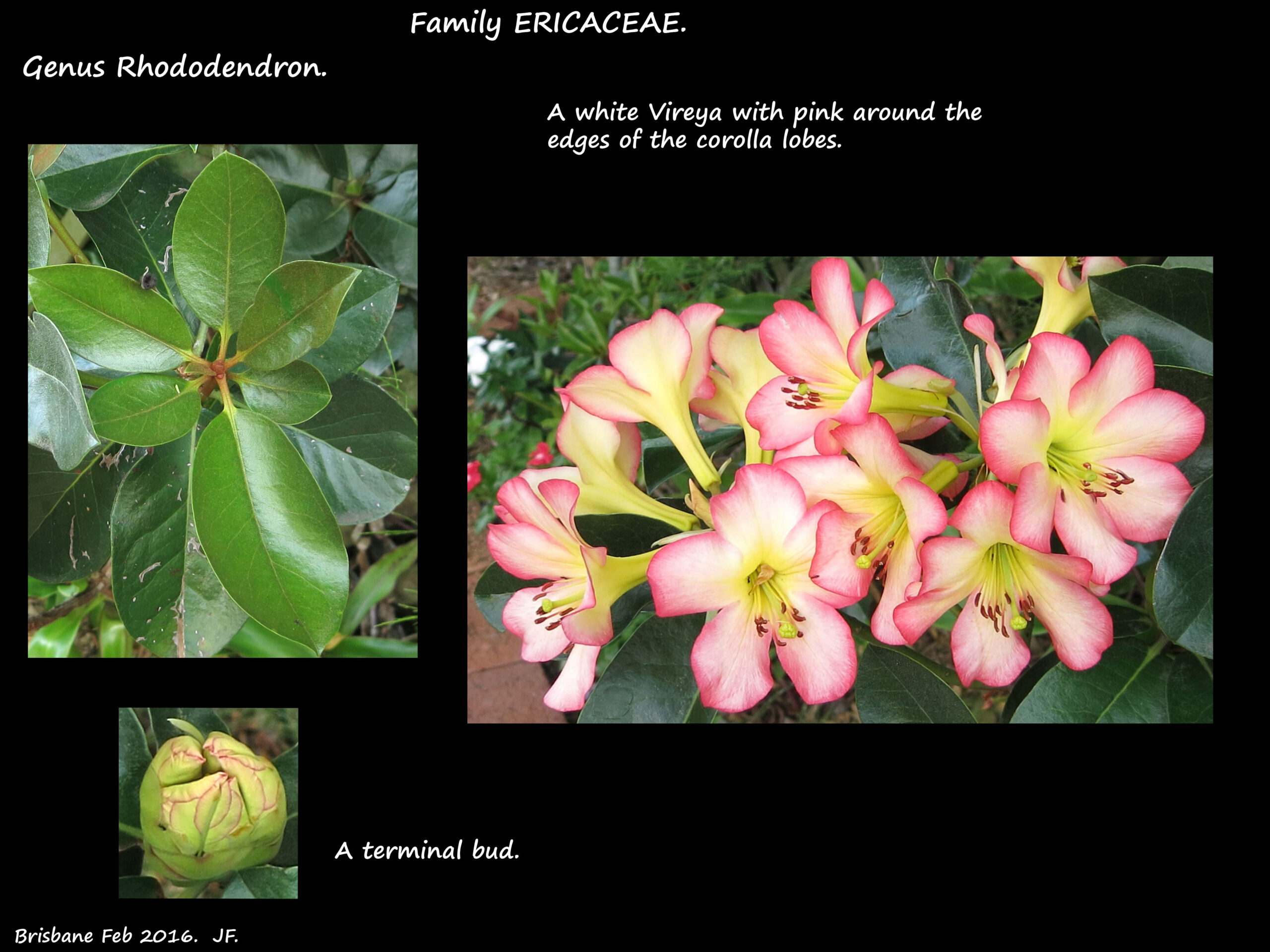
Inflorescences are single flowers or umbels of up to 30.
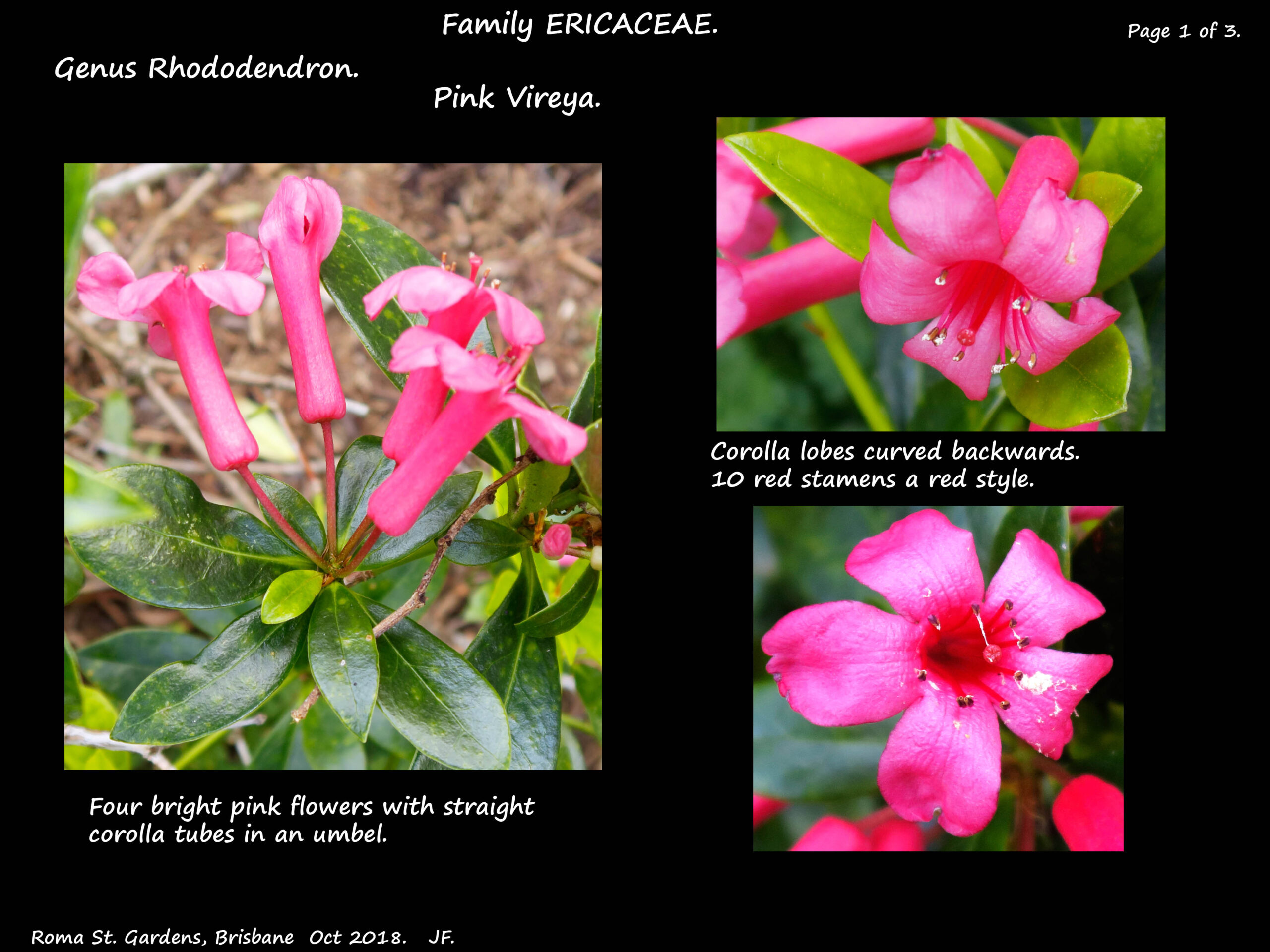
Flowers can be trumpet-shaped, tubular (straight or curved) or bell-shaped.
They can be from 1.0 to 11 cm long.
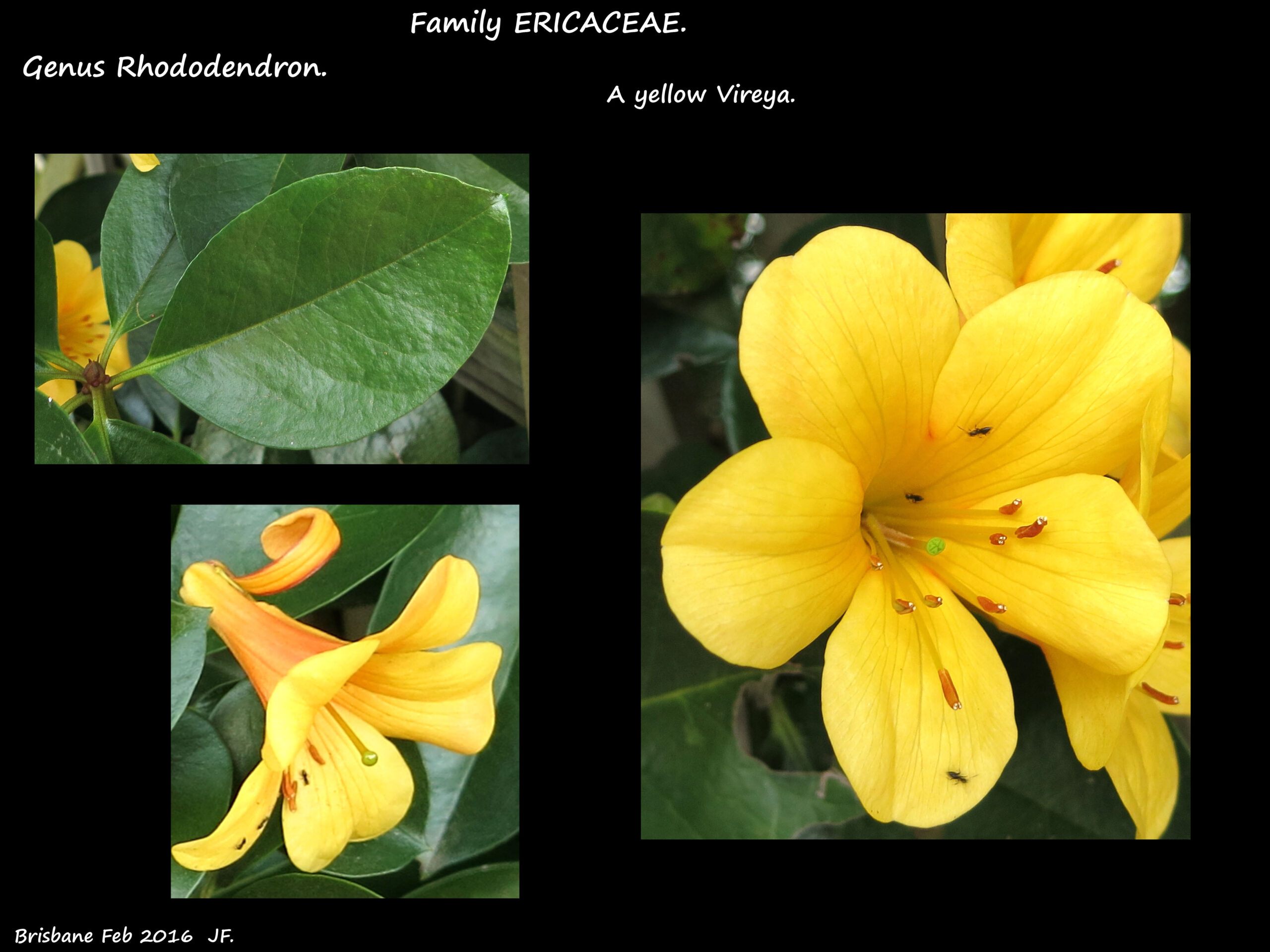
They come in shades of red, pink, yellow, orange and white.
Plants sometimes flower more than once a year and the flowers last a long time.
Mostly 10 stamens (5 – 16) with filaments that are smooth or have hairs at the base.
Fruit are capsules and the valves twist after they dehisce.
The seeds have appendages or wings on each end.
There are many varieties and cultivars.
Queensland Vireyas.
Previously only one species was recognised in Australia – R. lochiae.
These were the plants, with a straight corolla tube commonly seen in cultivation.
Plants of the World Online (Kew) now recognises two species both native to N. E. Queensland.
R. lochiae was retained as the name of the less common species having a curved corolla tube.
The common straight tubed Vireya was renamed R. viriosum.
This is the parent of most of the hybrids seen.
There are other differences between the two including the colour and position of the anthers, presence or absence or fine hairs on the filaments and the position of the style.
J.F.