Eukaryota > Kingdom Fungi > Division Basidiomycota > Class Agaricomycete > Order Geastrales > Family Geastraceae.
Known by the old name Gaestrum tenuipes in Queensland the official name is Gaestrum pectinatum.
Gaestrum pectinatum var. tenuipes is a synonym.
The Beaked earthstar is uncommon in Queensland.
The solitary or grouped fungus (a basidiomycete) grows on the ground.
New fruiting bodies, around 1.5 cm across are small spheres that look like a puffball.
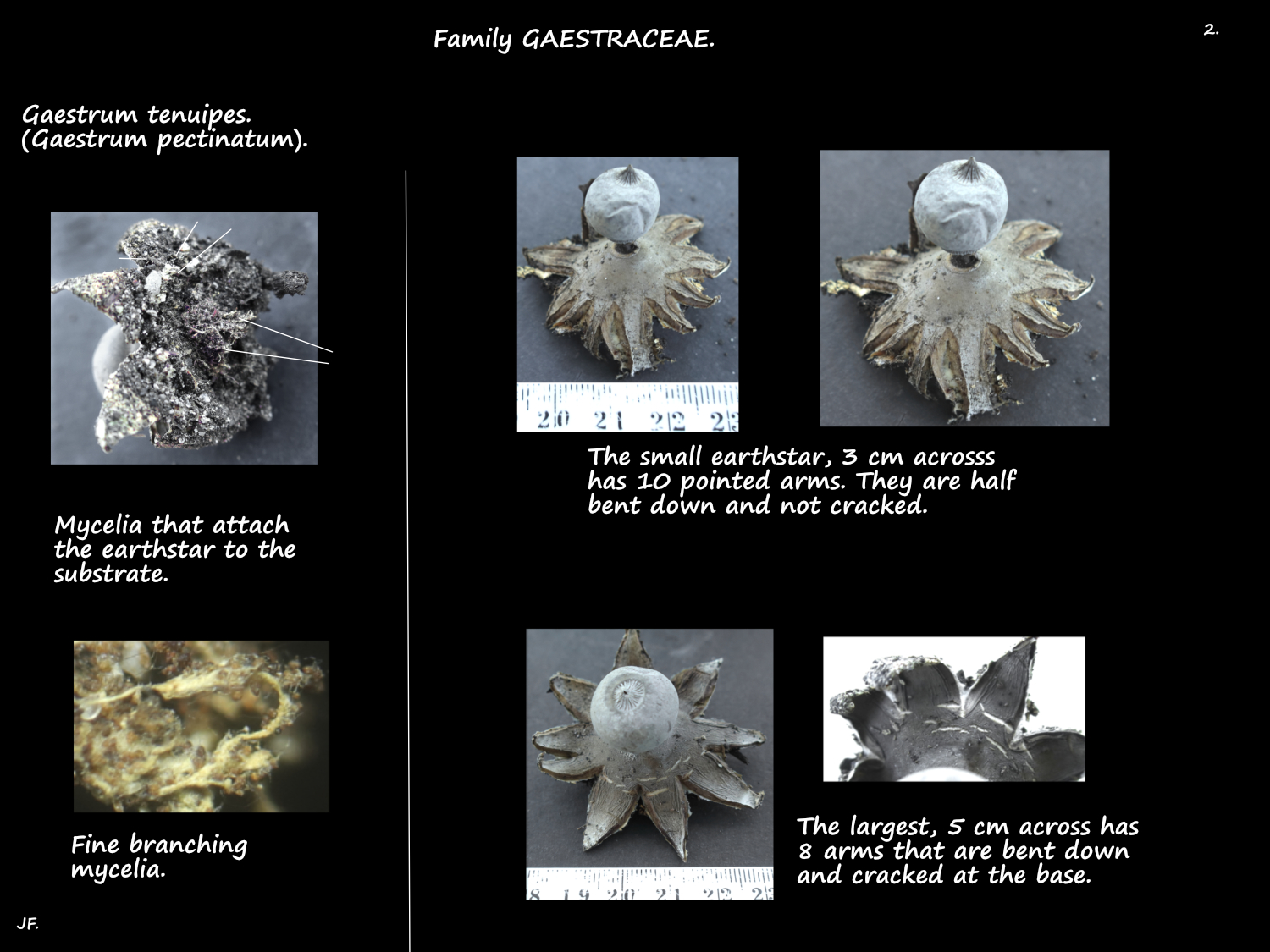
They are covered in mycelia giving them a fluffy appearance.
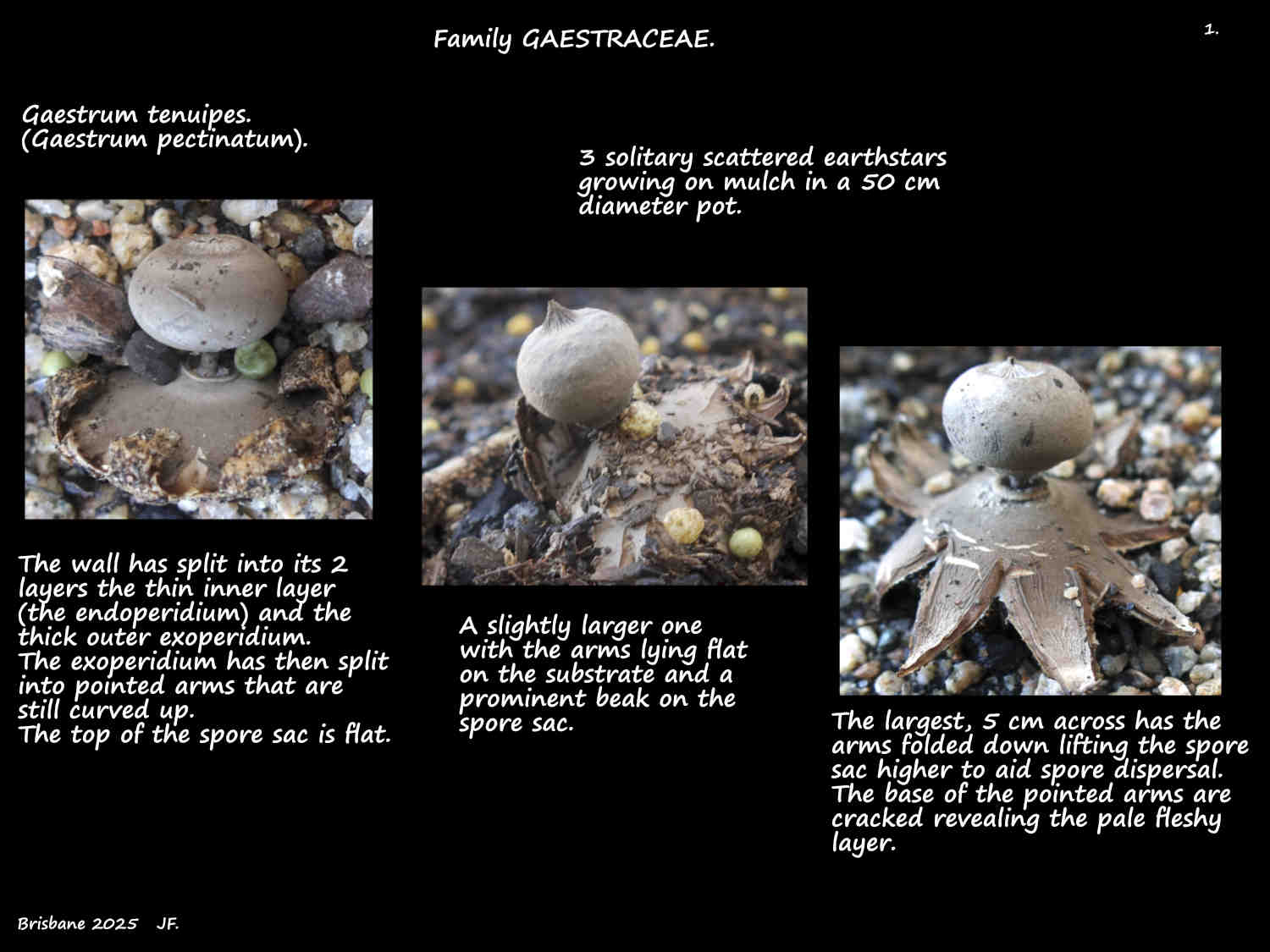
The wall is in 2 layers that split when the spores are mature.
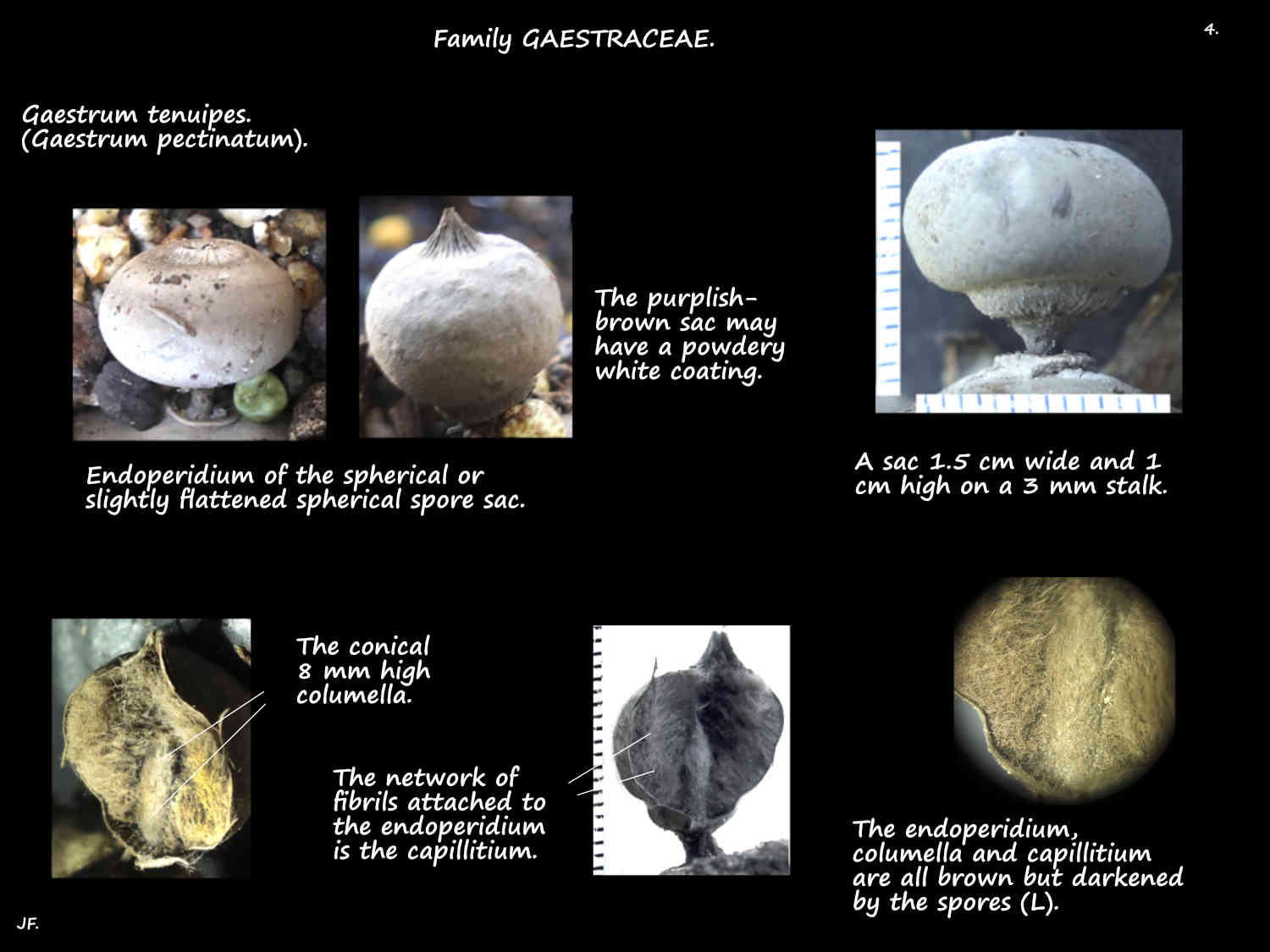
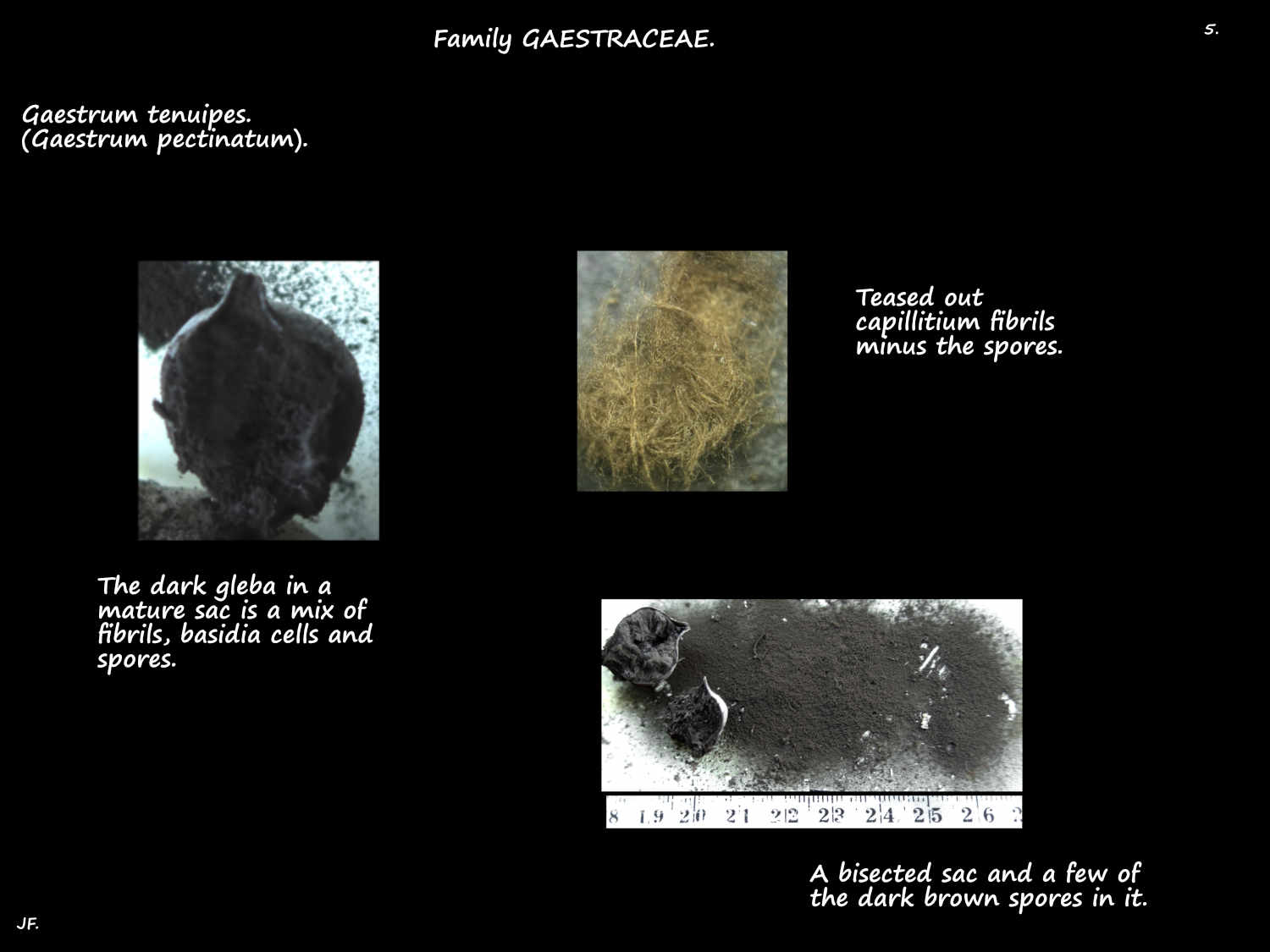
The thin membranous inner layer (endoperidium) forms the roughly spherical spore sac.
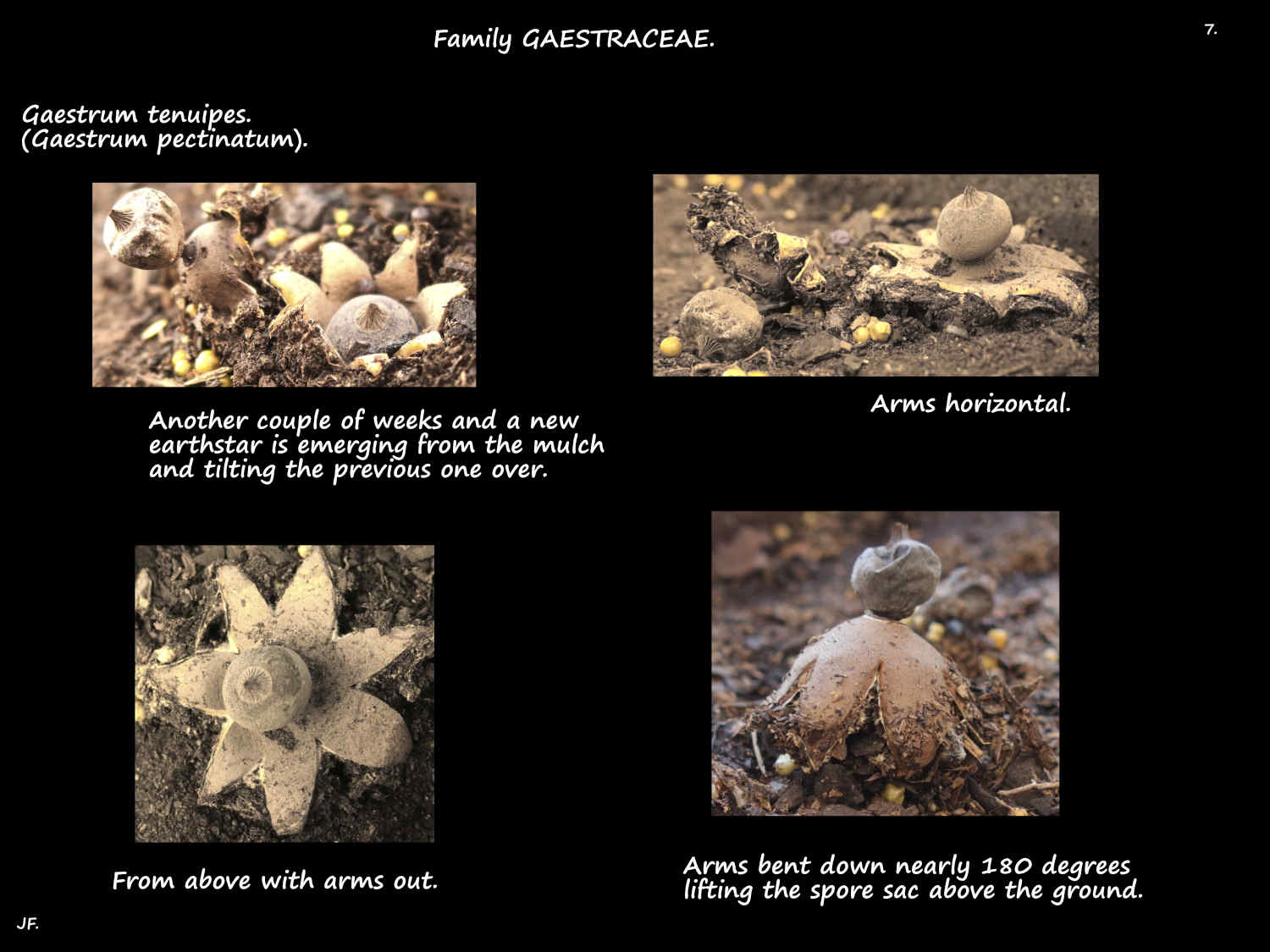
The thick outer layer (exoperidium) splits from the top down into up to 10 pointed rays.
The rays curve down lifting the spore sac above ground level to aid spore dispersal.
The earthstar is up to 5 cm across and slightly higher when the 5 mm long arms are fully extended.
As the arms curve down their inner surface often cracks.
The edges of the arms, and the cracks reveal a pale inner layer.
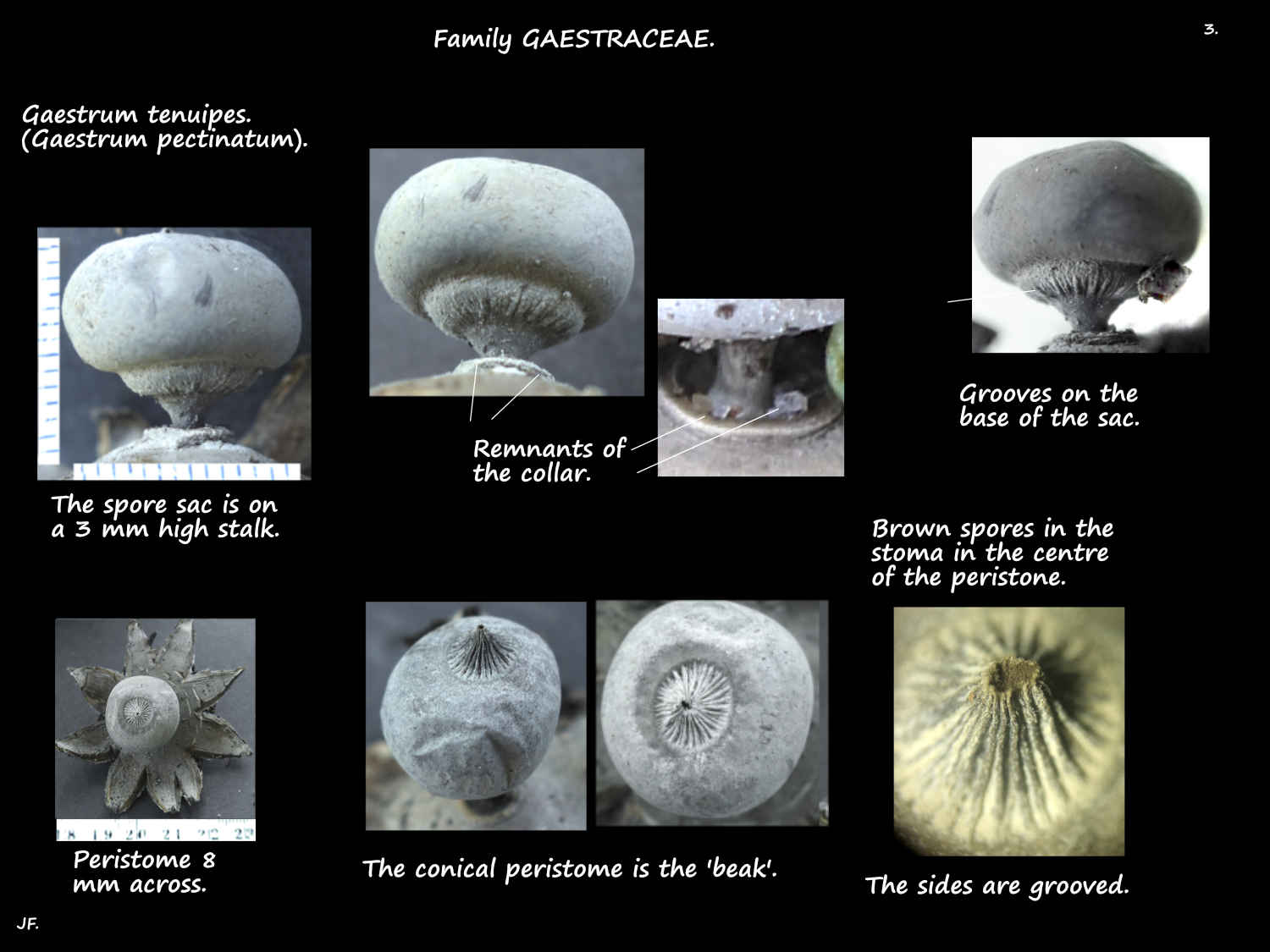
The white fleshy ring around the stem browns and dries up when the arms have curved back.
The mature purplish-brown spore sac is on a stalk 3 to 4 mm long.
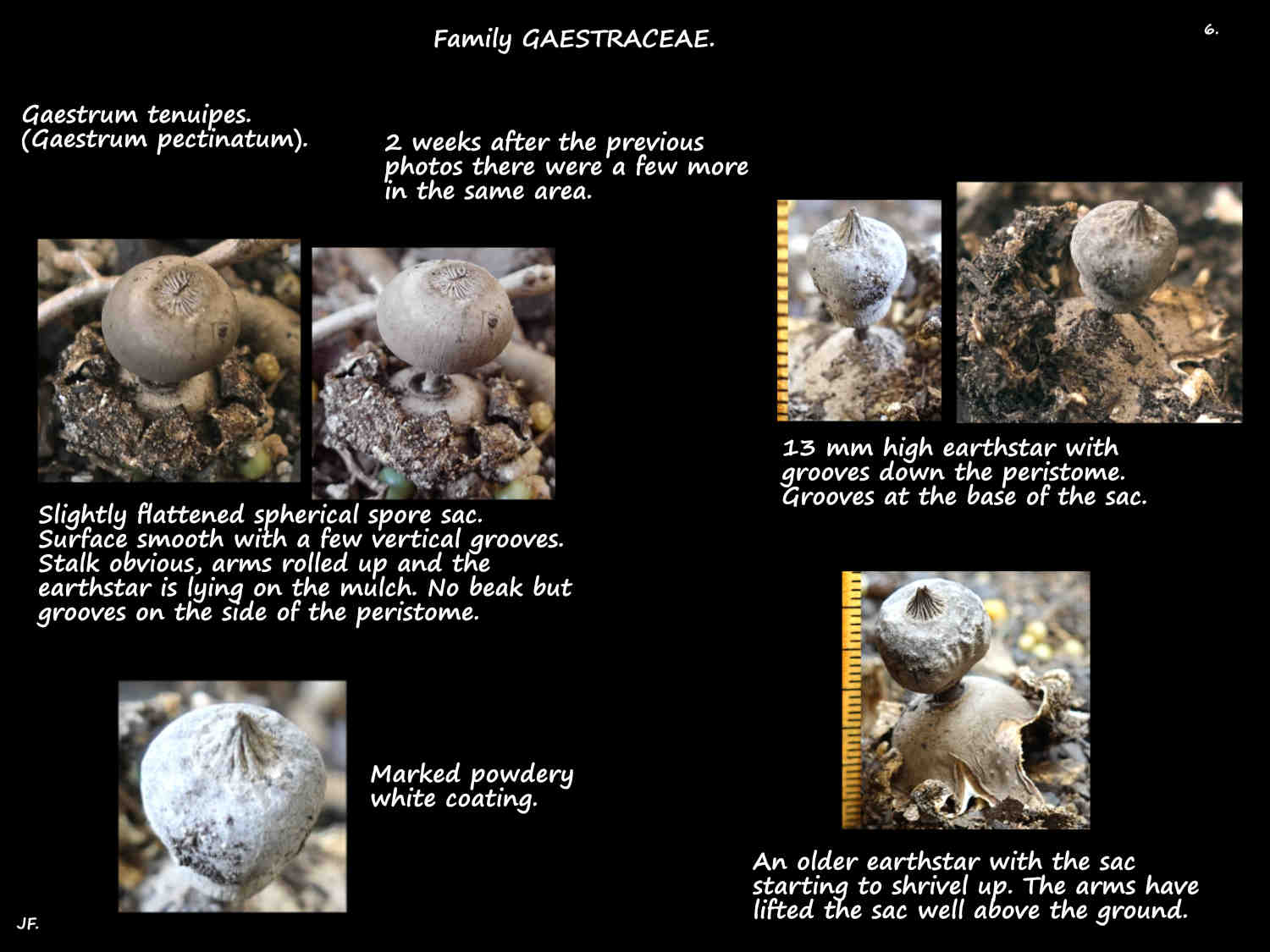
The sac, up to 2.5 cm wide and 1.5 cm high has grooves running up from the base.
Occasionally it has a white powder on it.
At the top of the spore sac is a small opening (pore, stoma).
The mouth is raised above the surrounding surface by the conical peristome (beak).
There are deep grooves down the sides of the up to around 7 mm high peristome.
Calcium oxalate crystals around the peristome are involved in the opening of the stoma.
Inside the sac and extending from the base to around the middle is the columella.
The pale brown conical columella has fine fibres along it.
Radiating from the inner surface of the endoperidium is a network of similar fibrils.
Among the mass of pale brown fibrils are the spores formed in the basidia cells.
As the spores mature this dark brown gleba becomes dry and powdery.
The roughly spherical spores are covered in translucent warts.
J.F.