The Blue Butterfly Bush is from tropical areas of East Africa.
Often cultivated as an ornamental it was previously known as Clerodendrum ugandense.
In horticulture it is commonly seen under the old name.
Rotheca myricoides has a number of varieties and cultivars.
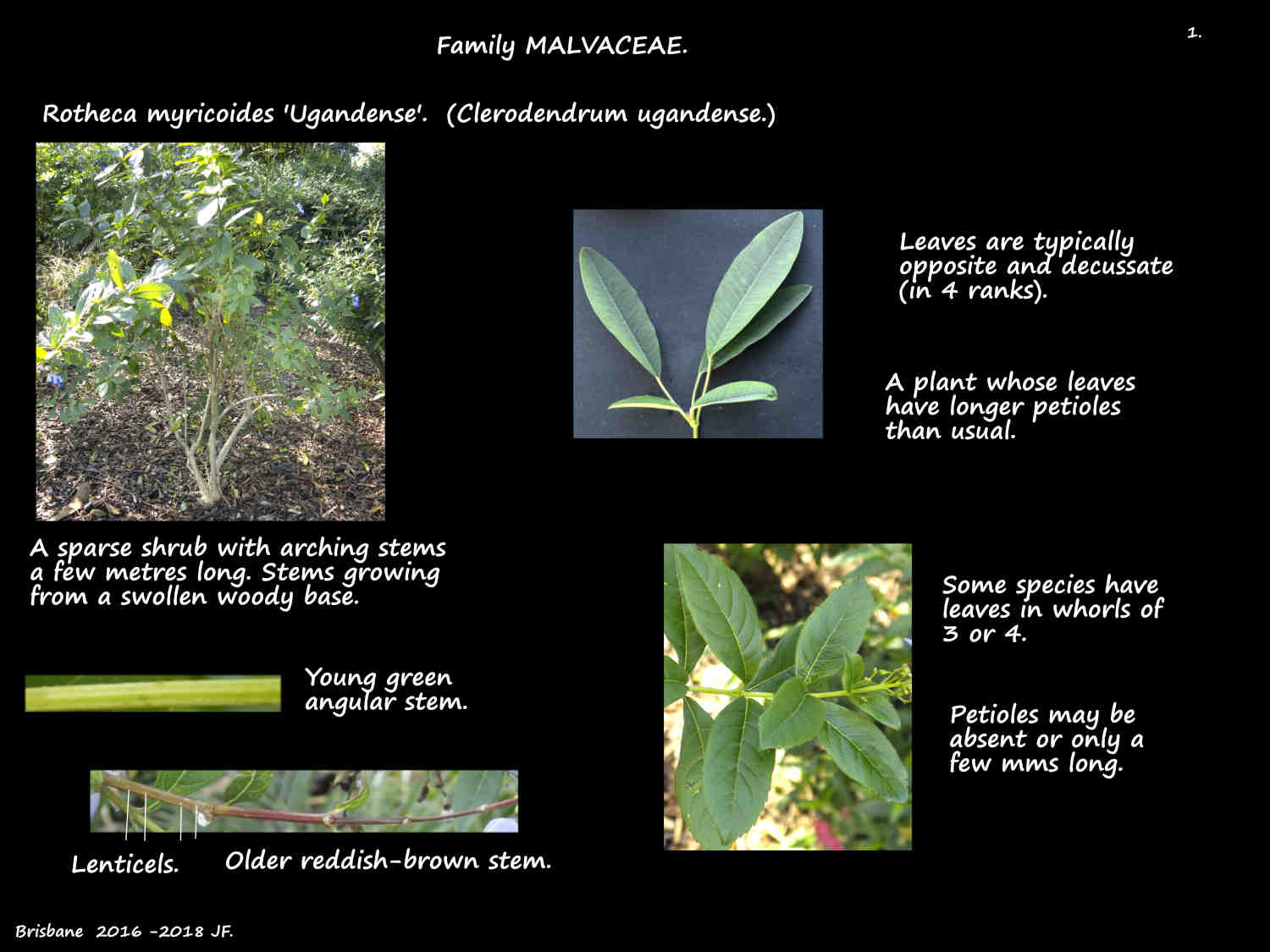
The evergreen shrubs grow to 3 or 4 m high and 1 to 2 m wide.
With long arching branches they often look straggly.
The angular red new branches have simple hairs.
There are prominent pale nodules (lenticels) on older branches.
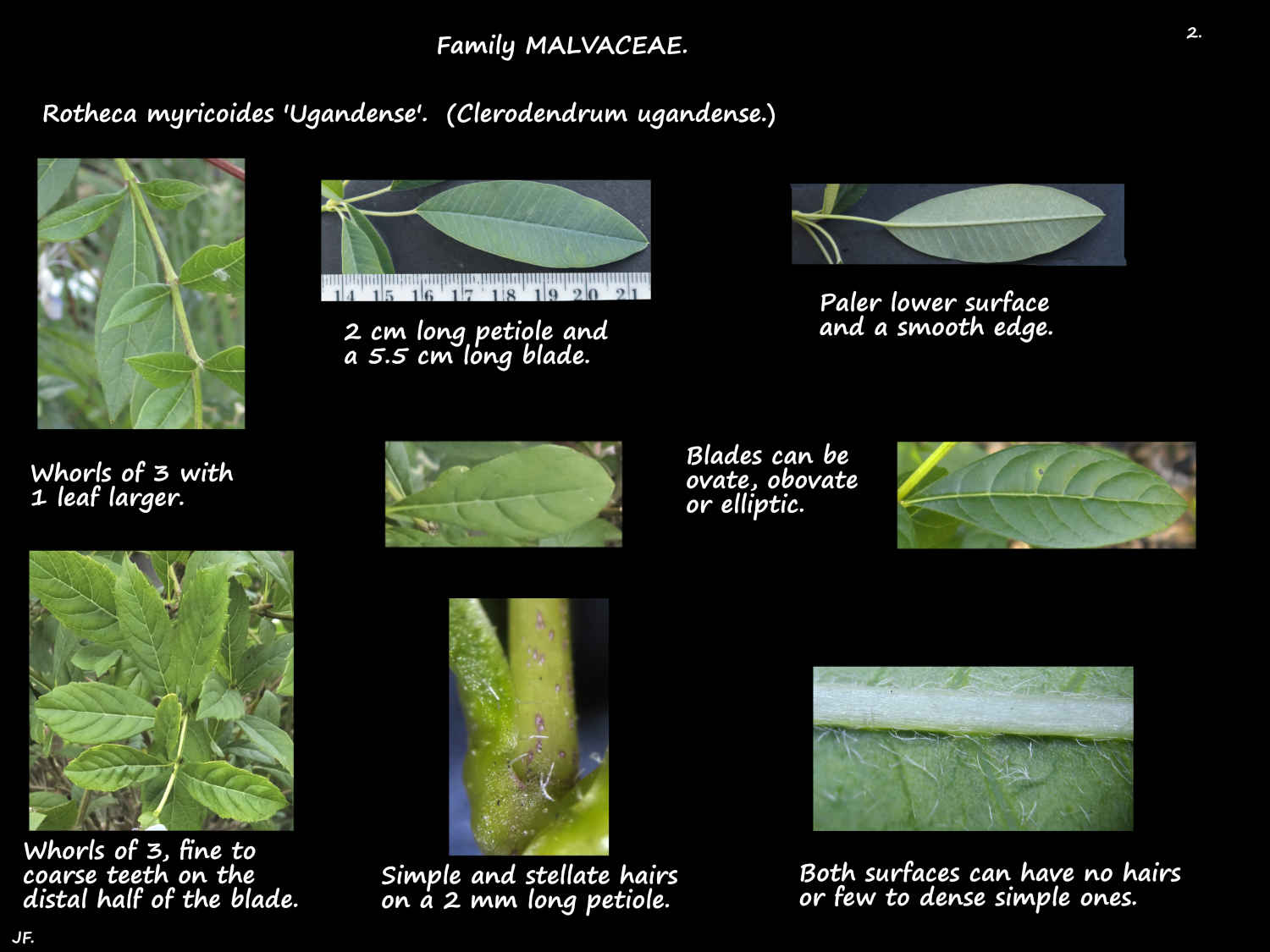
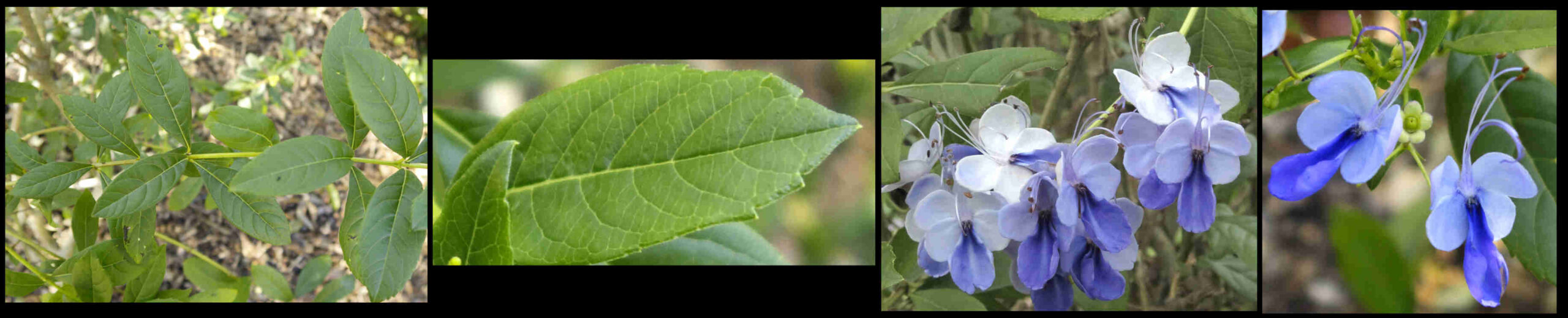
Leaves, with little or no petiole are typically in whorls of 3 or 4.
Some leaves are in opposite decussate pairs with a longer petiole.
Blades, up to around 8 cm long are ovate to elliptic.
The edge usually has small sharp teeth or lobes.
Scattered to dense hairs or scales are often present on both surfaces.
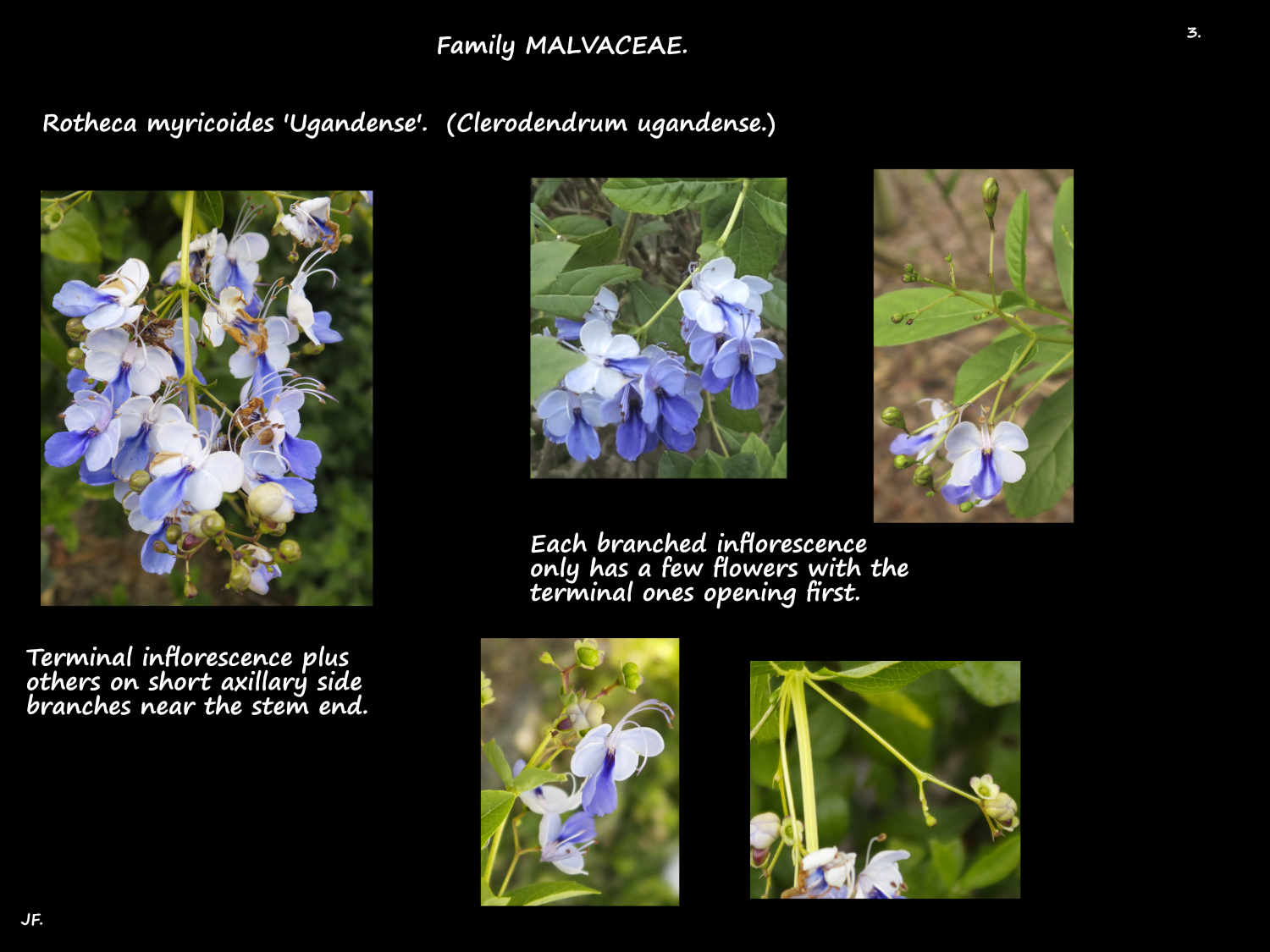
Inflorescences, up to 25 cm long are terminal and on short axillary side branches.
They are branched clusters (panicles) with flowers that are around 2.5 cm across.
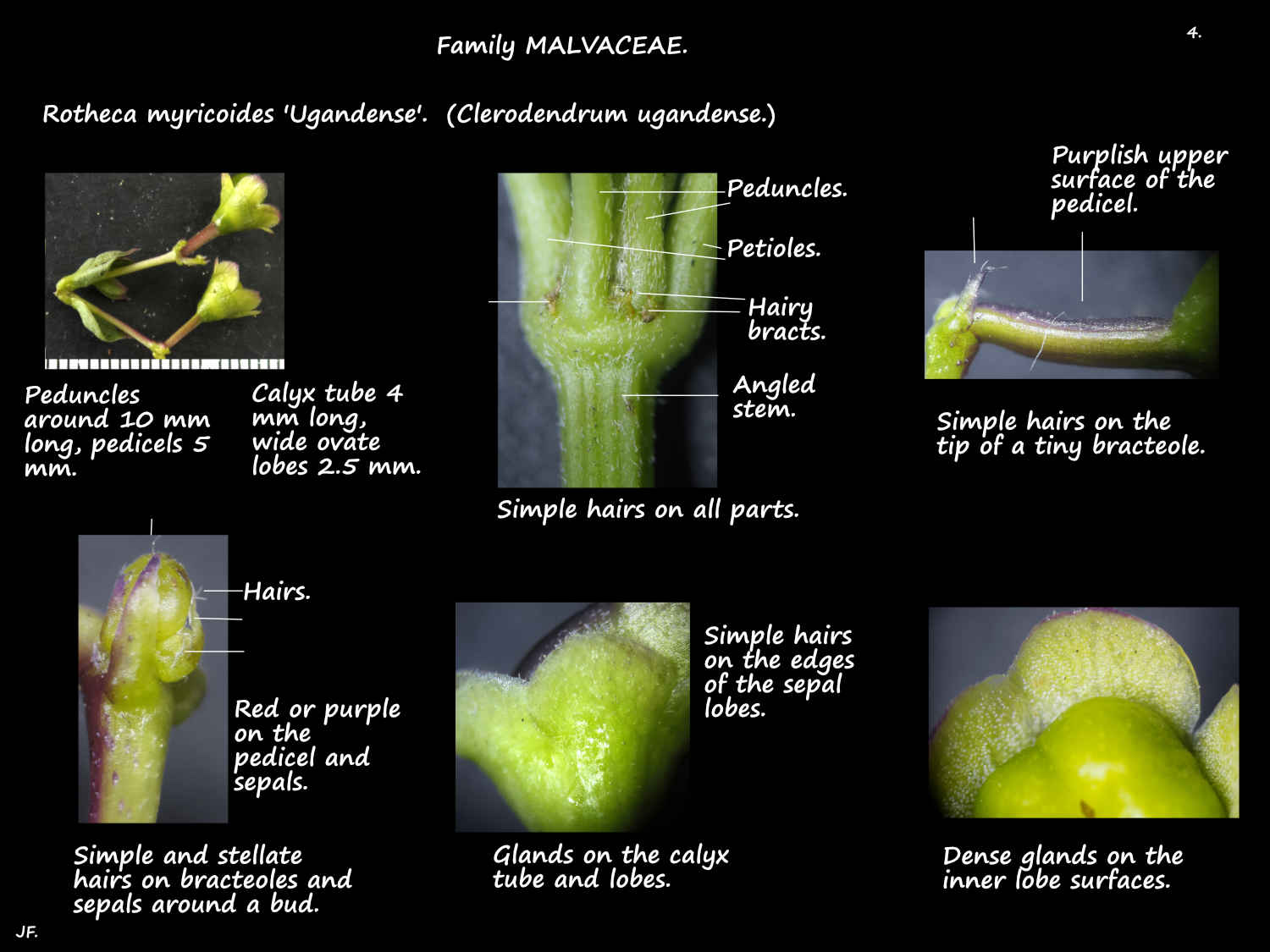
There are small hairs on the peduncles, pedicels, bracts and bracteoles.
The calyx has 4 reddish lobes on a short tube.
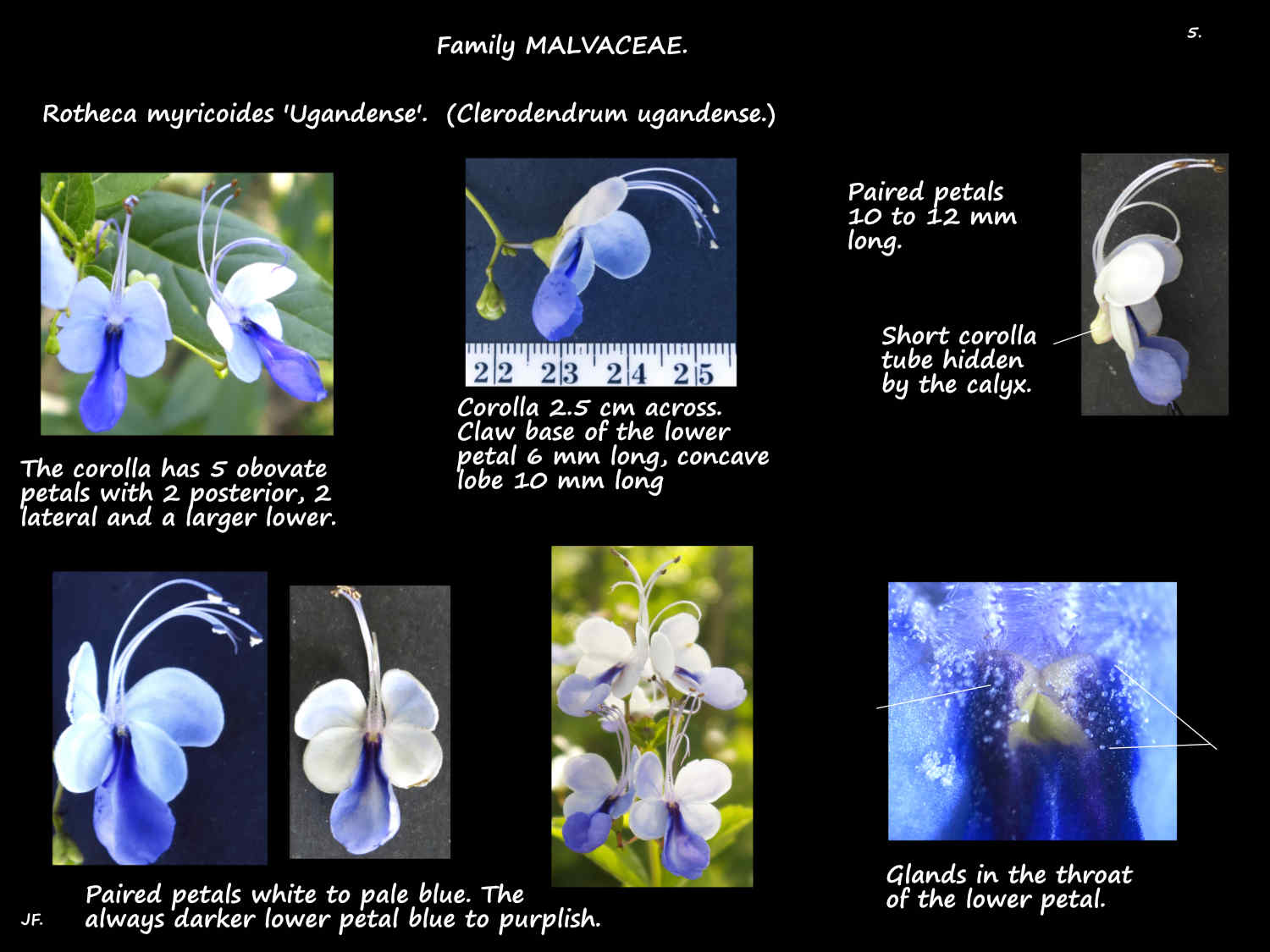
The short corolla tube has 5 spreading obovate lobes.
Flowers are bilaterally symmetric and the lobes are in a lower lip.
The obovate posterior pair of lobes, and the slightly larger lateral pair are white tinged with pale blue.
The larger spoon-shaped lower (anterior) lobe is mostly a deep purplish-blue with some areas of white.
The colours are variable.
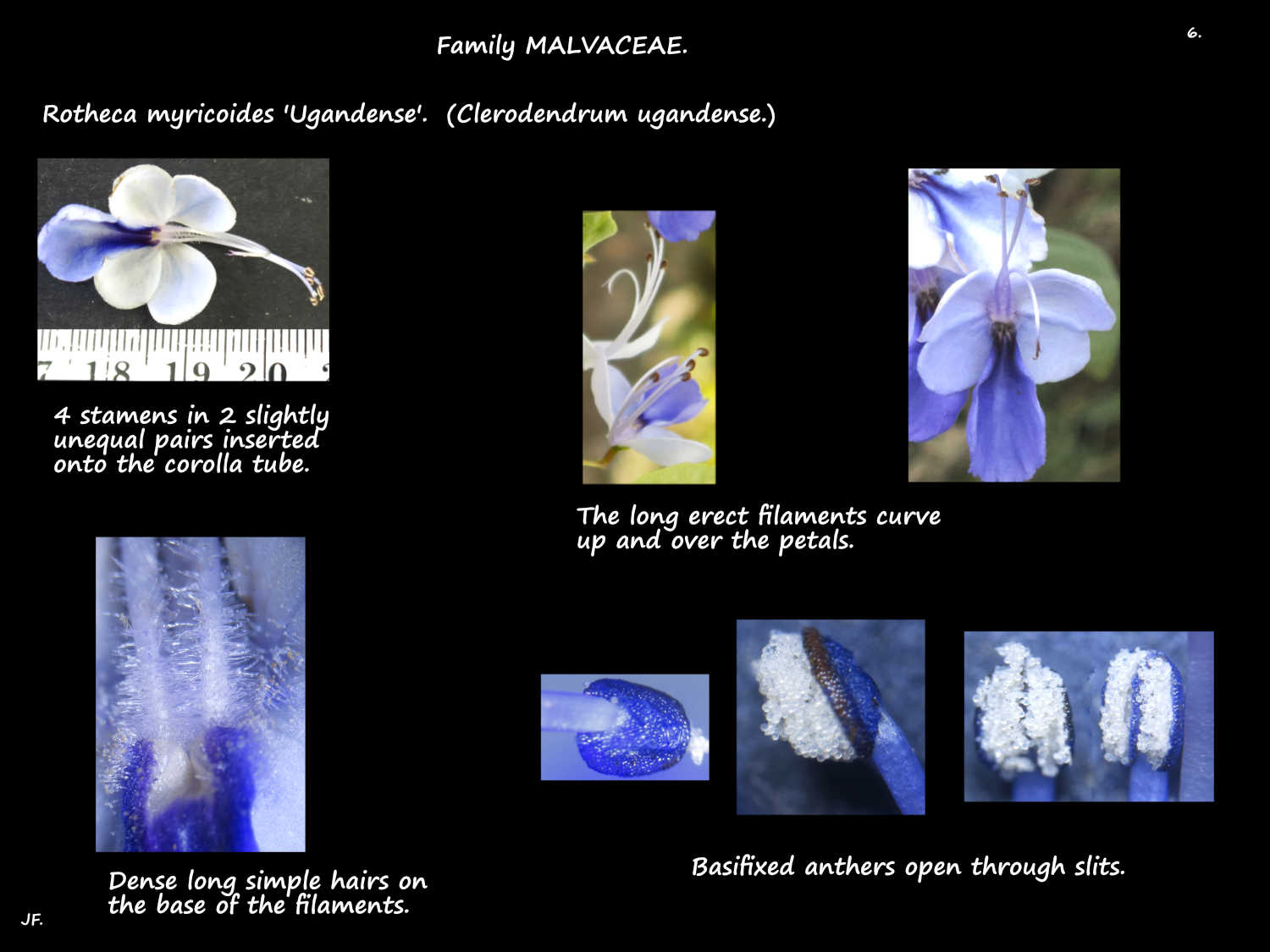
On long filaments the 2 pairs of stamens are of slightly different lengths.
They insert near the base of the corolla tube and have long simple hairs on the lower section.
The small basifixed anthers open through slits.
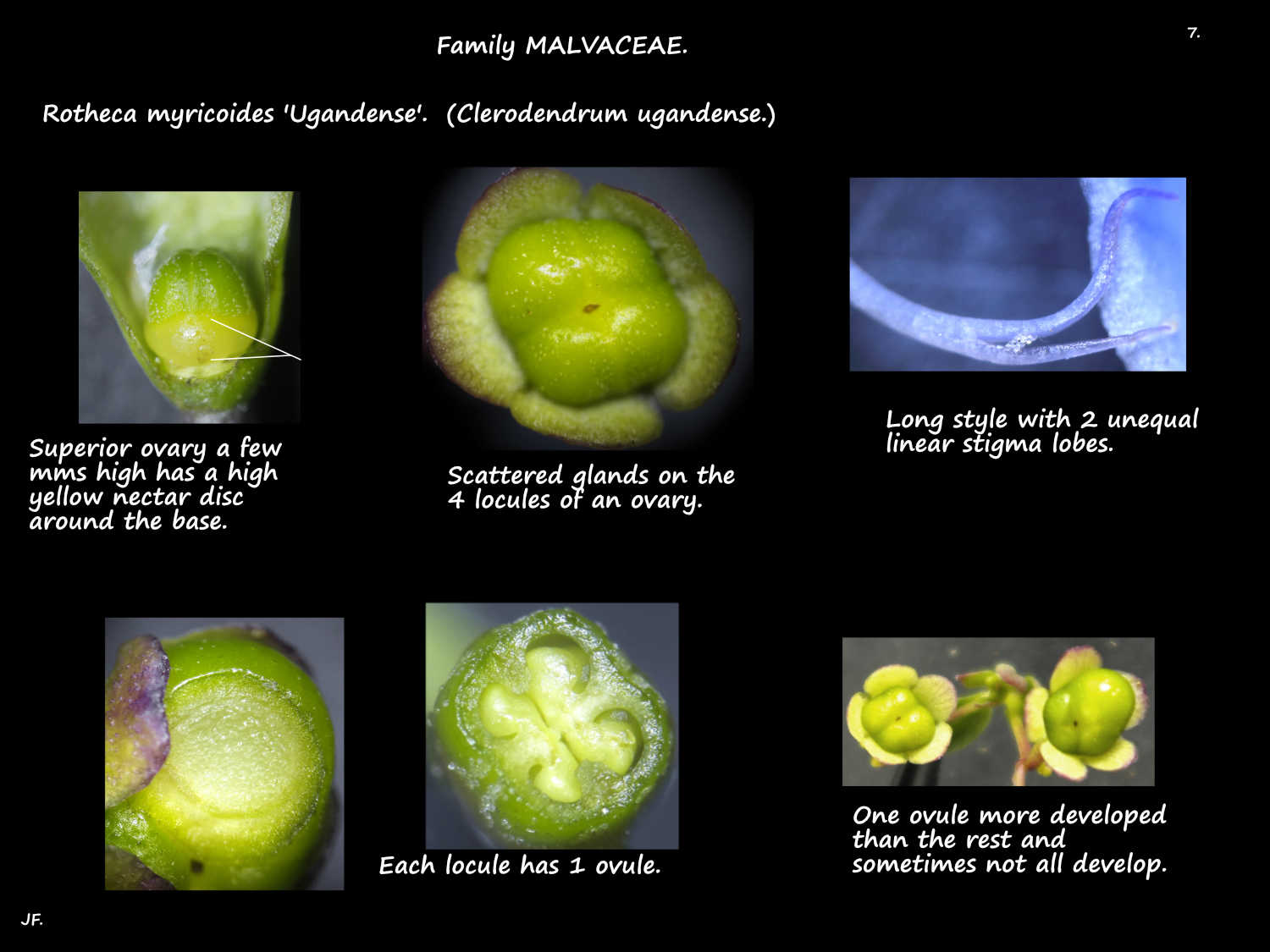
The superior ovary has 4 locules each with 1 ovule all of which often develop into seeds.
The erect style, extending past the stamens and corolla has a bi-lobed stigma.
The shiny black drupe-like fruit are up to 1 cm long and 0.5 cm wide.
They are deeply 4-lobed and break into their 4 segments (mericarps).
J.F.