The Red or Weeping Bottlebrush is also seen as Melaleuca viminalis.
It is native to the east coast of Queensland and NSW and a small area of Western Australia.
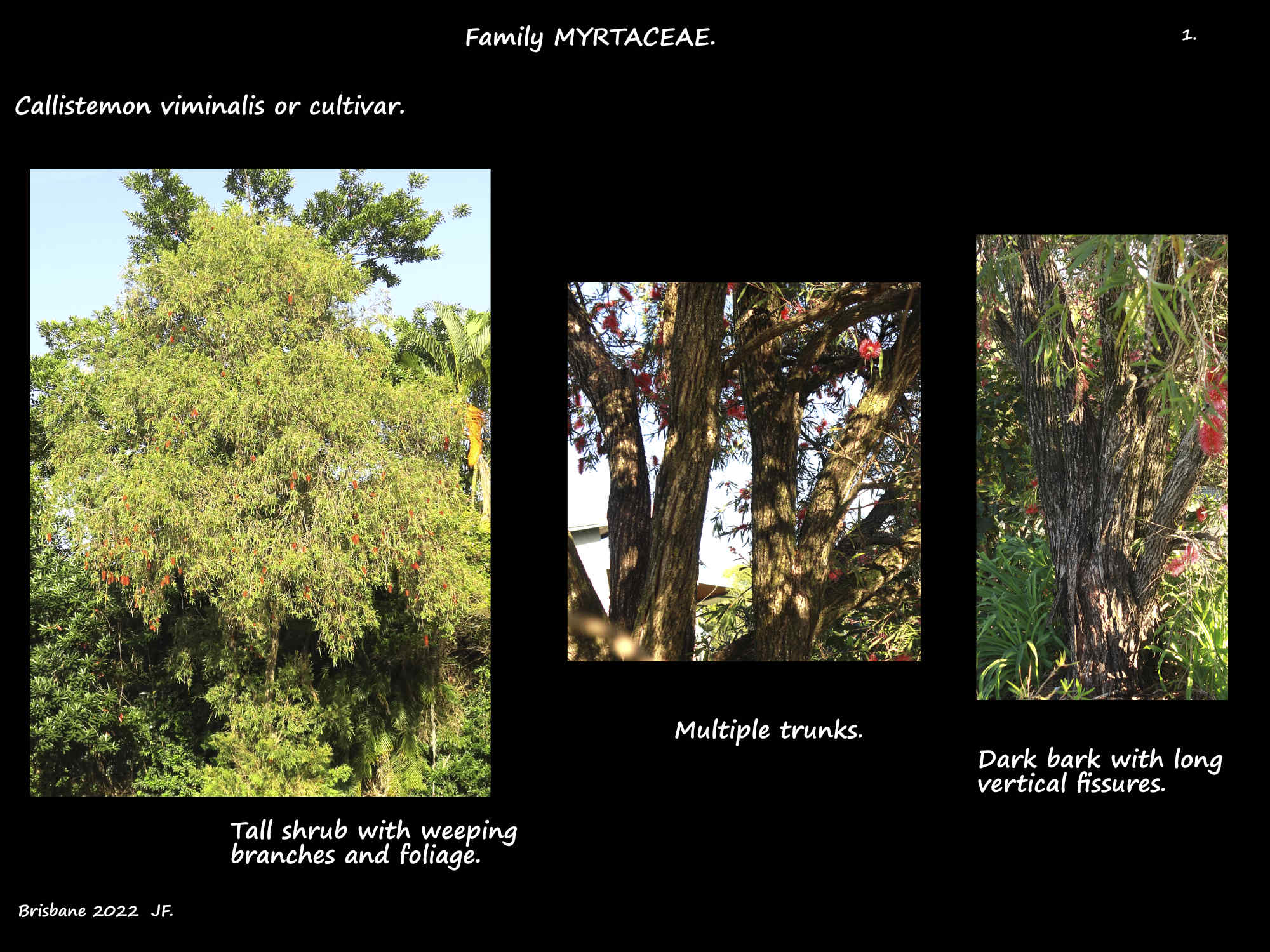
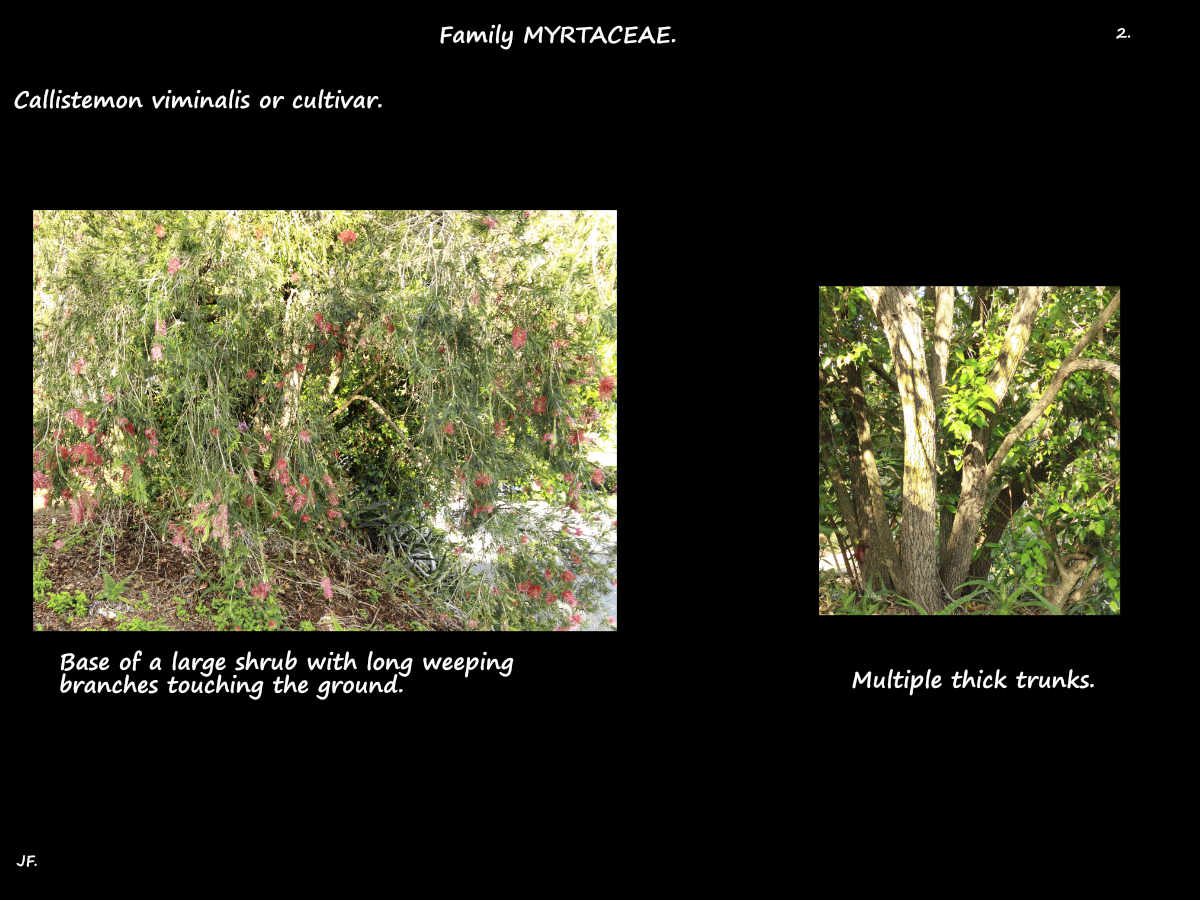
They grow as a shrub or small tree up to around 9 m high with some subspecies over 30 m.
The multiple trunks have hard fibrous bark that is usually dark and with vertical fissures.
A characteristic feature is the pendulous branches.
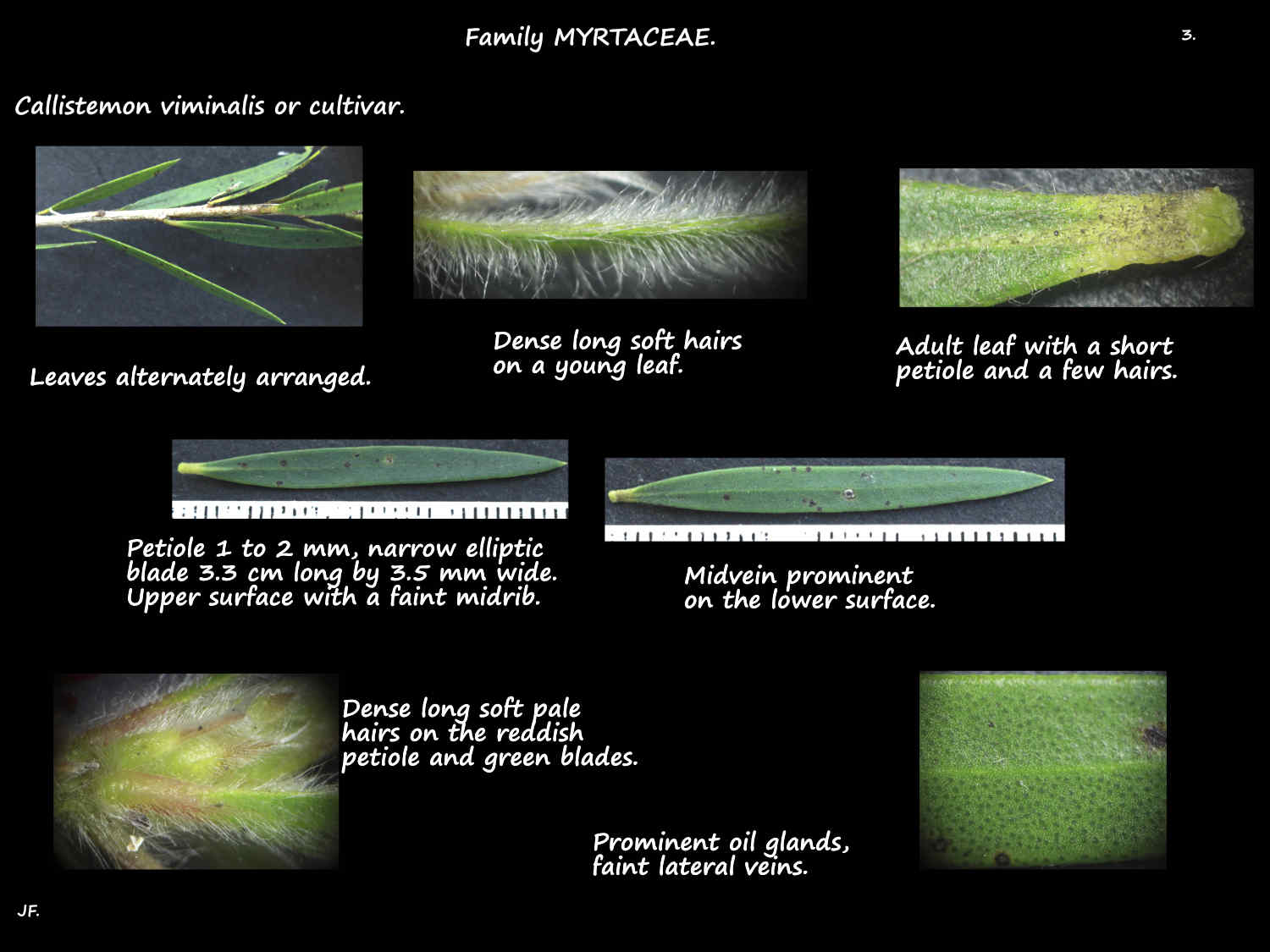
The simple alternate leaves, on a very short petiole are up to around 8 cm long and under 1 cm wide.
The green linear or narrow elliptic to ovate blades have a wedge-shaped base and pointed tip.
The midvein is prominent but the laterals are faint.
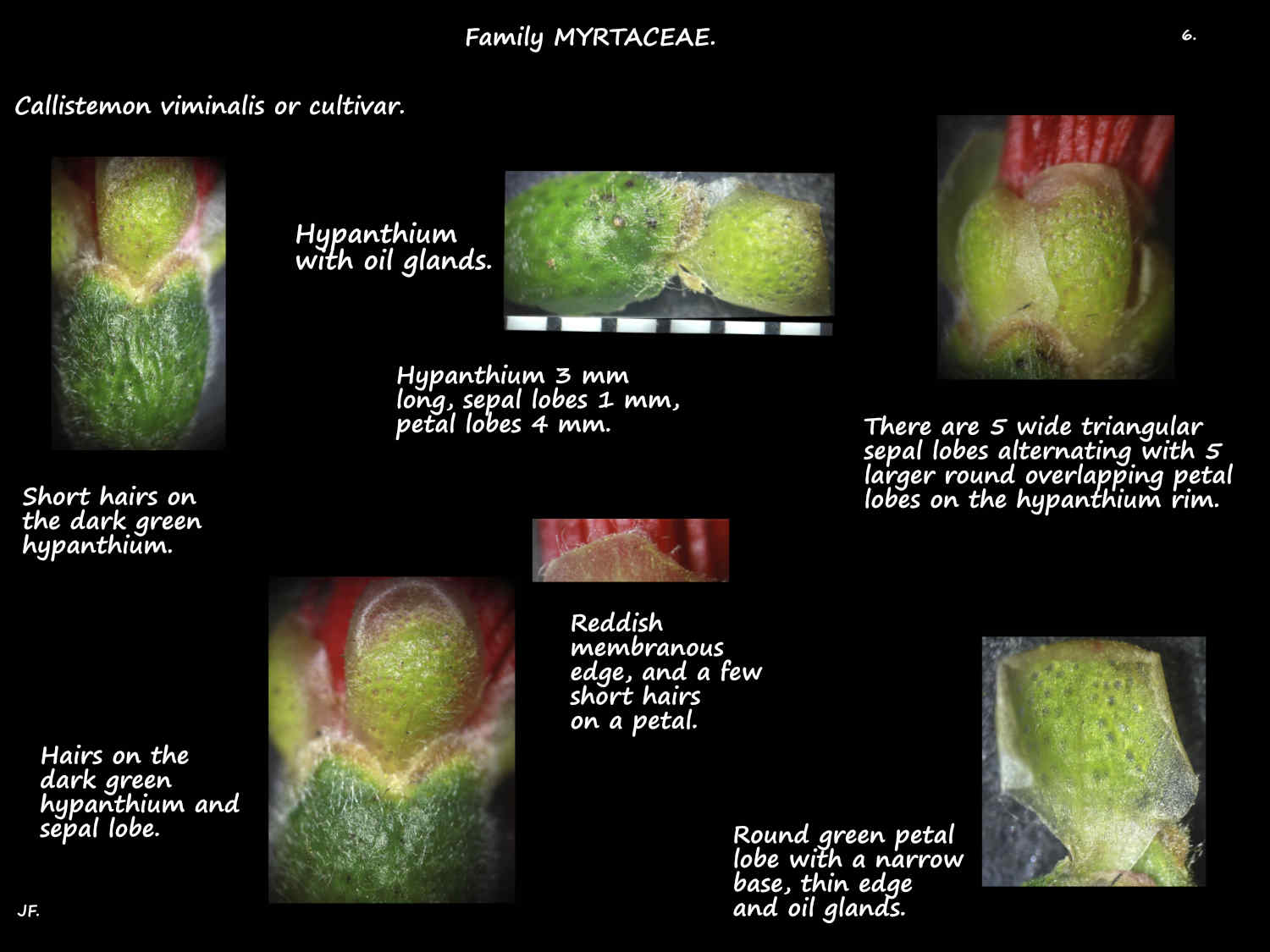
The large oil glands are visible on both surfaces.
Pinkish new leaves have long soft hairs that are gradually lost.
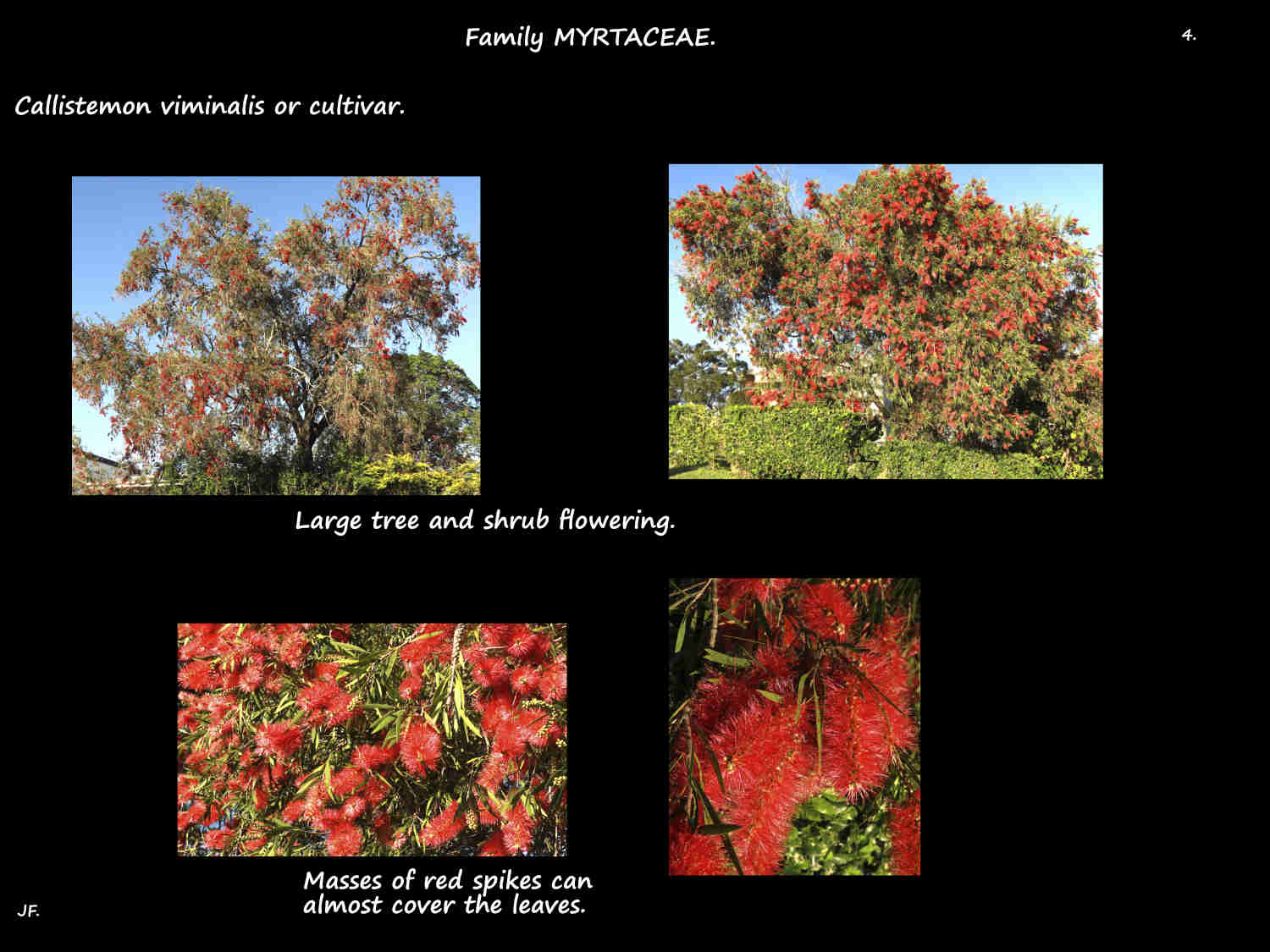
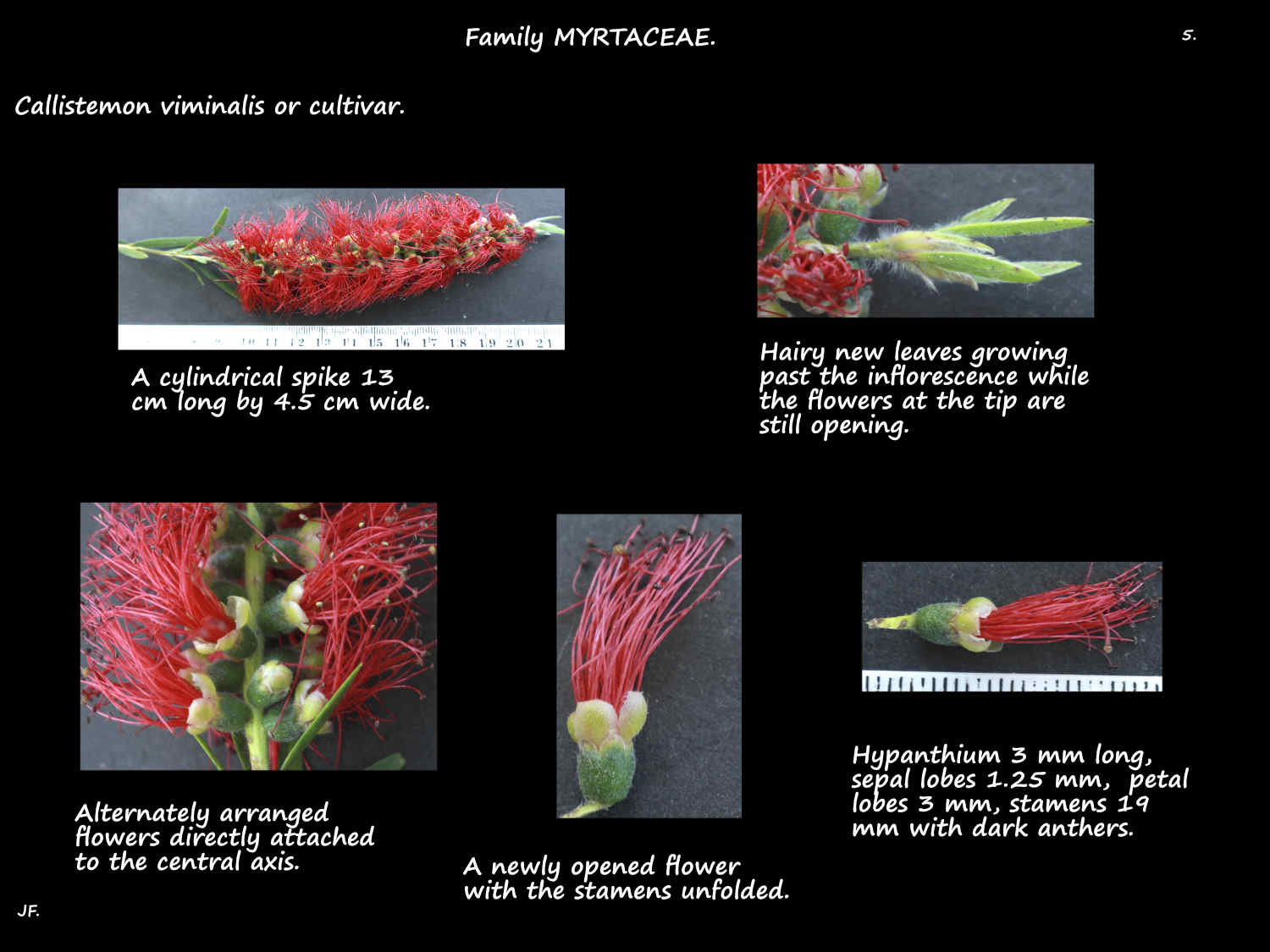
Inflorescences are a cylindrical spike near the branch ends.
Spikes are up to 15 cm long and 5 cm wide.
Along the central axis are alternately arranged flowers with no pedicels.
After flowering has started (or finished) the vegetative bud at the tip of the axis may resume growing.
This results in a short leafy stem that, the following year may produce another inflorescence.
The hypanthium of fused sepal and petal bases is around 4 mm long and 3 mm wide.
It has some short simple hairs.
On the rim are 5 small alternating sepal and petal lobes.
The green sepal lobes, 1 to 1.5 mm long have short hairs on the edges and outer surface.
The paler green roughly round petal lobes are around 4 mm long.
They have a reddish tip and hairs on the outer surface.
The sepals may persist and the petals fall.
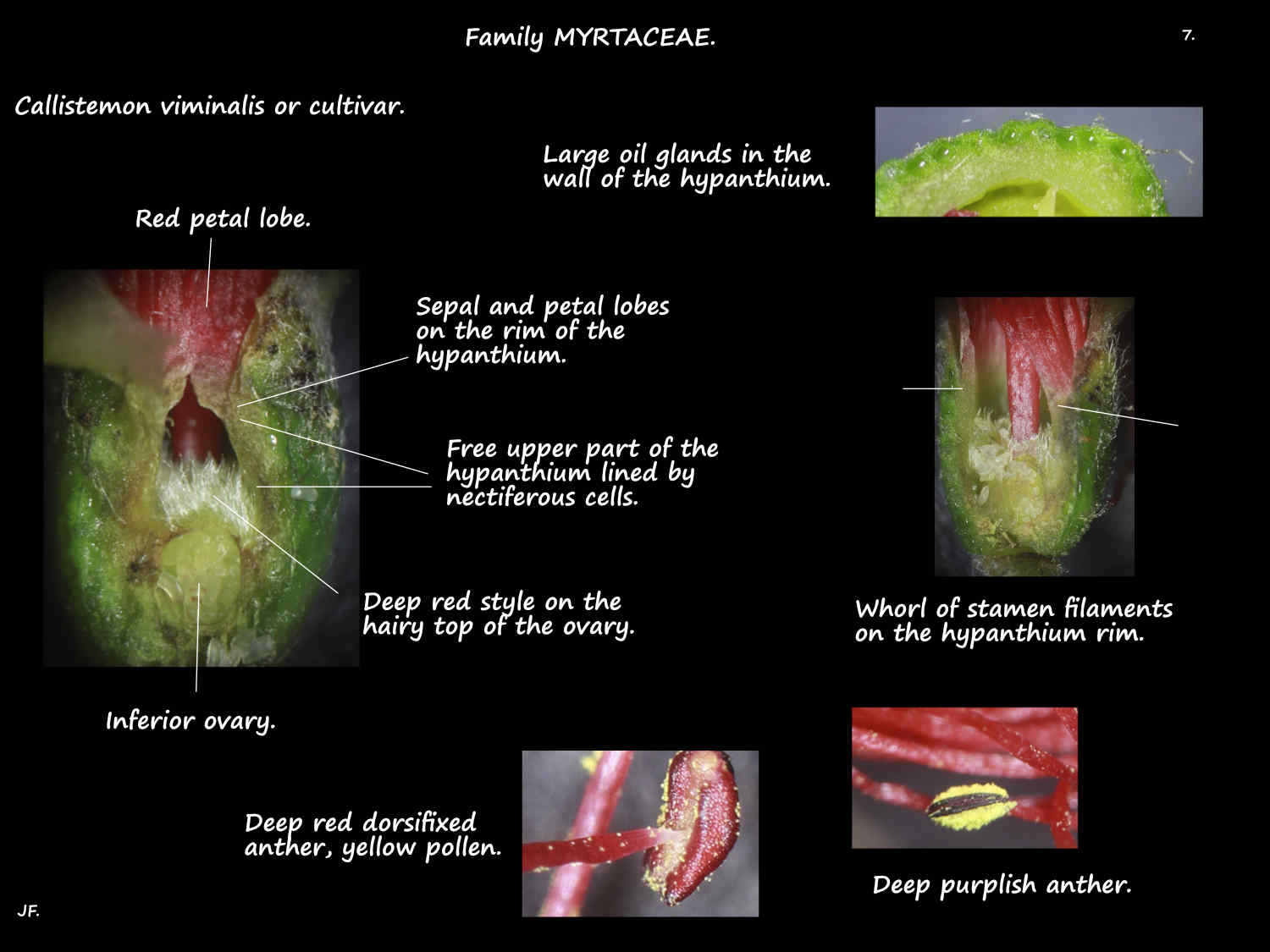
Inside the petals, and on the hypanthium rim are the stamens.
The filament bases can be free or very shortly joined at the base.
In the later case they fall as one unit.
The bright red filaments are around 2 cm long.
The bright red then blackish-red anthers are dorsifixed.
They release bright yellow pollen through long slits.
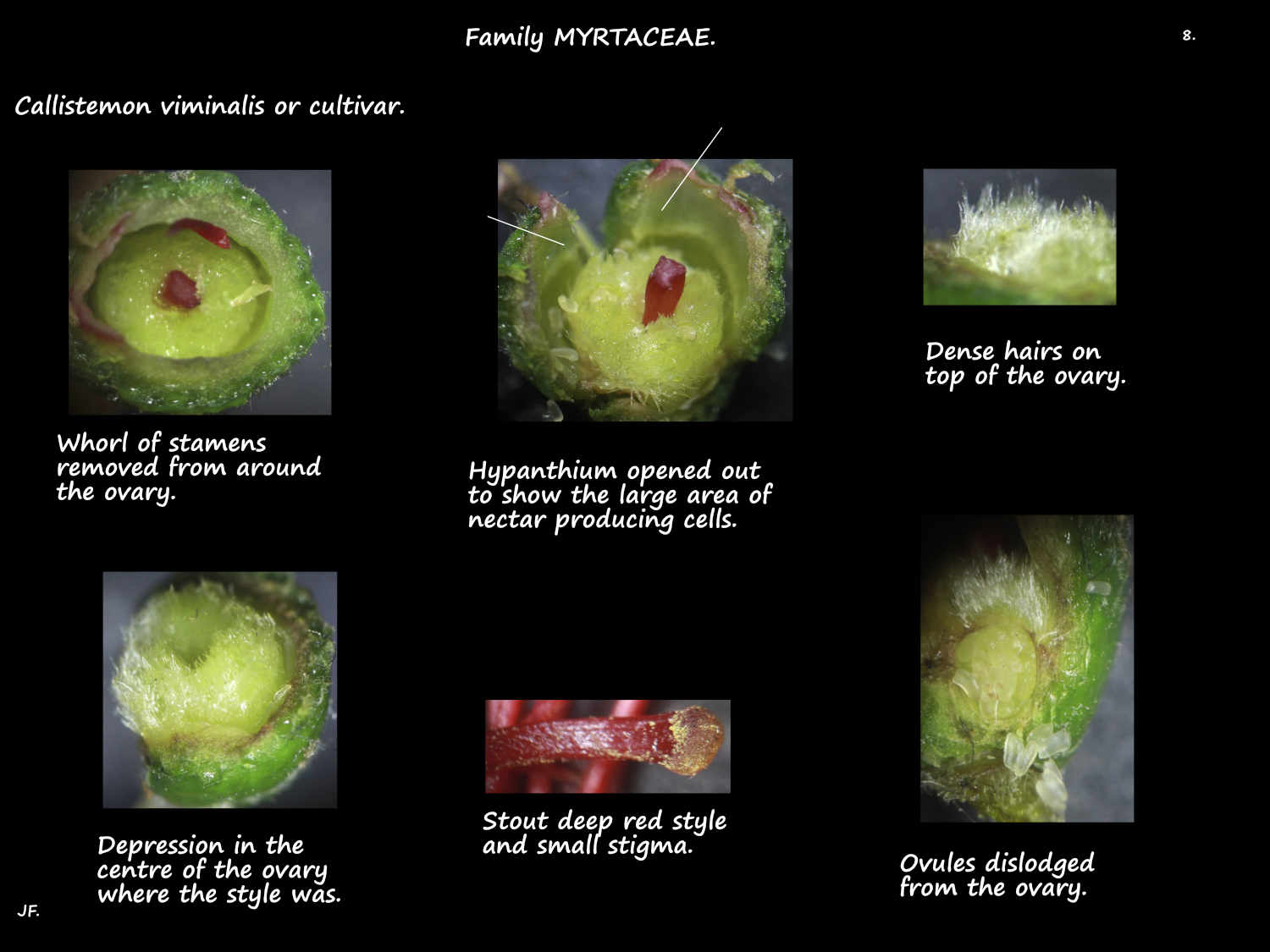
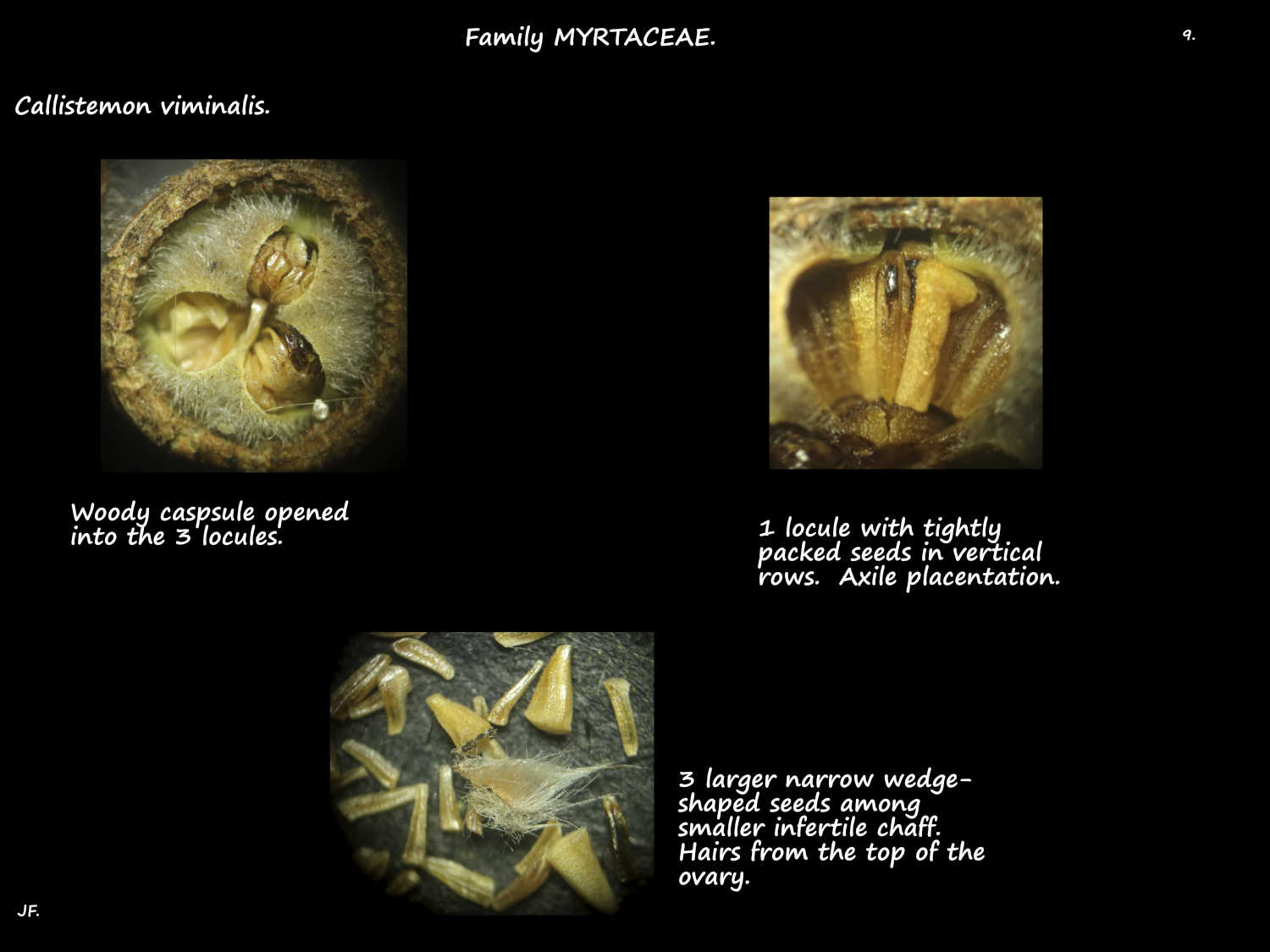
The inferior ovary has 3 locules with numerous ovules.
Its hairy upper surface lies well below the hypanthium rim.
The single deep red style is attached in a central depression on the ovary.
On the 2.5 cm long style the stigma extends past the anthers.
A lot of nectar comes from the nectiferous cells on the inner free wall of the hypanthium.
The woody cup-shaped loculicidal capsules a few mms long have a wide opening.
The numerous linear seeds are released after around a year.
There are numerous cultivars of Callistemon viminalis and with the widely cultivated Callistemon citrinus (Crimson bottlebrush) as parent/s.
J.F.