Prickly paperbark is native to the coastal areas of S. E. Queensland and into N.S.W.
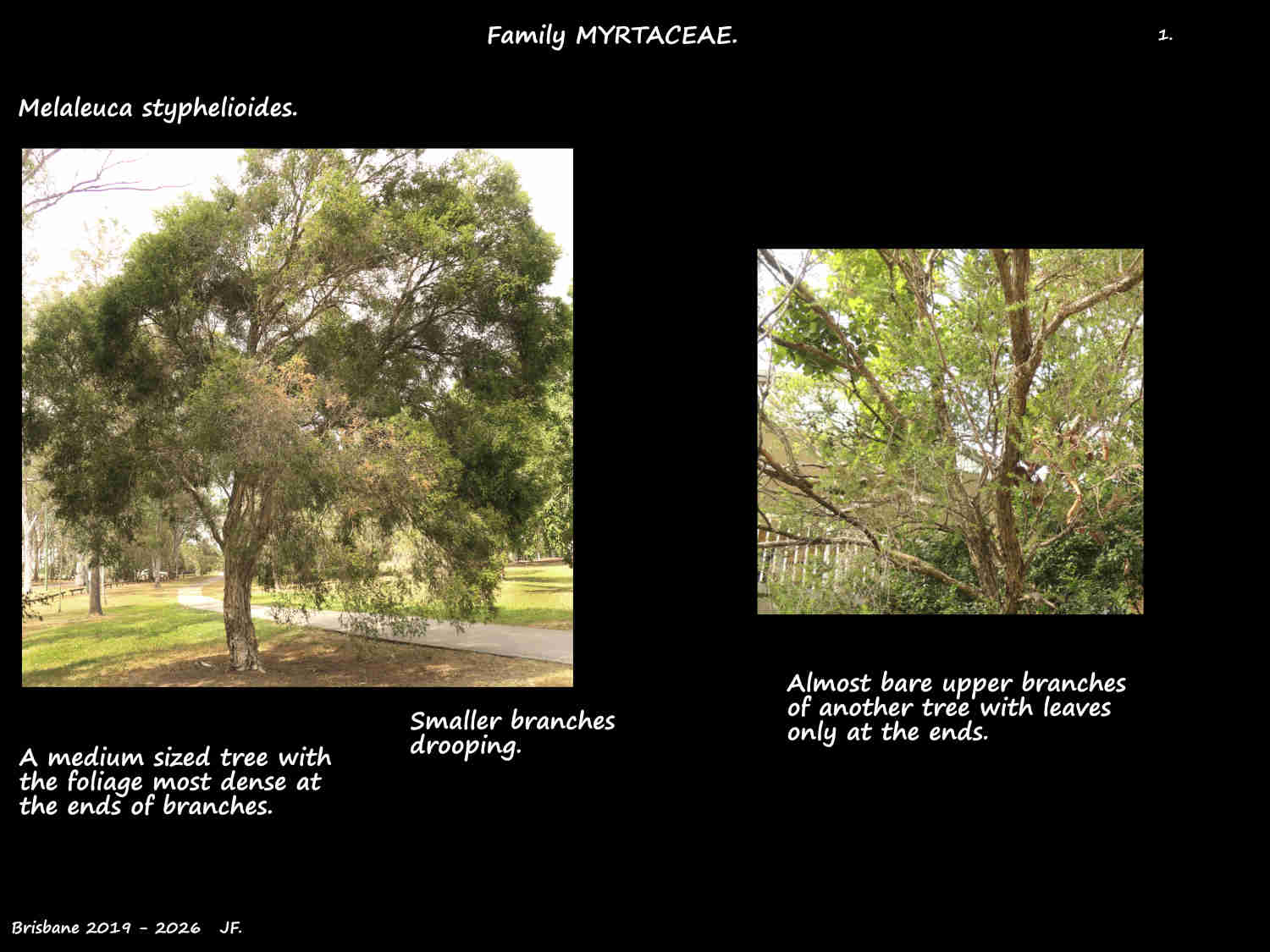
They can grow as a shrub 1 to 5 m high but are usually a tree to around 10 m.
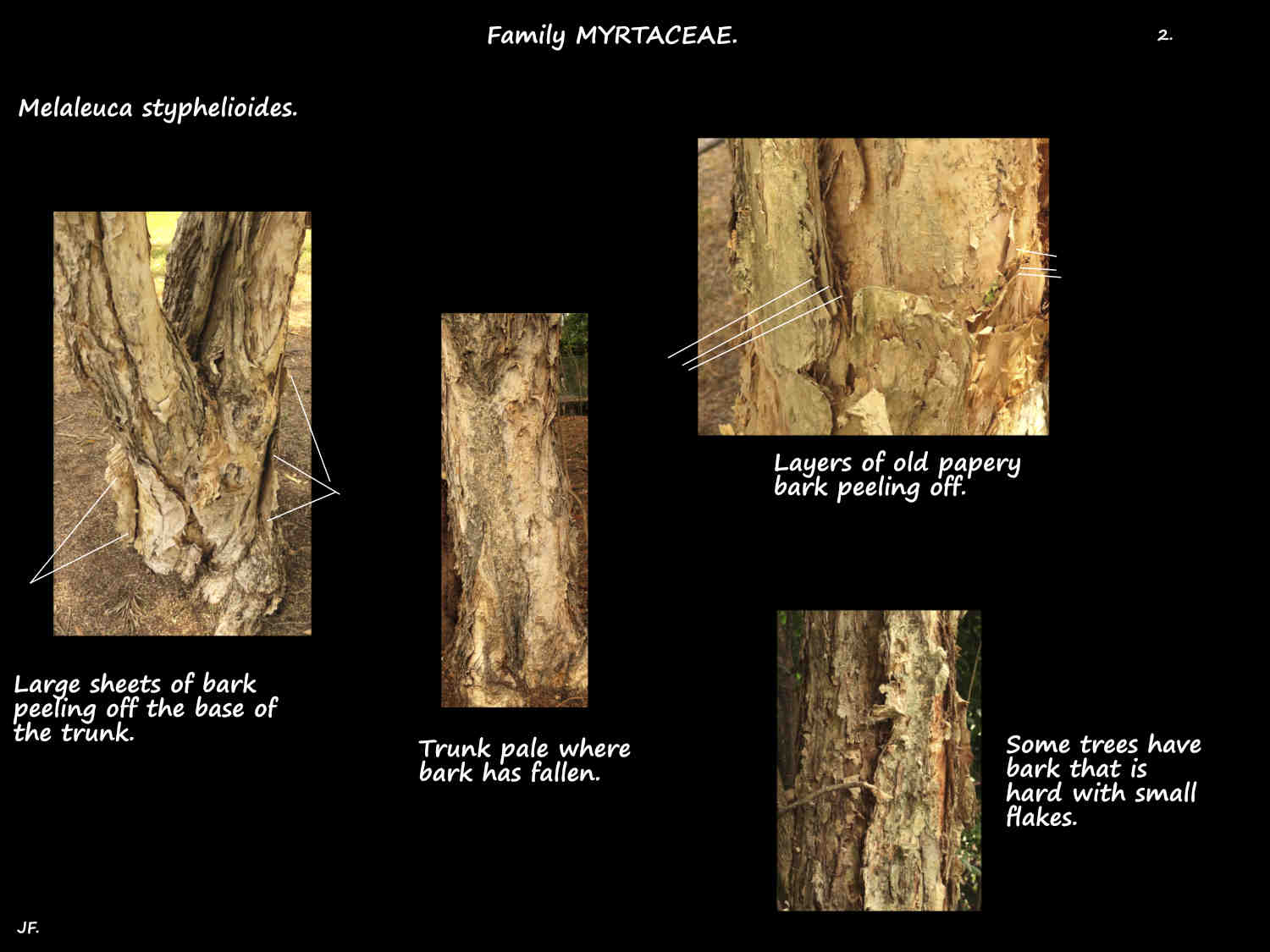
Bark on the trunk and large branches is papery.
It is pale brown and when peeled off it leaves an almost white surface.
It peels off in small to large strips or sheets with multiple thin layers of bark.
Stems branch a lot and, with leaves concentrated at the branch ends it makes for a dense crown.
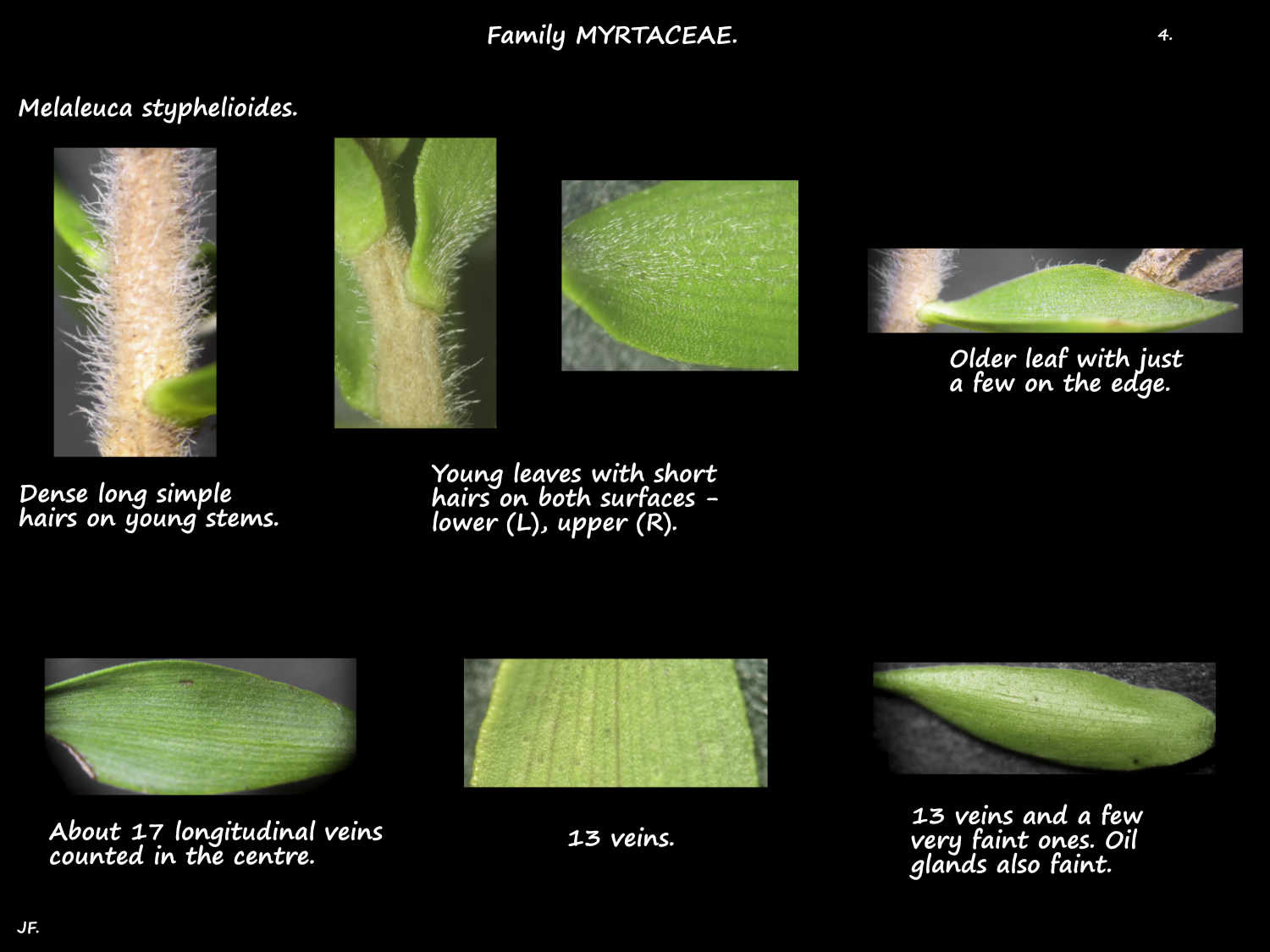
The thin terminal branches droop down and small twigs have dense simple hairs.
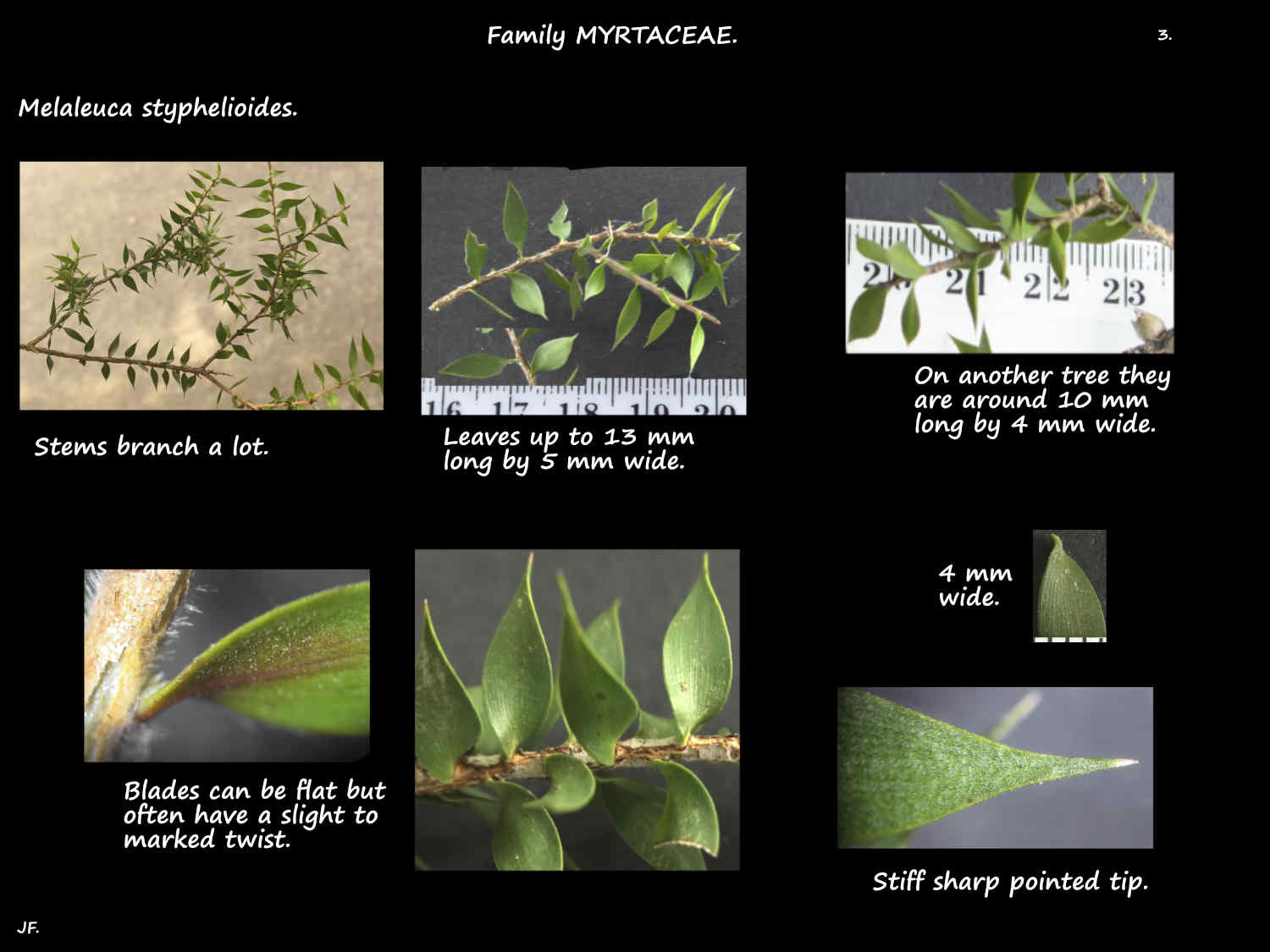
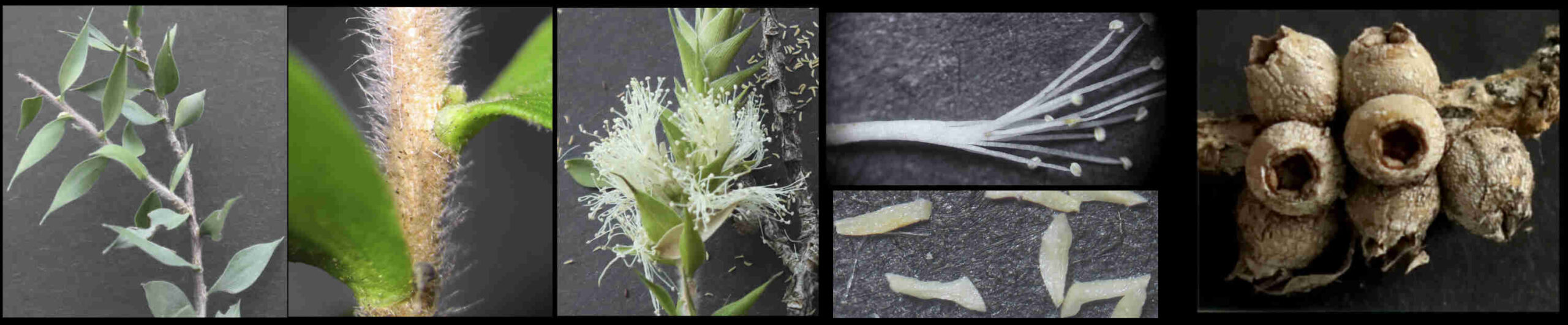
Leaves, with no petiole are alternately arranged but may appear to be irregularly scattered.
The wide ovate blades are up to around 15 mm long and 6 mm wide.
The base is twisted and the tip has a hard sharp point.
There are more than 10 longitudinal veins (counted in the middle of the blade).
Oil glands are present but often hard to see.
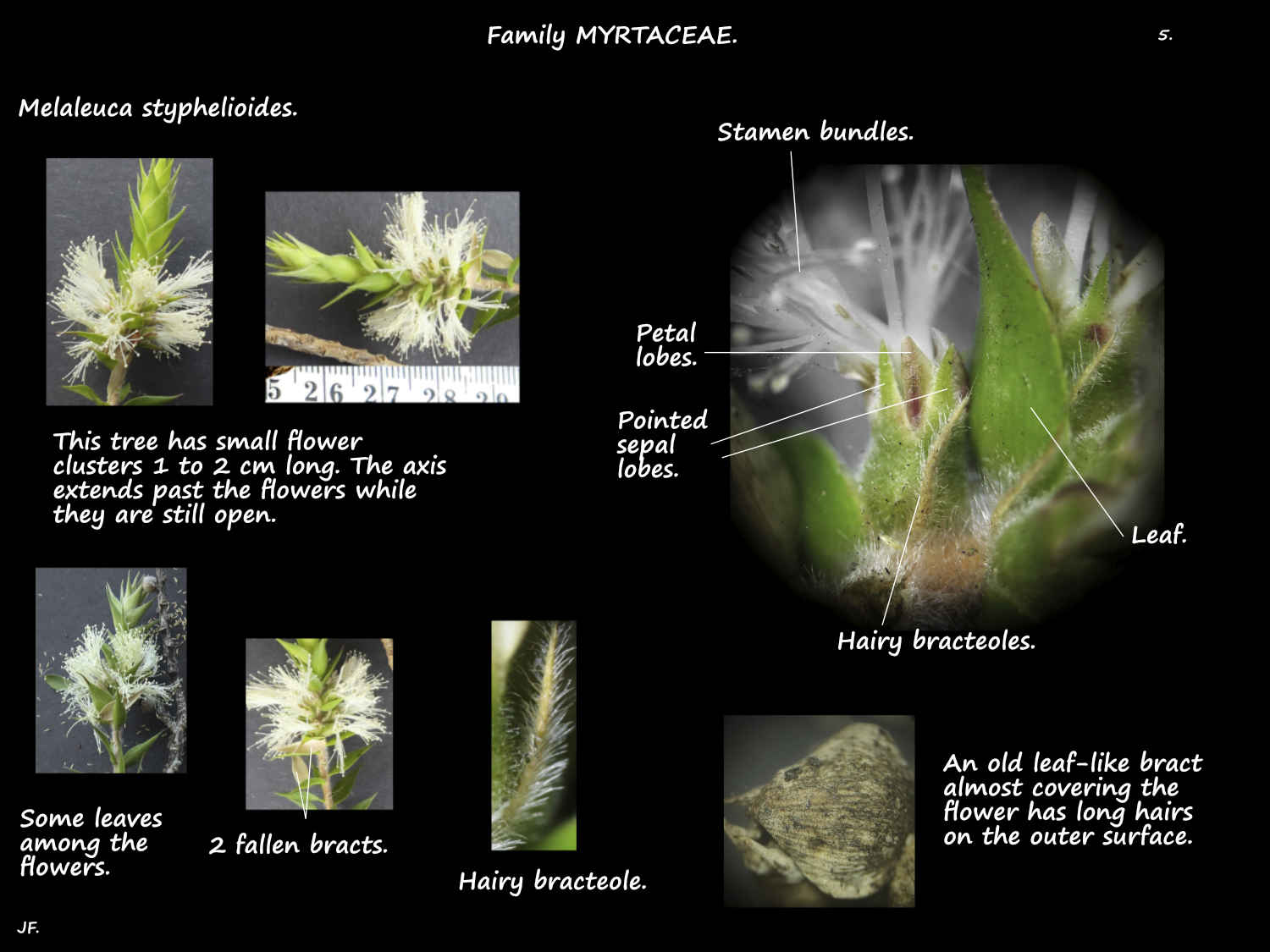
Inflorescences are a small spike under 5 cm long near the ends of the branches.
They do not remain terminal or near-terminal as the axis continues to grow past the flowers even while they are still open.
Flowers, directly attached to the hairy axis are solitary or in groups of three.
Under each flower or group are bracts and bracteoles.
Bracts are leaf-like and the 2 to 3 mm ovate bracteoles have hairs.
All fall early.
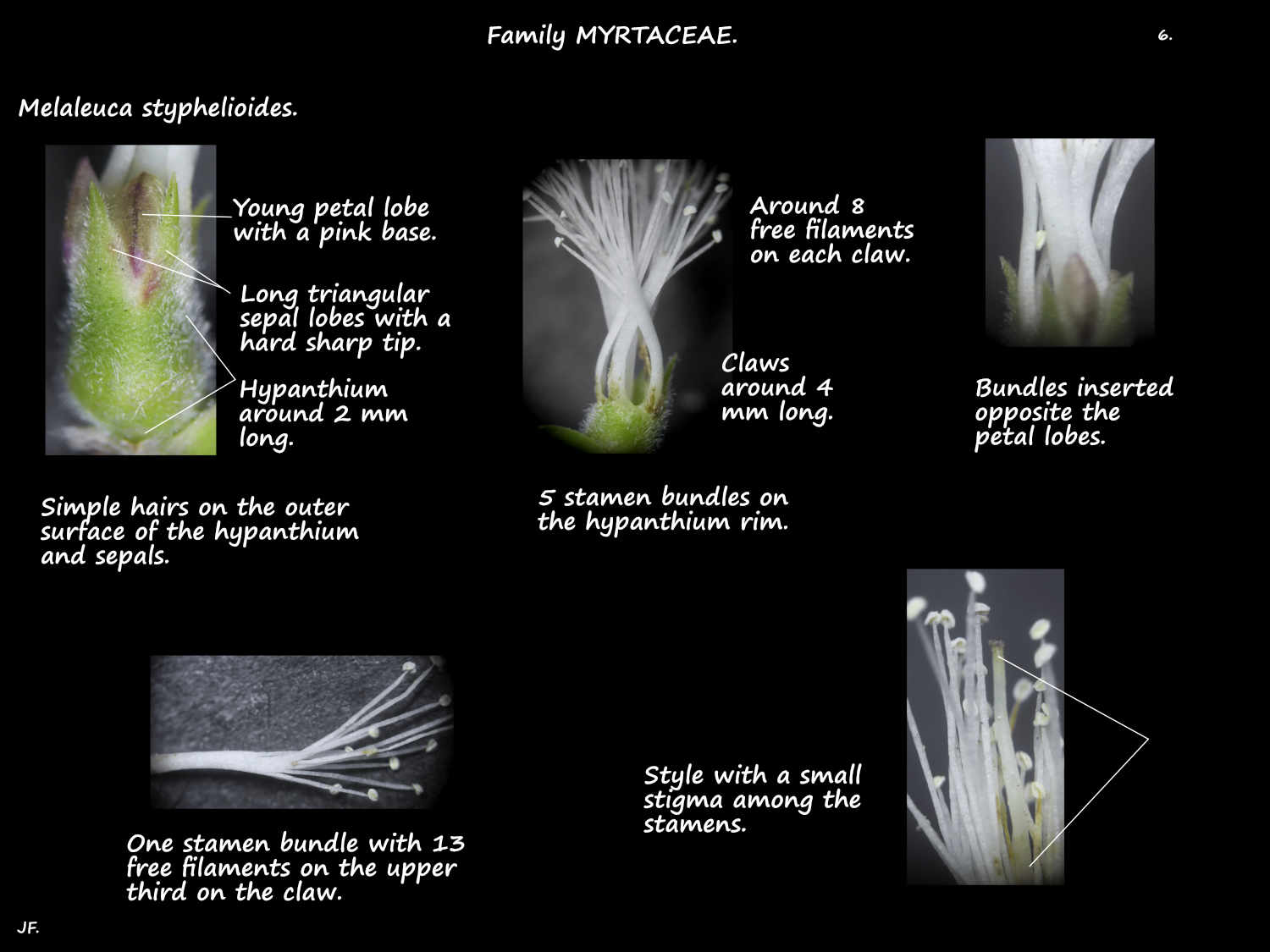
Flowers have an ovoid hypanthium around 2 mm long.
Of fused sepal and petal bases it usually has small hairs on the outer surface.
On the rim are 5 sepals and 5 petals.
The long narrow sepal lobes have a stiff pointed tip and hairs on the outer surface.
The white petals, 1 to 2 mm long have a narrow base and circular lobe.
Petals fall before the flowers die.
The numerous white stamens are in 5 bundles.
In each bundle around 4 mm of the filament bases are fused forming a claw.
The claws are inserted on the hypanthium opposite the petals.
The free filament ends in each bundle are attached to the edges of the upper third of the claws.
The up to 26 free filament ends are around 5 or 6 mm long.
The filaments and anthers are the most prominent parts of the flowers.
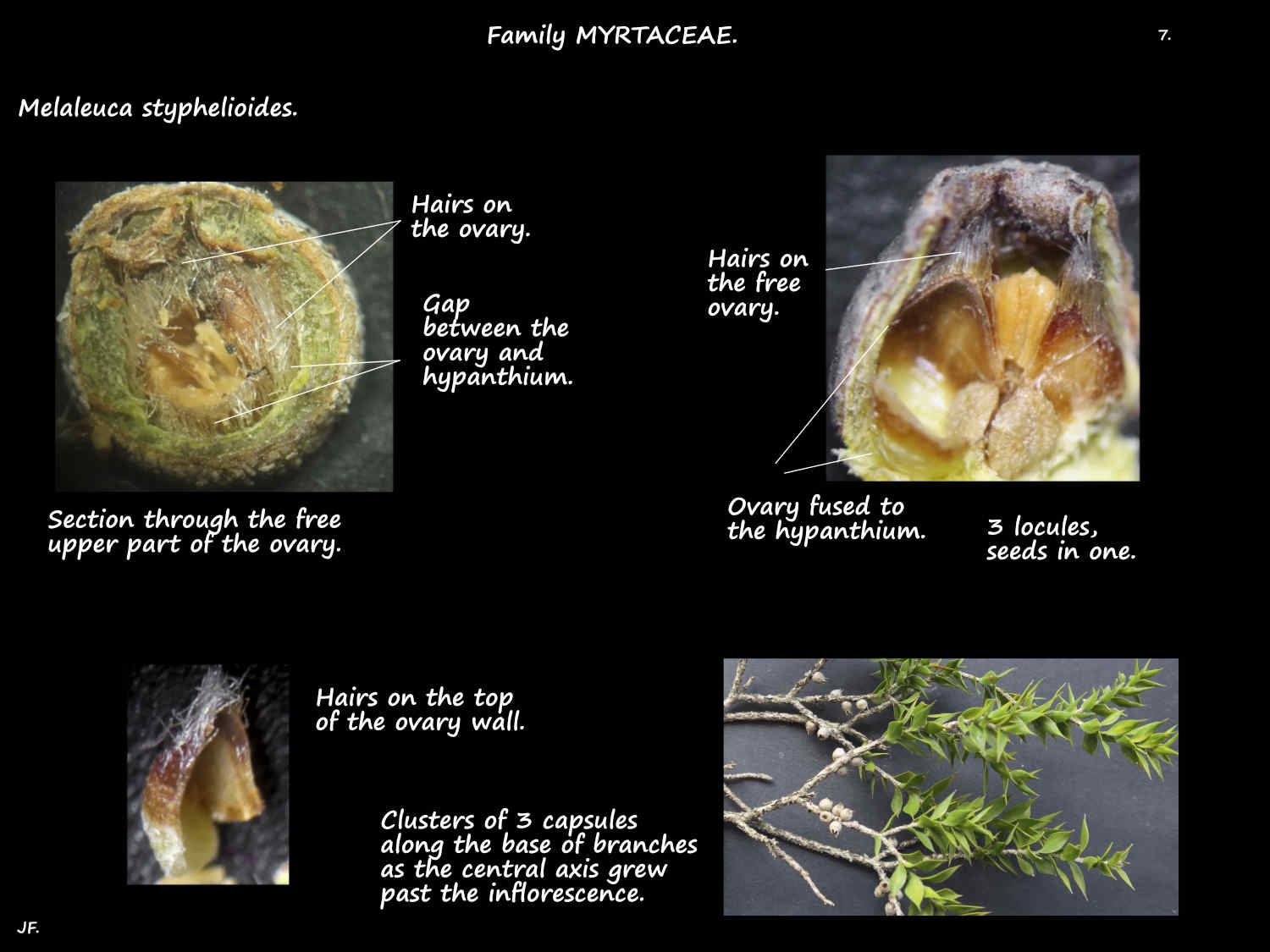
The lower part of the 2 mm long ovary is fused to the hypanthium.
The free upper section is covered in white hairs.
The 3 locules each have numerous ovules.
The single style, around 1 cm long has a small flat stigma.
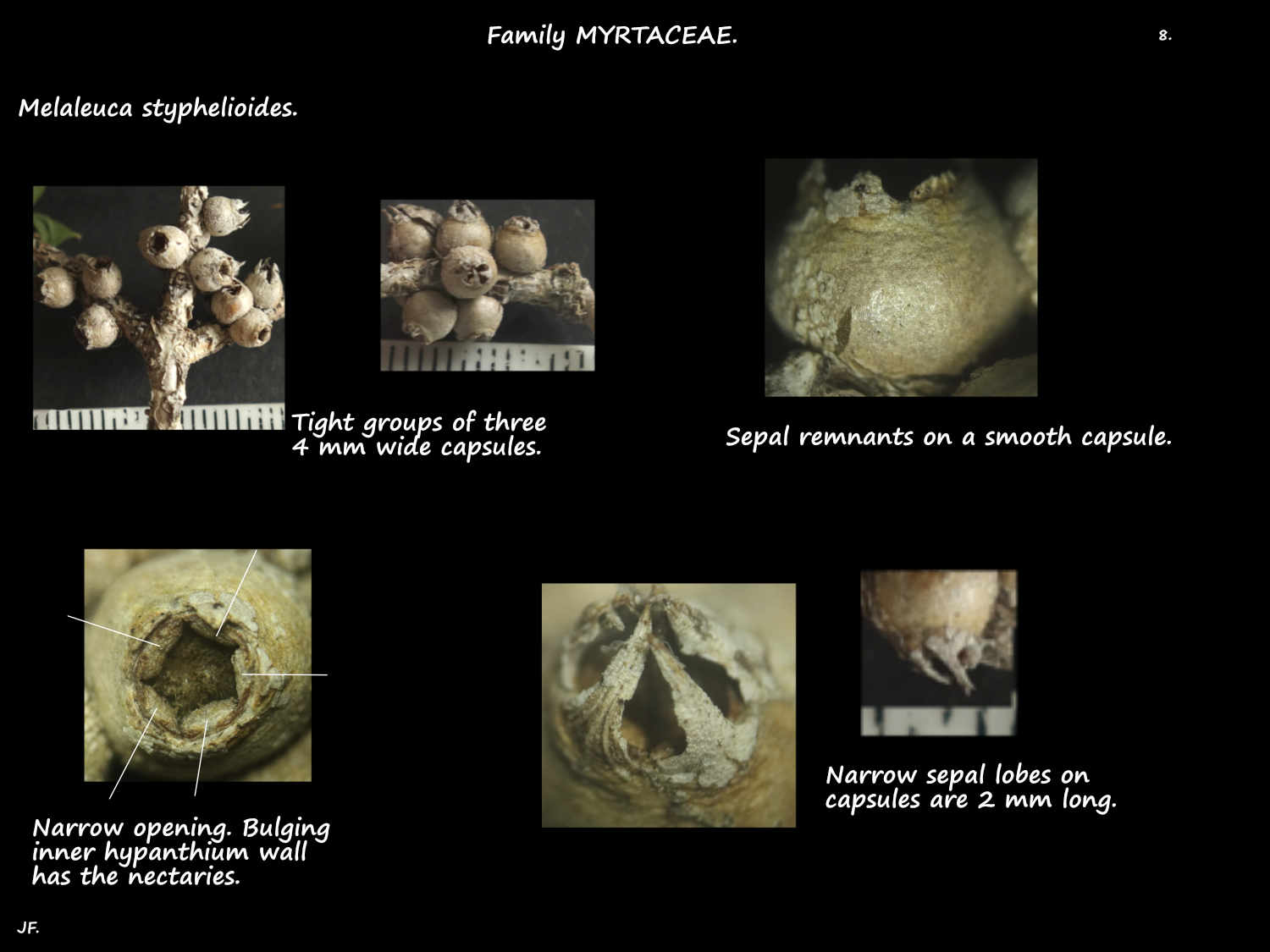
The brown to grey cup-shaped fruit are a loculicidal capsule around 3 mm wide.
Along the stem they are solitary or in groups of 3.
The sepal lobes may remain on the rim.
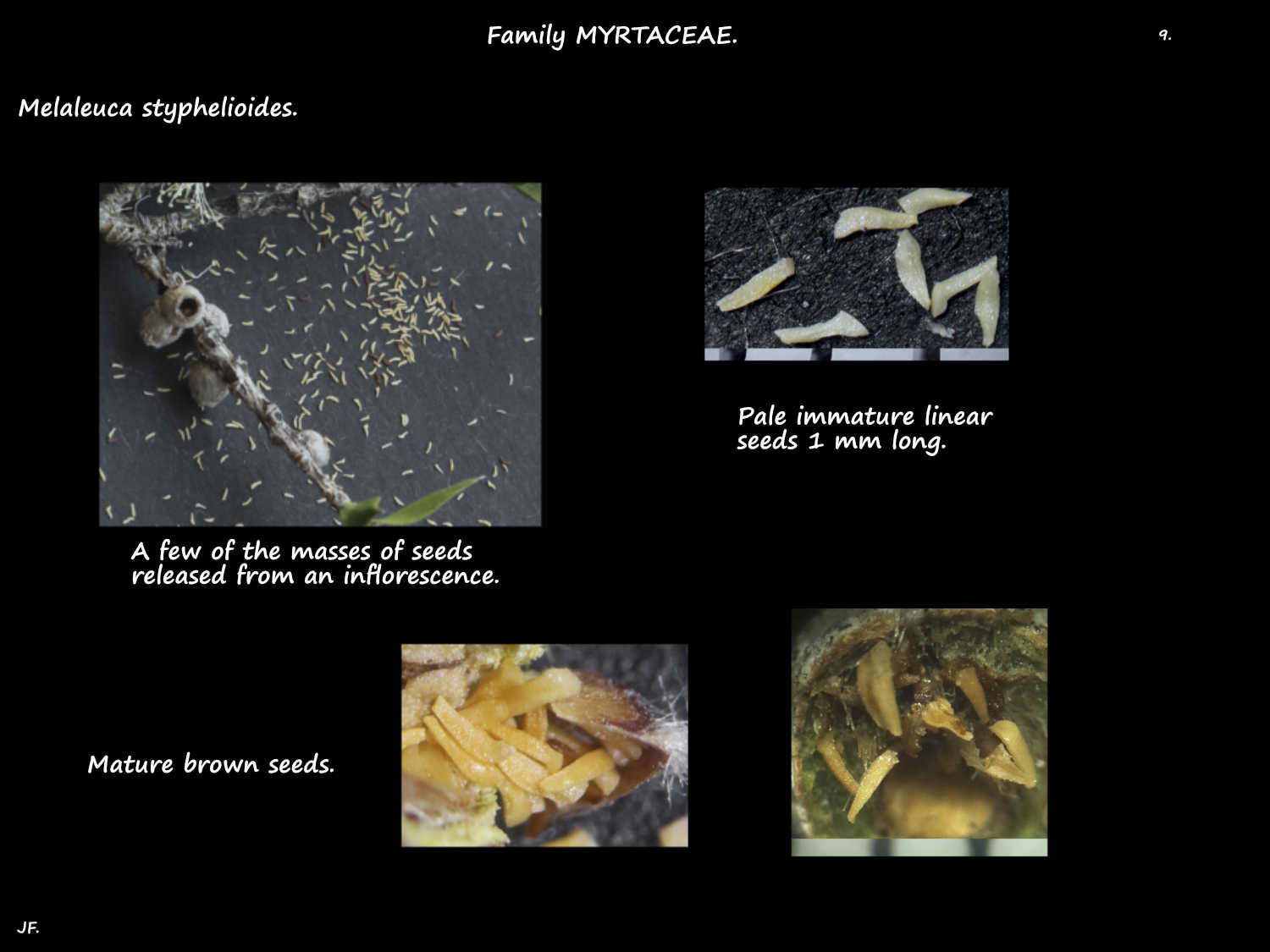
Each of the 3 chambers has numerous linear seeds.
J.F.