Family Rosaceae > Subfamily Amygdaloideae > Tribe Maleae > Subtribe Malinae.
Plants of the World Online accepts 27 species.
Different figures (40 to 65) can be seen as there is some debate over which other genera should be included.
Photinia are mainly found in China and S. E. Asia.
Australia has one naturalised species – Photinia serratifolia.
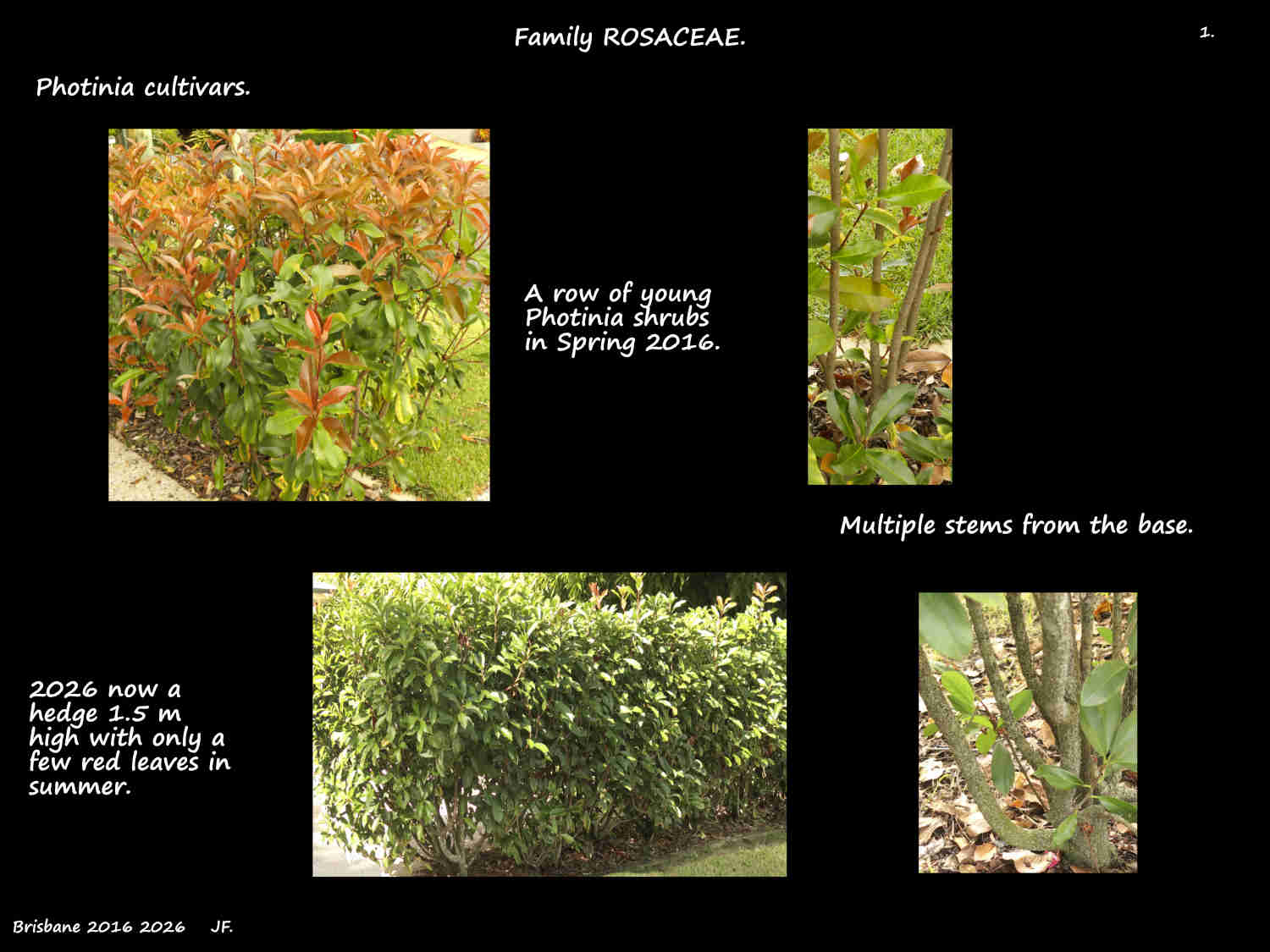
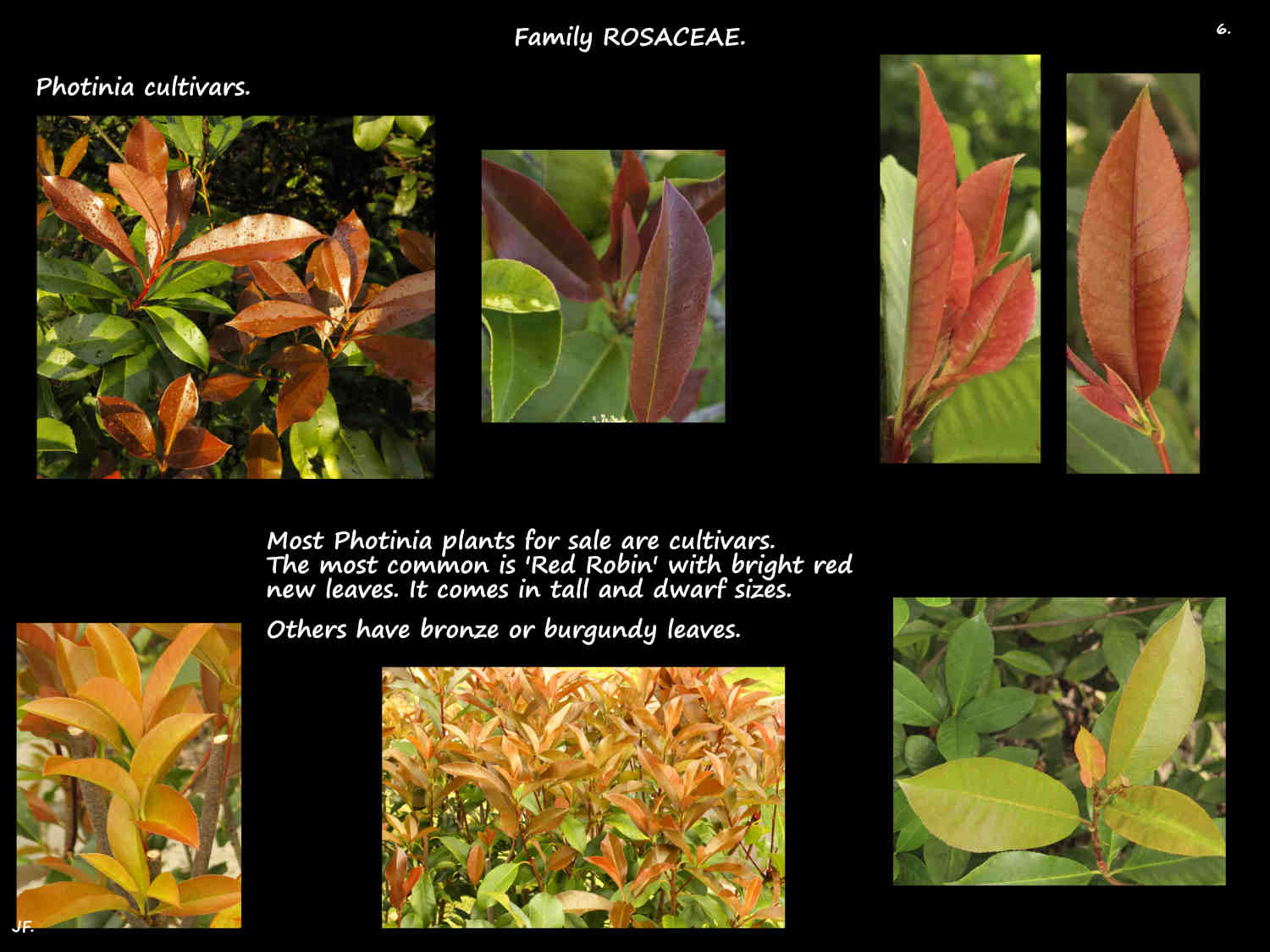
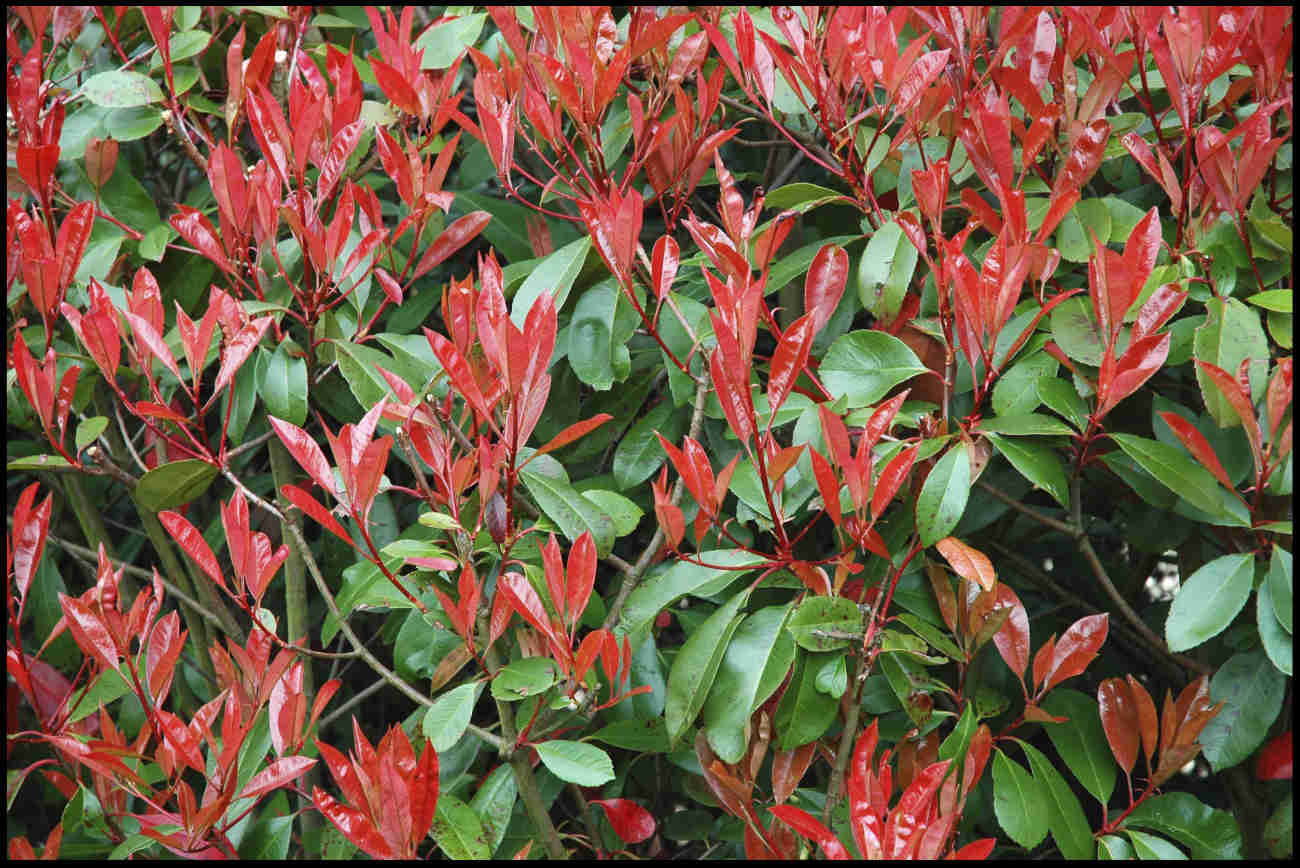
Cultivars are fairly common and often used as a hedge.
There are small to large shrubs 1 to 10 m high and trees to around 20 m.
They are evergreen or partly or fully deciduous.
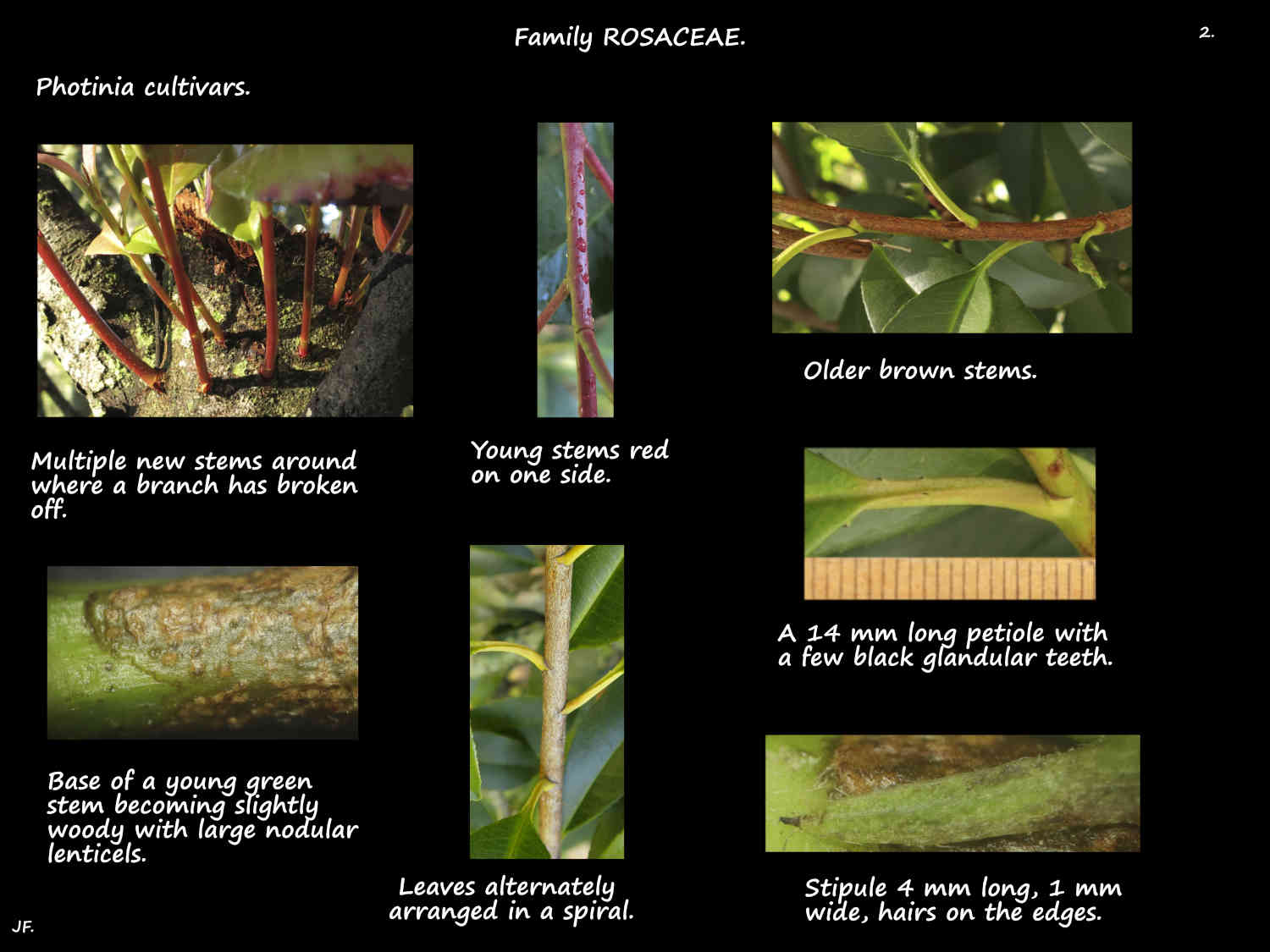
The erect branches have greyish bark and young twigs have dense brown hairs.
The simple alternate leaves are on a petiole from 4 mm to 4 cm long.
There are stipules, sometimes leaf-like at the base of the petiole.
Edges of the narrow triangular stipules can be smooth or toothed.
Around 5 mm long and 1 mm wide and they fall early.
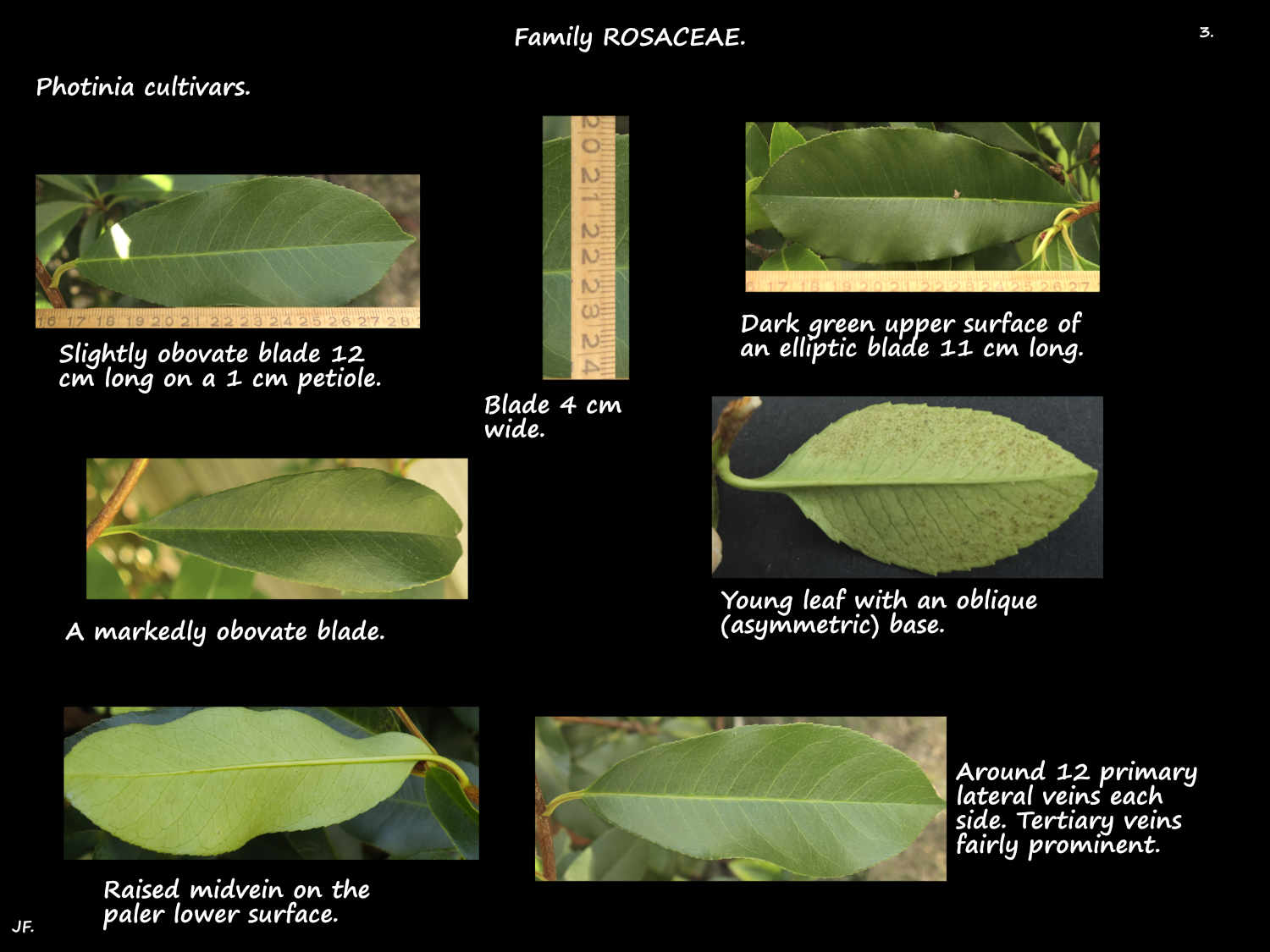
Leaf blades vary from 3 to around 15 (20) cm long.
They can be elliptic, oblong or obovate and the tip pointed to blunt.
The base is usually wedge-shaped but can be asymmetric (oblique).
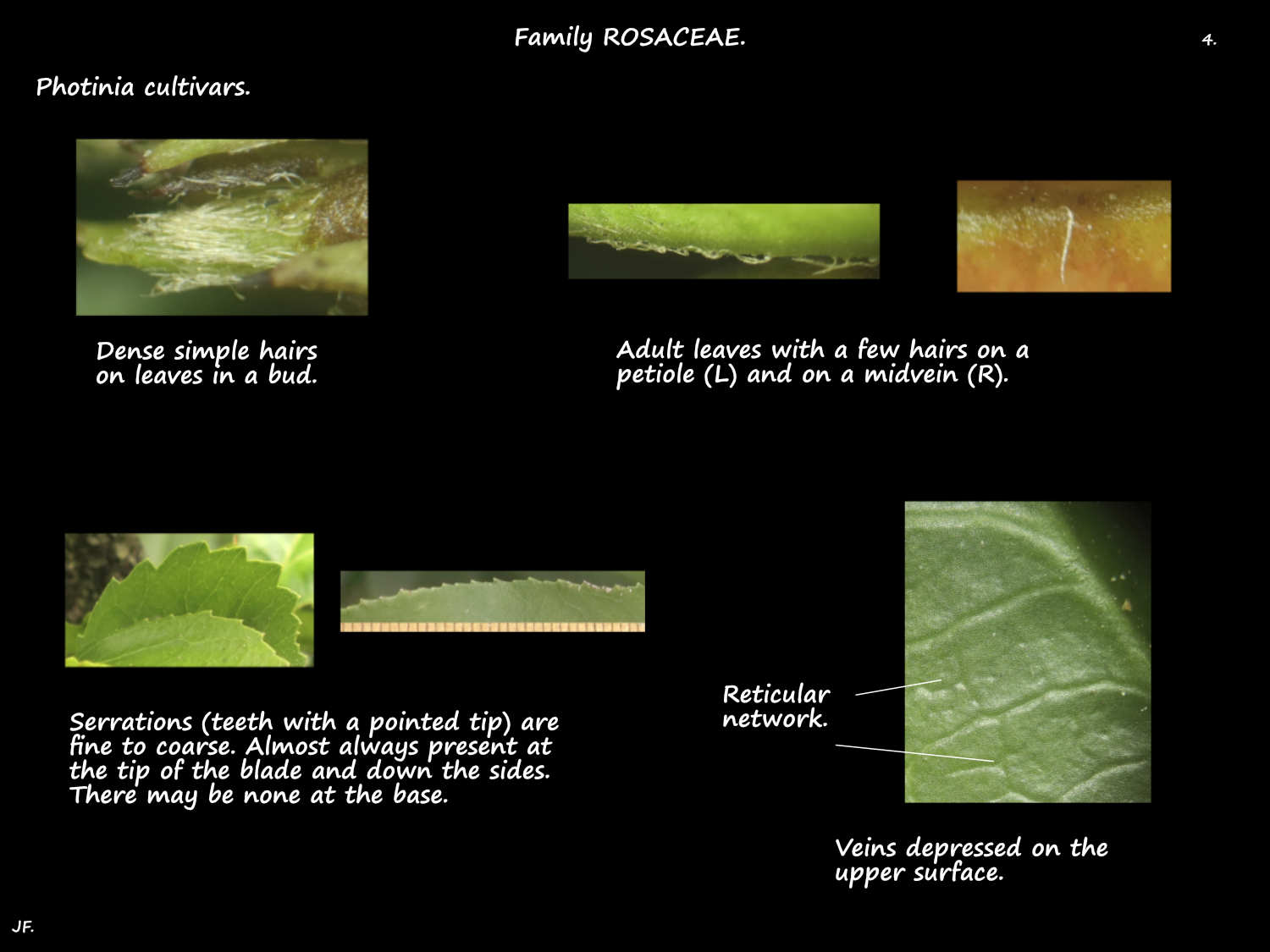
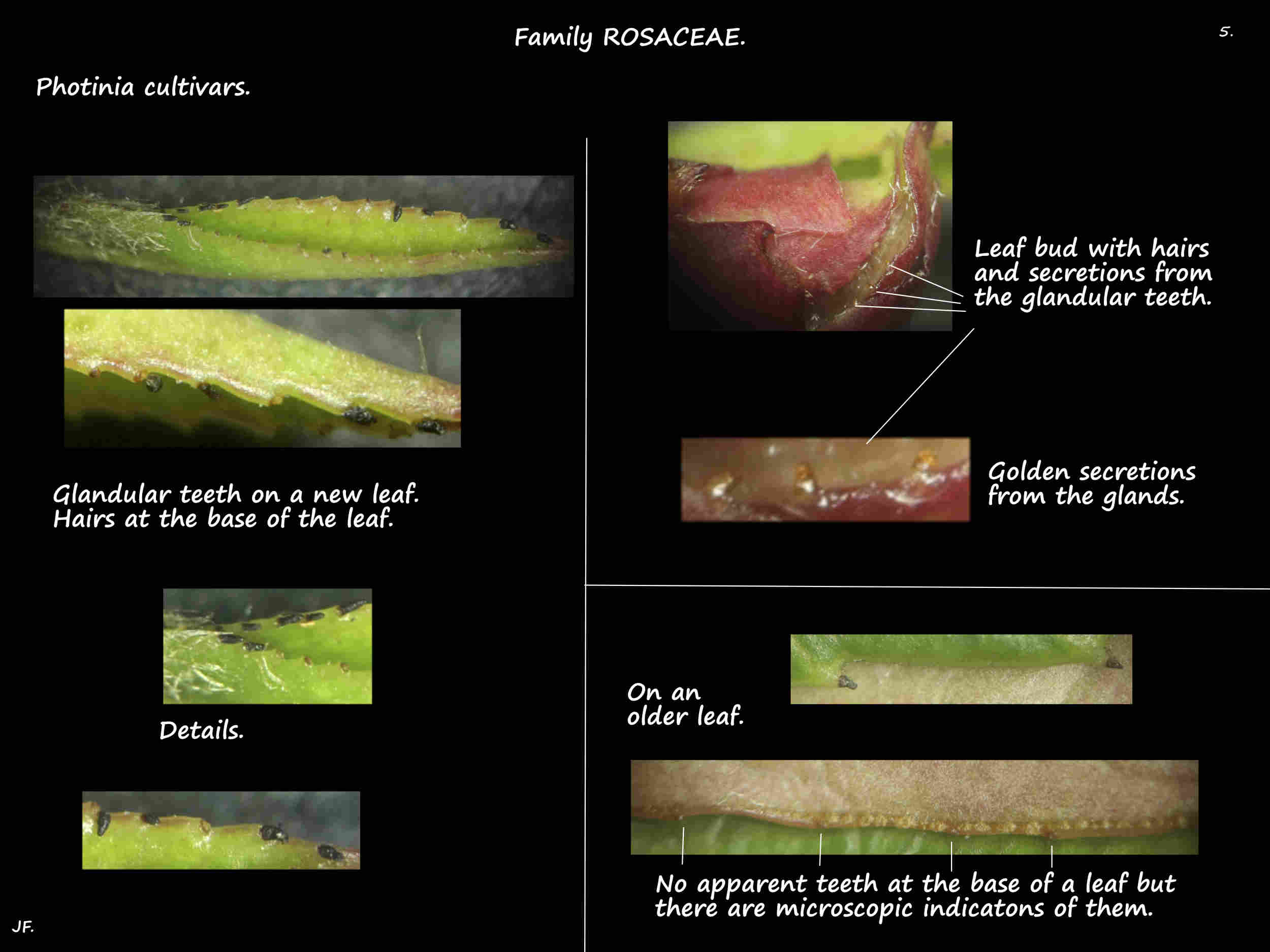
The edge can be smooth but usually has some glandular teeth.
Teeth can be fine or large and on part or all of the edge.
Leaves are smooth and shiny on the upper surface and dull below.
New leaves have dense hairs but adult leaves have few or none.
There may be dark glands on the lower surface.
The 12 to 40 pairs of lateral veins are slightly to markedly depressed on the upper surface.
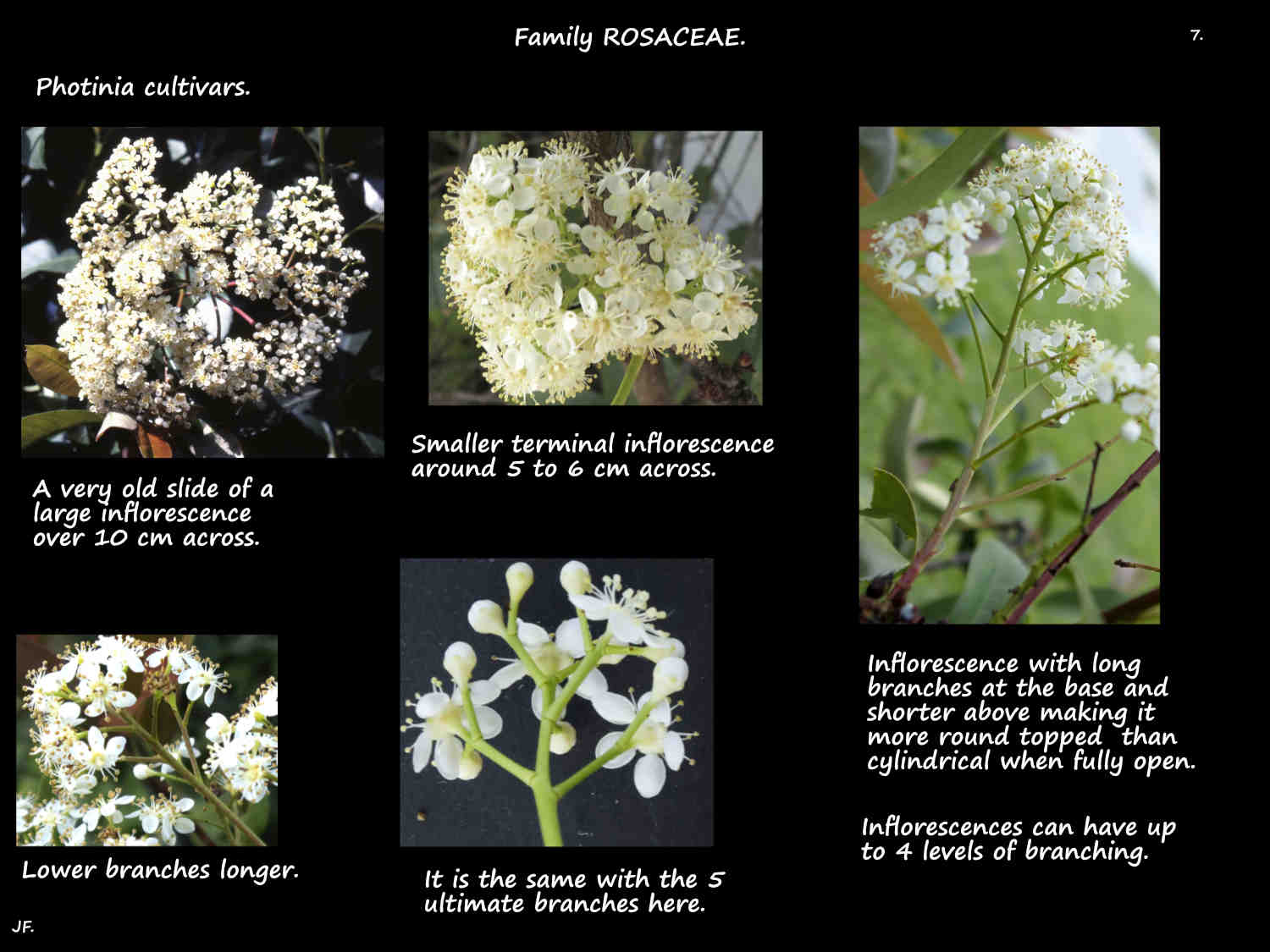
Terminal inflorescences up to 10 or 15 cm wide have 1 to 300 flowers.
They have up to 4 levels of branching with the ultimate branches mostly being like a corymb or umbel.
Corymbs have flowers along a central axis with the lower flowers being on a longer stalk (pedicel) than the upper ones.
Umbels have all the flowers attached to the tip of the branch.
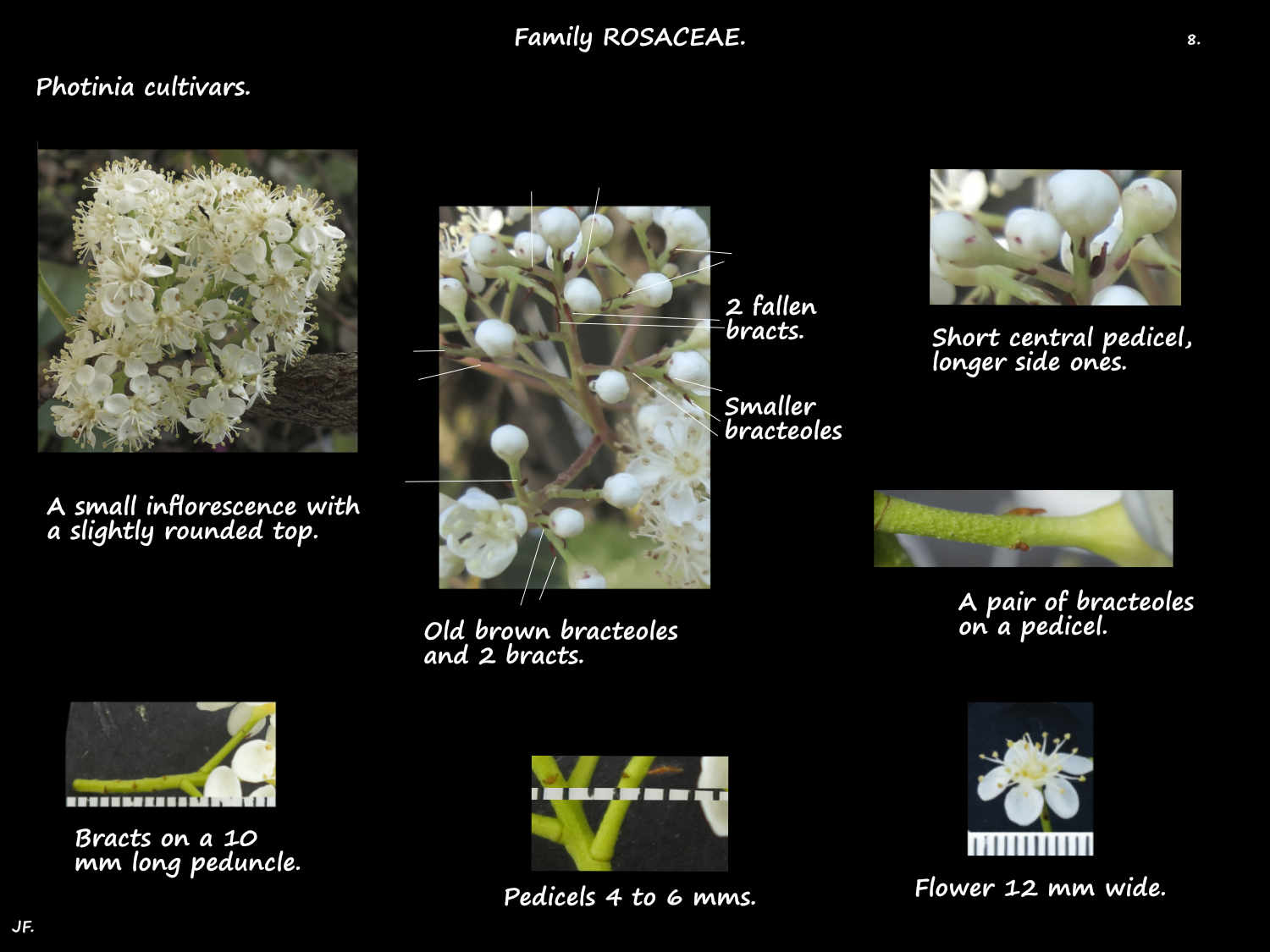
Each flower is on a pedicel from 3 mm to 5 cm long.
There may be some hairs on all the branches.
The midrib and pedicels may develop nodular lenticels in the fruit.
Each branch has a bract or leaf, up to a few cms long at the base.
There are tiny bracteoles on the pedicels.
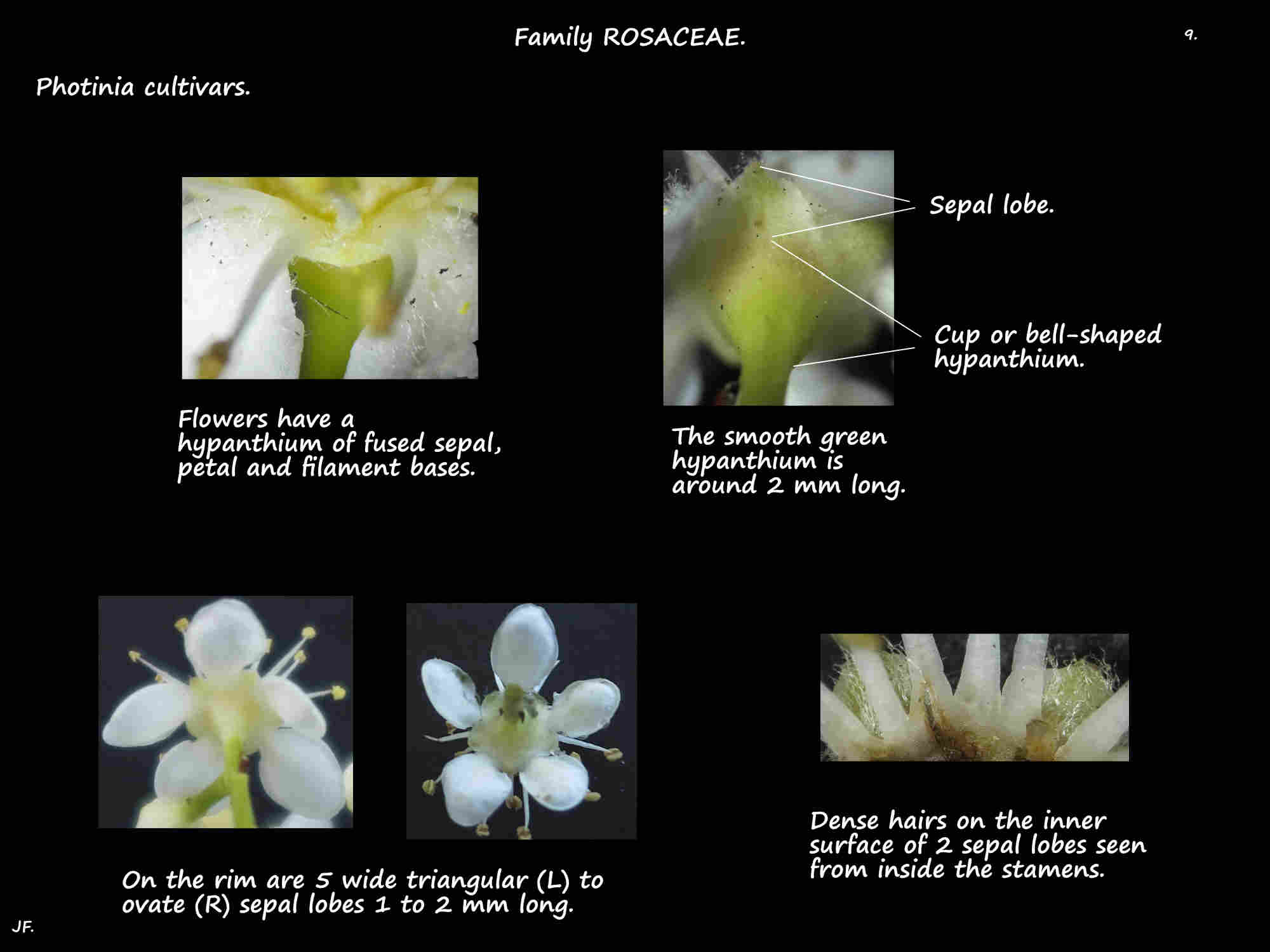
Flowers have a hypanthium of fused sepal, petal and filament bases.
Only around 2 mm long it can be tubular or cup or bell-shaped.
It can have dense to no hairs.
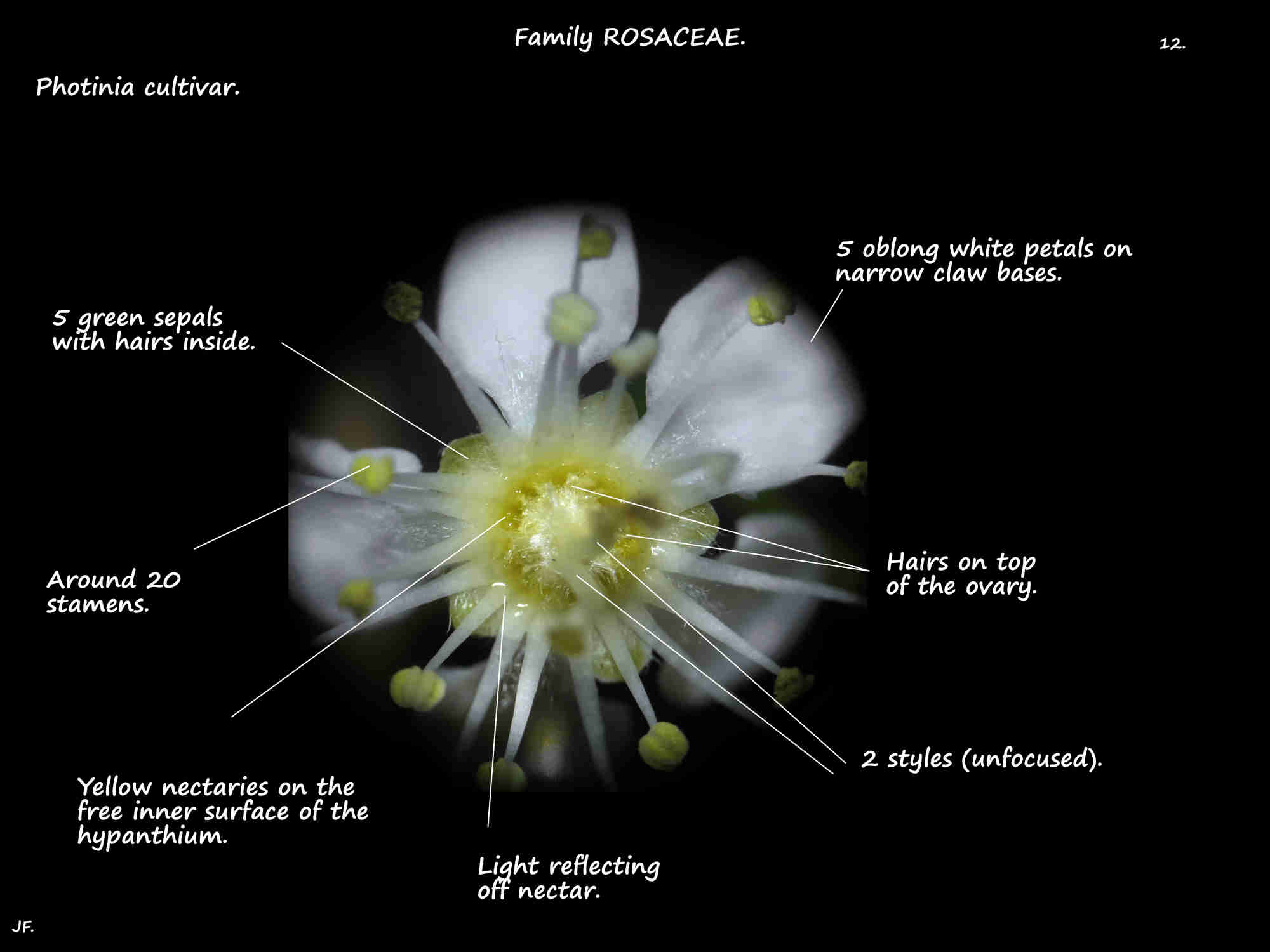
On the rim of the hypanthium are 5 wide green ovate to triangular sepal lobes.
One to 2 mm long they have hairs on the inner surface and may be toothed.
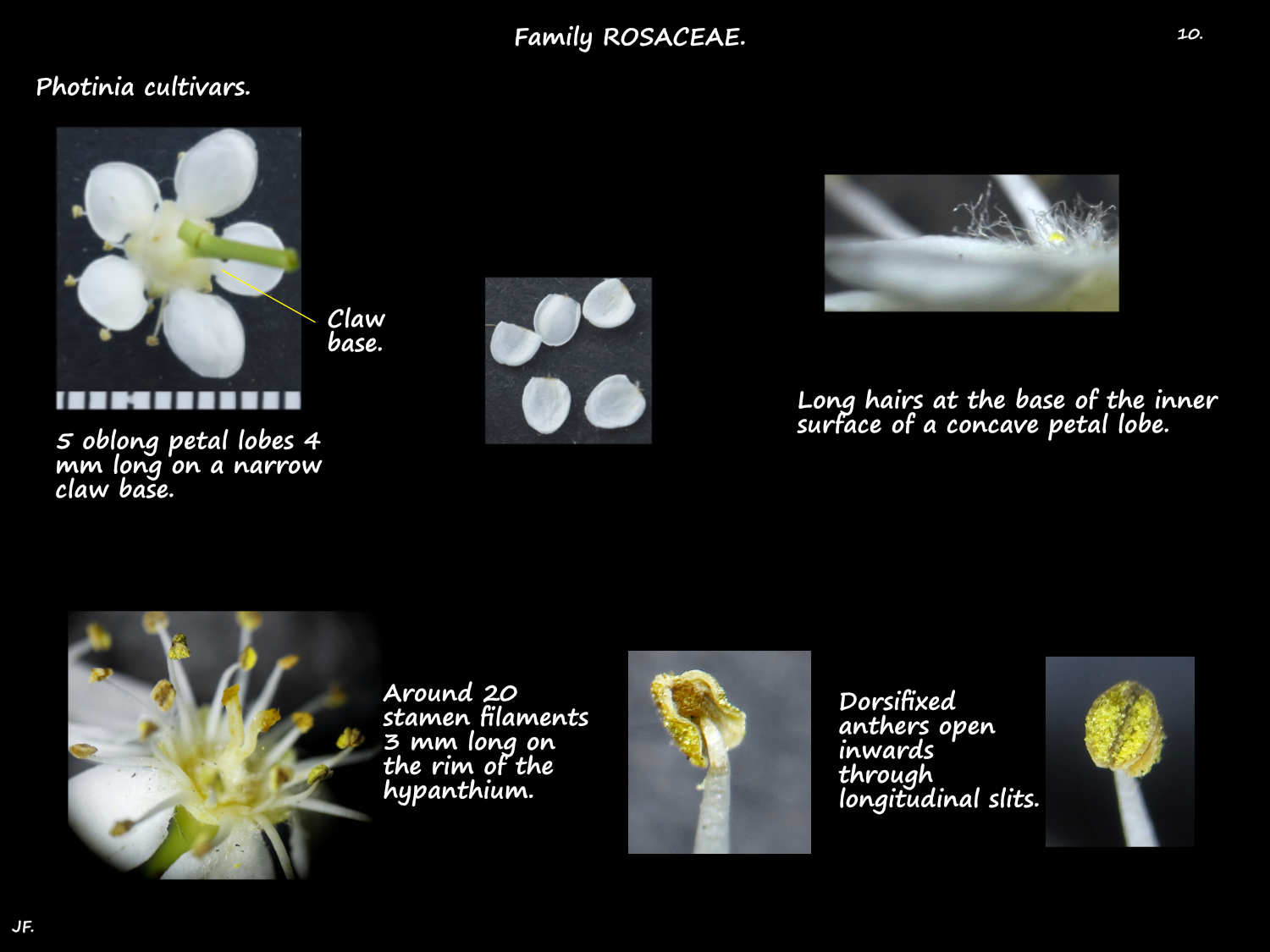
Alternating with the sepals are 5 white petals with narrowed claw bases.
The round to oblong lobes spread outwards making the perianth 5 to 10 mm across.
There may be a clump of long white hairs on the inner surface at the base.
Also on the rim of the hypanthium are around 20 stamens around 3 mm long.
The filaments hold small dorsifixed anthers that open inwards through long slits.
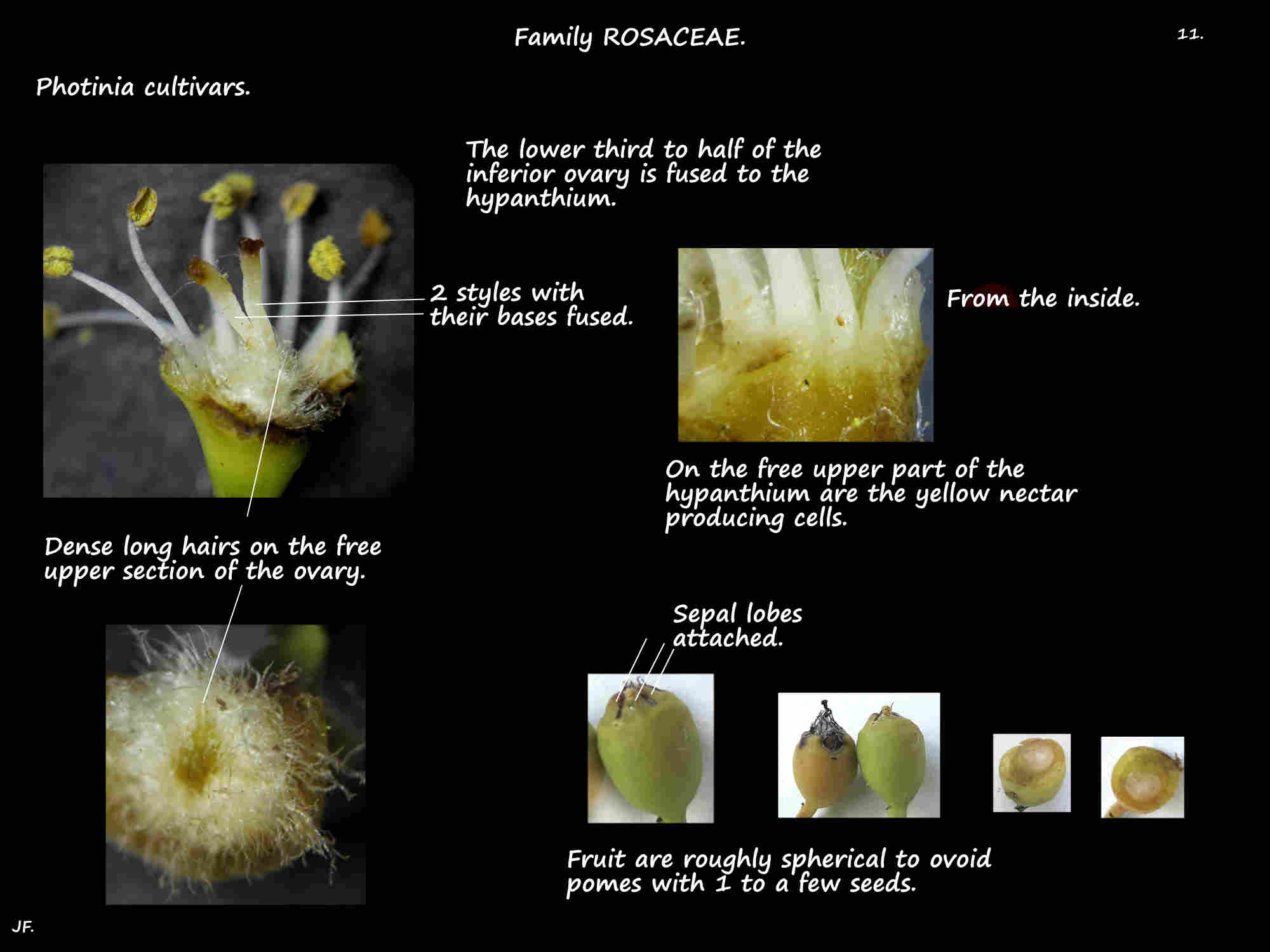
The inferior ovary consists of (1, 2 to 4) 5 fused carpels each with 2 ovules.
Its lower half to one third is fused to the hypanthium.
The free upper section has hairs like those on the petals.
There are usually 2 (to 5) stout styles up to 3 mm long that may be fused for up to half their length.
They have a few hairs on the base.
The fruit are pomes – a fruit derived from an inferior ovary of multiple carpels surrounded by the fleshy hypanthium.
Roughly spherical and around 5 (to 10) mm wide they have the sepal lobes attached.
The red or black fruit stay on the plant for a few months.
J.F.