Family Myrtaceae > Tribe Chamelaucieae.
Plants of the World Online (Kew) accepts 102 species of Featherflowers.
All are native to Western Australia except 2 from the Northern Territory.
They are sparse to bushy shrubs up to around 2 m high.
Two are trees under 10 m high.
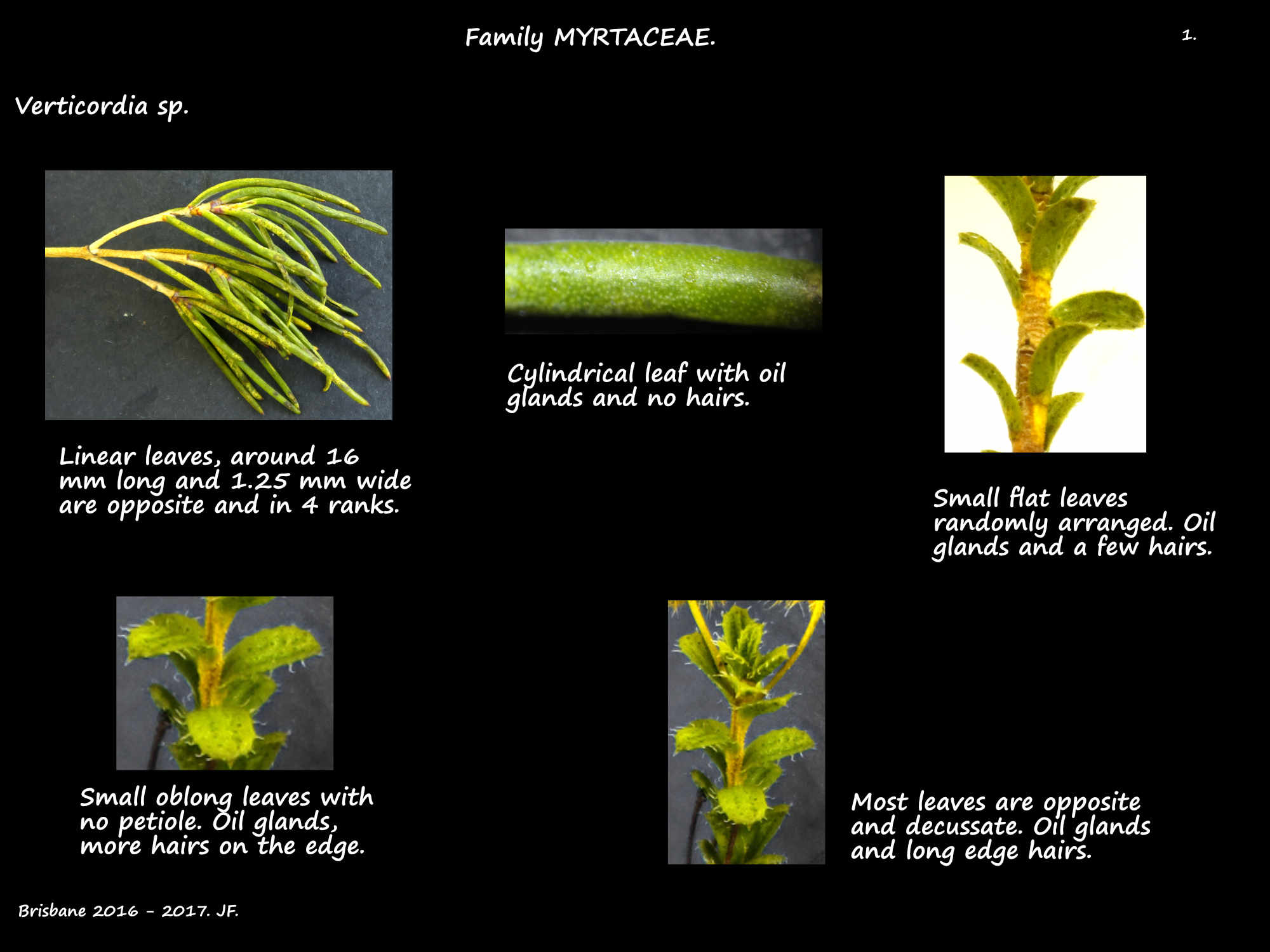
The small to medium sized simple leaves may be on a petiole or directly attached.
Leaves are very variable both between and within species.
They can be almost any shape and one plant may have more than one type.
Most species have opposite and decussate (in 4 ranks) leaves.
Some are in whorls of 3 or 4 leaves and some are randomly arranged.
They vary from linear to lance-shaped, oblong, elliptic or round.
Blades can be flat to round or angled in cross section.
Depending on the type of leaf the veins can be pinnate or parallel.
Some leaves only have 1 vein.
Oil glands are present and some have hairs on the leaf edge.
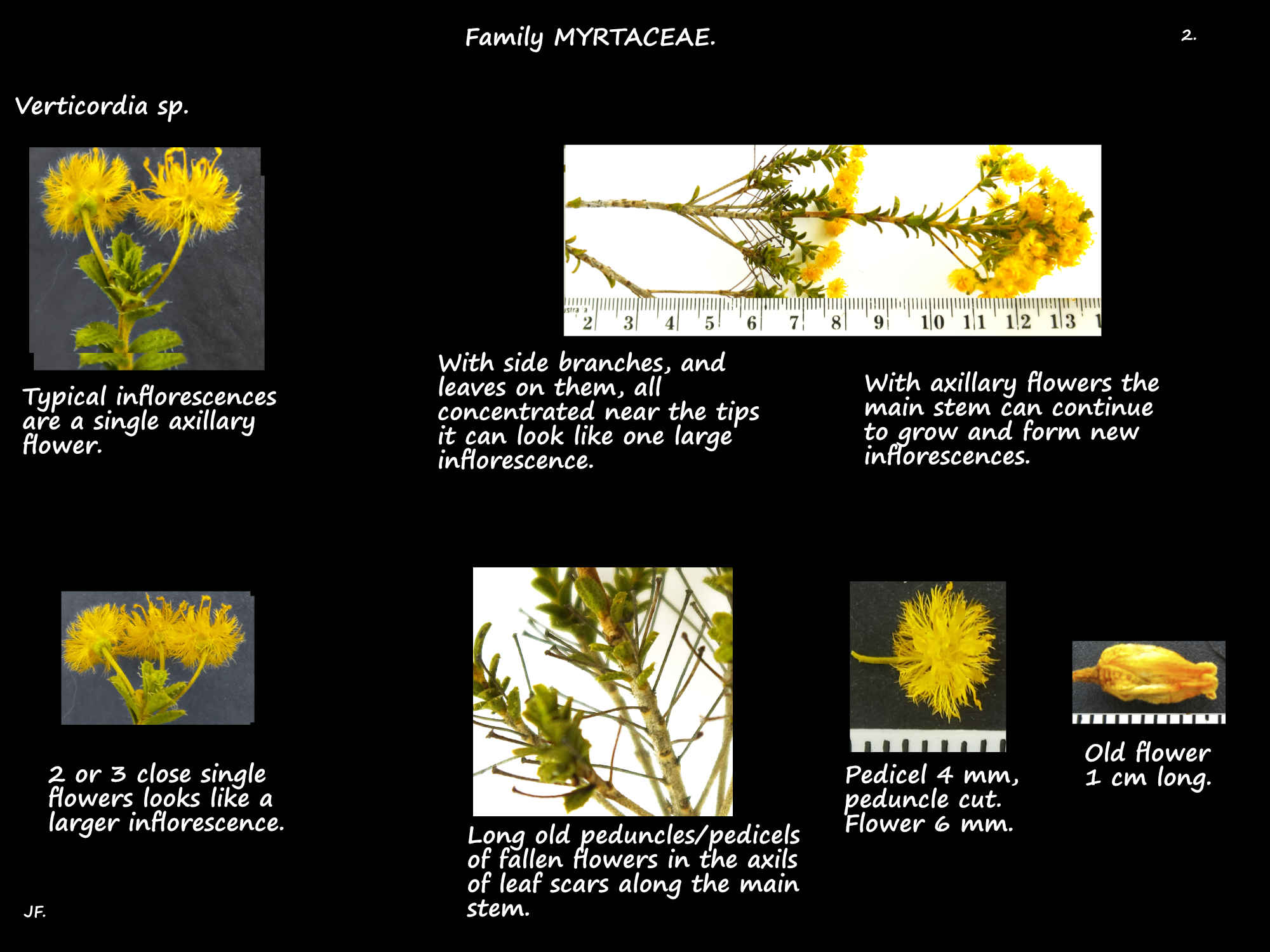
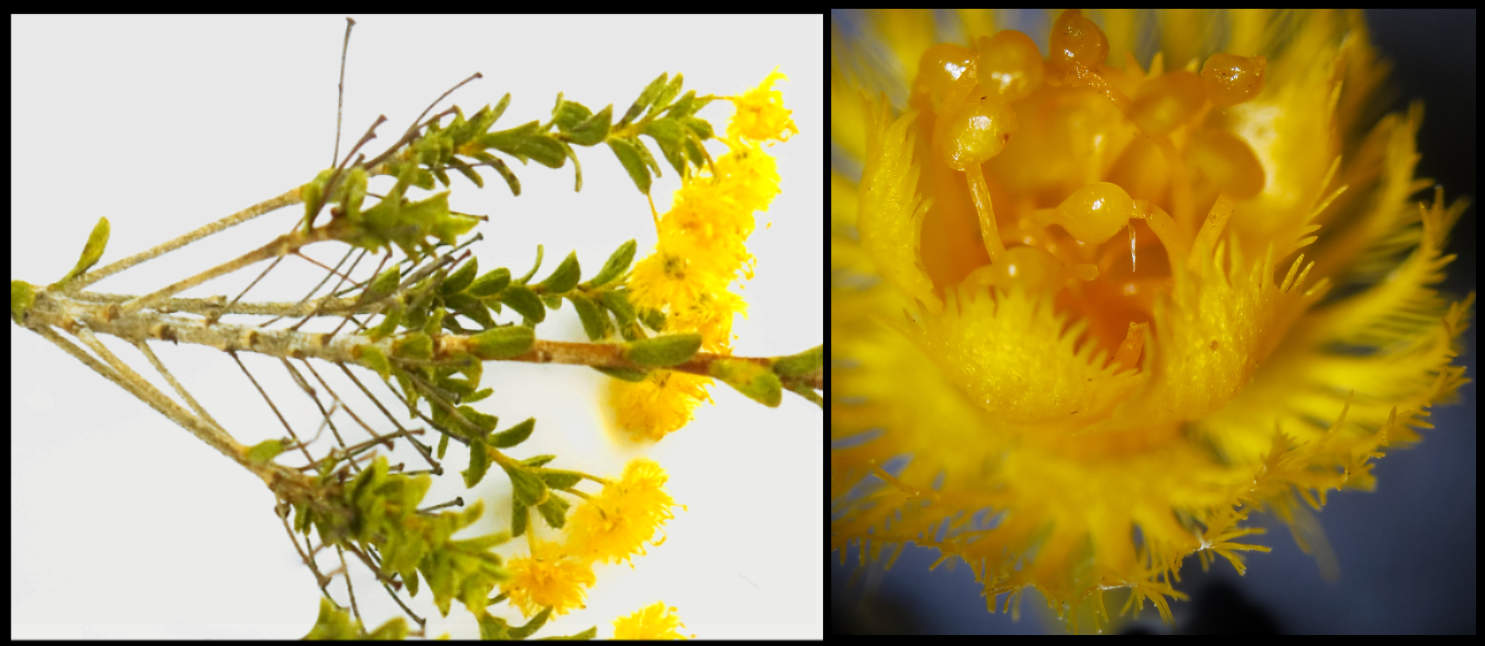
Inflorescences are in the axils of leaves near the branch ends.
With the leaves close together it can look like one large terminal inflorescence.
Each inflorescence is typically a single flower but there may be groups of 3.
Some are branched.
There are 1 or 2 bracteoles that may fall or persist.
The peduncles and pedicels are of variable lengths.
(With a single flower the peduncle is below the bracteole/s and the pedicel above.)
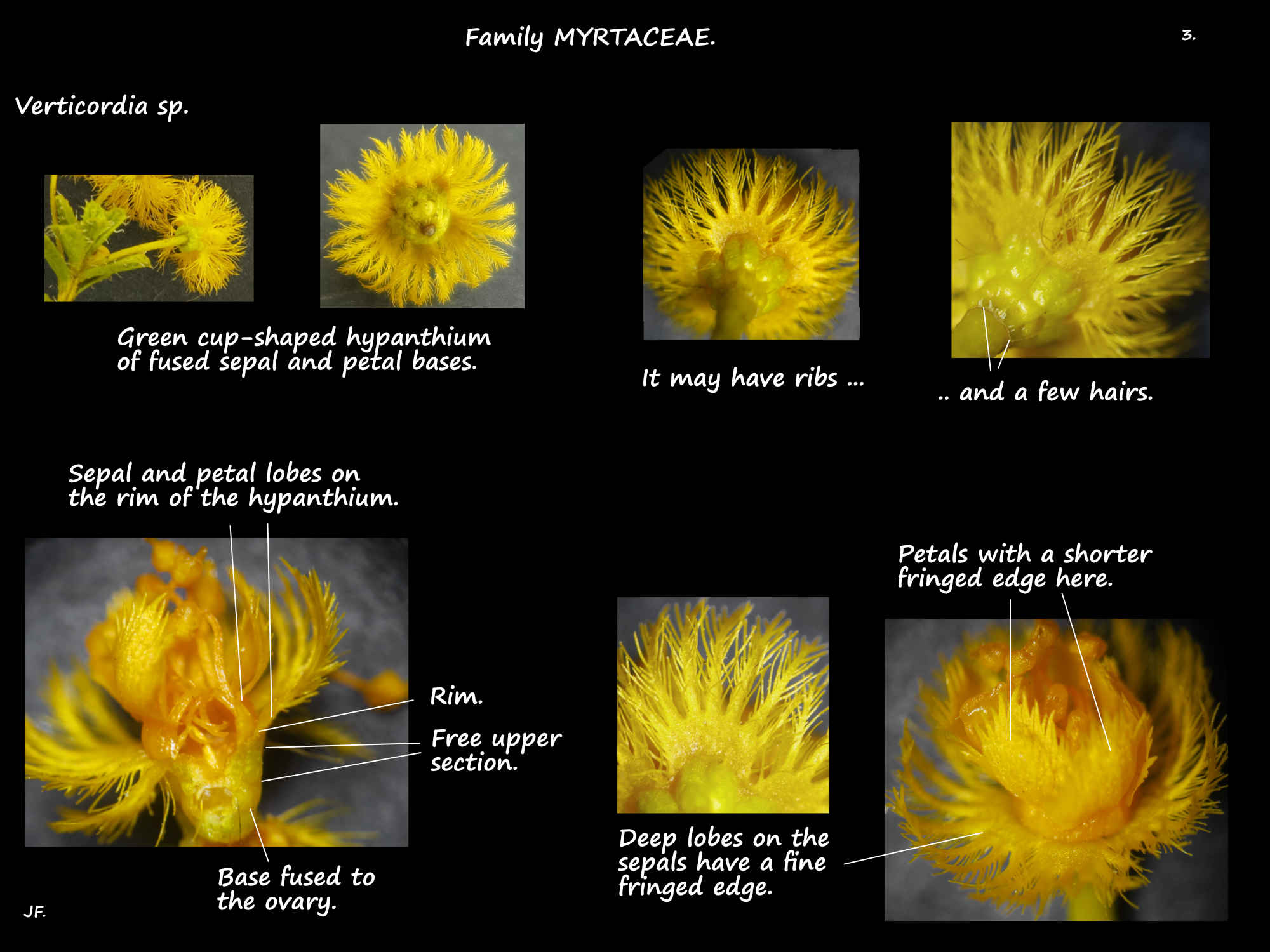
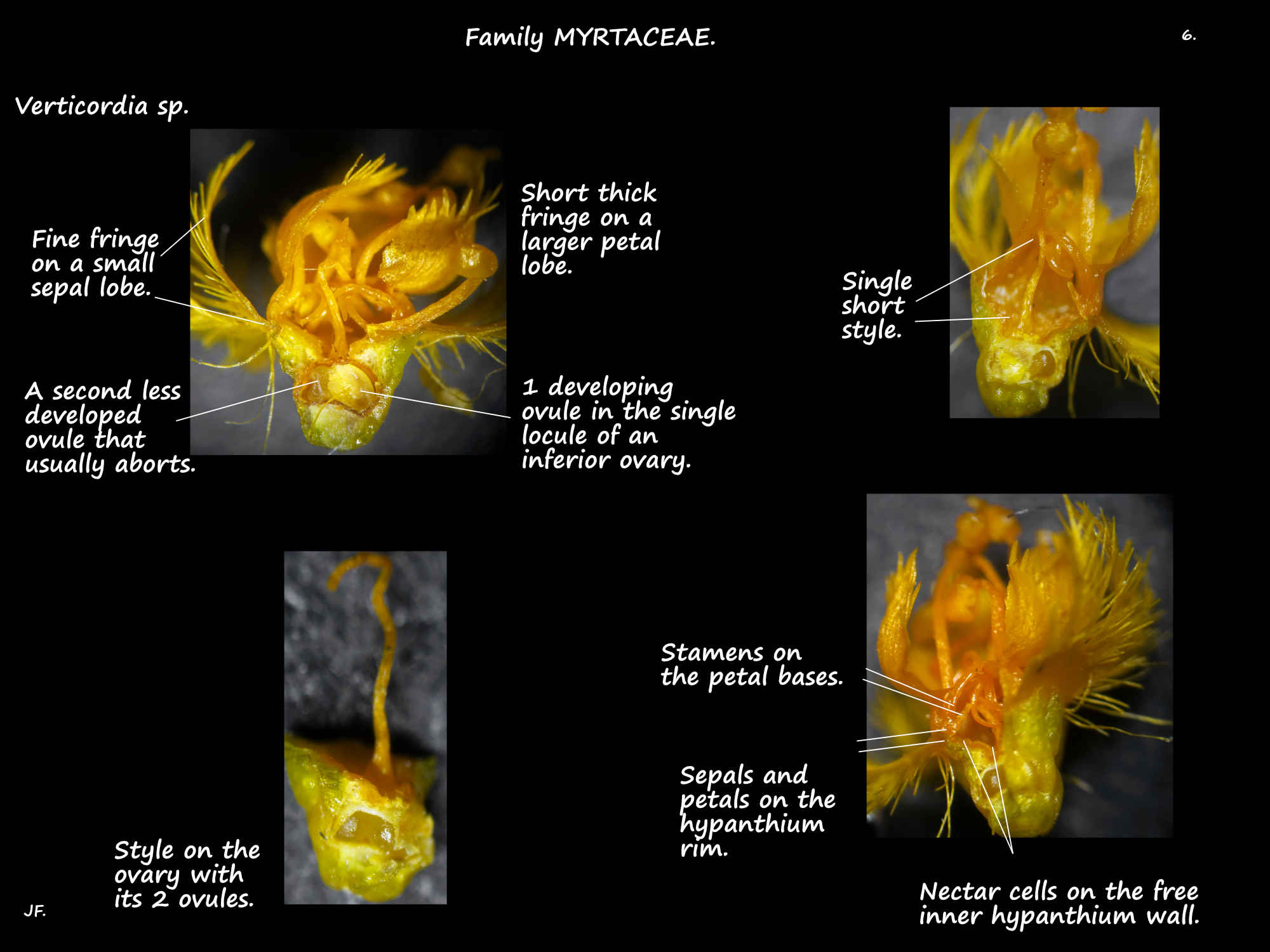
Flowers have a hypanthium of fused sepal and petal bases.
It can be a cup or inverted cone shape and smooth or hairy.
Sometimes there are 5 vertical ribs and/or appendages.
Flowers have 5 overlapping sepal lobes on the rim of the hypanthium.
The sepals can be lobed but are usually deeply and finely divided giving a feathery appearance.
The base may have appendages (auricles) that may have small hairs.
Sepals can be green but are usually the same colour as the petals.
The 5 overlapping petal lobes on the hypanthium are about the same length as the sepals.
The round, ovate or obovate petals are directly attached or have a narrow claw base.
The edges are deeply fringed.
Petals may have a pair of basal appendages and some hairs.
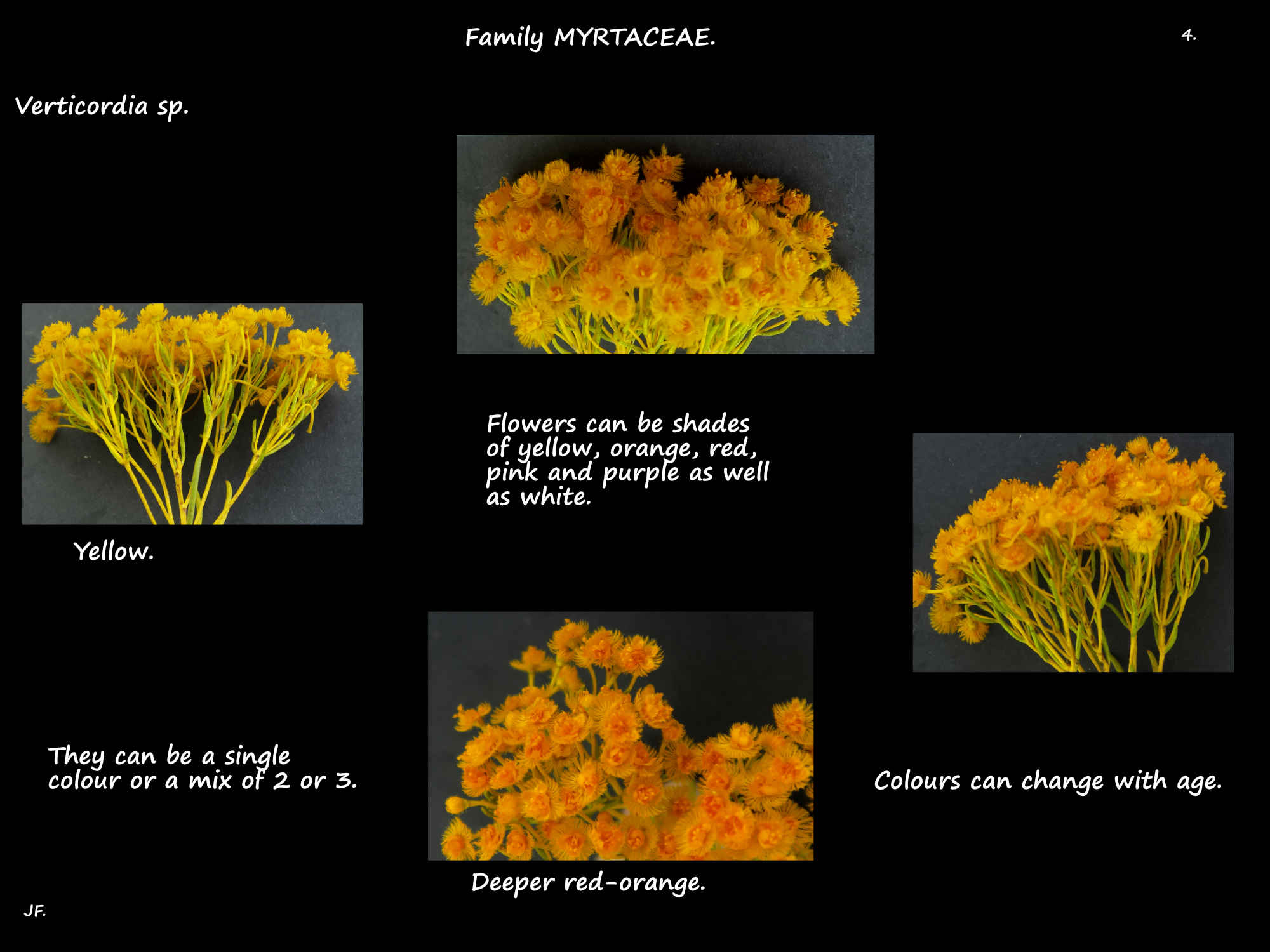
Petals (and sepals) can a single colour or a mix of 2 or more.
The colour may change as the flower ages.
Colours include yellow, red, orange, purple, pink as well as white.
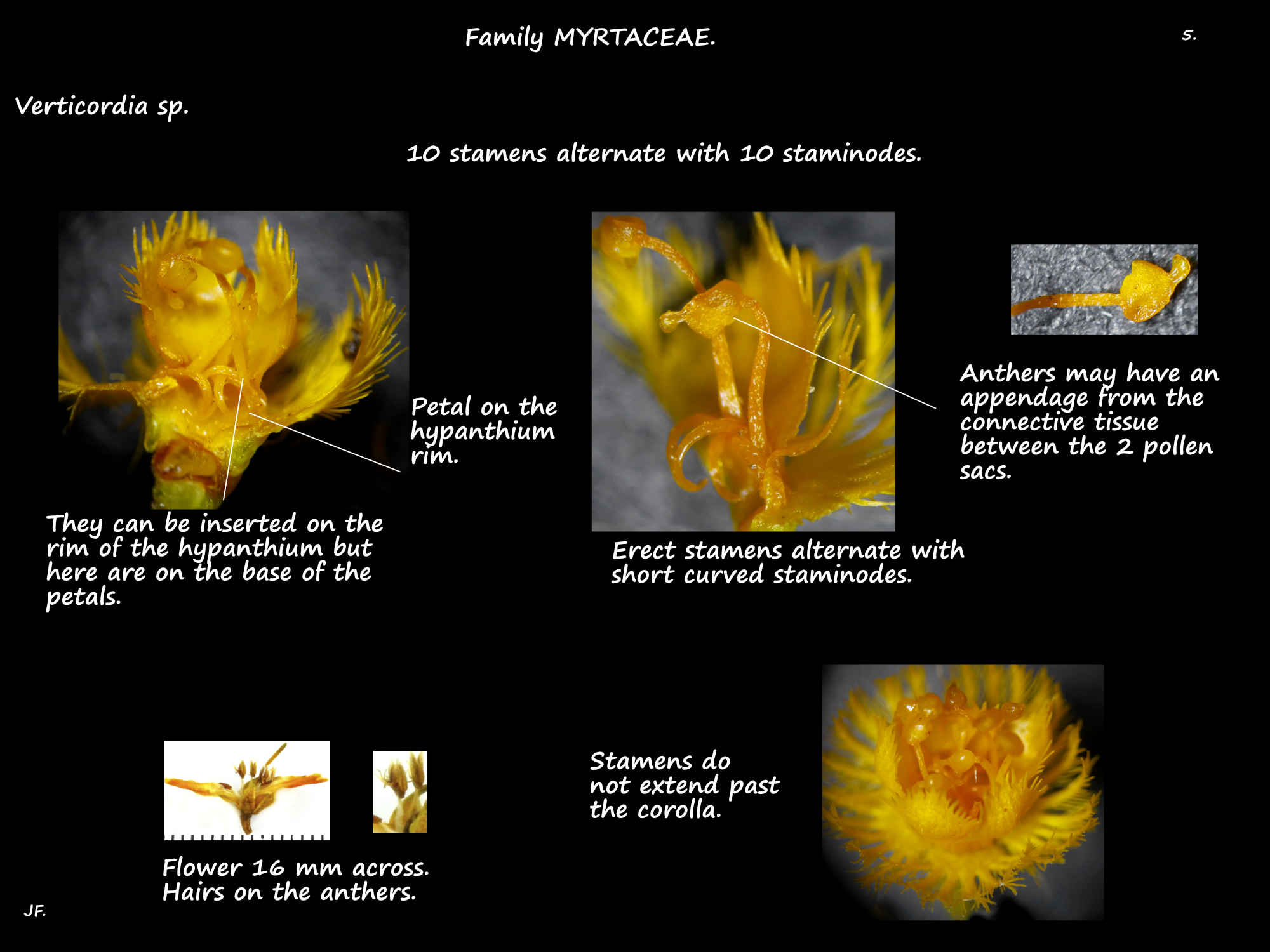
There are 10 stamens alternating with 10 infertile staminodes.
These can be on the hypanthium rim or attached to the base of the petals.
They can all be the same length or alternate long and short.
Basi- or dorsi-fixed anthers open inwards through pores or long or short slits.
There may be appendages from the connective tissue between the anther sacs.
Staminodes may be lobed or feathery and round or flattened.
There may be hairs or glands on them.
The inferior ovary, of 2 fused carpels has 1 locule.
The one to a few ovules have basal placentation.
The single style is attached to the apex of the ovary or off centre.
The often hairy tip usually does not extend past the petals.
Fruit are a 2 mm nut – a hard dry indehiscent fruit from 2 carpels but with only 1 seed.
Occasionally there are 2 seeds.
There are up to around 20 species and hybrids available for gardens or cut flowers.
J.F.