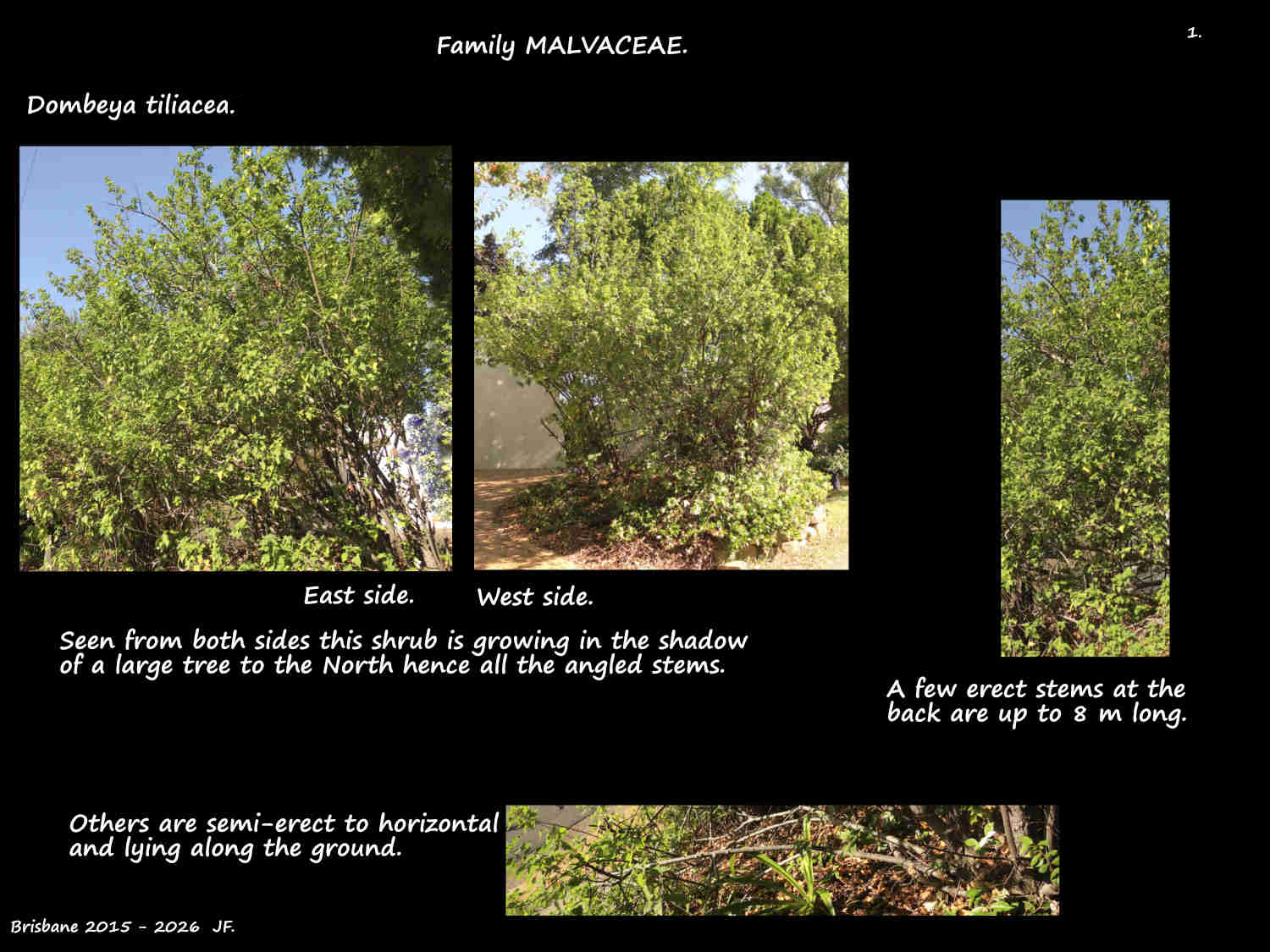
Forest Wild Pear or Forest Dombeya is native to the southern part of South Africa.
Synonyms include D. dregeana, D. elegans, D. gracilis and D. natalensis.
Some of these were previously regarded as species but with only very slight differences.
It is said to be the most common Dombeya in Australia, mainly in the southern states.
In Brisbane it is rarely seen outside the Botanic Gardens.
(One nursery in Australia sells them for $70.)
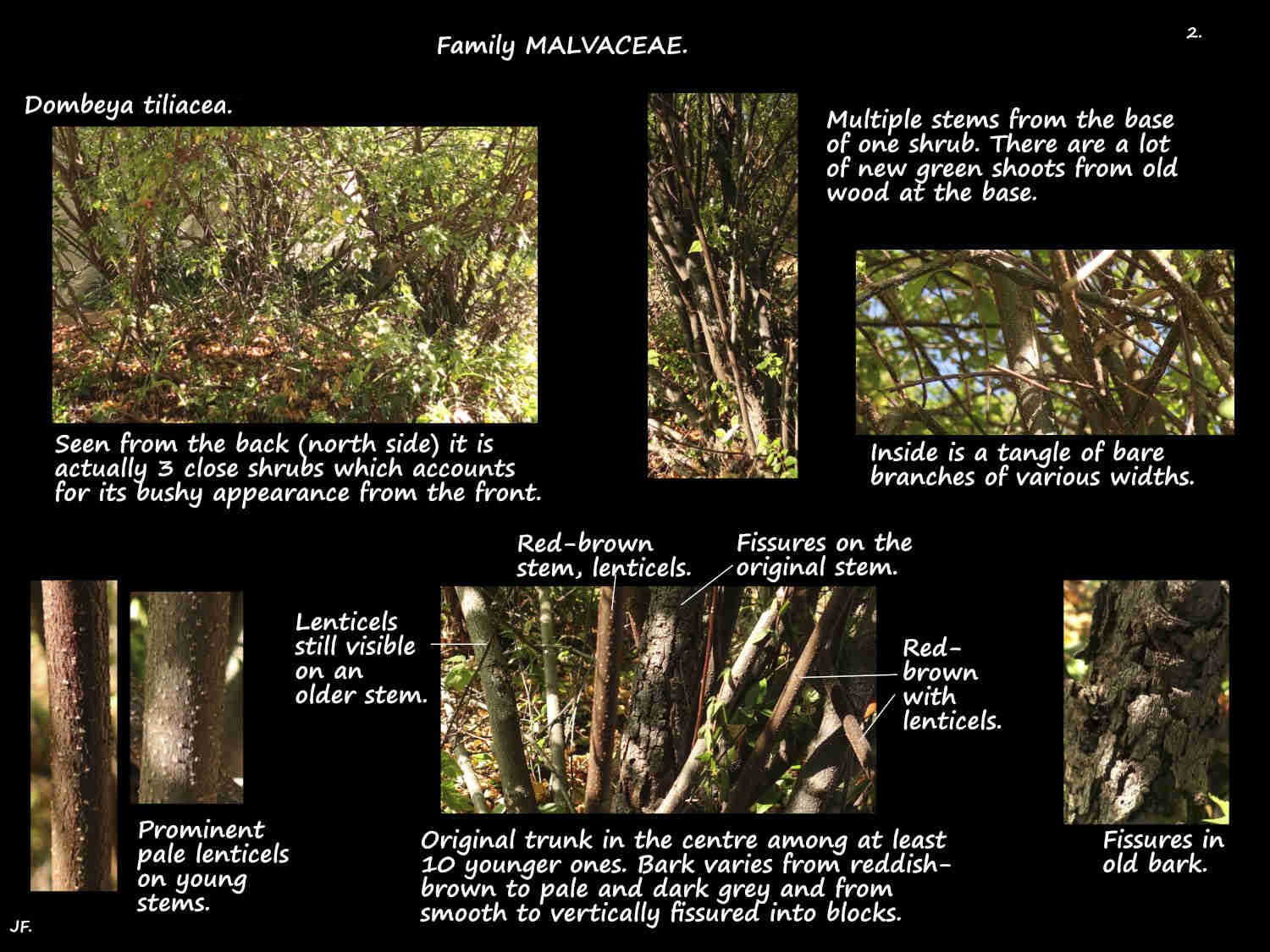
As a sparse shrub 2 to 3 m high they have multiple stems from the base.
They may be vine-like and scramble over other vegetation.
As a small semi-deciduous tree they can be around 10 to 12 m high.
Small to medium sized branches have pale nodules (lenticels) visible to the naked eye.
Green new twigs may have hairs but the smooth grey bark of older branches has none.
The largest stems at the base have dark grey bark with vertical fissures that may break into blocks.
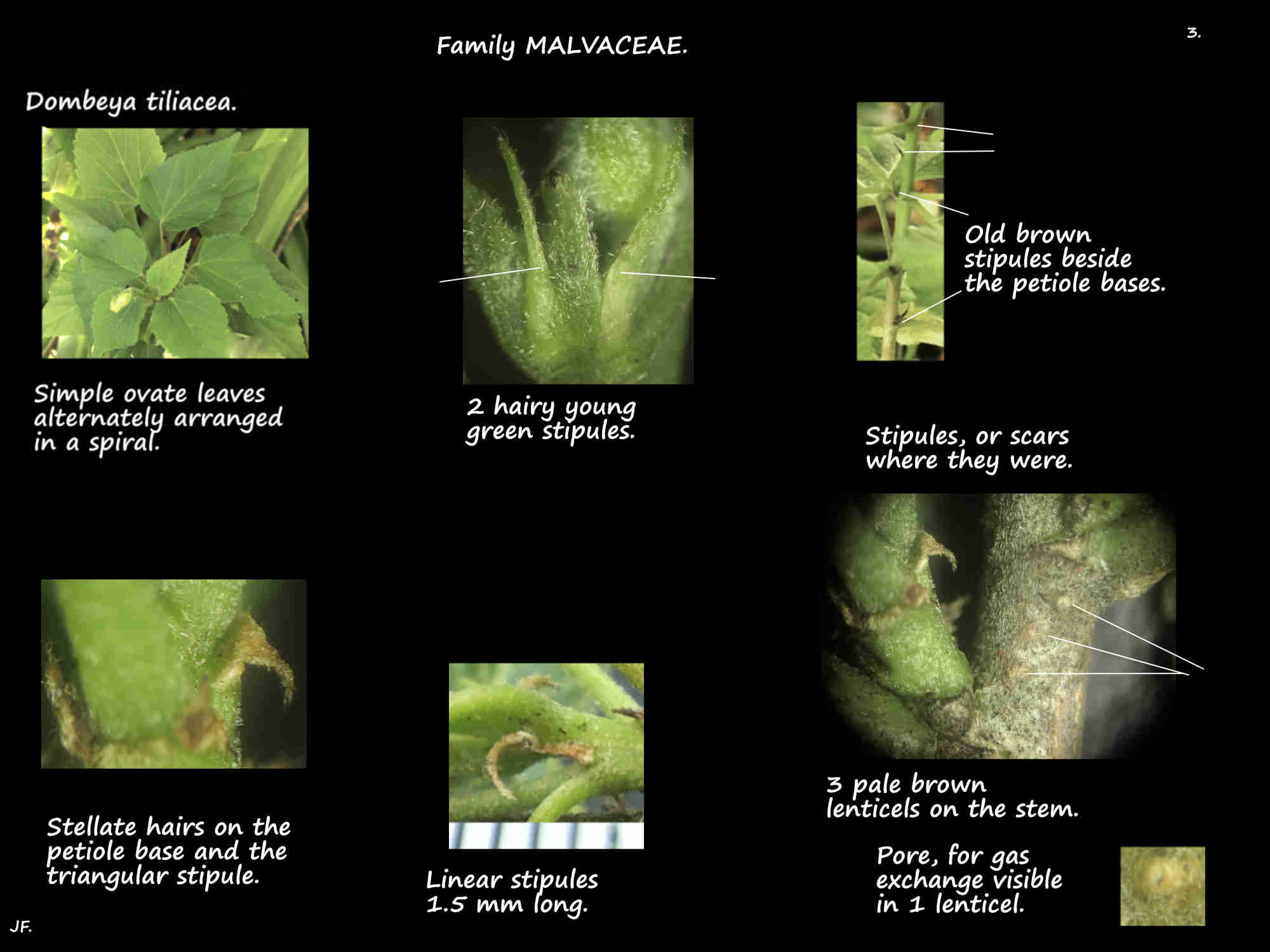
Leaves, with a simple ovate blade are alternately arranged in a spiral.
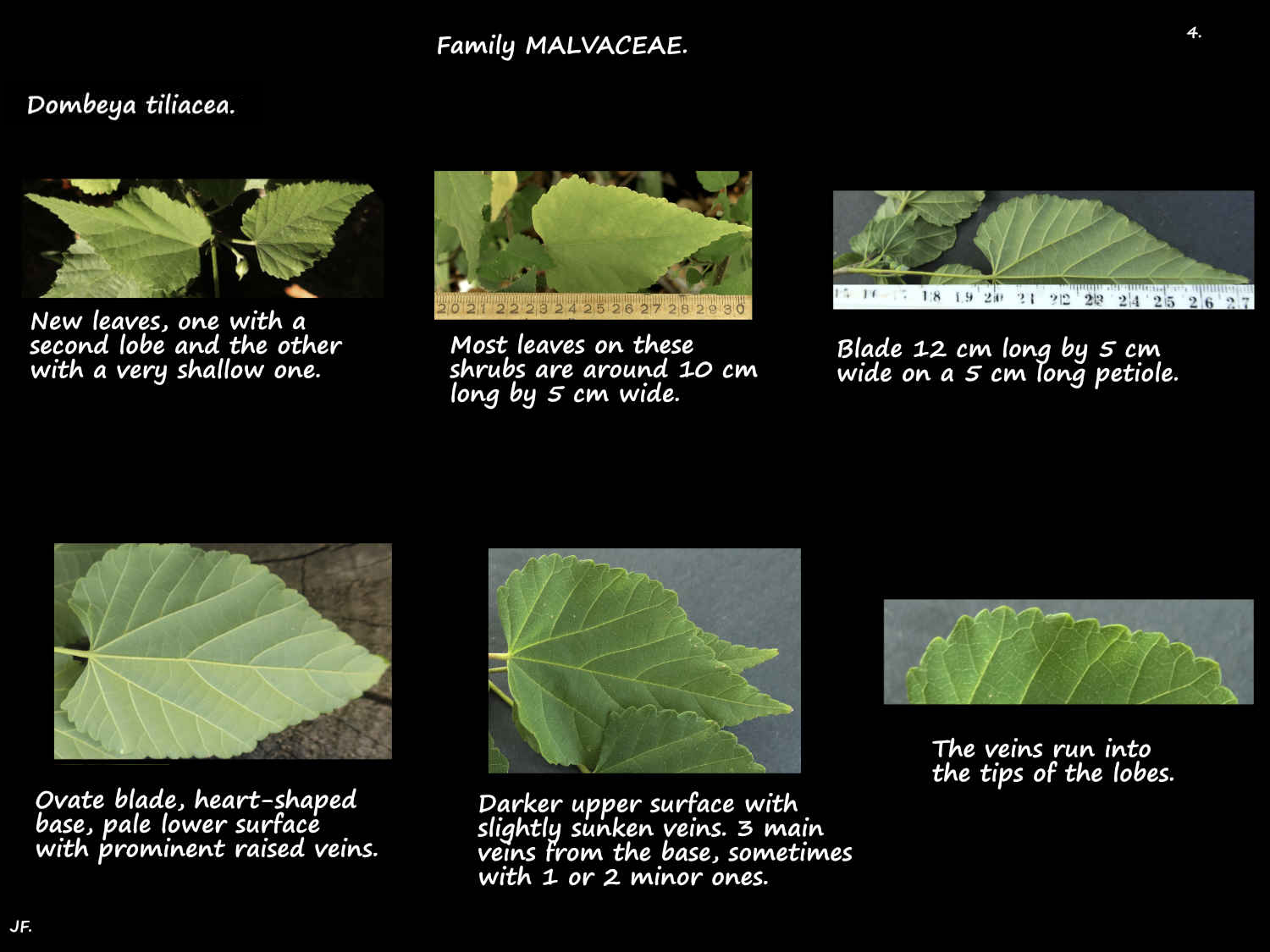
Most leaves are around 10 to 12 cm long with the petiole being up to half of that.
The pair of small stipules at the petiole base fall early.
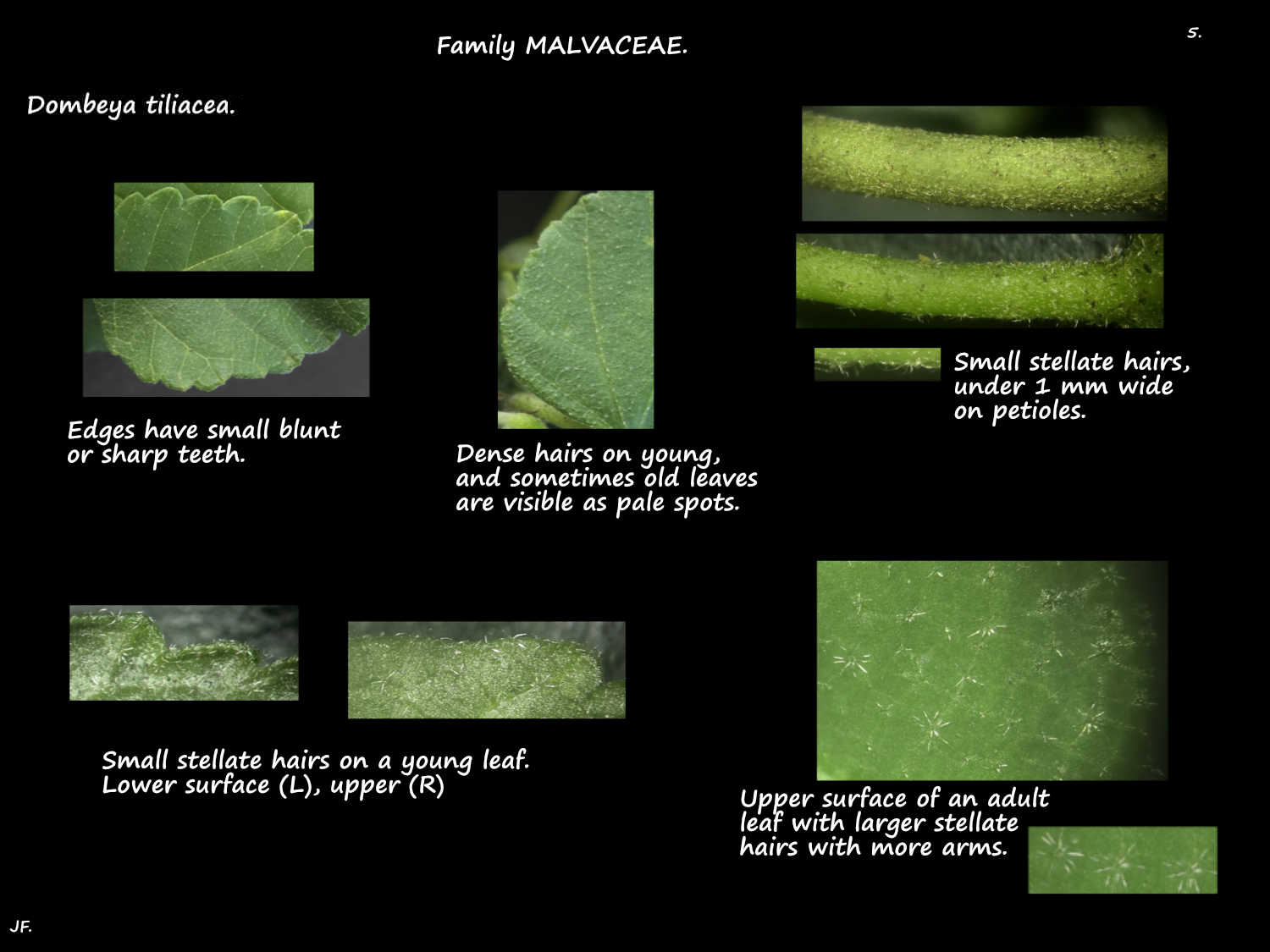
From linear to triangular they have few to dense stellate hairs.
The wide ovate blades occasionally have 2 or 3 shallow lobes.
They have a heart-shaped base and a tapering pointed tip.
The edge has small sharp or blunt teeth.
There are (3) 5 or 7 veins running from the base into the lobes.
Veins are prominently raised on the lower surface.
Young leaves have dense stellate hairs on both surfaces.
Older leaves may have no hairs or a few mainly on the lower surface.
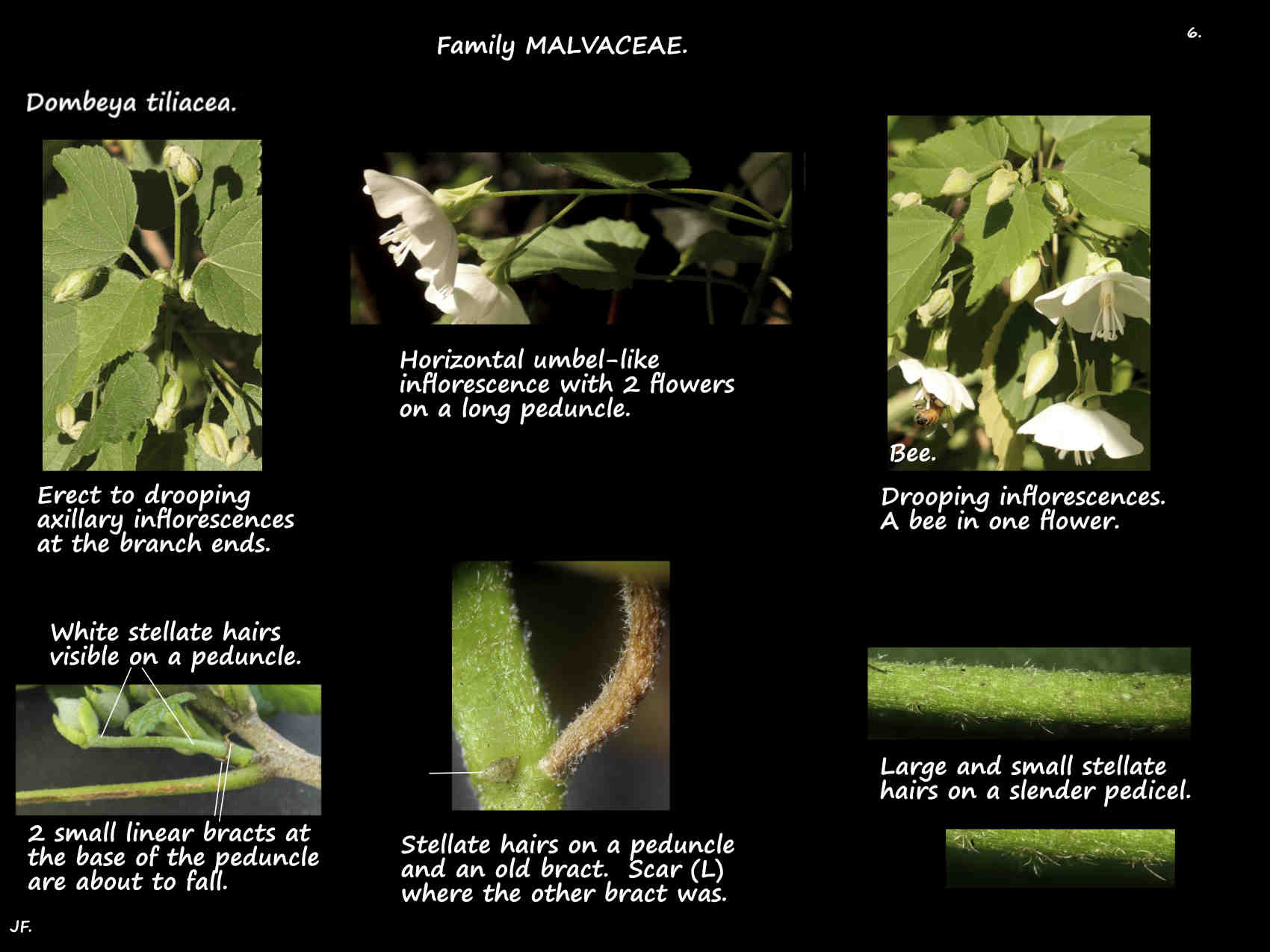
Axillary inflorescences are concentrated near the branch ends.
The slightly drooping inflorescences are small clusters with 2 to a few flowers.
The peduncle, up to 8 cm long has small deciduous bracts.
The sometimes branching peduncles may have a few simple hairs among the small stellate ones.
Inflorescences are mainly umbel-like with flowers attached near the tip of the peduncle.
Flowers are on a thin pedicel up to 3 cm long with small stellate hairs.
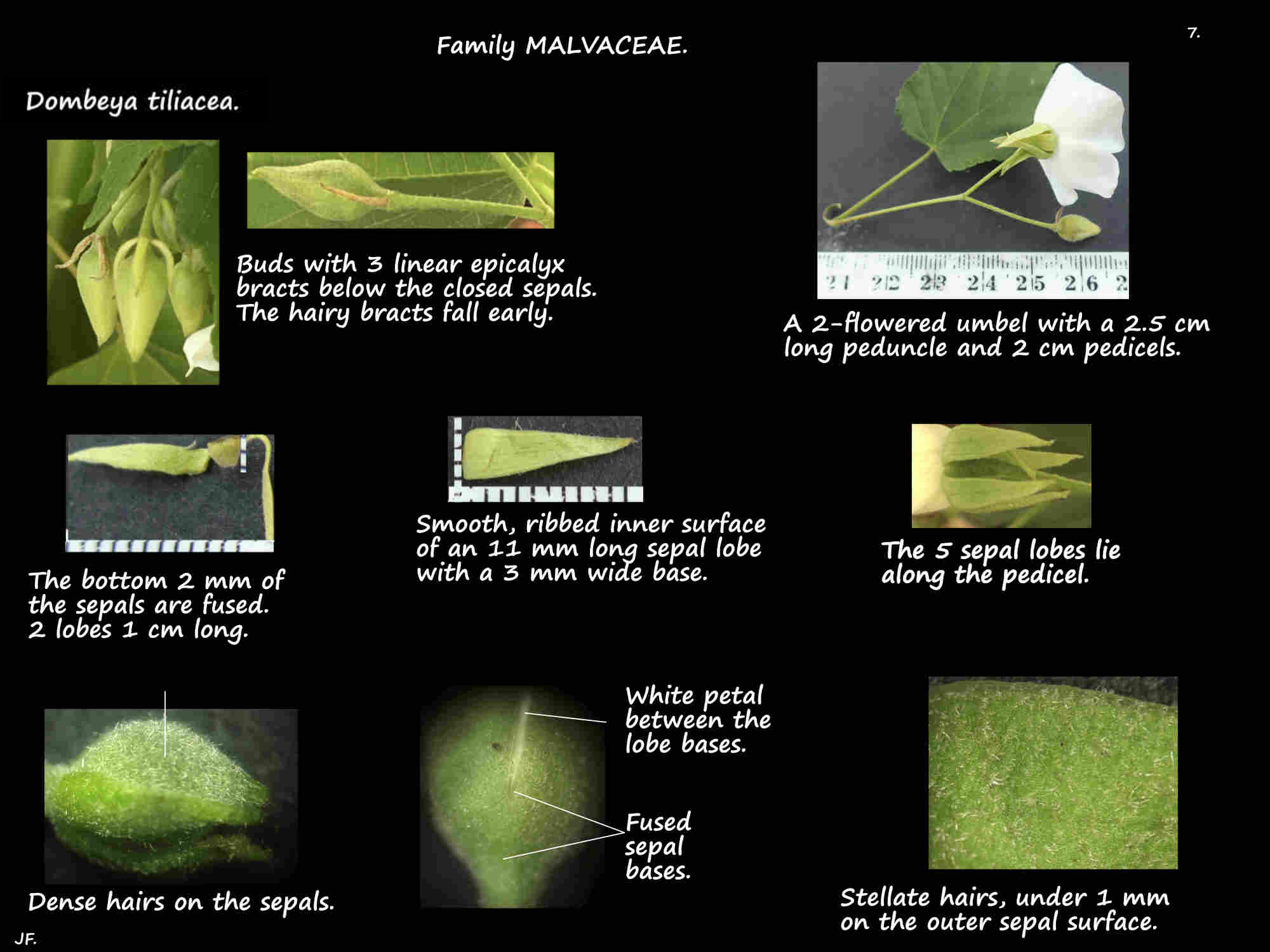
Just below the calyx are 3 free deciduous epicalyx bracts.
From linear to ovate and with a pointed tip the the hairy bracts are up to 1 cm long.
The 5 sepals are joined for around 2 mm at the base.
The narrow triangular lobes are 1 to 1.5 cm long and under 0.5 cm wide at the base.
They have a pointed tip and stellate hairs on the outer surface.
Sepals usually bend back to lie along the pedicel.
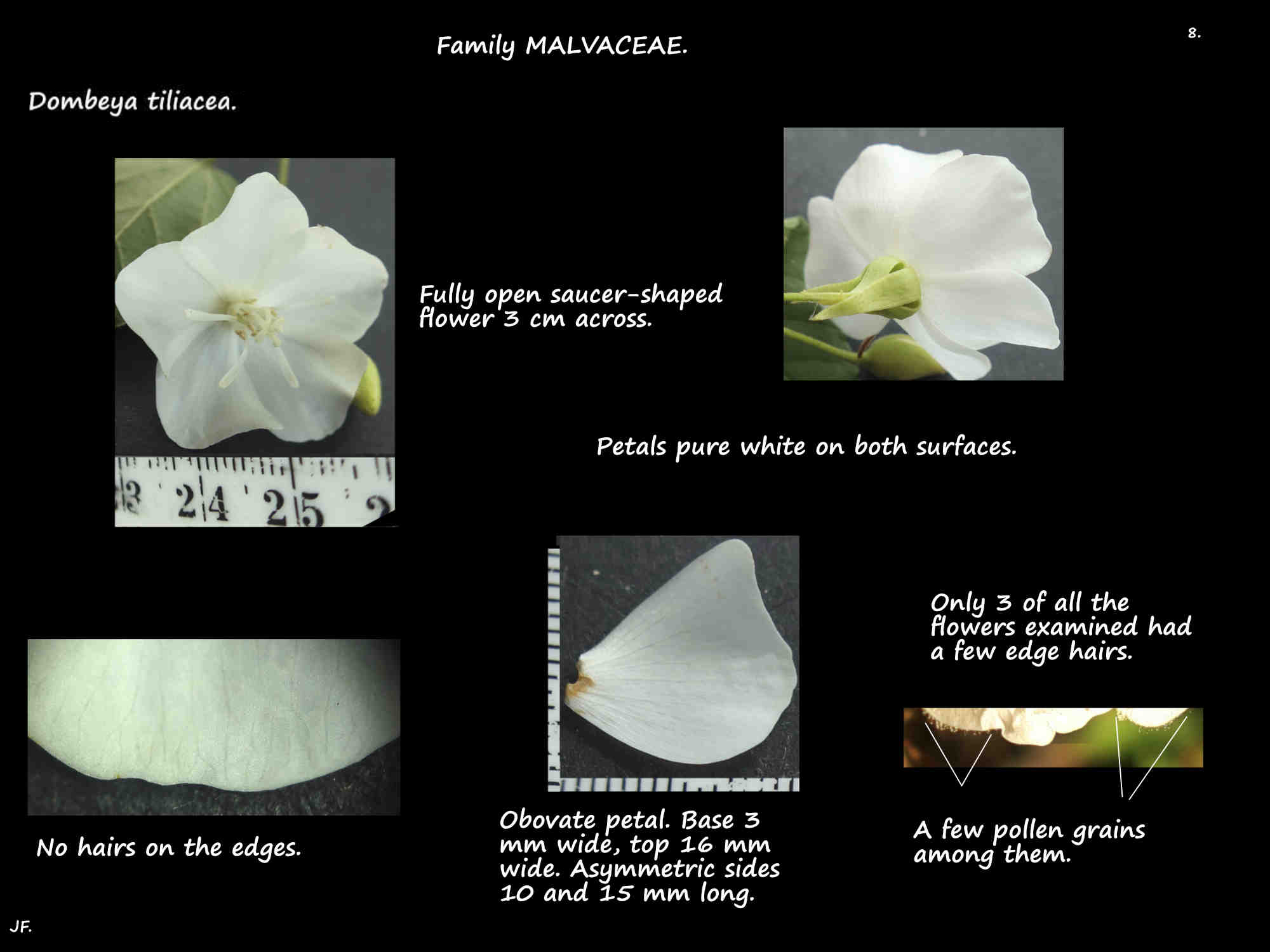
There are 5 free asymmetric obovate petals around 1.5 cm long.
They have a narrow base and a tip up to 1.5 cm wide.
Petals are pure white but are occasionally pink or have a pink base.
They persist on old flowers becoming rust-coloured and papery.
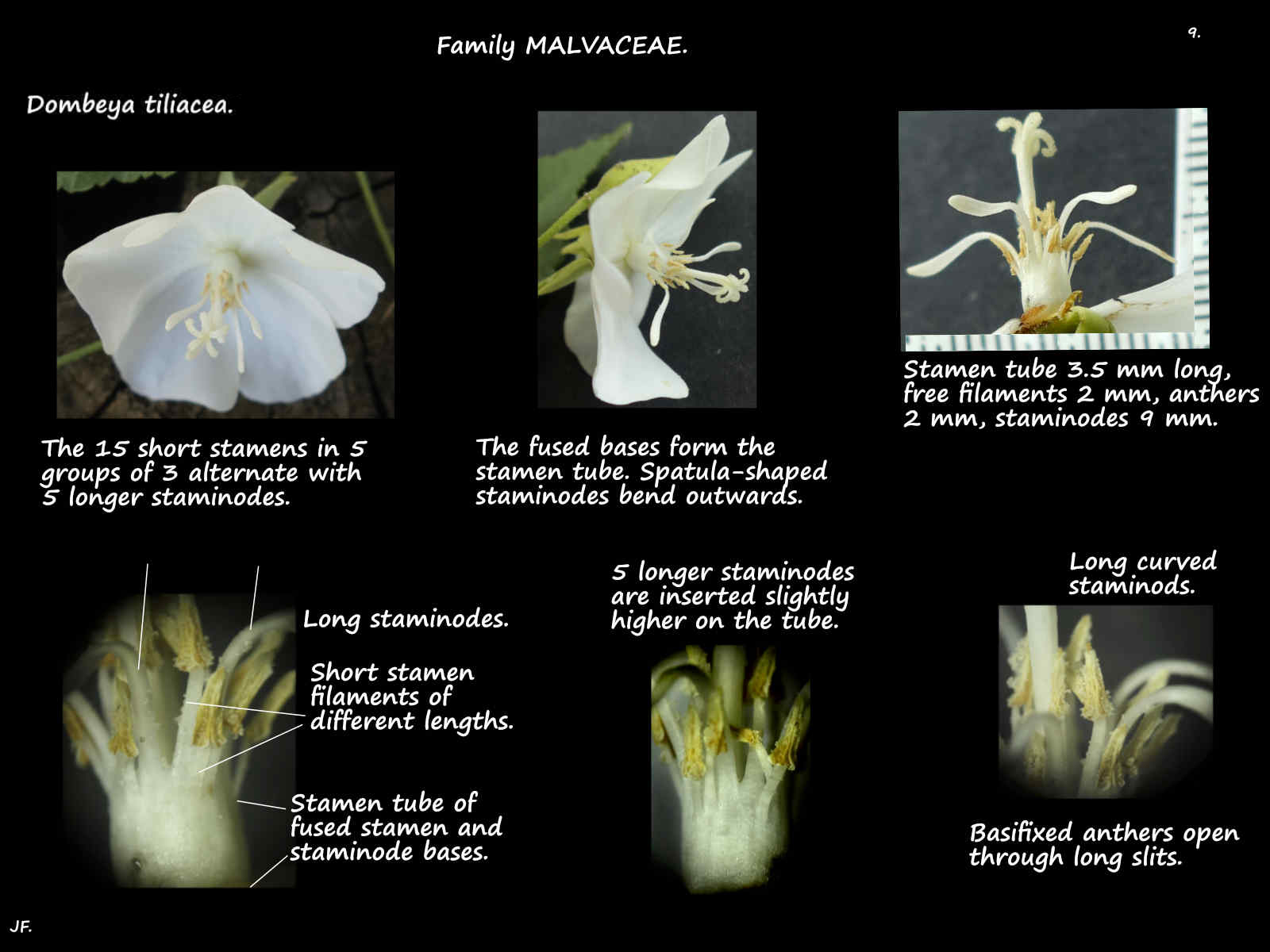
The 15 stamens and 5 staminodes are fused at the base for 2 to 4 mm.
The free stamen filaments, around 3 mm long are attached at slightly different levels.
The yellow basifixed anthers, opening through longitudinal slits are around 3 mm long.
On the top of the stamen tube are the around 1 cm long spatula-shaped staminodes.
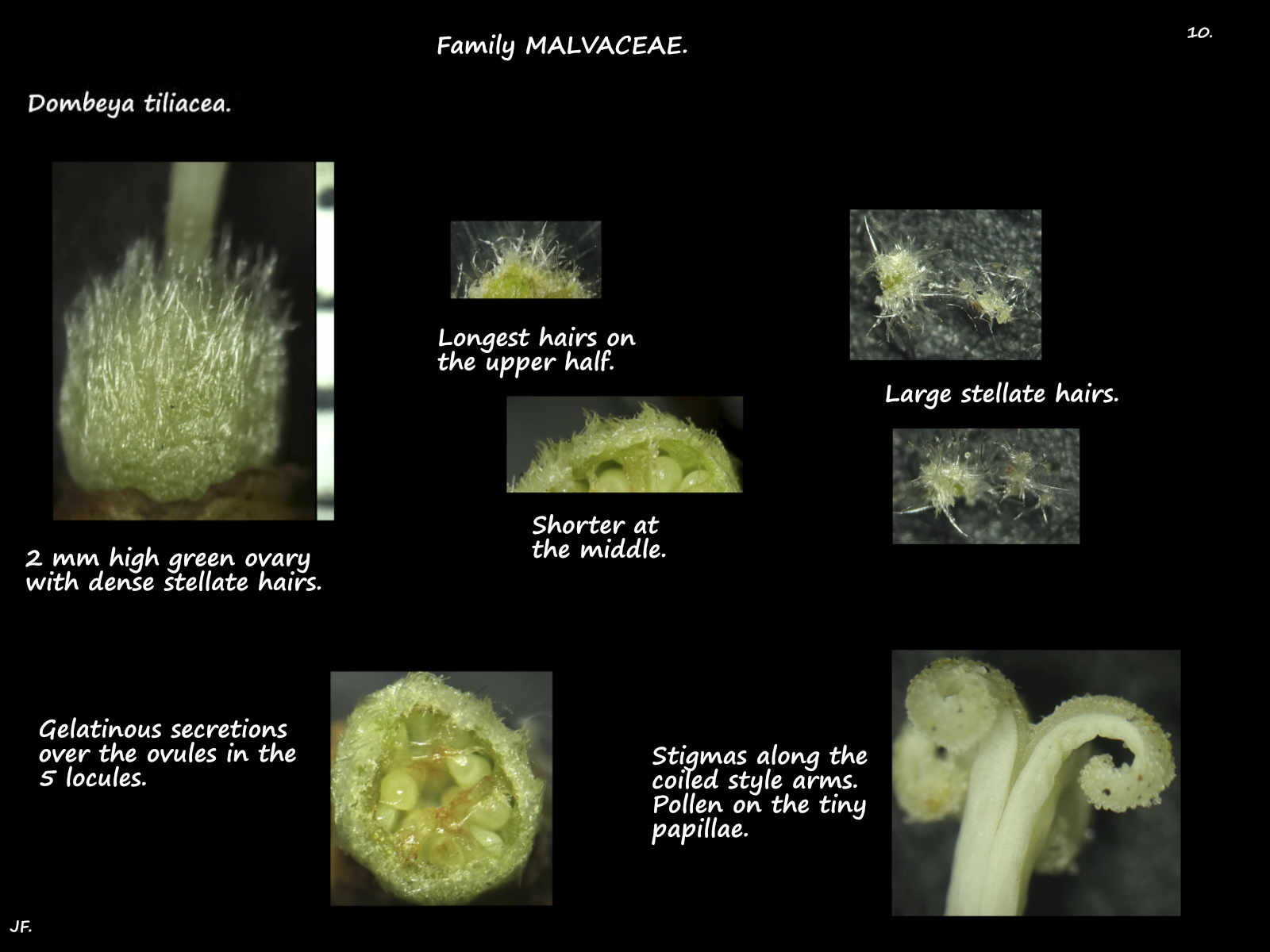
The superior ovary of 5 mostly fused carpels has 5 locules.
Each locule has 2 to 4 ovules attached to a central placenta.
The longest of the dense stellate hairs on the ovary are on the upper third.
A single style, from the 5 fused styles, emerges from the top of the ovary.
Up to 1 cm long it splits into the 5 short style arms holding the stigmas.
Fruit are said to be a loculicidal capsule around 7 mm long with dense hairs.
The brown petals remain on the fruit.
J.F.