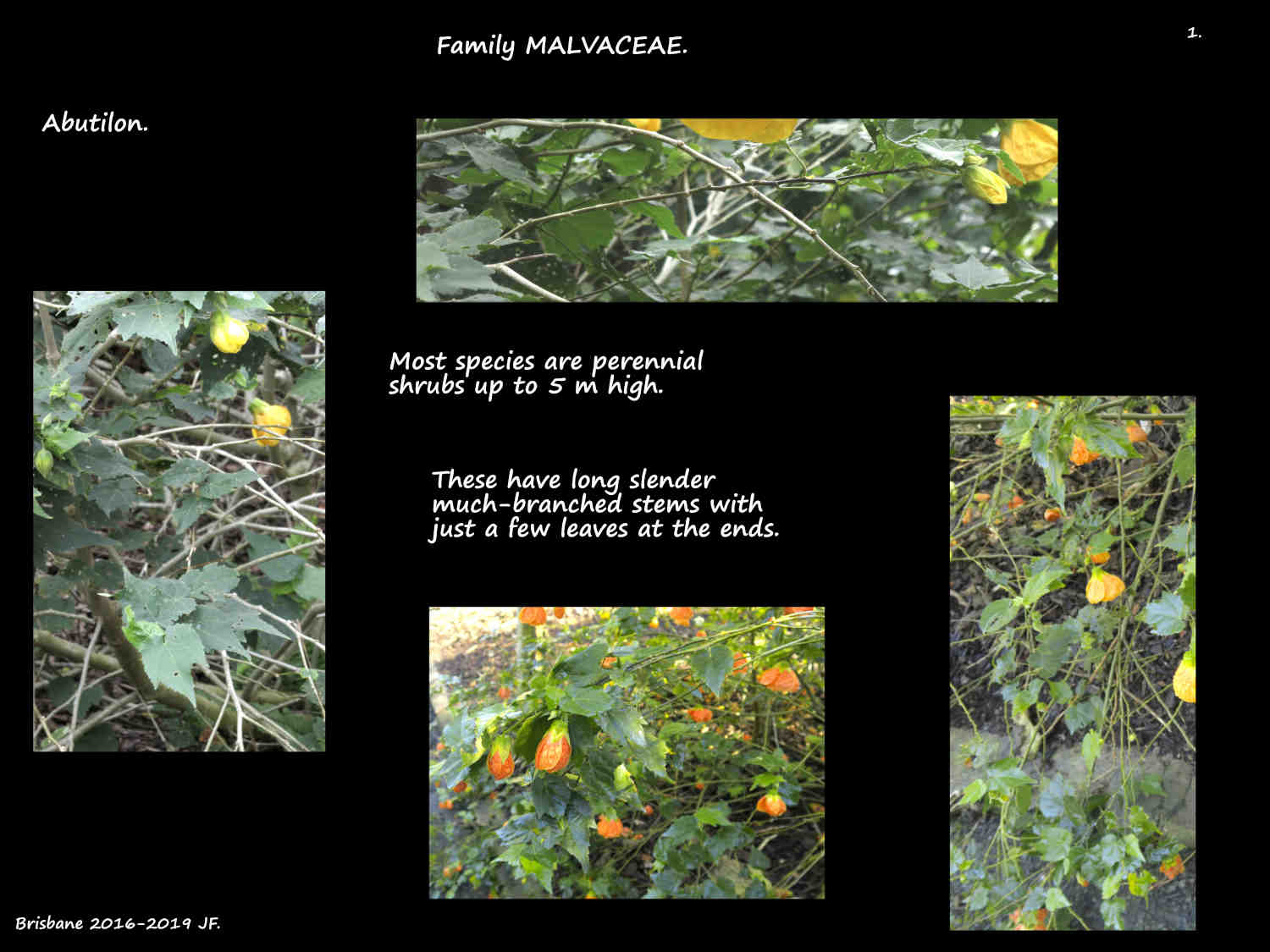
The Chinese Lantern or Lantern-flower is in Family Malvaceae > Tribe Malveae.
Plants of the World Online (Kew) recognises 176 species.
Because many are very similar the actual number is uncertain.
They are native to widespread areas of the tropics and subtropics.
Australia has around 30 species almost all of which are native.
Some species, and numerous hybrids are cultivated.
Almost all are erect perennial shrubs 0.4 to 4 or 5 m high.
There are a few annual herbs and the occasional tree.
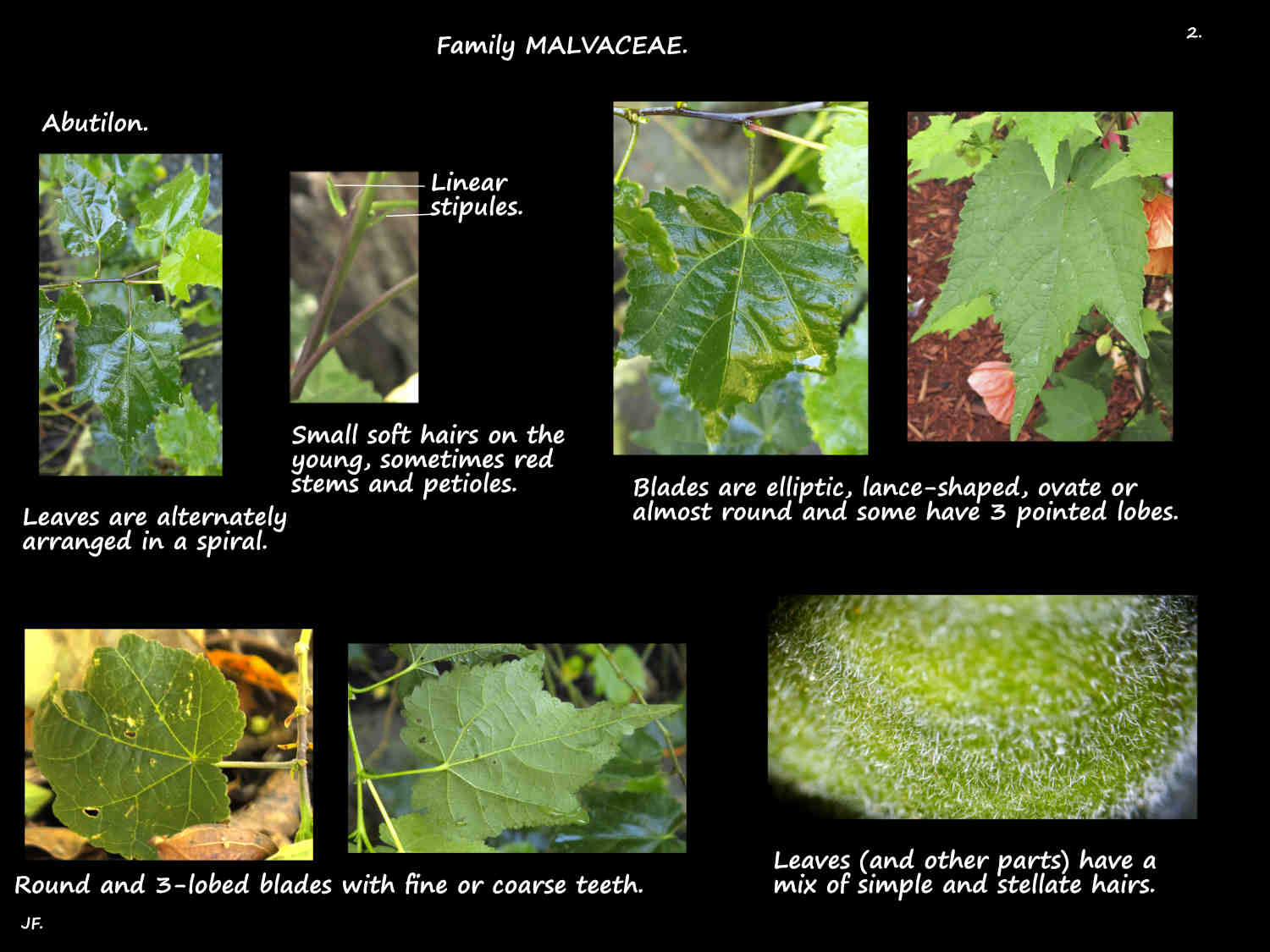
Parts almost always have a mix of long simple and short stellate hairs.
Leaves, on a petiole are alternately arranged in a spiral.
New leaves may have no petiole or a very short one.
Linear stipules at the petiole base may persist or fall.
Blades can be ovate, elliptic or almost round with a pointed tip and heart-shaped base.
They can be from 1 to 2 cm up to 10 or 15 cm long.
Edges have fine to coarse teeth and there may be 3 (5) shallow lobes.
There are simple and stellate hairs.
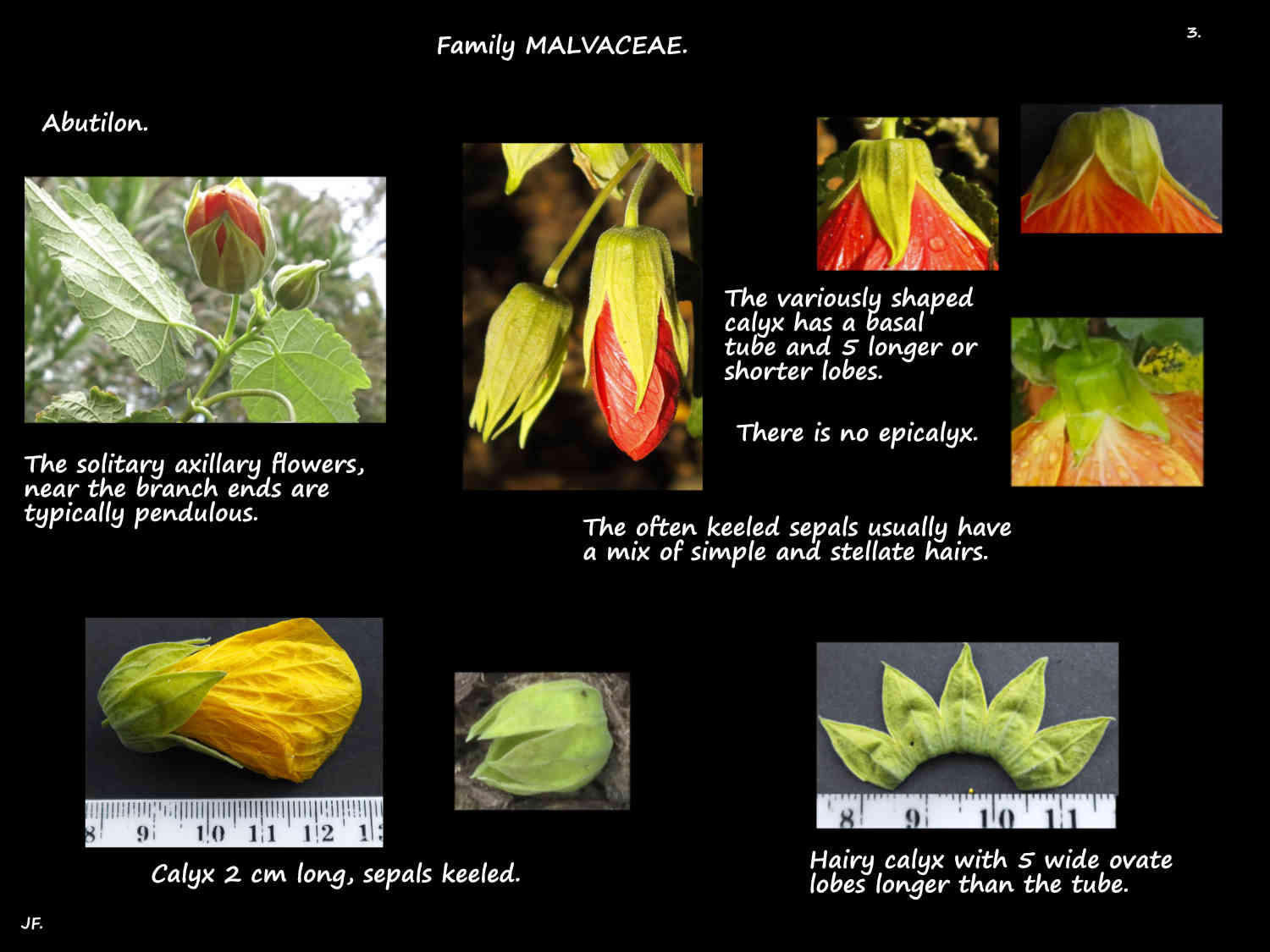
Axillary inflorescences are mostly a solitary pendulous flower.
Where small leaves near the branch ends are very close the flowers can appear to be in small terminal clusters.
Unlike many Malvaceae there is no epicalyx.
The cup or bell-shaped calyx is up to 2 cm long.
The basal tube has 5 usually longer ovate to almost round lobes.
The tips are pointed and there are simple and stellate hairs.
There are species with no petals or ones only a few mms long.
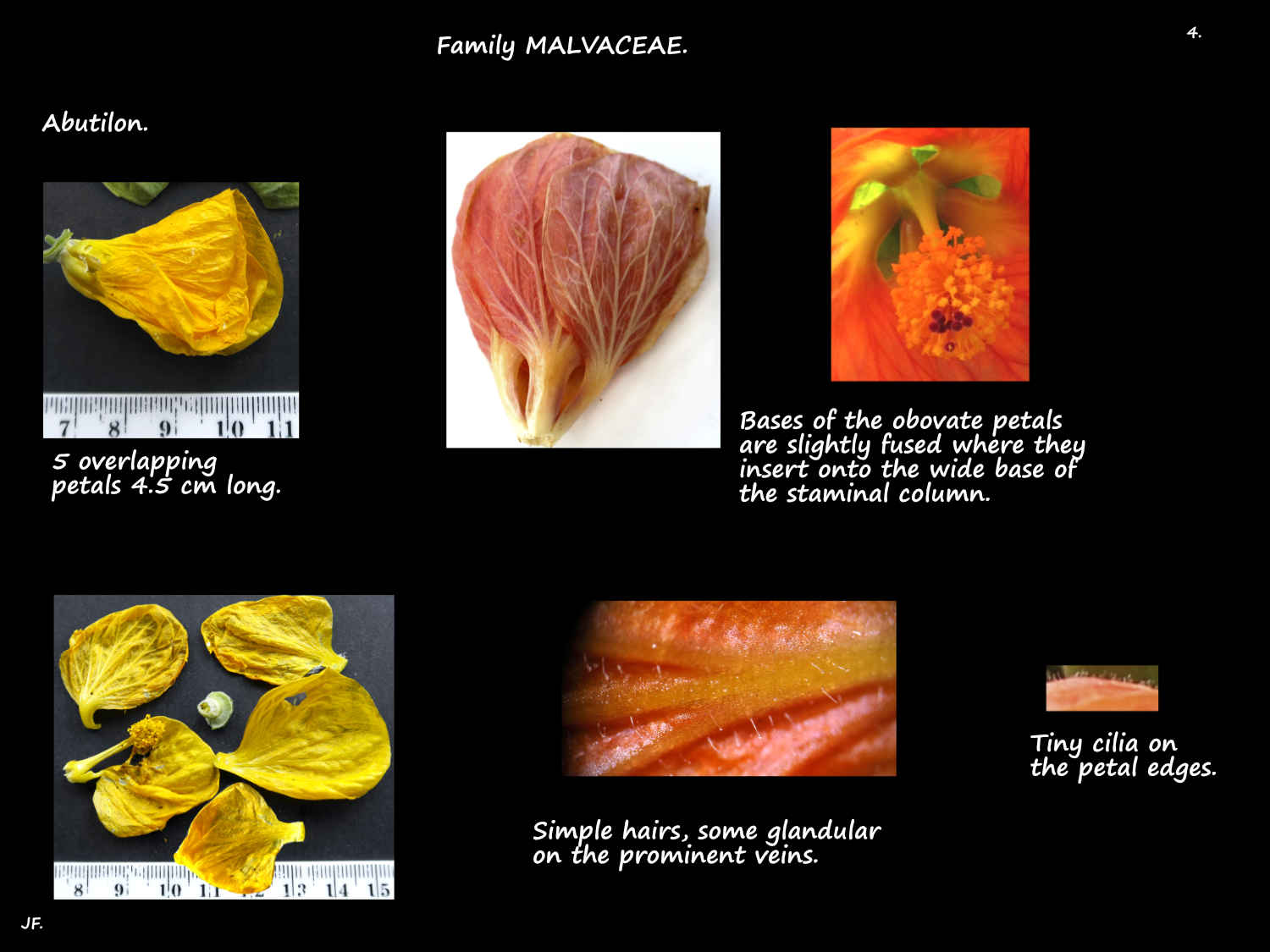
Others can be up to 4.5 cms.
The 5 obovate petals have a narrow base and wide roundish lobes.
The bases are fused where they insert onto the base of the staminal column.
There may be short hairs on the outer surface near the base.
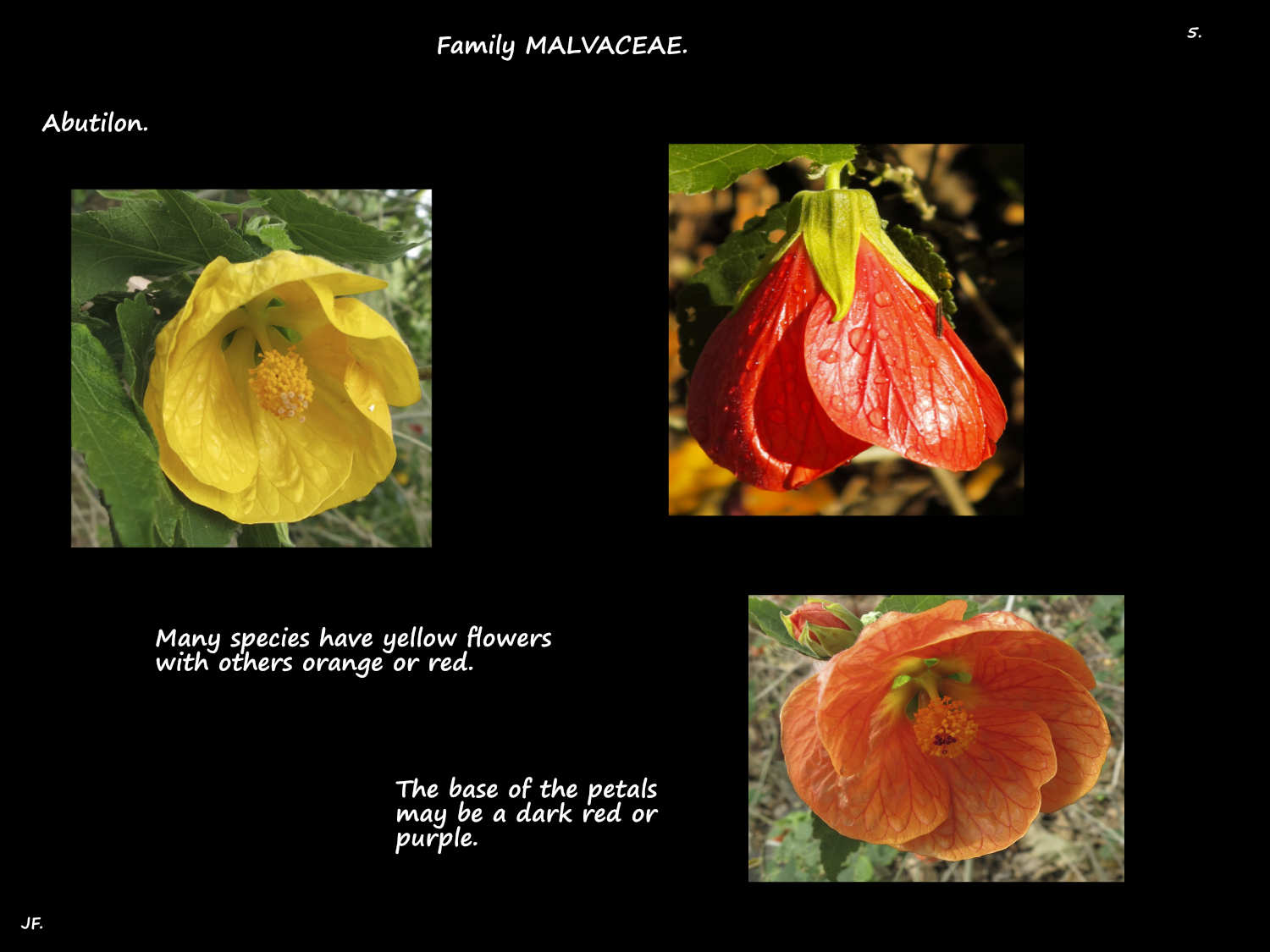
The mostly yellow or orange petals may have a darker purple or red base.
Other petal colours include red, mauve and purple as well as white.
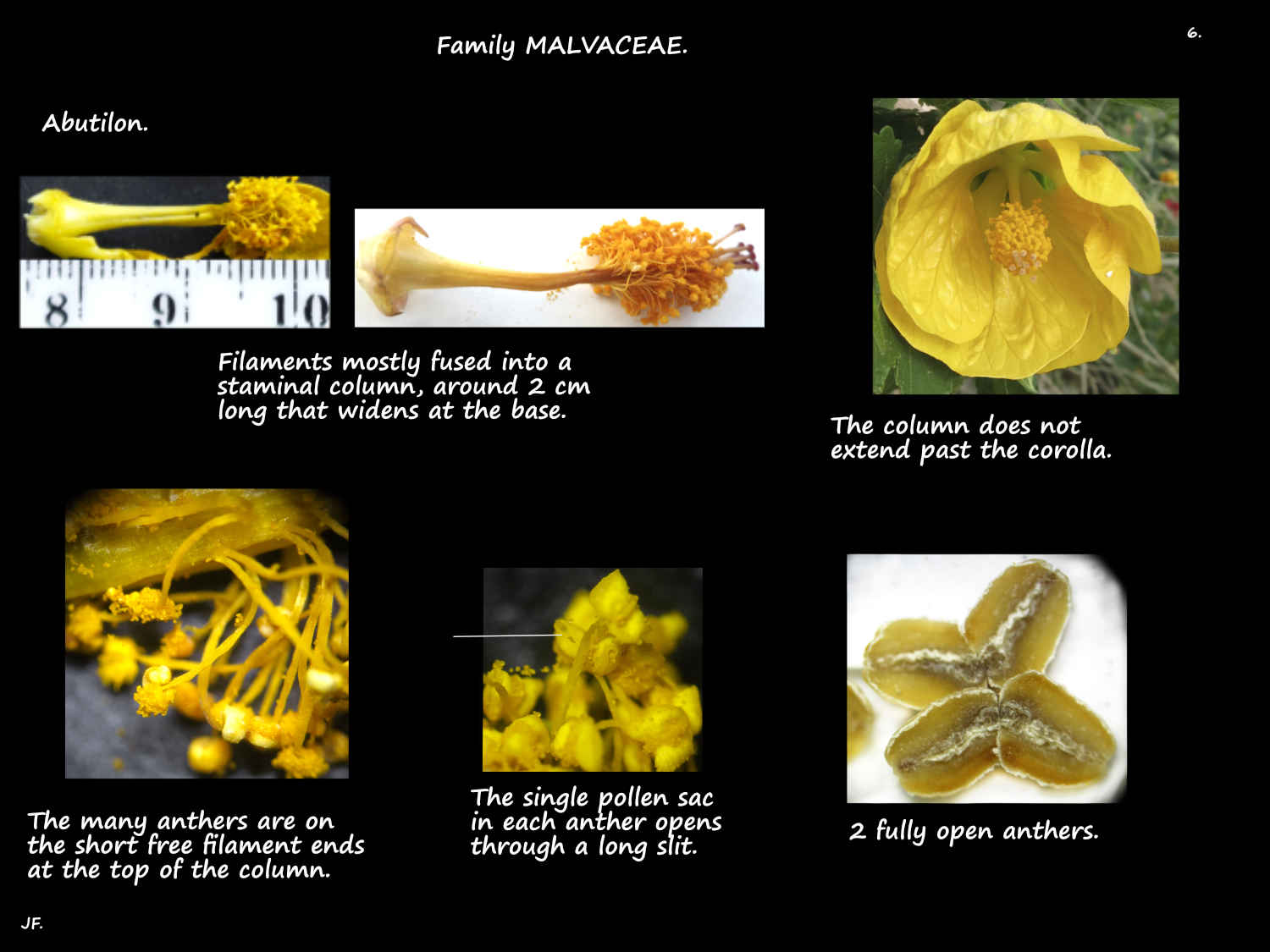
The up to around 100 stamens are in 1 whorl.
The filaments are fused into a staminal column with anthers on the short free ends.
The base of the tube is often dilated.
The tube may be smooth or have some stellate hairs.
The kidney-shaped anthers have 1 pollen sac that opens inwards through a long slit.
In most species the tube does not extend past the corolla.
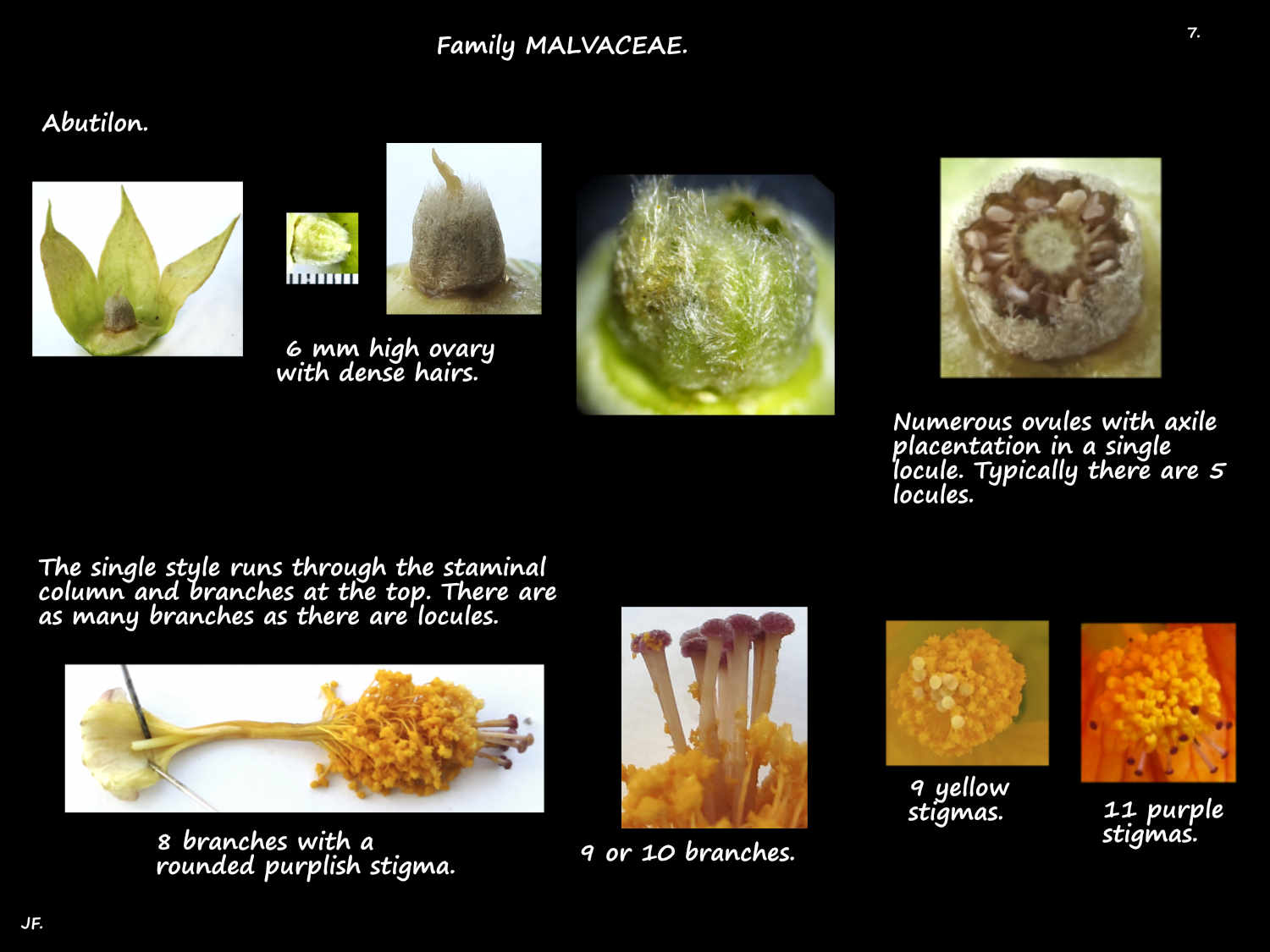
The almost spherical or cylindrical superior ovary consists of up to 40 fused carpels.
These are commonly reduced to 5 (10 to 20) each with (1, 2, 6) 3–9 ovules with axile placentation.
The single style runs through the staminal column and branches at the top.
There are as many branches as there are locules in the ovary.
Each thin or club-shaped style branch has a rounded or flattish stigma.
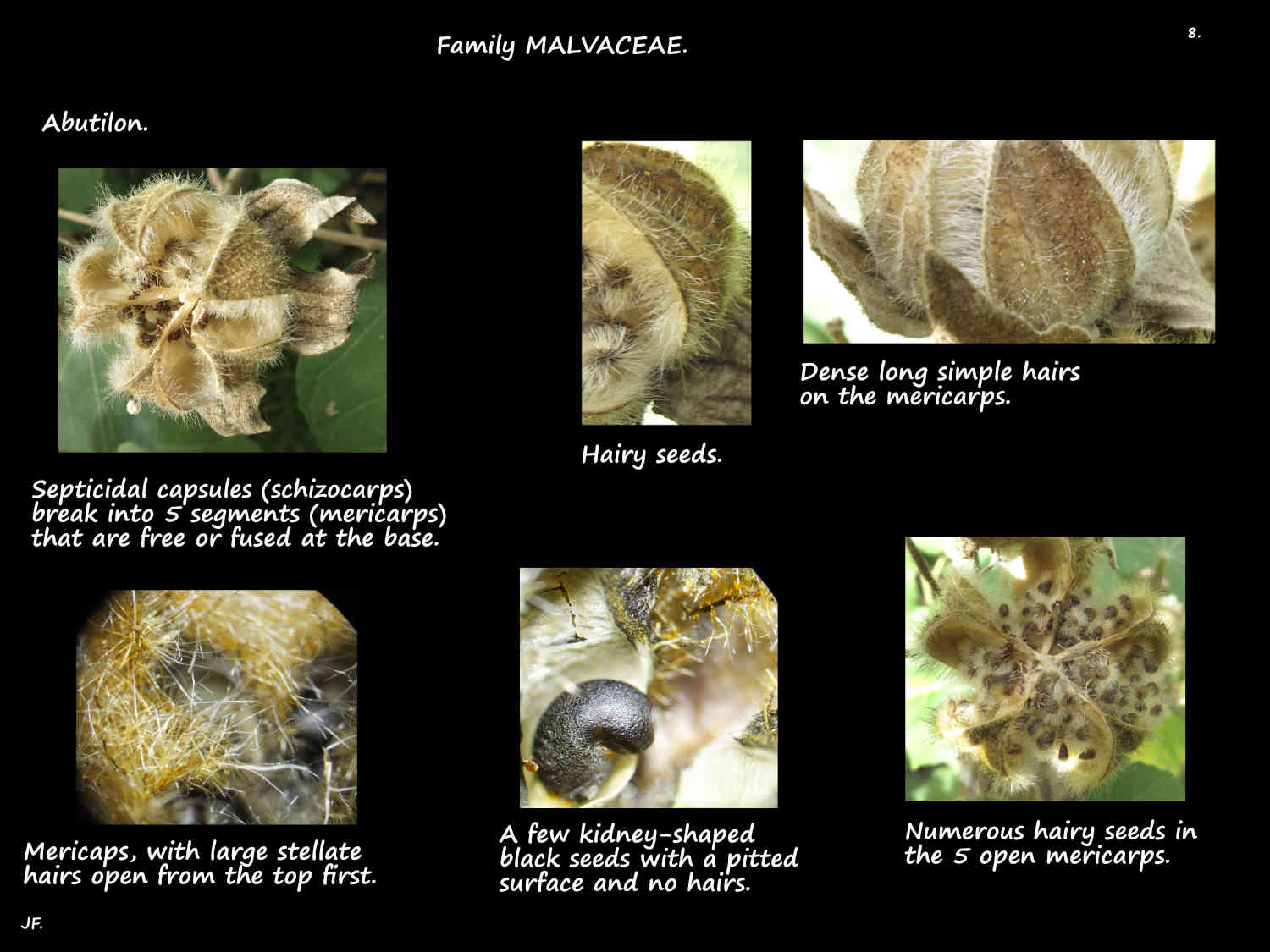
Fruit are a green, grey, brown or black septicidal schizocarp (capsule).
They are around 10 (6-15) mm long and up to 2 cm wide.
Round or angled (star-shaped) in cross section there is often a deep depression in the top.
The number of segments (mericarps) depends on the number of locules.
The often around 5 to 10 mericarps may separate or remain fused at the base.
Mature capsules may be smooth or have stellate hairs.
Mericarps often have a rounded base and may have 1 or 2 awns (bristles) at the top.
They open into 2 valves along the outer suture usually starting at the top.
Inside, the seeds are attached to a central column or columella.
The (1) 2–3 (9) roughly kidney-shaped seeds can be smooth, pitted, have tiny nodules, have no hairs or stellate ones.
J.F.