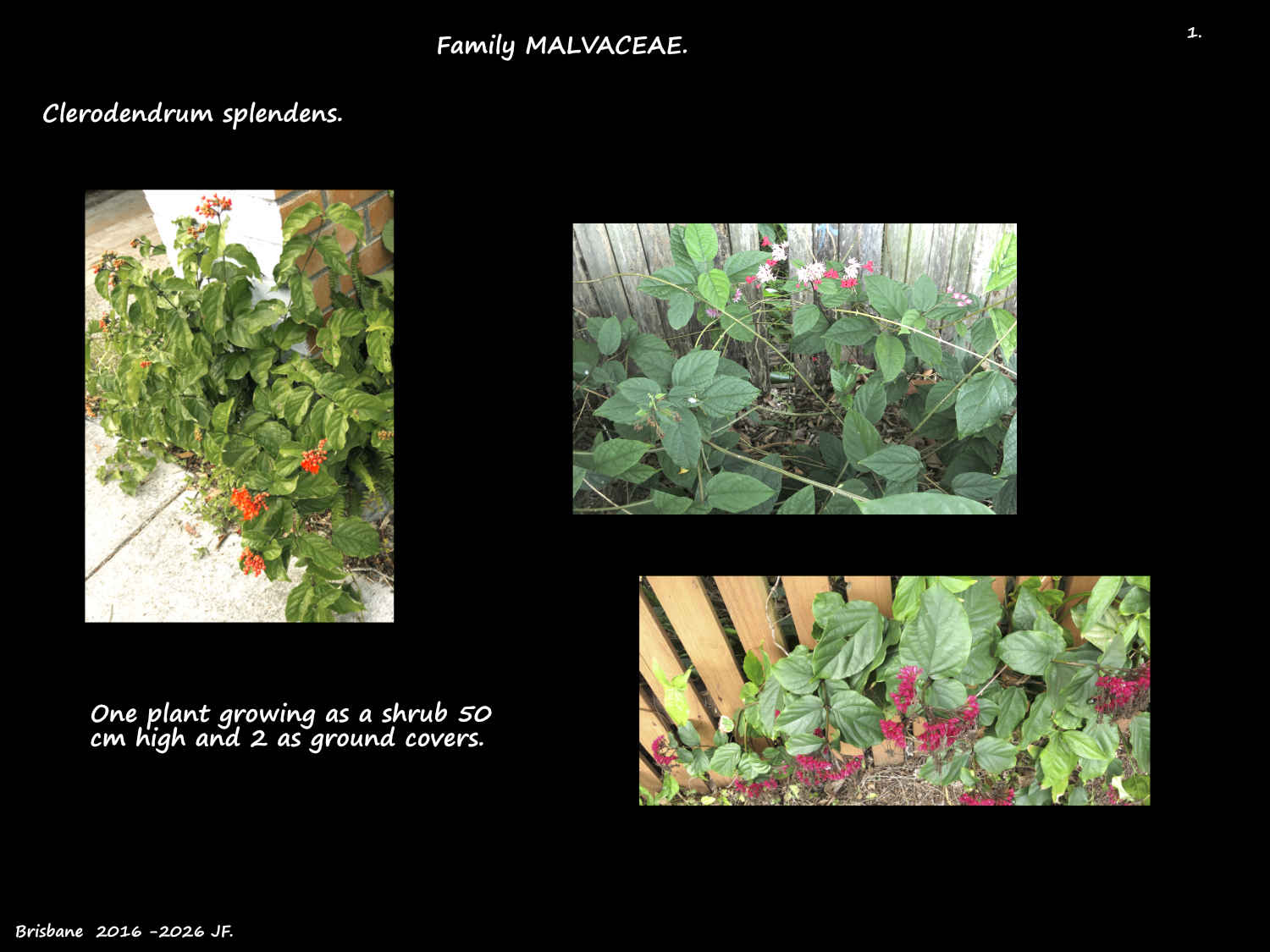
The Bleeding Heart or Glory Bower vine is native to tropical West Africa.
With no support they grow as a small shrub or a ground cover.
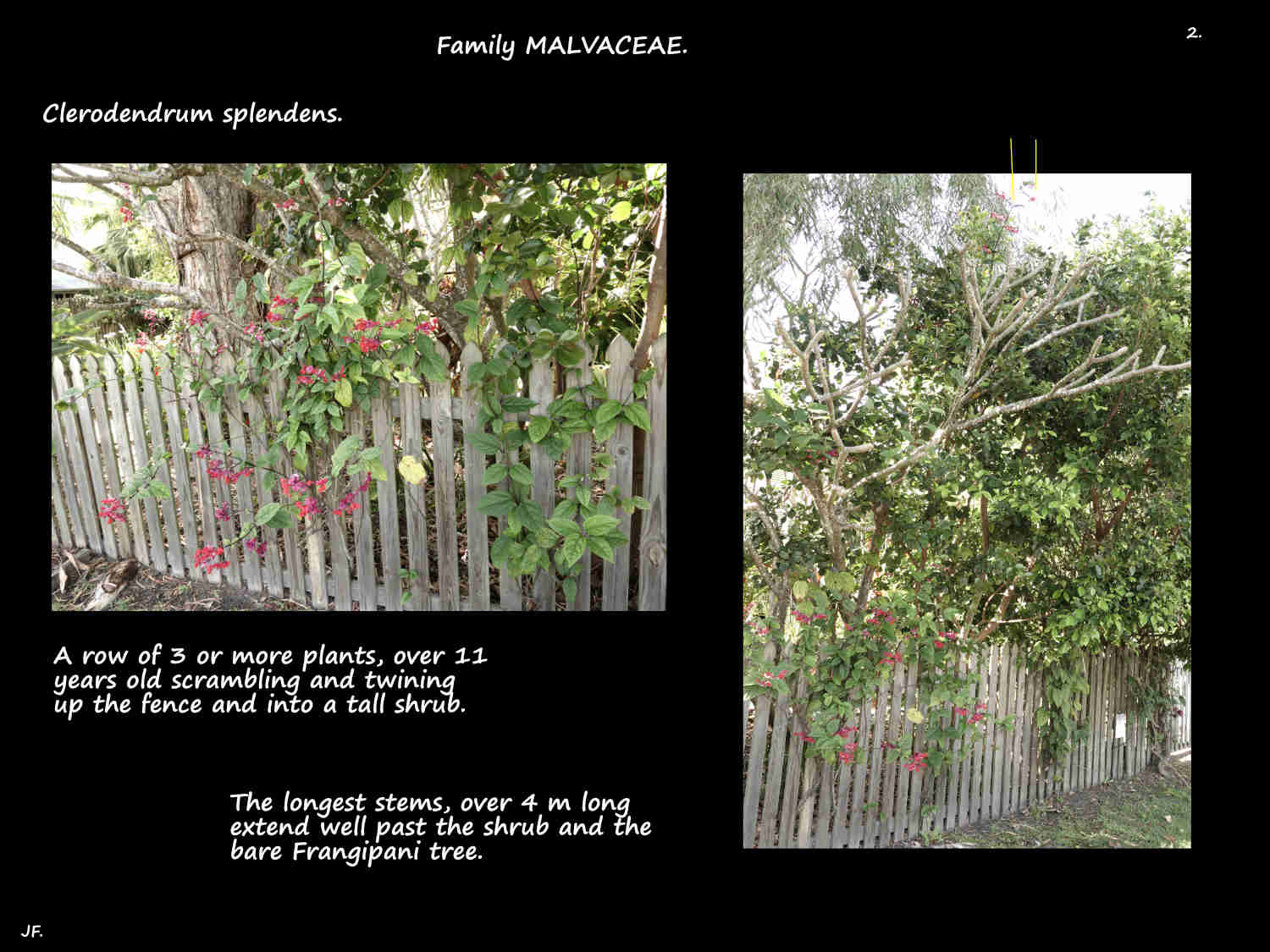
Typically they are a much-branched woody vine with stems 4 or 5 m long.
They climb by twining and scrambling over other vegetation.
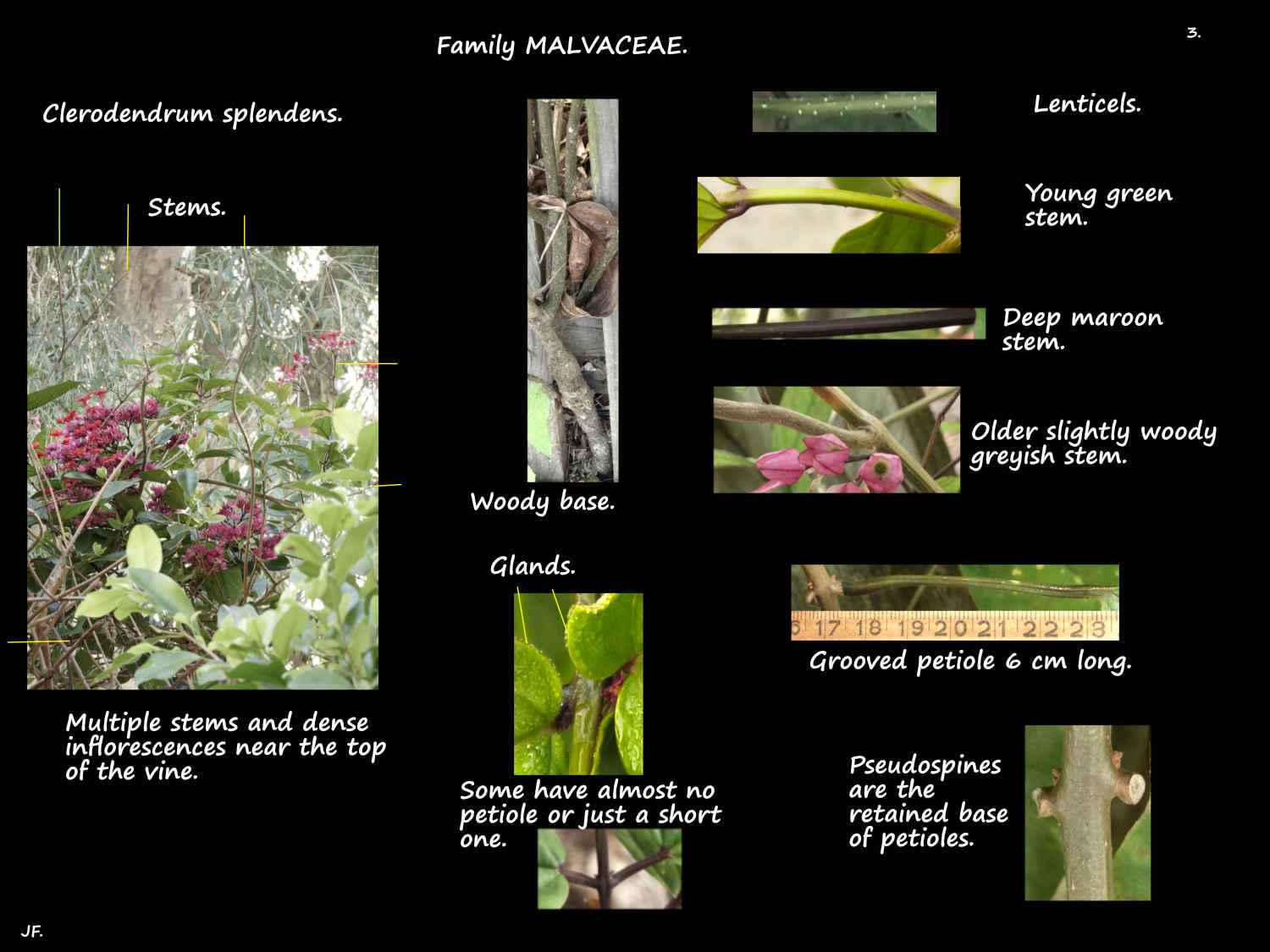
Young stems are green and/or a deep maroon.
Older plants have a woody base and grey-brown stems with lenticels.
Stems can be round or 4 to slightly 5-angled and may be twisted.
When old leaves fall they can leave a flat scar on the stem.
Commonly they leave a pseudospine 2 to 10 mm long which may aid climbing.
In some situations plants can become extremely invasive with deep roots many metres long that can send up suckers.
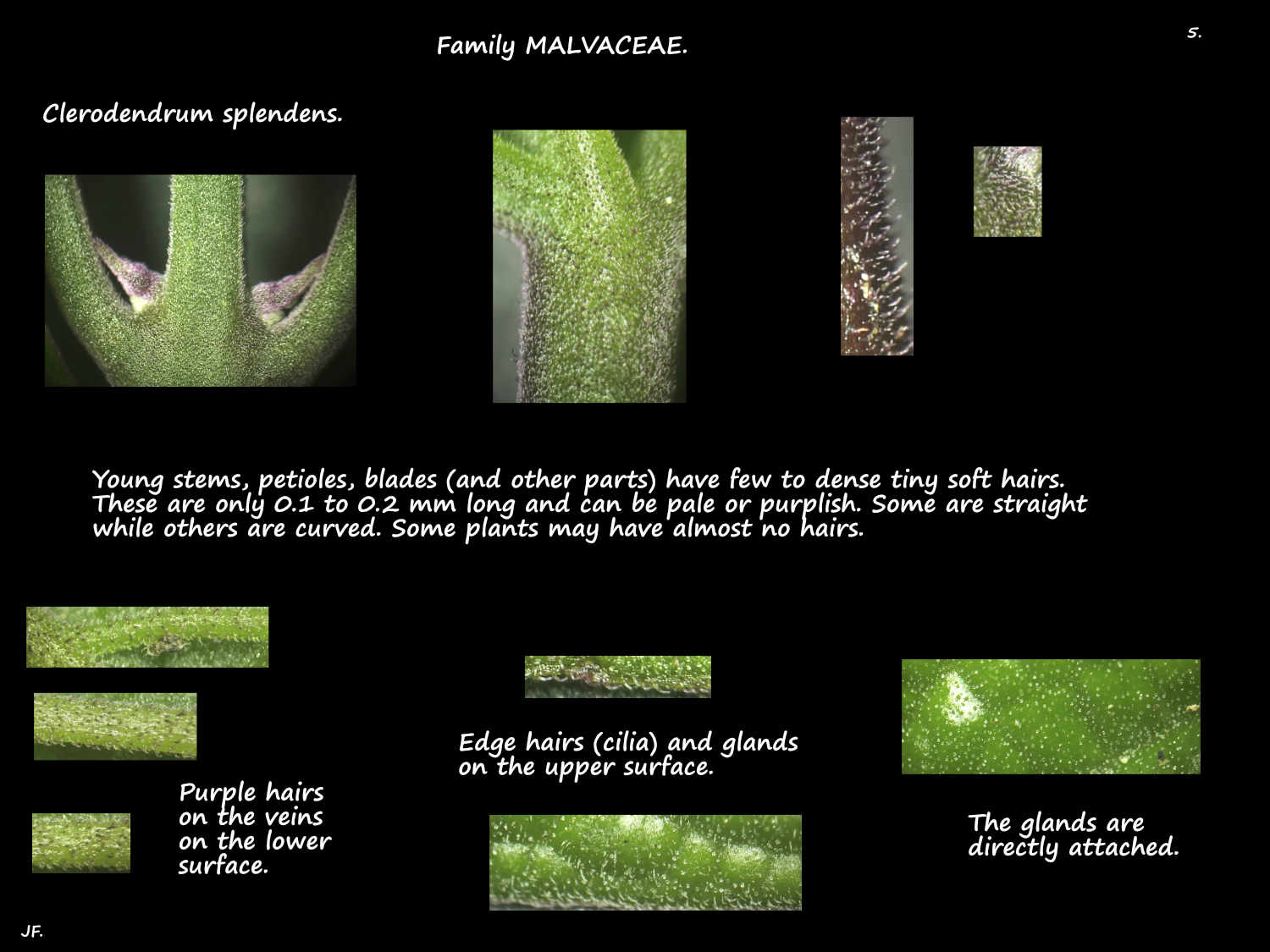
The whole plant may have no hairs but usually many parts are puberulent.
This is defined as having minute soft (erect) hairs.
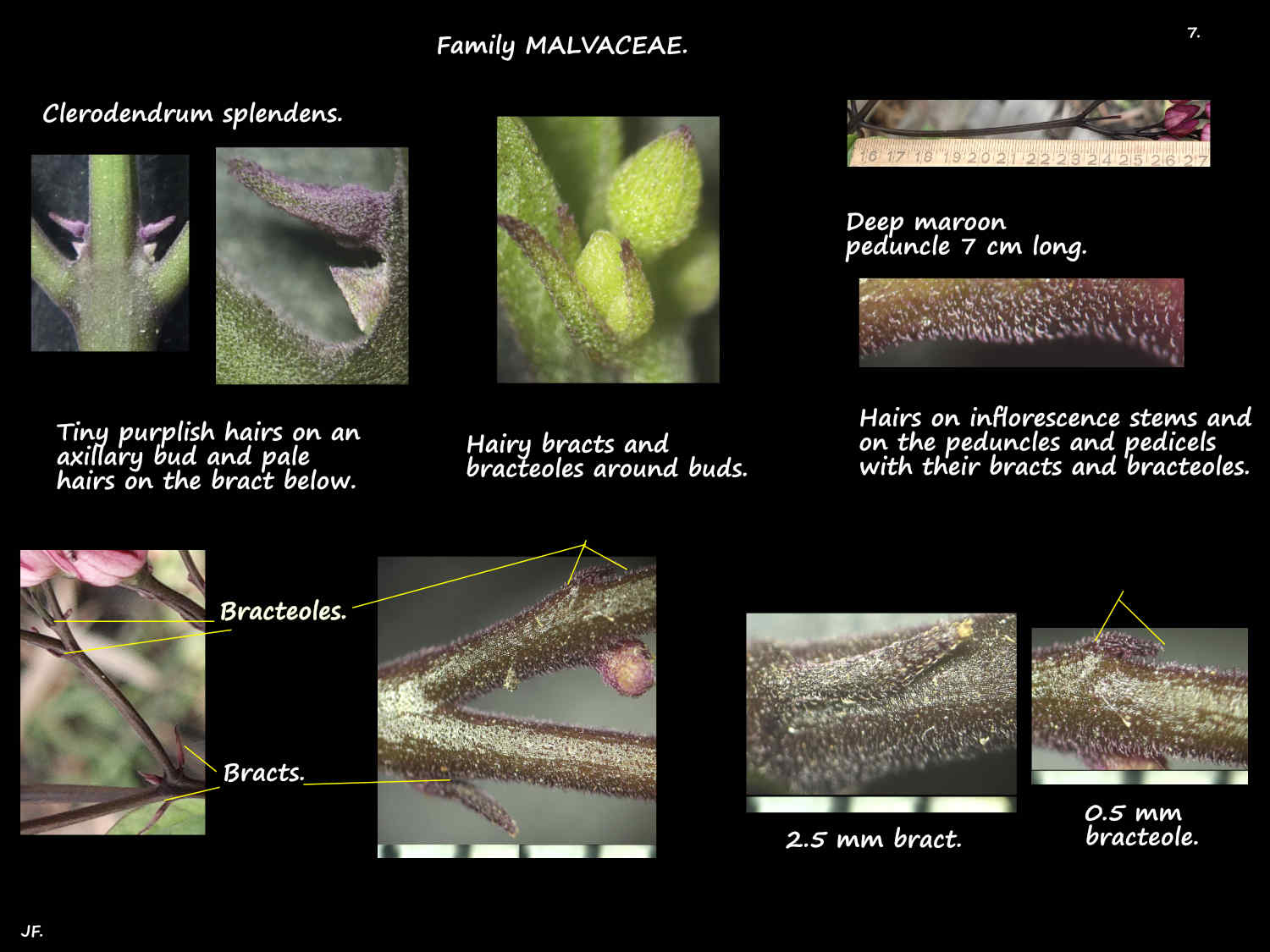
Parts with hairs include young stems, petioles, leaves, peduncles, pedicels, bracts, bracteoles, calyces and corollas.
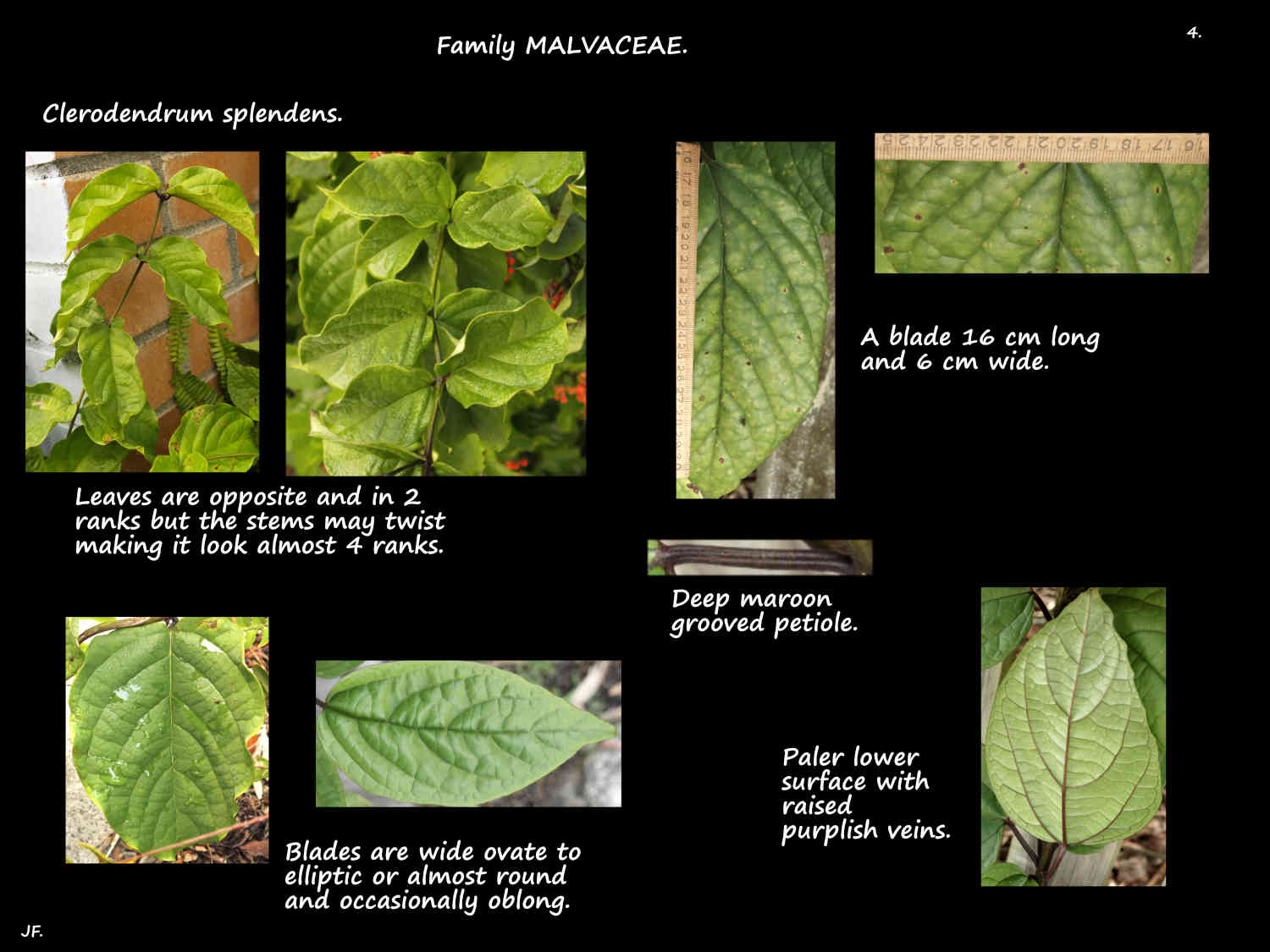
Evergreen leaves are usually opposite to subopposite but not decussate (in 4 ranks).
The petiole, with a grooved upper surface can be up to 2 or 2.5 cm long.
The blades are up to around 18 cm long and 10 cm wide.
They are typically widely ovate to almost round or oblong and have a short pointed tip.
The base is round to heart-shaped or almost flat.
Green to dark green blades have a paler lower surface with prominent veins.
Young leaves often have tiny soft hairs and there may be small glands with no stalk.
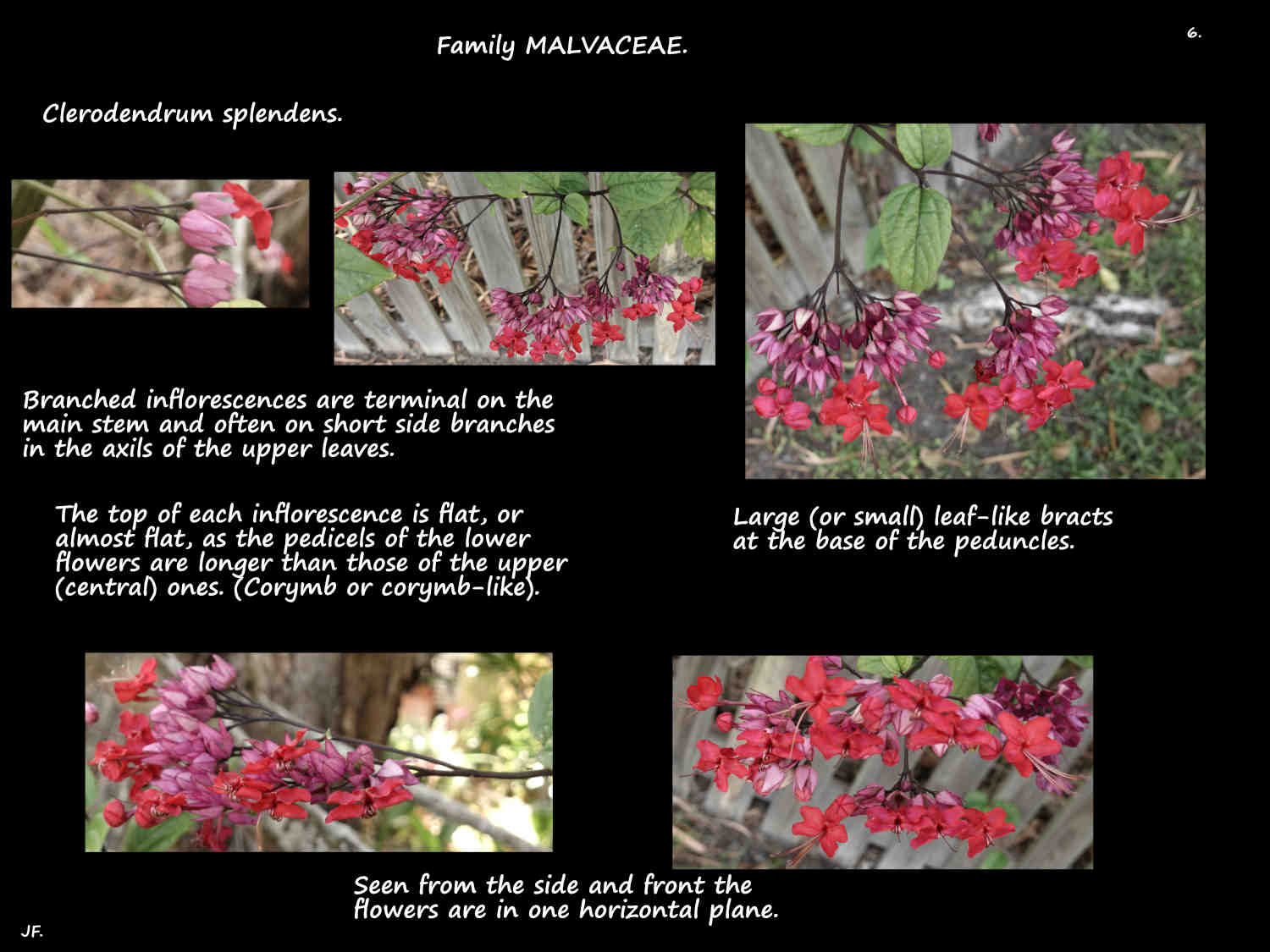
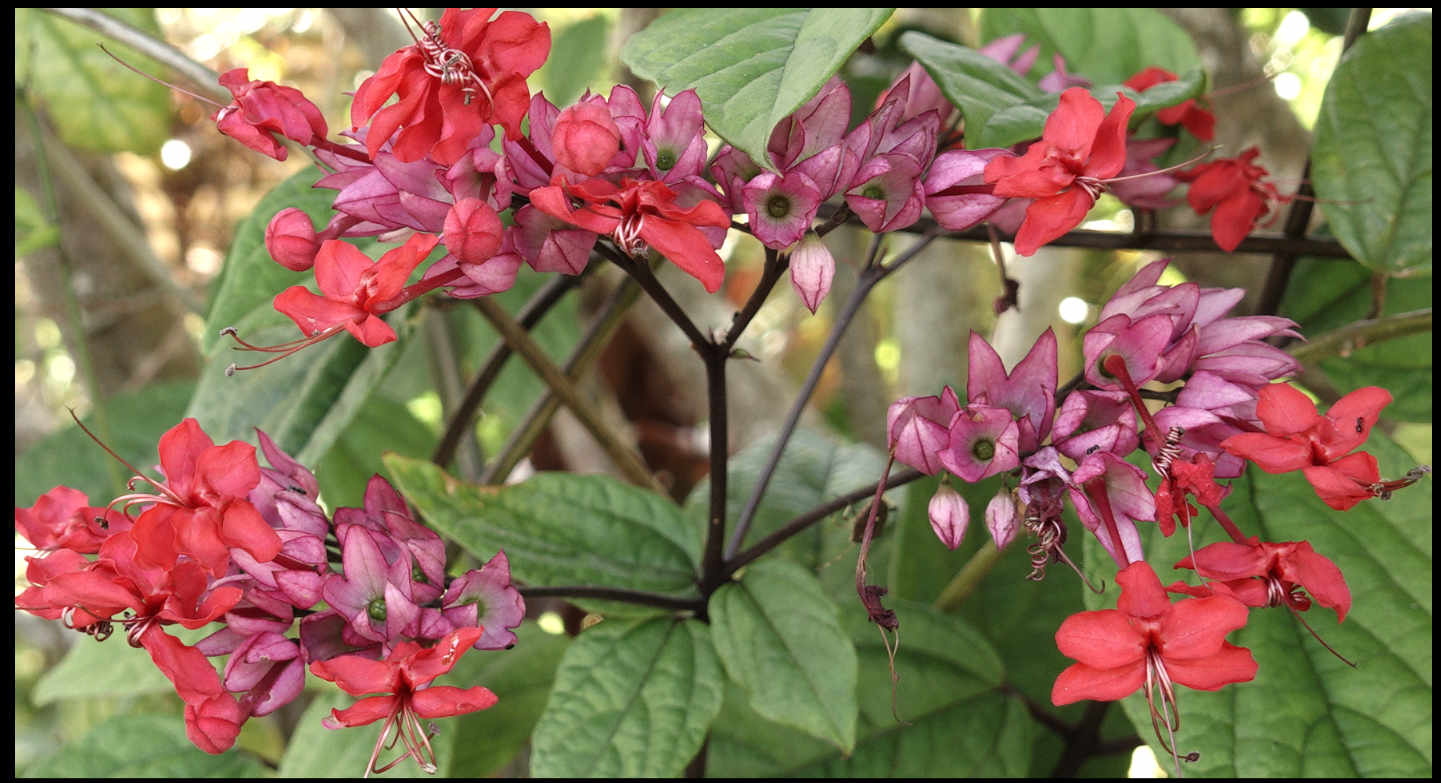
Dense, much-branched inflorescences are almost always terminal.
There may be a second (or third) pair on short side branches from the upper leaf axils.
Inflorescences are corymbs or corymb-like (corymbiform).
The basic unit is a raceme with flowers, on a pedicel along a midrib.
The lower flowers open first and the corymbs are often branched.
In a corymb the lower flowers are on longer pedicels than the upper ones.
This means the top of the inflorecence is flat or almost flat.
Flowers lie in a narrow horizontal plane.
Up to around 14 cm long and 20 cm wide, inflorescences have a primary peduncle up to around 8 cm long.
At the base of each peduncle is a leaf-like bract a few cms long or a tiny one a few mms long.
Individual flowers are on a pedicel a few mms to over 1 cm long.
Pedicels have a bractiole a few mms long and all these parts have minute fine hairs.
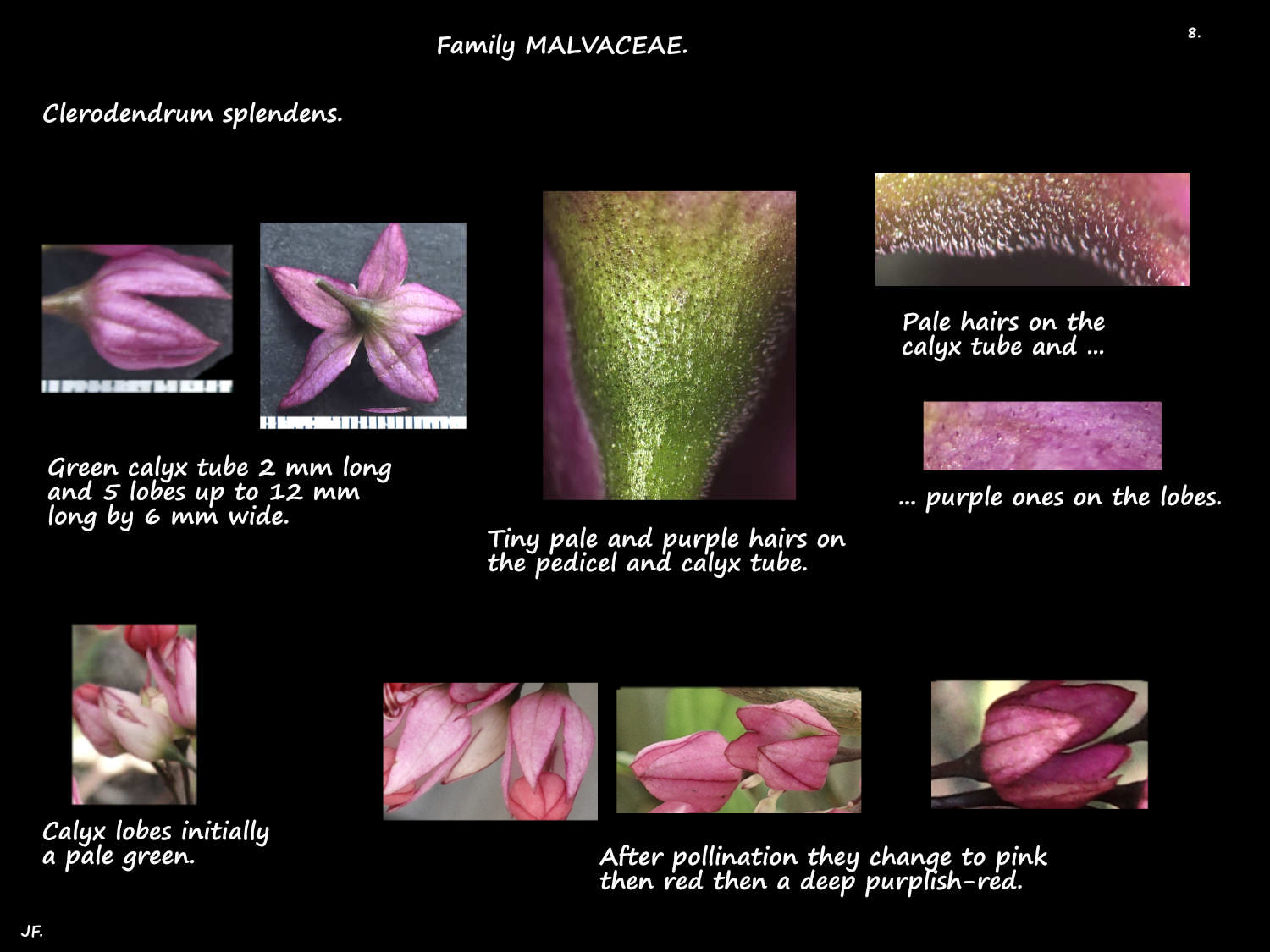
The calyx has a tubular base a few mms long with 5 longer pointed lobes.
Initially green, after maturity it becomes red then purplish.
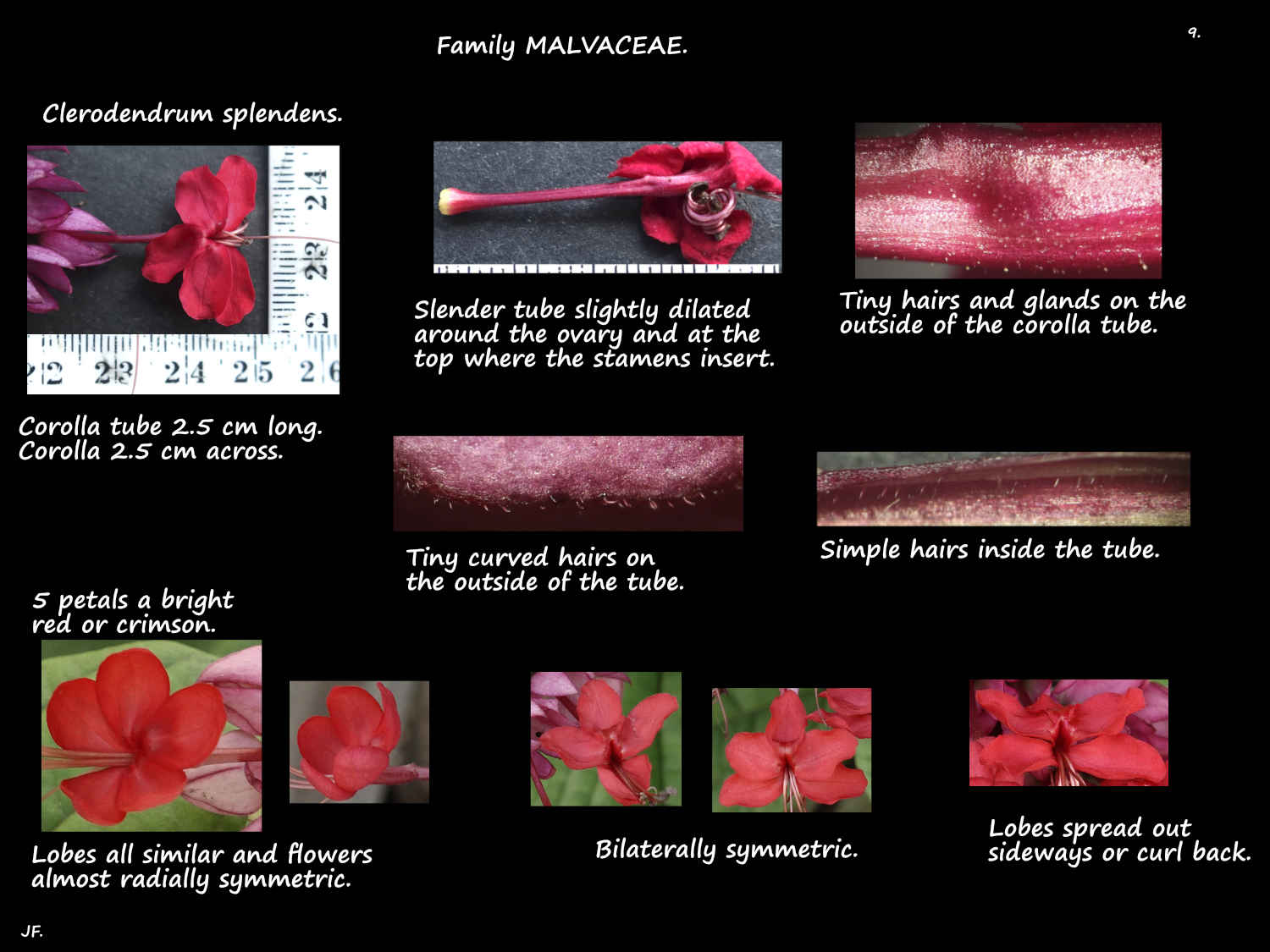
The corolla tube, around 2.5 cm long has 5 lobes.
The scarlet lobes, with a rounded tip spread out then curl back.
Calyx and corolla have minute hairs and glands.
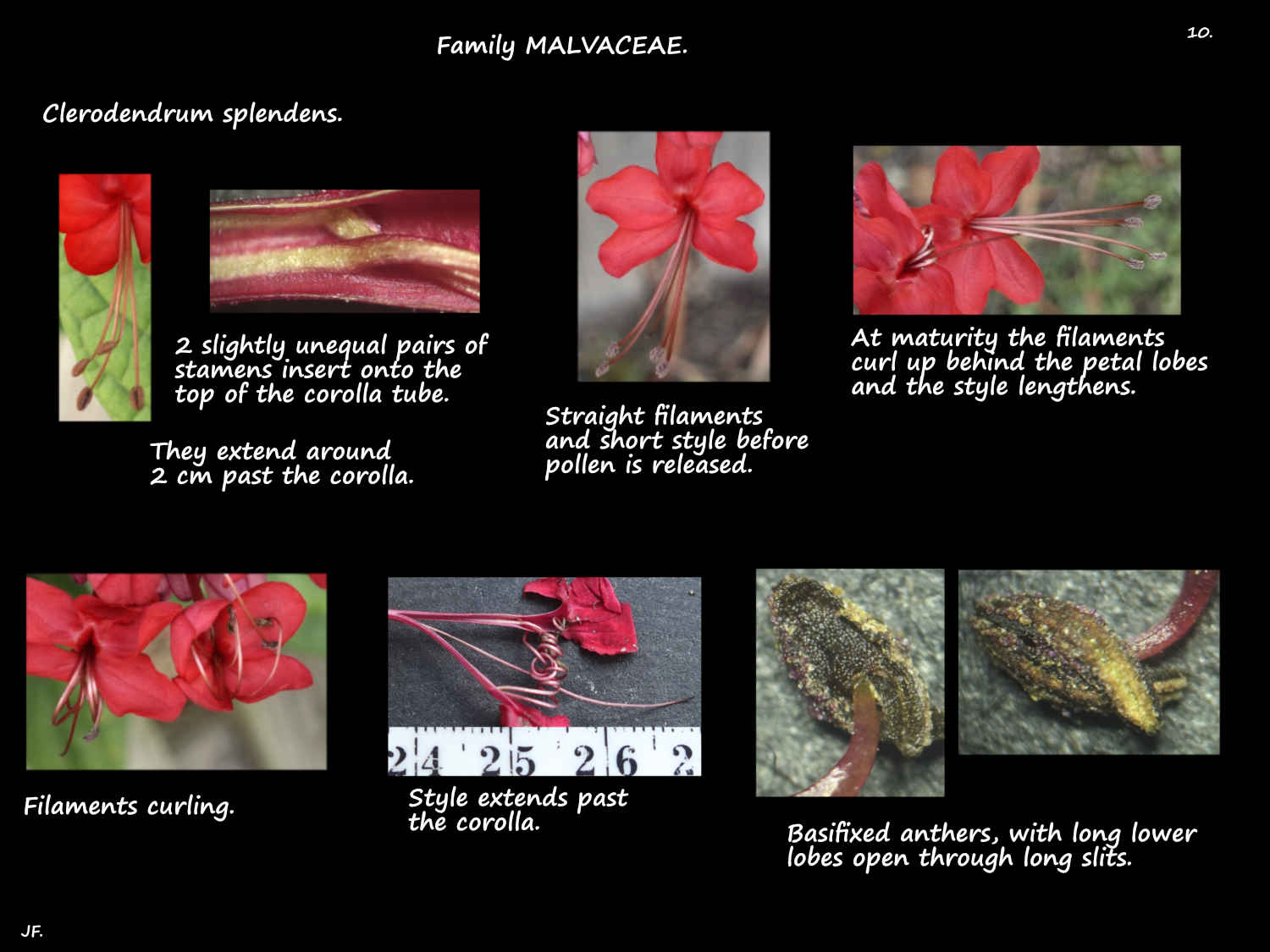
There are 4 stamens in 2 pairs that are equal or slightly unequal in length.
Inserted onto the upper part of the corolla tube they curl back after their pollen is shed.
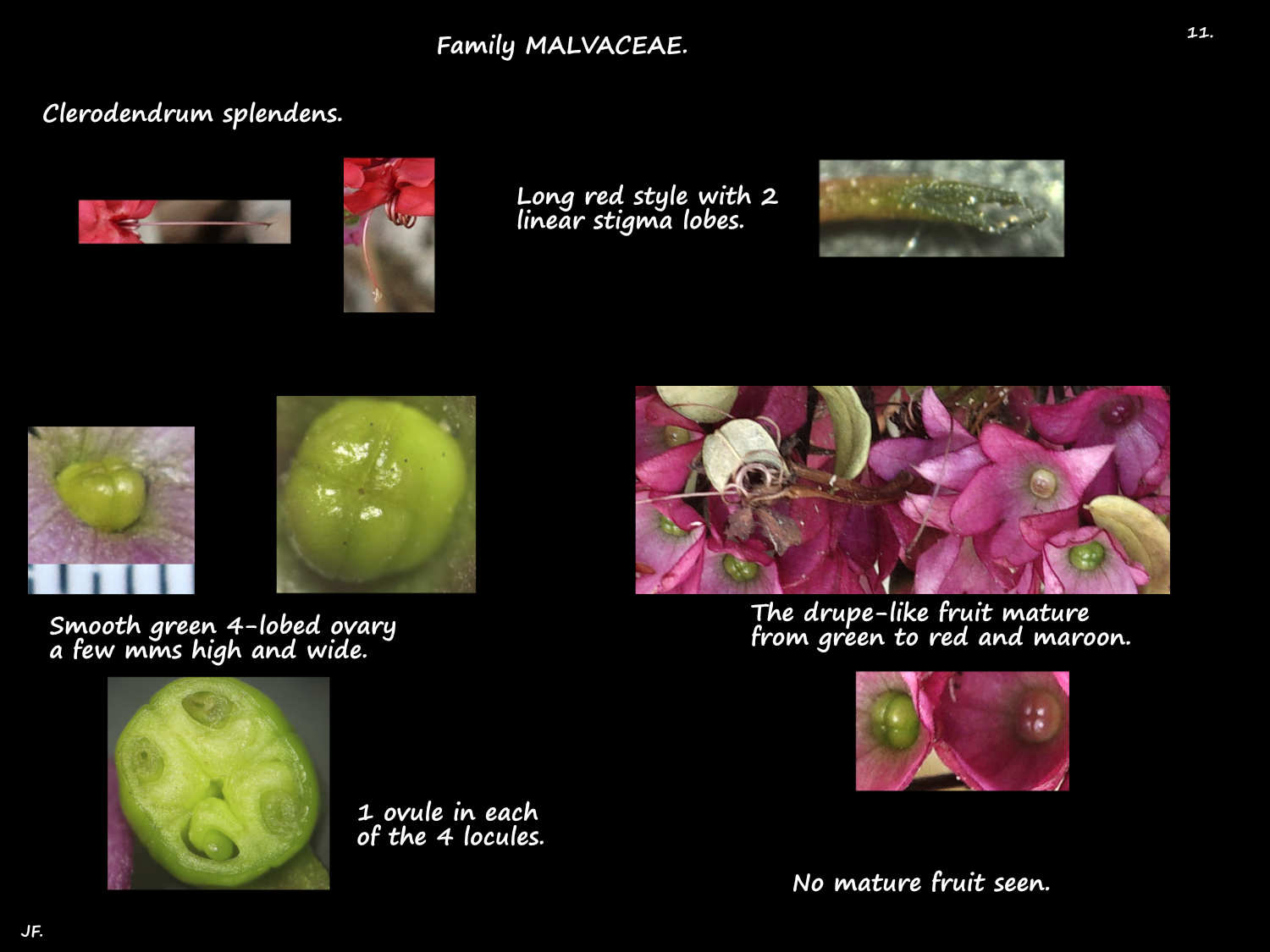
The ovary has 4 locules each with one ovule.
The style, with 2 linear stigma lobes extends well past the corolla tube.
The drupe-like fruit are 1 to 1.5 cm long and almost as wide.
They mature from green to a shiny black or purplish-black.
There are no hairs on the stamens, ovary or fruit.
The calyx, enlarging around the fruit becomes red or purplish-red.
J.F.