Known as Small-bracted Sanchezia or just Sanchezia.
In Family Acanthaceae it is native to tropical areas of South America.
Cultivated as a garden plant it is now an invasive weed.
It is naturalised in parts of the eastern coast of Queensland.
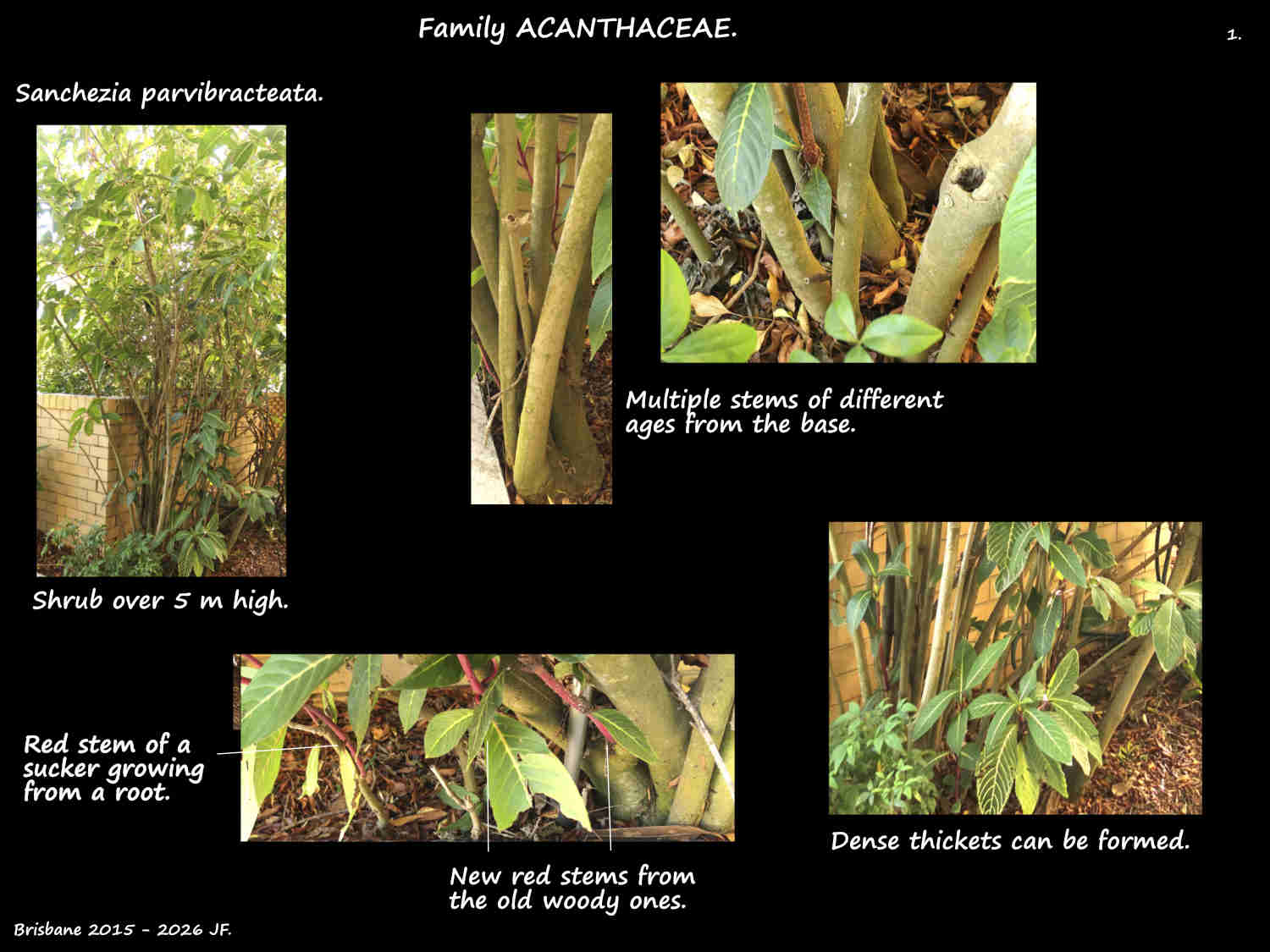
In gardens the shrubs can be up to 5 or 6 m high.
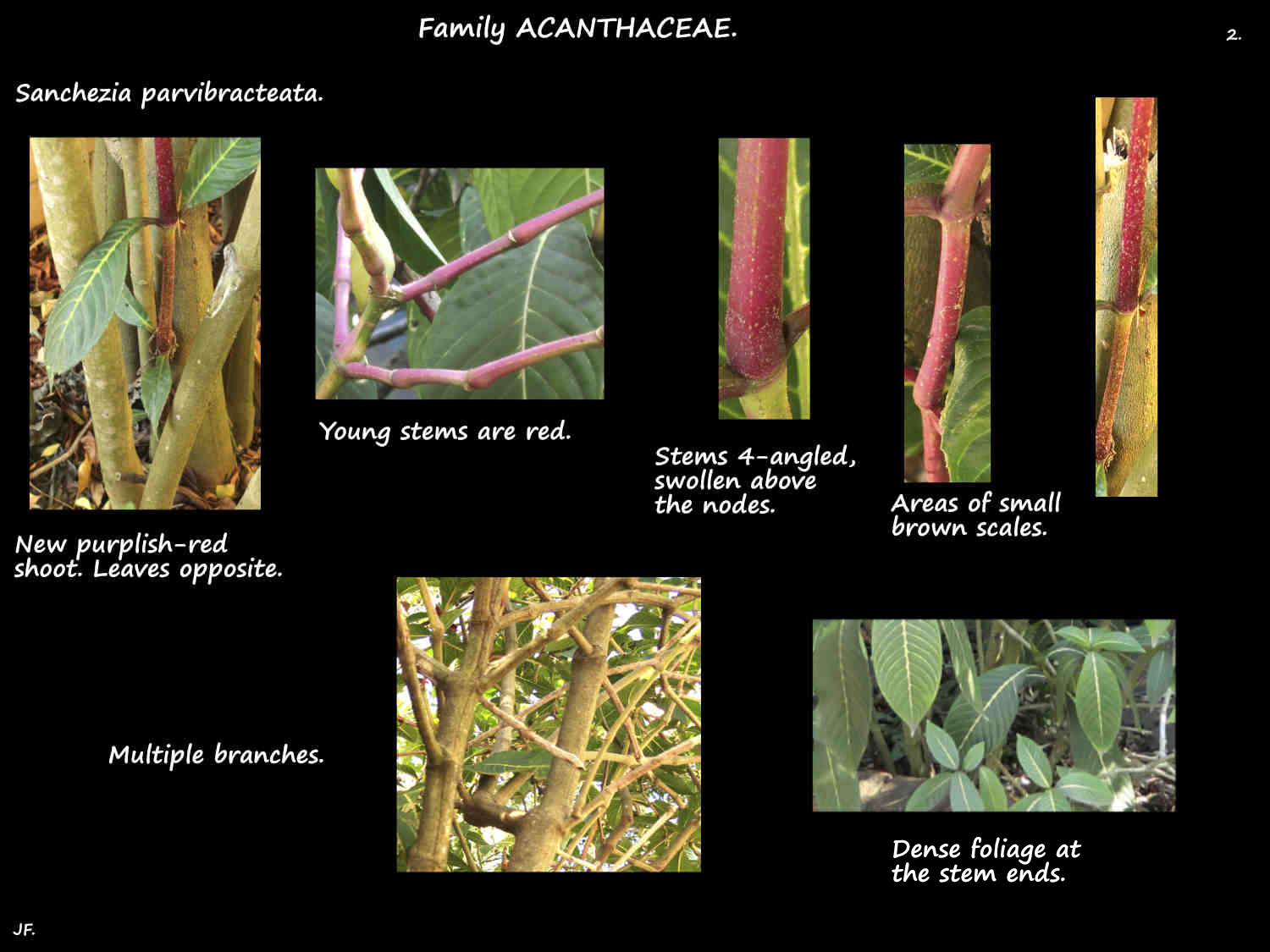
Young green or reddish stems are 4-angled.
Older stems have areas of small brown scales (scurfy) but there are no hairs.
New shoots can grow from the woody base.
Suckers can grow from the roots away from the main stems.
Pieces of broken stem can also root.
All these new shoots can lead to dense stands that smother other vegetation.
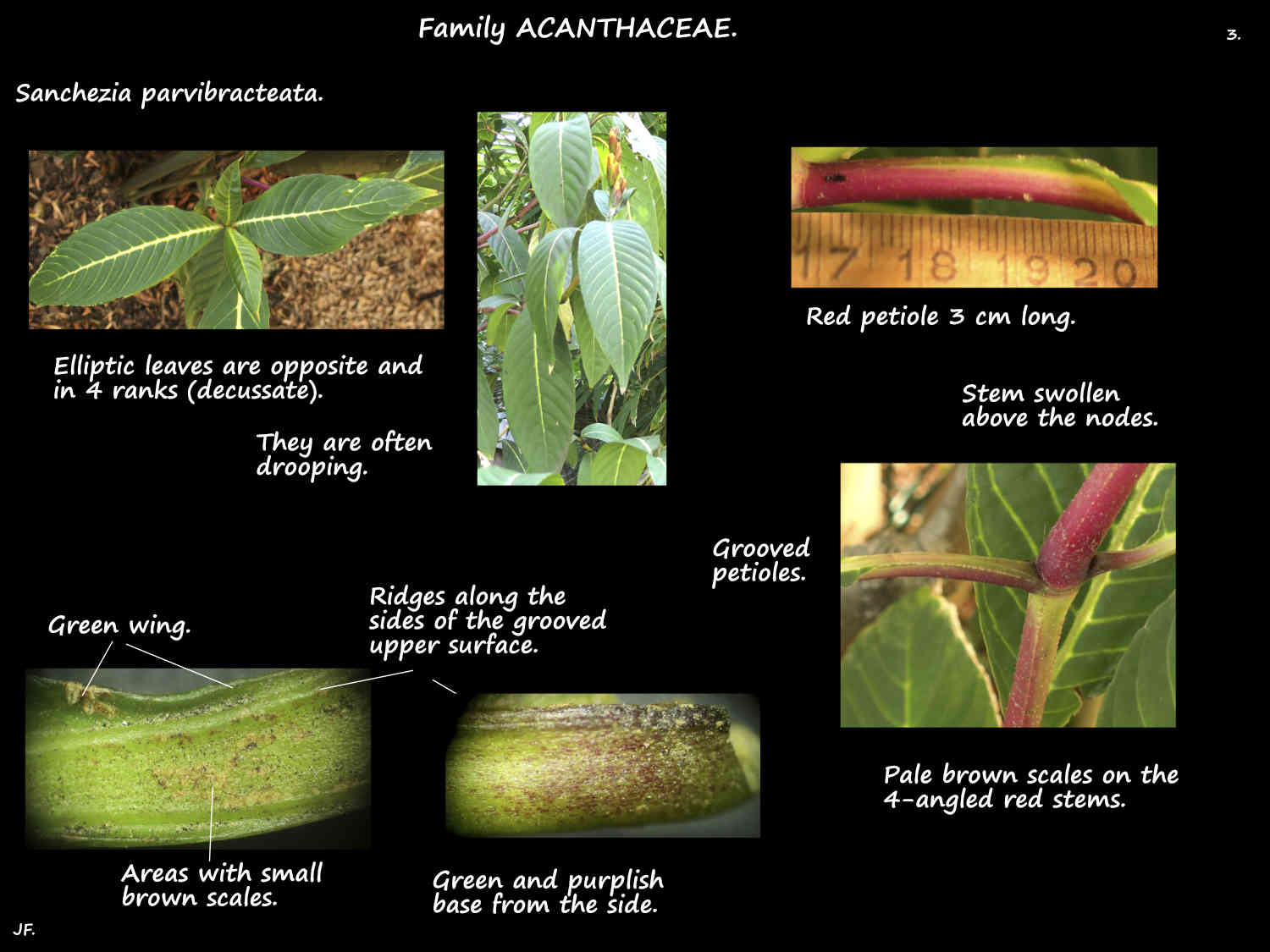
The opposite and decussate leaves are on a petiole up to 3 cm long.
The petiole has a grooved upper surface with ridged edges.
It may be reddish or purplish and have small scales on the upper surface.
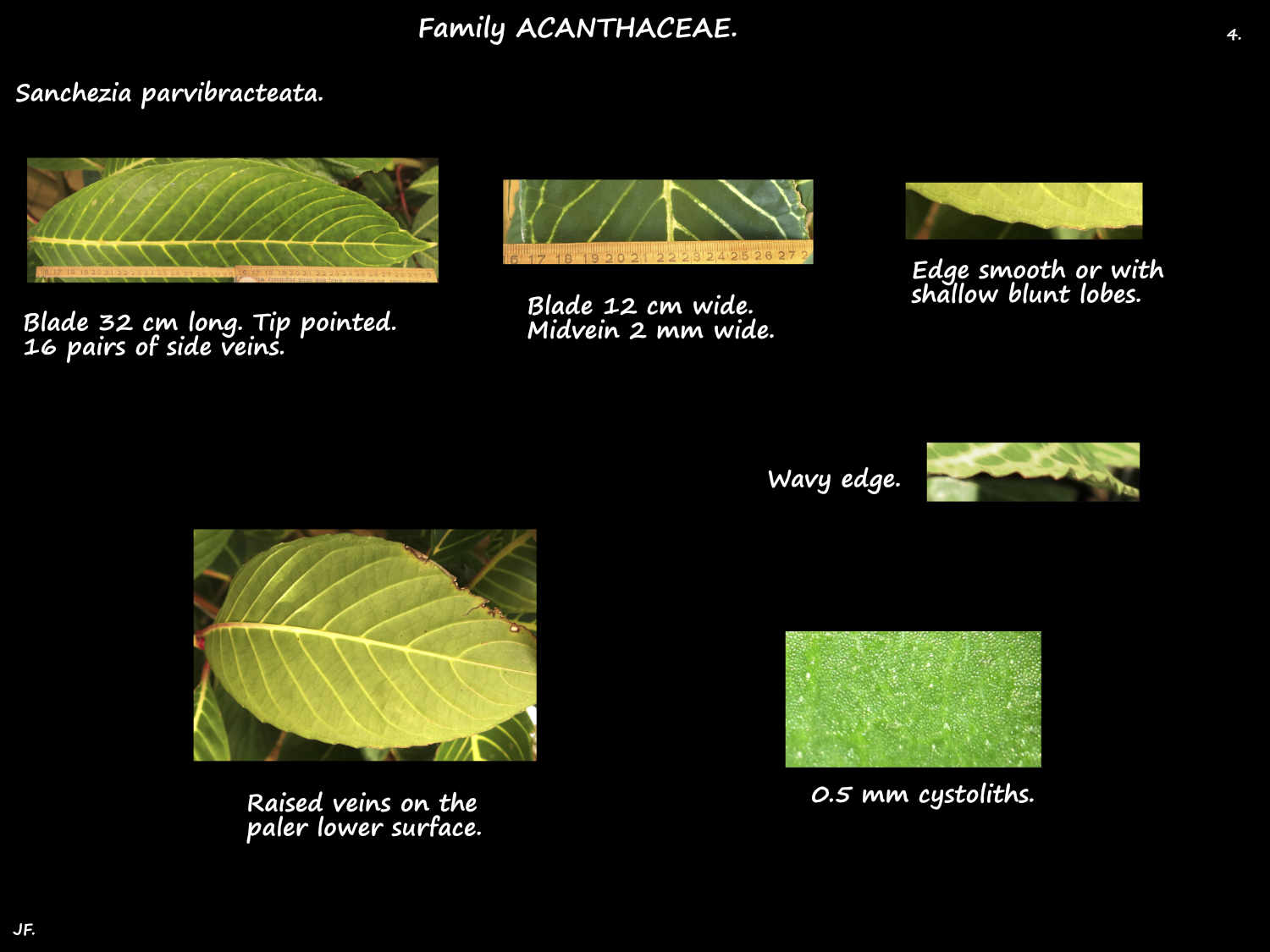
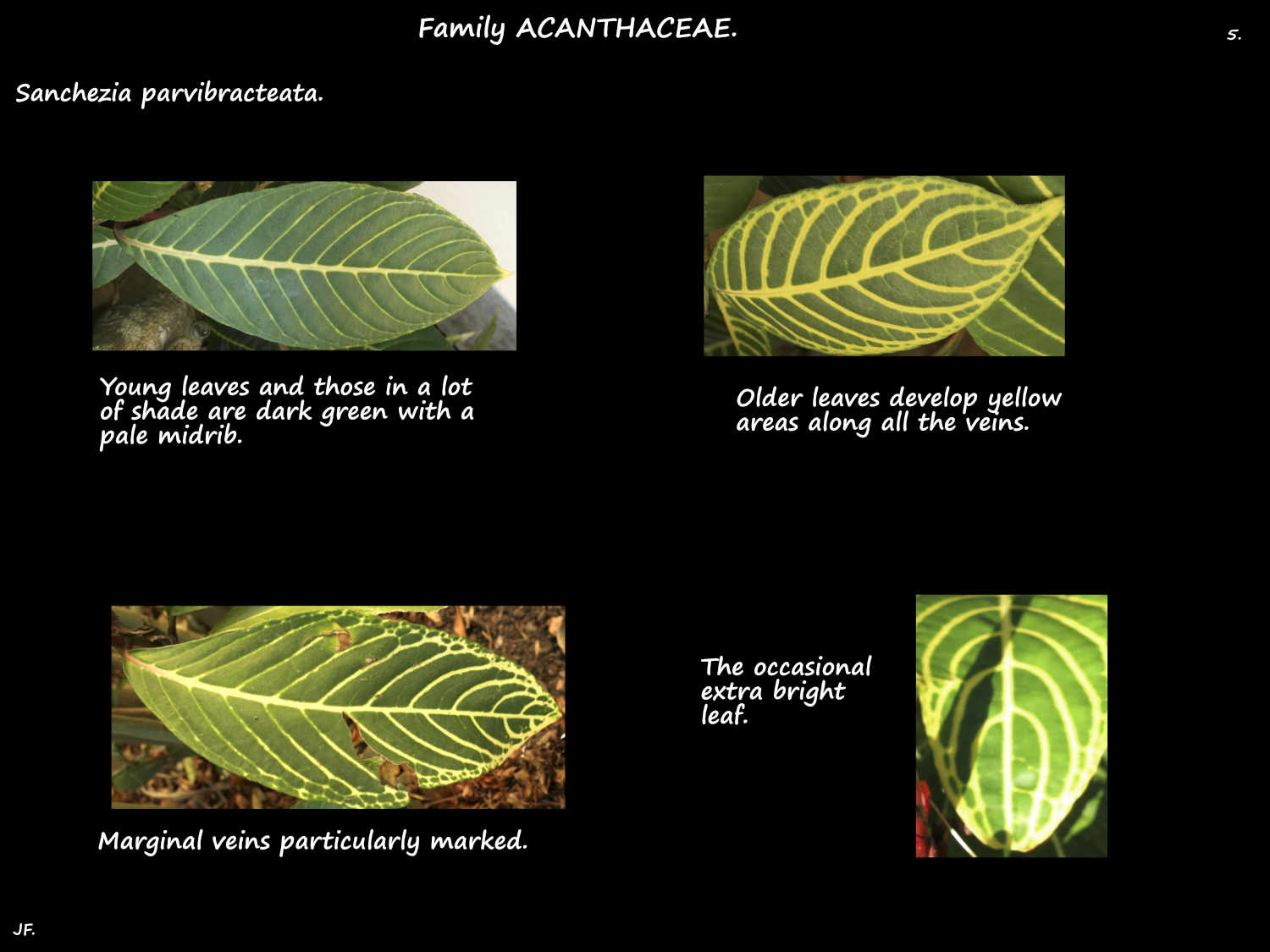
The elliptic blades can be up to 35 cm long and 15 cm wide.
The base runs onto the petiole as small wings.
The wavy edge may be smooth or have small blunt teeth.
The wide yellowish midvein has up to 14 pairs of side veins.
On older leaves there are narrow to wide areas of yellow along the side veins.
Midrib and veins are prominent on the paler lower surface.
Both surfaces have small pale calcified nodules (cystoliths)
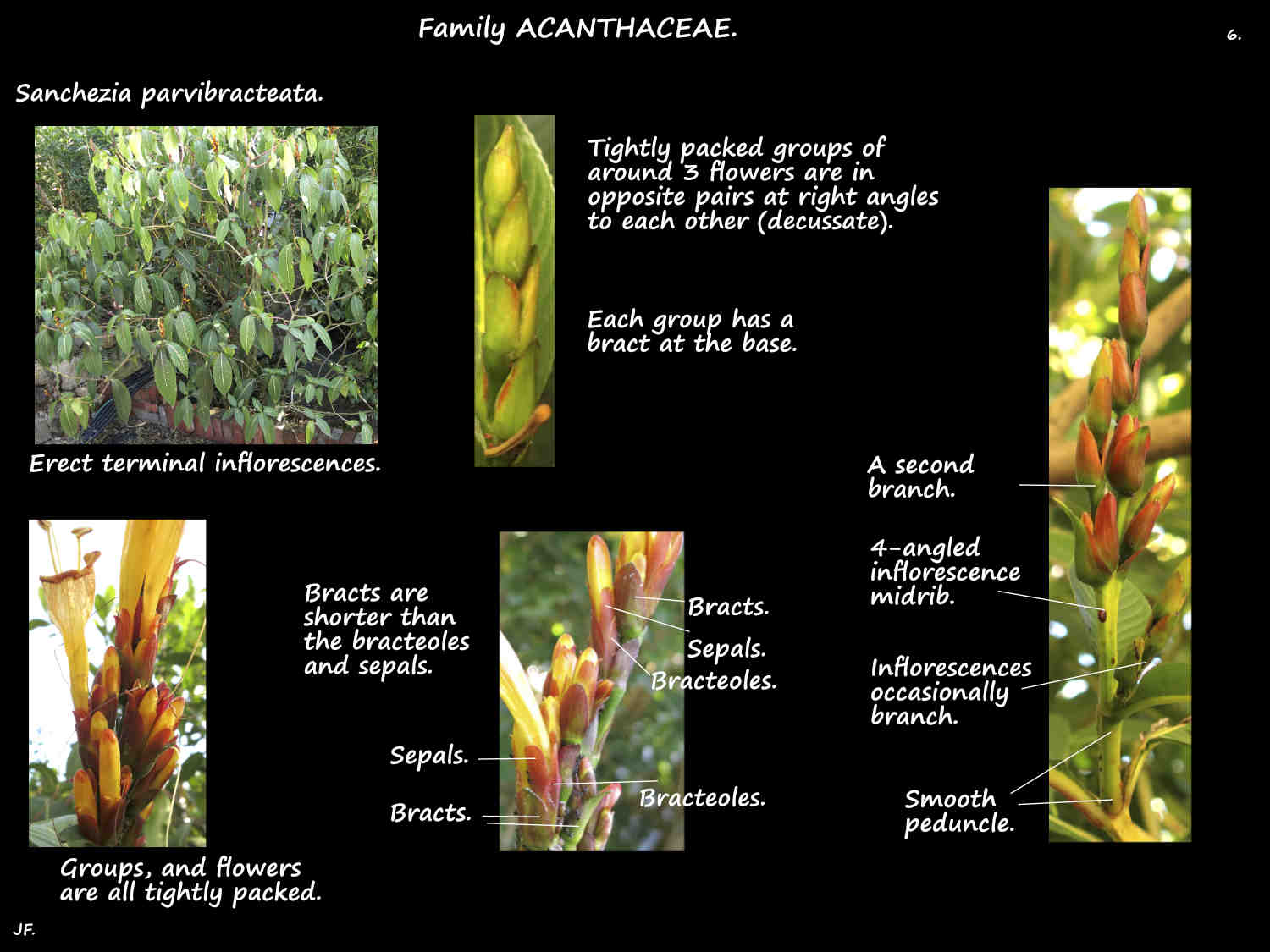
Terminal inflorescences, up to 16 cm long and 4 cm wide are on a smooth peduncle.
Below the terminal flower are small groups of around 3 flowers.
The tightly arranged groups are in opposite pairs and in 4 ranks (decussate).
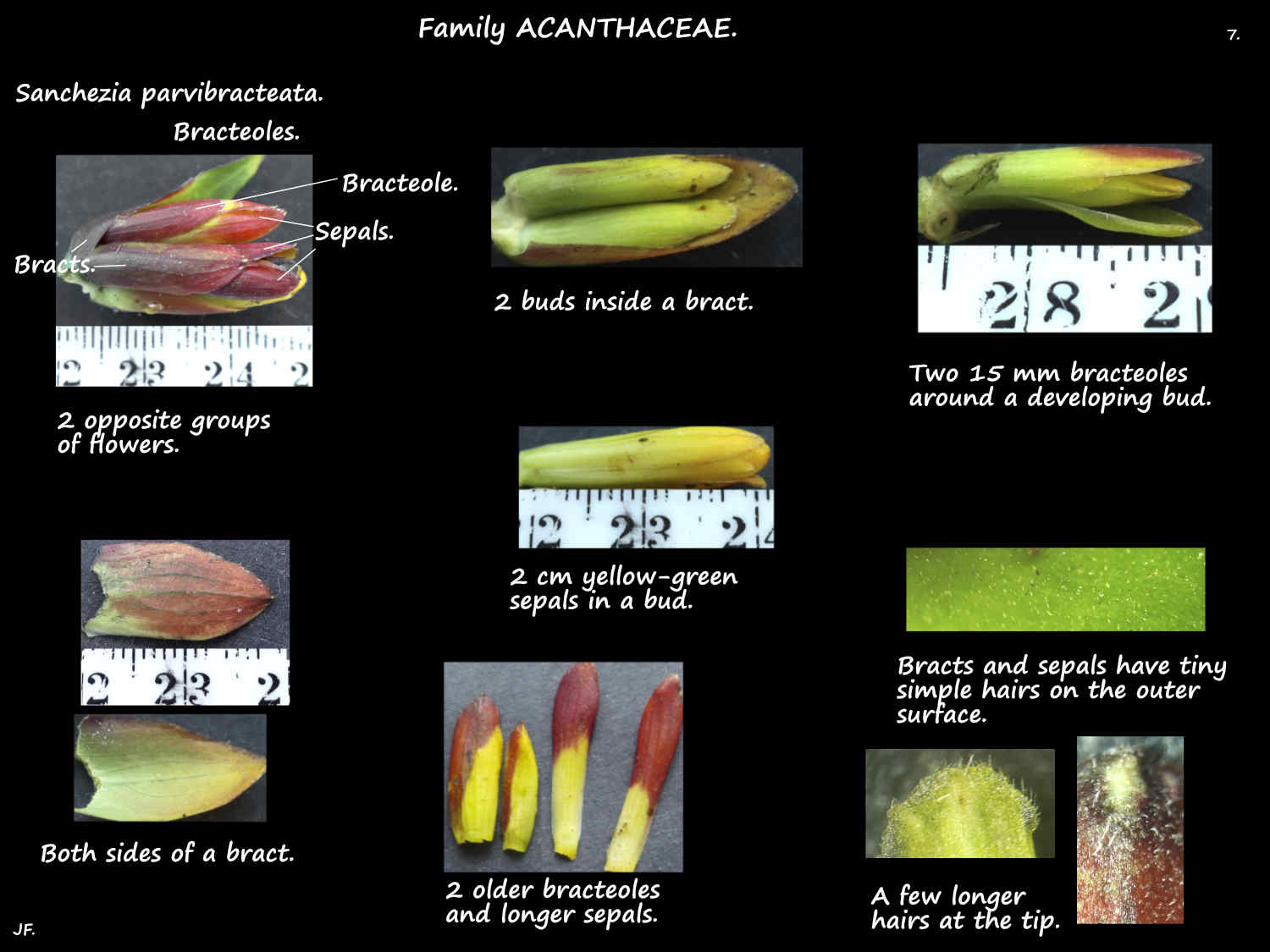
Under each group is an ovate to triangular bract around 1 cm long with a wide base.
Each directly attached flower has elliptic bracteoles below it.
Around 1.5 cm long and with a narrow base they have a reddish tip.
Bracts and bracteoles have small edge hairs (cilia) and simple hairs on the outer surface.
The distinguishing feature of this species is that the bracts are shorter than the bracteoles and sepals.
The 5 sepals, 2 to 2.5 cm long and 5 mm wide are oblong to oblanceolate.
Hairs on the outer surface and edge are like those on the bracteoles.
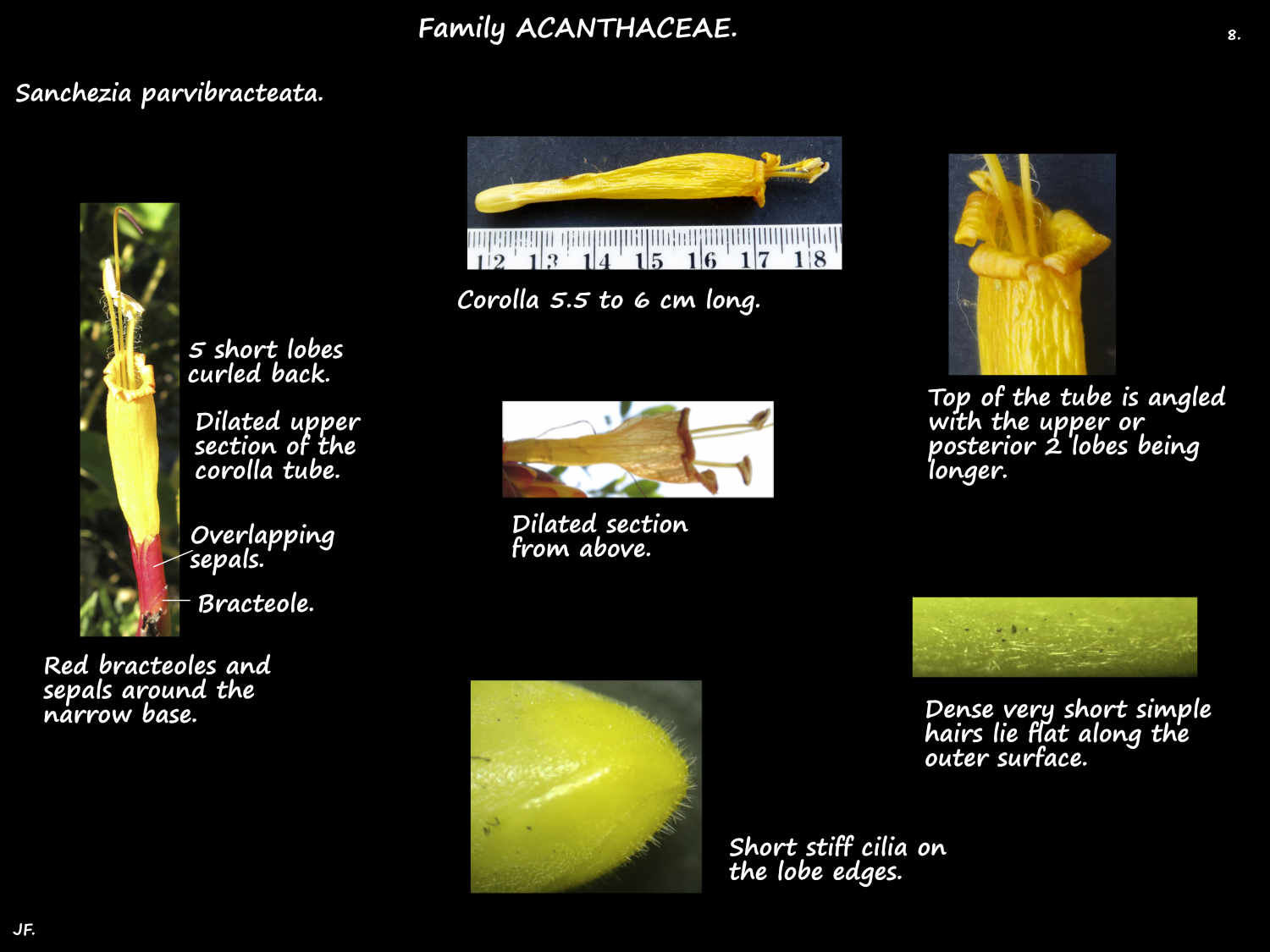
The yellow corolla has a tube around 5 cm long.
Above the ovary the lower half is around 5 mm wide, the upper half 10 mm.
The 5 oblong lobes, up to 1 cm long coil back.
The outer surface of the upper half of the tube has dense but tiny hairs.
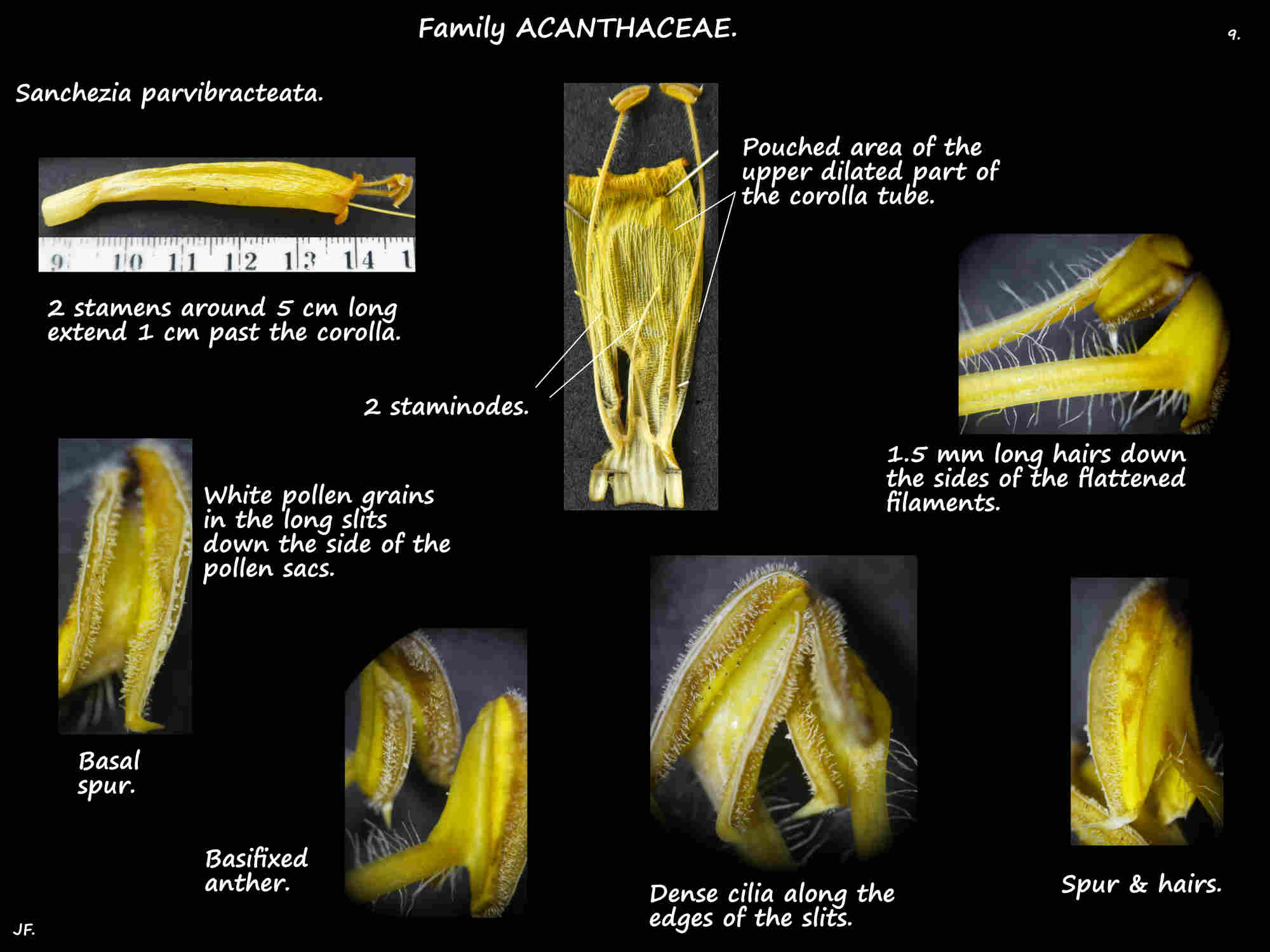
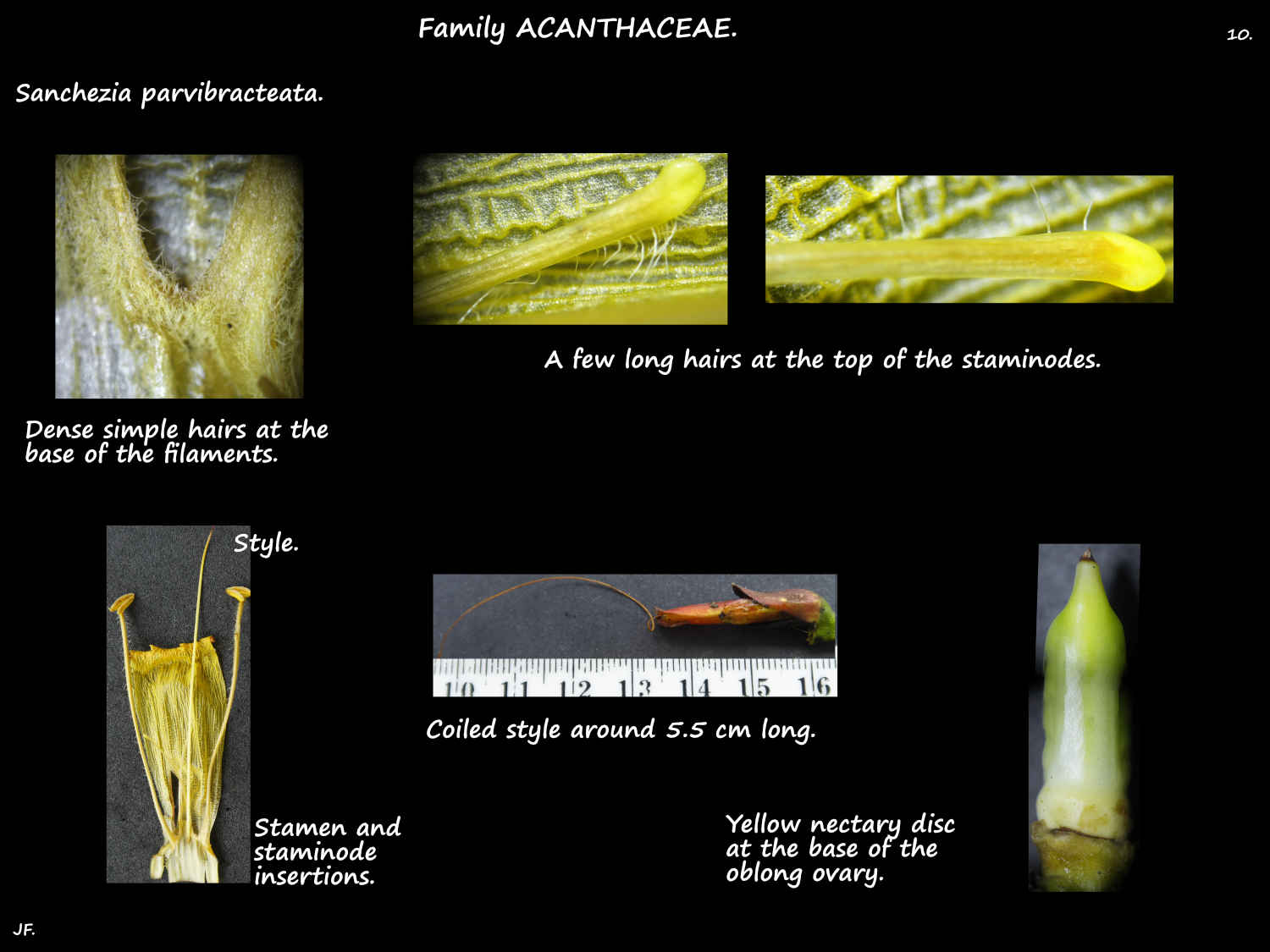
The 2 stamens are inserted at the base of the widening corolla throat.
The flat filaments extend around 1 to 2 cm past the corolla tube.
There are long simple hairs along the sides of the filaments.
The basifixed anthers have 2 pollen sacs that open through long slits.
Anthers have hairs on the outer surface and small cilia around the edge of the slits.
Anthers have a sagittate base with a hairy outwards curved spur around 1 mm long.
Between the filament bases is a pair of staminodes around 1.5 cm long.
They have a few hairs near the anther free tip.
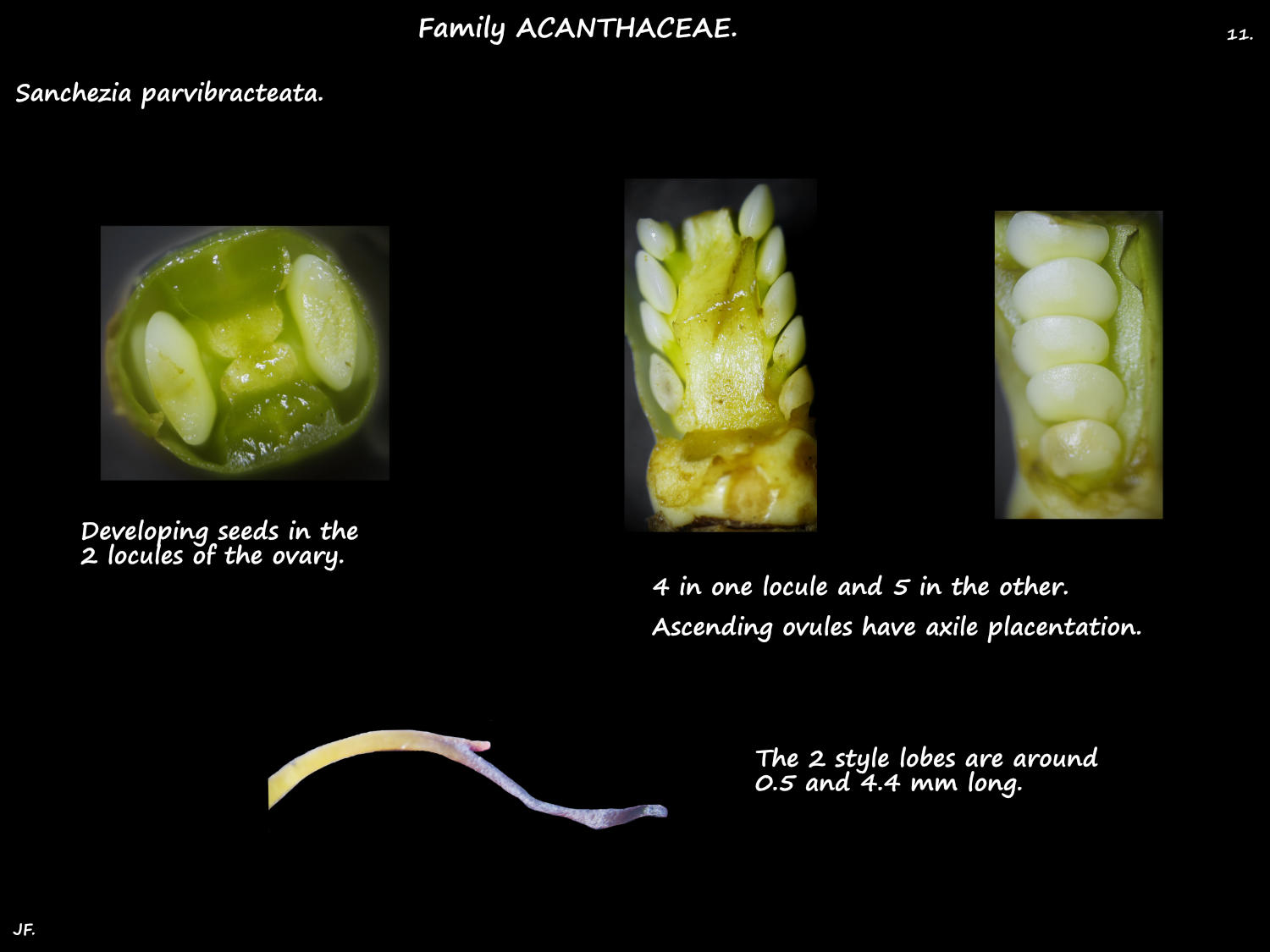
The superior ovary has 2 locules each with 3 or 4 ovules with axile placentation.
The style, up to around 6.5 cm long extends well past the corolla tube.
The 2 very unequal stigma lobes are around 0.3 and 4 mm long.
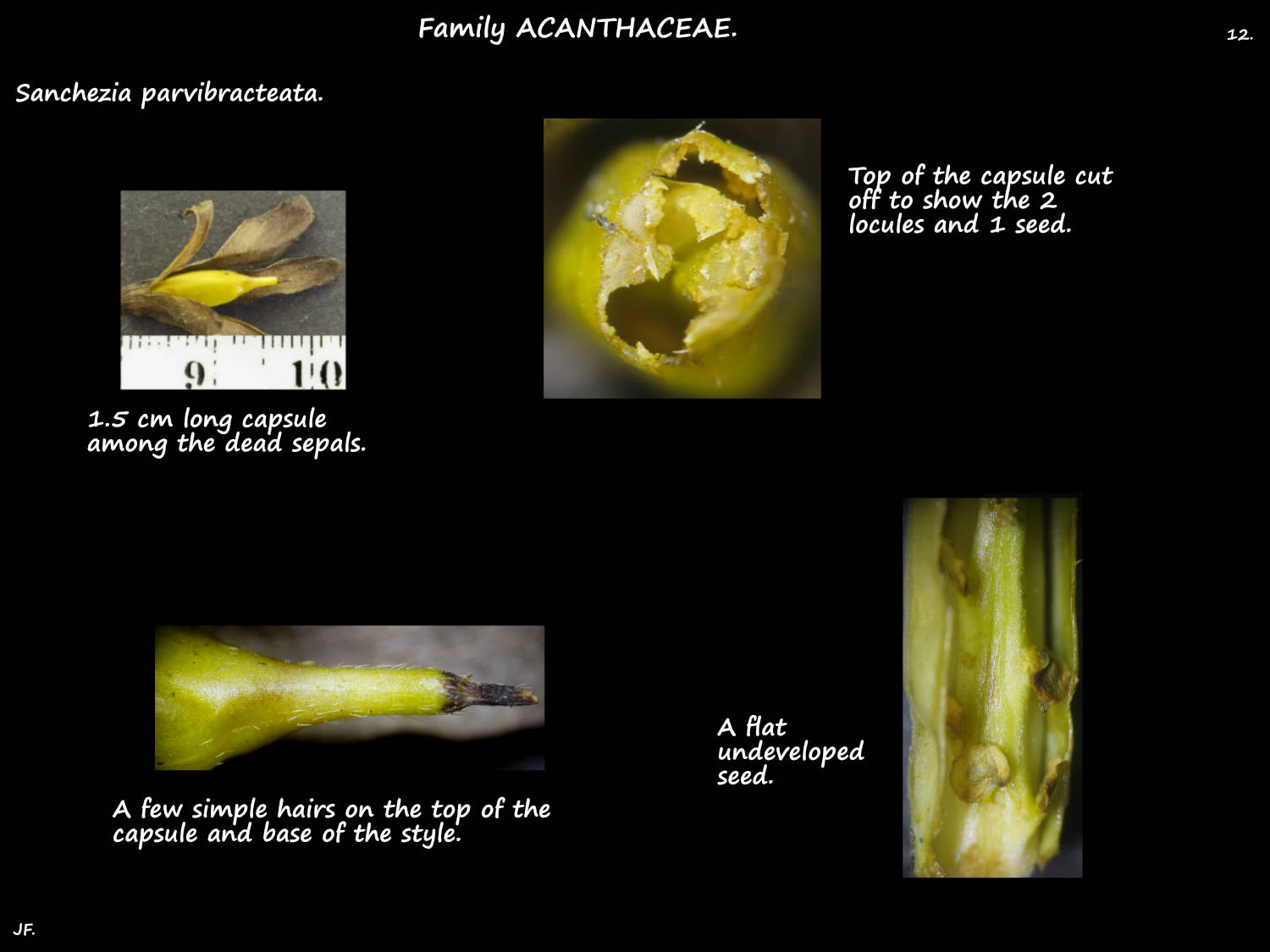
Cultivated plants here rarely produce fruit.
Capsules are around 1 cm long with a few hairs near the tip.
There are up to 4 flat seeds in each chamber.
J.F.